Window Parts, Materials & Components
Aluminum Windows: Are They Worth It?
Aluminum windows have been a staple in the industry since the beginning of the 20th century. And naturally, they've evolved over the years from the basic single-frame systems to sophisticated, energy-efficient fenestration solutions.
If you're looking for new windows and trying to decide whether aluminum units are right for you, we've got you covered! This guide explains everything you need to know about them: technical advantages, energy efficiency considerations, aesthetics, and long-term value.
What Are Aluminum Windows?
Most aluminum windows are now manufactured from strong, corrosion-resistant aluminum alloys that also provide great finish quality, typically 6063-T5.
Aluminum windows were first used in 1912 as windows in buses and trolleys. Fifteen years later, they were being installed in commercial buildings. Then, in the 1960s, aluminum windows became a staple for residential applications as well, especially those that required large glass areas and slim frames.
But there was one major concern: aluminum is not very energy-efficient, so these windows did not insulate well. Over the years, manufacturers came up with a solution: they started designing them with thermal breaks that enhanced insulation and reduced heat transfer.
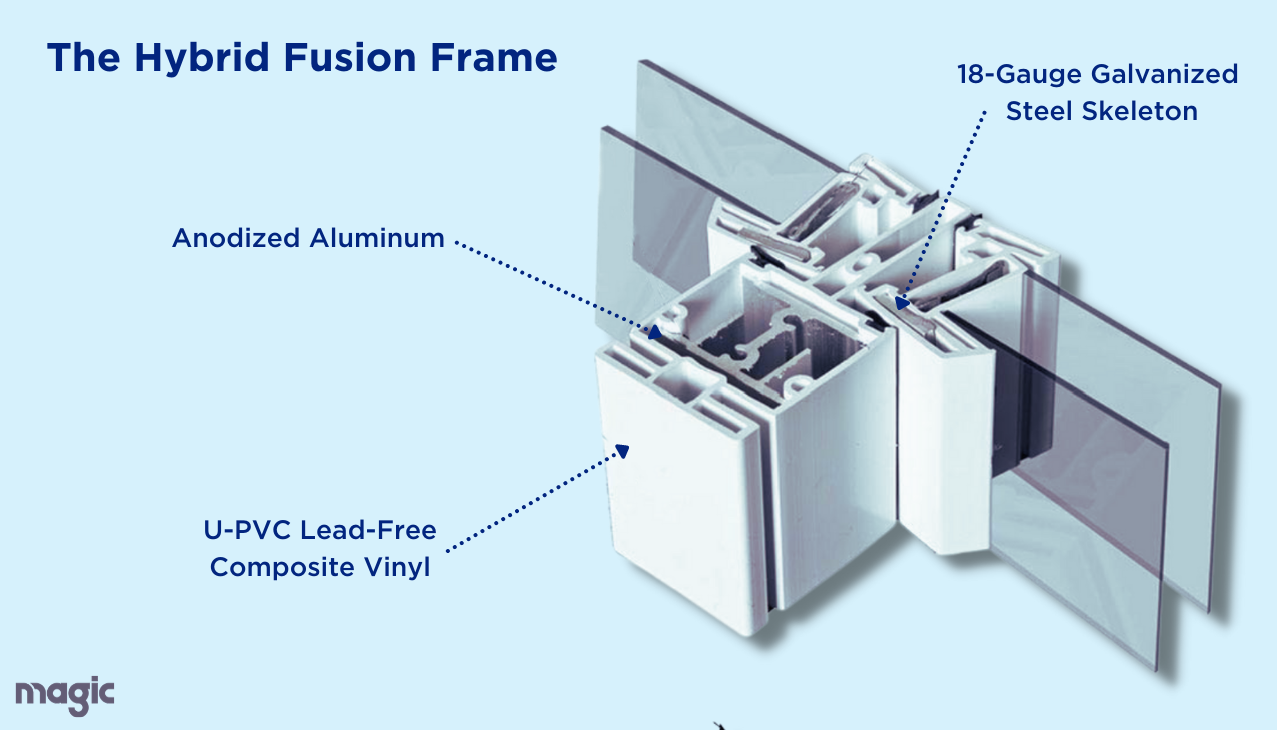
Nowadays, some manufacturers take it even further to provide homeowners with quality windows. Magic, for example, combines aluminum with steel and vinyl - for durability, superior energy-efficiency, and unmatched strength.
Key Benefits of Aluminum Windows
Can't decide if aluminum windows are the best for your home? Let's discuss some of their most praised benefits!
How Strong and Durable Are Aluminum Windows?
Aluminum windows are exceptionally resistant to warping, cracking, and structural deformation. All of these are undesired in windows because they can compromise the window's structural integrity over time. Aluminum, on the other hand, remains stable over time in regions with harsh climates.
While aluminum does not rust, it can corrode. However, nowadays, the aluminum used for windows undergoes an electrochemical process called anodizing. This final product is called anodized aluminum and it will never chip, flake, peel, or corrode. Moreover, after undergoing this process, the surface of the metal becomes tougher than the surface of base aluminum, being three times harder.
What Is the Energy Efficiency of Aluminum Windows?
Modern aluminum windows are remarkably energy-efficient. This is primarily due to the use of thermal break technologies that fundamentally change how heat transfers through the frame system.
For example, the U-value (which measures the heat loss rate of a material) of a standard single-pane window is above 1, which is pretty high for a window. When looking at U-values, you should go for lower ones, as they indicate better insulation. As such, aluminum windows with thermal breaks or combined with other materials can have a U-value as low as 0.25 or even 0.17, in the case of Magic windows.
Therefore, when buying aluminum windows, it is of the essence to confirm their U-value and what exactly makes them energy-efficient, given that the standard material has poor thermal performance.
Do Aluminum Windows Require Maintenance?
Aluminum windows require little to no maintenance compared to other materials. As mentioned earlier, the anodizing process creates a durable finish that eliminates the need for repainting or refinishing throughout the window’s service life. Compared to wood windows, for example, that require regular staining or painting to maintain their appearance and weather protection, aluminum windows are definitely much better.
Basically, all you have to do is clean the windows with soap and water, remove dirt and debris from their tracks, if any, and make sure that the hardware does not rust or corrode.
Are Aluminum Windows Customizable?
Aluminum windows are definitely customizable. Plus, they're incredibly aesthetically pleasing!
We all prefer aluminum windows thanks to one major advantage: slim profiles. Vinyl windows, for instance, have quite bulky frames. This might not be an issue for large windows, but if you want to install a small window in the bathroom, for instance, that bulky frame will become a nuisance. First, it will cut the glazing area and thus reduce Visible Transmittance (the amount of natural light that passes through the window). Secondly, it will not look aesthetically pleasing.
And that's exactly why homeowners often prefer slimmer frames like those made from aluminum. And since they're also durable, aluminum frames can withstand large glazing areas too.
Aluminum frames can be powder-coated in many finishes, including matte, gloss, and metallic. You can choose from numerous colours - white, black, bronze, and others, so the windows match your home's style. Moreover, aluminum windows can be made in specialty shapes and grille patterns.
How Much Do Aluminum Windows Cost?
Aluminum windows typically require 15-25% higher upfront costs compared to basic vinyl windows, ranging between $400 and $900. The final price depends on multiple factors, including:
- Whether the material is reinforced with other materials
- How many glass panes the window has
- Whether you opt for any Low-E coatings
- The window shape and size
Keep in mind their long-term performance before making a choice based on the price. For example, aluminum windows have a lifespan of 30+ years, while vinyl windows have an expectancy of only 15-20 years, even less if they're installed in regions with extreme temperature fluctuations.
Is Aluminum Environmentally Friendly?
Aluminum is 100% recyclable. It can be recycled repeatedly without degrading its quality and value.
Statistics show recycling aluminum saves 95% of the energy needed for primary production. Furthermore, one tonne of recycled aluminum saves approximately 8 tonnes of bauxite, 7.6 cubic meters of landfill, and 14,000 kWh of energy.
The Disadvantages of Aluminum Windows

Like with any other window material, aluminium does have some disadvantages, including:
- Higher price point
- Higher risk of scratching
- High thermal conductivity, thus thermal breaks are required
- Higher risk of corrosion if not treated properly
- Higher risk of interior condensation
Aluminum Windows vs Vinyl Windows vs Wood Windows
Here's a brief comparison between aluminum windows, vinyl windows, and wood windows:
Combination Windows: Aluminum + Vinyl + Steel

Imagine a window frame that overcomes the drawbacks of both vinyl and aluminum, lasting up to 40 years... That’s exactly what Magic’s Hybrid Fusion Frame delivers: a smart blend of anodized aluminum, stainless steel, and vinyl. But what makes this frame stand out in the industry?
At the core of our design is a sturdy skeleton made from anodized aluminum and stainless steel. This strong aluminum-steel framework is then encased in vinyl.
The robust skeleton ensures the vinyl maintains its shape and integrity, even under harsh weather conditions, making it an ideal choice for Canadian climates. This combination also improves energy efficiency thanks to the vinyl addition.
The result is a window and door frame that excels in strength, longevity, and insulation performance.
Thanks to its exceptional sturdiness, our frames can be made thinner than conventional designs. Plus, they can be painted in any color, inside and out, giving you complete design flexibility!
And the best part is that every window comes with a 40-year warranty, giving you peace of mind for decades. Plus, you can get them in custom sizes and shapes, as well as equip them with fully retractable screens. Not to mention that Magic offers professional installation services too, so you don't have to worry about a thing!
Curious to learn more about the best windows in the GTA? Book your free consultation with Magic today!
FAQs
How long do aluminum windows last?
Aluminum windows typically last 30 years or more with minimal maintenance, especially in harsh climates and when they have quality powder-coated finishes that resist corrosion and fading in various environments. They must also be well constructed and properly installed to last long.
What is better, PVC or aluminum windows?
PVC/uPVC windows are usually better if your priority is energy efficiency, lower upfront cost, and reduced condensation. Aluminum windows are better if you need superior structural strength, slim frames, large glazed areas, and long-term durability. However, you can also get combination windows with both aluminum and vinyl, such as those manufactured by Magic.
What is the disadvantage of aluminum windows?
The main disadvantages of aluminum windows are weaker thermal insulation unless equipped with thermal breaks, higher risk of interior condensation on frames, and potentially higher purchase cost. Poor-quality aluminum or finishes can also be more prone to corrosion or oxidation in harsh or coastal environments.
Are aluminum windows worth it?
Aluminum windows are usually worth it if you value long service life, slim, stylish frames, design flexibility, and strong security with minimal maintenance. When combined with thermal breaks, quality glazing, and good installation, they can offer an excellent balance of durability, safety, and modern aesthetics despite higher initial costs than PVC.
Which is more expensive, uPVC or aluminum windows?
Aluminum windows are generally more expensive than uPVC windows in terms of upfront purchase and installation costs. However, their longer lifespan and resistance to deformation can narrow the cost difference over time.
How do you know if aluminum windows are of good quality?
You can tell aluminum windows are good quality if they use thermally broken frames or are reinforced with other materials, have robust multi-point locking hardware, smooth and tight seals, and certified performance ratings for energy efficiency, air–water tightness, and security. High-quality models also feature durable powder-coated or anodized finishes and consistent colour.
Are aluminum windows low-maintenance?
Yes, aluminum windows are generally low maintenance. All you have to do is clean them once in a while. Sometimes, you may have to repaint them.