
Window Styles & Comparisons
Arched Windows: Costs, Styles, and Installation Tips
Arched windows have been a favorite for architects and homeowners for centuries... And they are still one of the most sought-after timeless features for both renovations and new builds.
It's not all roses, though. Arched windows certainly improve curb appeal, add architectural elegance, and bring in more natural light. But they're also much more difficult to install and maintain. For one thing, their unique shape makes them more expensive. Secondly, they're difficult to clean. Thirdly, finding window treatments for arched windows is quite challenging.
But if you're set on incorporating arched windows into your design, keep reading, as we've included everything you need to know about them to decide whether they're a good option for your home or not!
Key Points: Arched Windows
- Arched windows are specialty windows with a curved top that adds architectural character, increases natural light, and creates a sense of height inside a space.
- Most arched windows are fixed, though some designs combine an operable rectangular base with a decorative arched top.
- Modern arched windows can also be energy-efficient when built with high-performance glazing, and they can be covered using custom blinds, shutters, or curtains designed to fit the curve.
What Are Arched Windows?
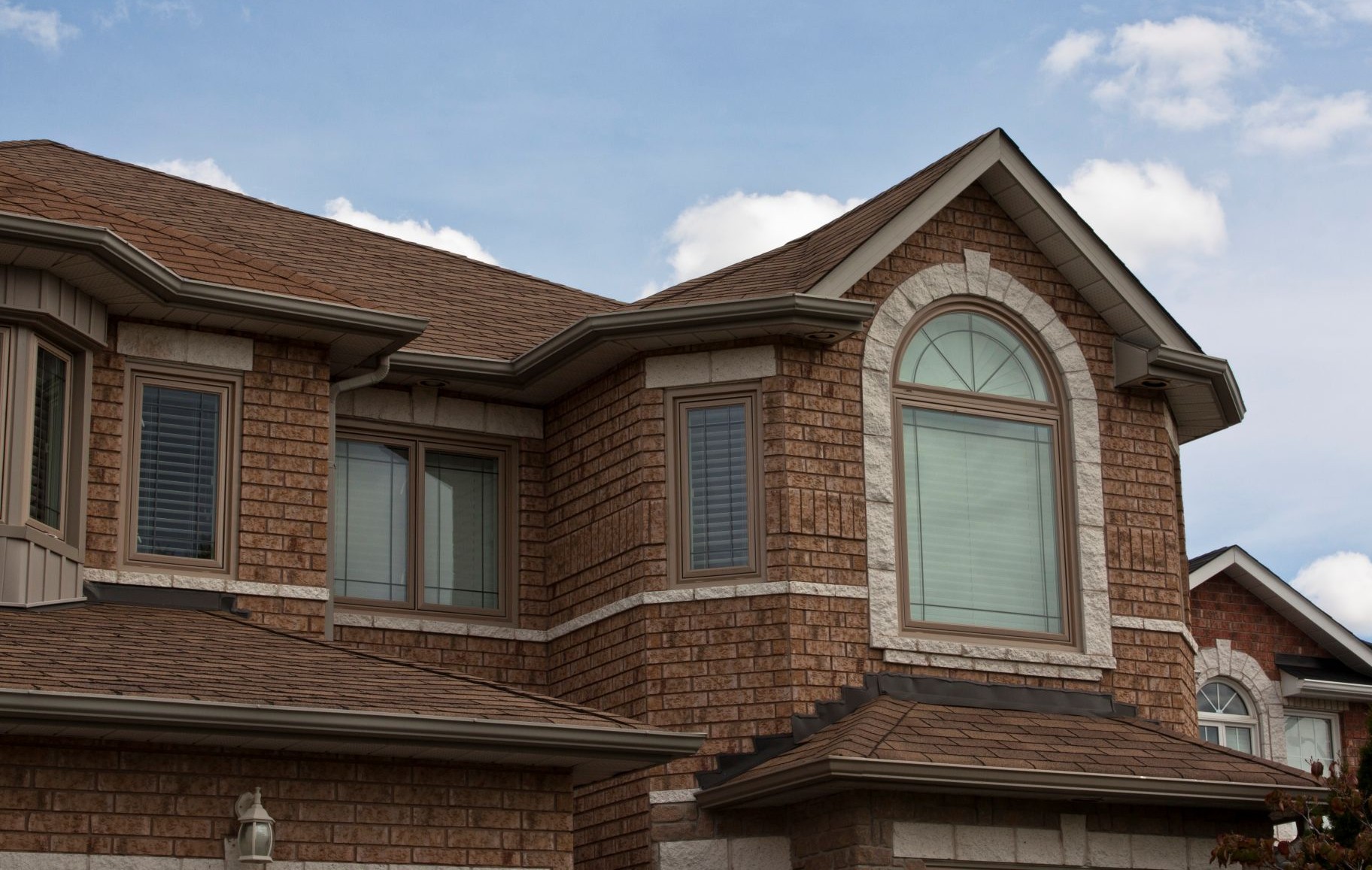
An arched window consists of a rectangular or square base topped with a semi-circular upper portion. Most arched windows are fixed units, though in some cases, the rectangular portion below the semi-circular one consists of an operable window, usually a casement window.
Besides its aesthetic role, the curved structure of an arched window also redistributes weight and allows for wider openings than a simple flat lintel could support.
Types of Arched Windows
There are several types of arched windows. Some of them are pretty common in residential buildings. Others... Not so much. But you can still incorporate them into your home's design if they fit well.
Semicircular Arched Windows

The semicircular arch, often referred to as the Roman arch, is the classic arch because of its simpler design (compared to other arched windows!). It has a perfect half-circle top where the height is exactly half the width.
Because the curve is so uniform, it creates a sense of balance on any facade. This makes it a staple in Mediterranean, Renaissance, and Romanesque Revival homes. The semicircular arch is particularly effective in grand entryways.
Lancet Arched Windows
Drawing inspiration from the heights of the Gothic era, the lancet arched window is tall and narrow and culminates in a sharp point. The arch is formed by two intersecting arcs of equal radii, giving it an arrowhead appearance.
The lancet window was historically used in cathedrals to draw the eye toward the sky, mainly because it creates a strong vertical emphasis. In modern residential design, lancet windows are not very common. But they could work well in libraries and stairwells or as narrow accent windows to add a touch of drama, mystery, and historical gravity.
Elliptical Arched Windows
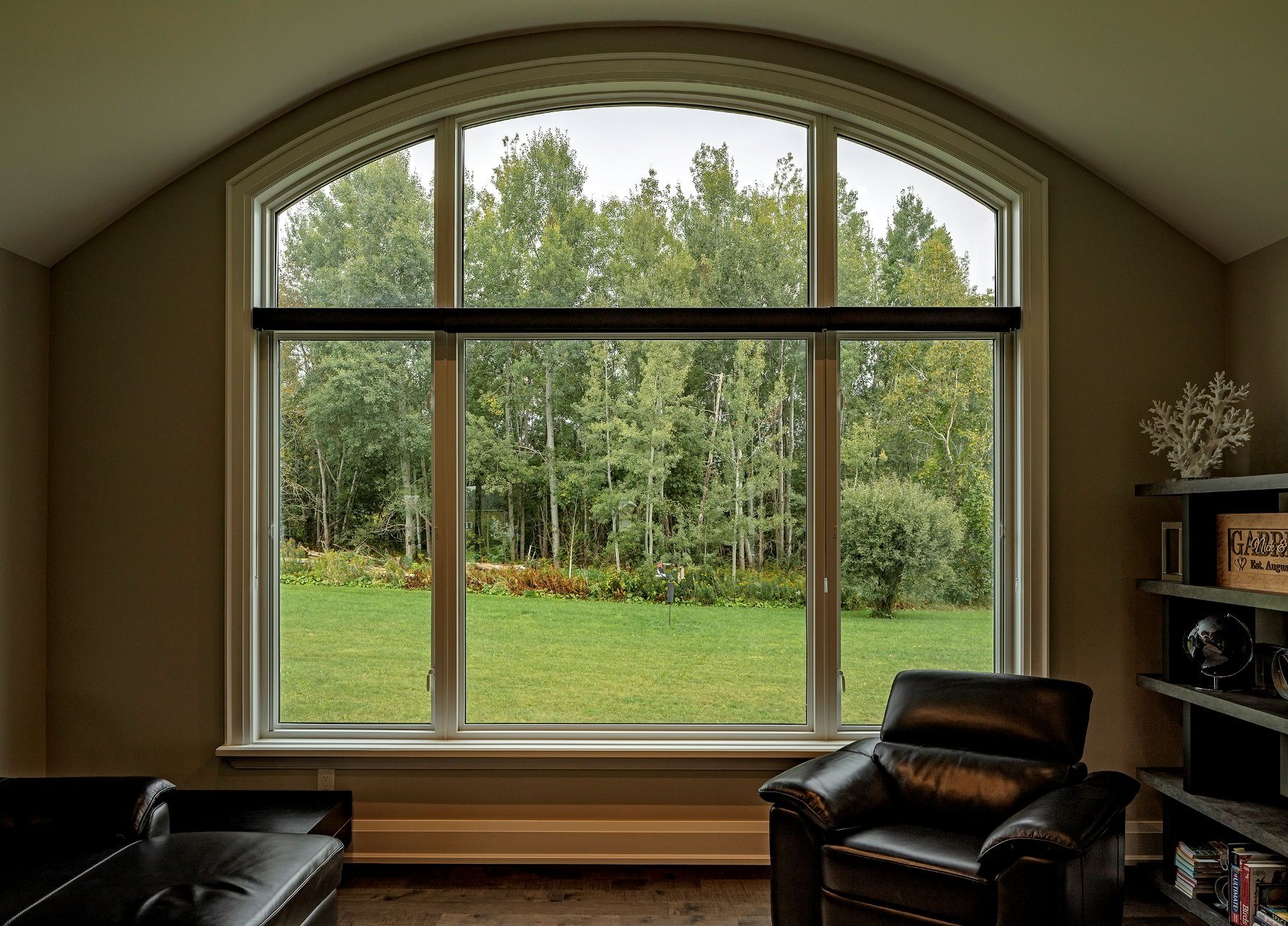
Elliptical arched windows are similar to semicircular arched windows, except that they follow a flattened, oval-like curve that is much wider than it is tall.
Because of its low profile, an elliptical arched window is an excellent choice for wide rooms with standard ceiling heights where a full semicircular arch would be too tall.
Ogee Arched Windows
Perhaps the most decorative of all, the ogee arched window features a double curve meeting at a delicate point at the top. In architecture, the ogee was first seen in Venetian Gothic and Gothic Revival architectural styles.
Because the special shape is so intricate, Ogee windows are rarely used for residential windows, except maybe in homes that have a very specific architectural style and require such a unique design.
Venetian Arched Windows
Commonly known as a Palladian window, the Venetian arched window is actually a three-part assembly. It consists of a large, semicircular arched center window flanked by two shorter, narrower rectangular windows on either side.
This configuration was popularized by the Renaissance architect Andrea Palladio and is designed to flood a room with light while maintaining a rigid, grand symmetry. It is almost always used as a primary architectural feature, often placed centrally over a front door or in a formal dining room.
Arched Transom Window

An arched transom window is a separate window installed above a door or a larger window, so it's not part of the larger assembly. The arch can be semicircular or segmented (a shallower curve).
Its primary purpose is to allow borrowed light to flow between rooms or into an entryway, even when the door is closed.
Key Benefits of Arched Windows
While arched windows are definitely more expensive than standard windows (all specialty windows are, after all!), they are surely worth the investment if you want to enjoy more natural light, enhance your home's curb appeal, and increase property value.
Here are the key benefits of arched windows that make them truly worth it!
Architectural Interest and Curb Appeal
One of the primary benefits of arched windows is their ability to break up the monotonous, boxy lines common in standard residential construction.
From the outside, they enhance a home’s curb appeal, making the structure look custom-designed rather than mass-produced. Inside, they act as built-in artwork and frame the outdoors beautifully.
Maximizing Natural Light and Height
Because arched windows are often taller than their rectangular counterparts, they allow natural light to penetrate much deeper into a room. The curved top section captures light from higher angles, which can brighten the center of a space that might otherwise remain dim.
Furthermore, these windows draw the eye upward. This creates an optical illusion of higher ceilings.
Design Versatility and Timelessness
Arched windows are remarkably versatile! With a bit of strategic planning and a few basic design concepts, they can fit into almost any architectural style. While they are a natural fit for Mediterranean, Gothic, or Victorian homes, they are increasingly used in ultra-modern minimalist designs as well to add a touch of organic softness to clean lines.
Also, unlike certain trendy window styles that may look dated within a decade, the arch is a geometric shape that has been used in architecture for hundreds of years.
Increased Property Value
Unique architectural features are significant selling points in the real estate market. And arched windows are often perceived as a premium upgrade because they require more craftsmanship to manufacture and install than standard windows. This can increase the perceived value of a property.
It goes without saying that many potential buyers are drawn to homes that possess a distinct character. So, a well-placed Venetian or lancet window can provide exactly that memorable detail that sets a home apart from others on the market.
Disadvantages of Arched Windows

While arched windows are undeniably beautiful, they do come with a few disadvantages that can be decisive. It's important to weigh these drawbacks against their aesthetic appeal before committing to them.
Cost and Installation Complexity
The most immediate disadvantage is the price tag. Arched windows are significantly more expensive than standard rectangular ones because they are often custom-made. The curved glass and frame require a specialized manufacturing process and a labor-intensive installation process.
Beyond the unit cost, installation is also more complex. To achieve a perfect seal and proper insulation around a curve, you'll have to hire a team with a high level of craftsmanship. If installed poorly, arched windows are more prone to air leaks or water infiltration.
Window Treatment Difficulties
One of the most common frustrations for homeowners with arched windows is finding ways to cover them. Standard blinds, shades, and curtain rods are designed for straight lines, so you can't really use them on arched windows.
While you can buy custom "fan" blinds or cellular shades specifically for arches, they are expensive and often cannot be opened or closed easily. Many people choose to leave the arched portion uncovered for the look, but this can lead to issues with glare on television screens, lack of privacy at night, or unwanted heat gain during the day.
Maintenance and Repairs
If an arched window breaks, you can't just head to a local hardware store for a quick replacement. Because the glass is custom-cut to a specific radius, a replacement pane must be specially ordered, which can be both costly and time-consuming.
Furthermore, because these windows are often placed high up to take advantage of ceiling height, they can be difficult to reach for routine cleaning.
Also, over time, the specialized seals on the curved portion may be more susceptible to wear and tear due to the way the materials expand and contract.
Energy Efficiency Concerns
While modern arched windows are available with high-performance double or triple glazing, the inherent shape can sometimes be a weak point for energy efficiency. The larger surface area of glass, especially if it is a single large pane, can lead to significant heat loss in the winter or "greenhouse effect" heating in the summer.
Additionally, because window treatments are so difficult to install, you lose the ability to use thermal curtains or blackout shades to help regulate the room's temperature effectively.
Arched Windows: Different Materials

The material of the frame is the most critical factor in the window's longevity and maintenance requirements. Arched windows can be made from various materials, including vinyl, timber, and aluminum.
Wood is the traditional choice. It is often preferred for historic restorations because it can be easily milled into complex curves like ogee or lancet arches. But... While wood offers natural insulation and a high-end feel, it requires regular painting or staining to prevent rot. And given that arched windows are often installed high on walls, maintenance can be difficult.
Vinyl is a popular, cost-effective alternative that is virtually maintenance-free, though it can be more difficult to find in sharp, intricate arch shapes compared to other materials. Also, vinyl expands and contracts in extreme temperature fluctuations (exactly like those in Ontario).
Fiberglass is becoming a premium favorite because it doesn't expand or contract with temperature changes, ensuring that the specialized seal of the arch remains airtight for years.
However, an even better choice is the Hybrid Fusion Frame: a combination of vinyl, aluminum, and steel. We're talking improved strength, durability, energy efficiency, and curb appeal!
Grill Patterns for Arched Windows
Grill patterns are the decorative strips that divide the glass into smaller panes. For arched windows, the grill pattern is what truly emphasizes the shape of the arch. Here are some popular options:
- Sunburst or fan: this is the most iconic pattern for arches, where lines radiate from the center of the base to the curved edge, resembling a rising sun.
- Colonial or prairie: these patterns use vertical and horizontal lines to create a grid look. In an arched window, the grid usually continues into the curve, which can create a striking contrast between the square panes and the rounded frame.
- Gothic grids: specifically for Lancet or Ogee windows, these grills often feature intersecting arcs that create petals or pointed shapes within the glass.
- No grills: many modern home designs opt for a completely clear pane of glass. This minimalist approach puts the focus entirely on the silhouette of the arch itself and provides an unobstructed view of the outdoors.
Glazing Options for Arched Windows
Glazing refers to the glass itself, its energy-efficient properties, and its ability to help lower energy costs. Because arched windows are often larger and placed higher up, where they catch more direct sunlight, it's of the essence to choose the right glass.
Low-E (Low-Emissivity) glass is a standard recommendation. It features a microscopic metallic coating that reflects heat back to its source, keeping your home cool in the summer and warm in the winter.
Beyond standard coatings, you can opt for double- or triple-pane glazing, where the space between the glass layers is filled with an insulating gas like argon or krypton. This significantly reduces noise and heat transfer.
For windows in bathrooms or entryways, you may also want to consider installing stained glass or frosted glass for privacy.
Arched Window Installation
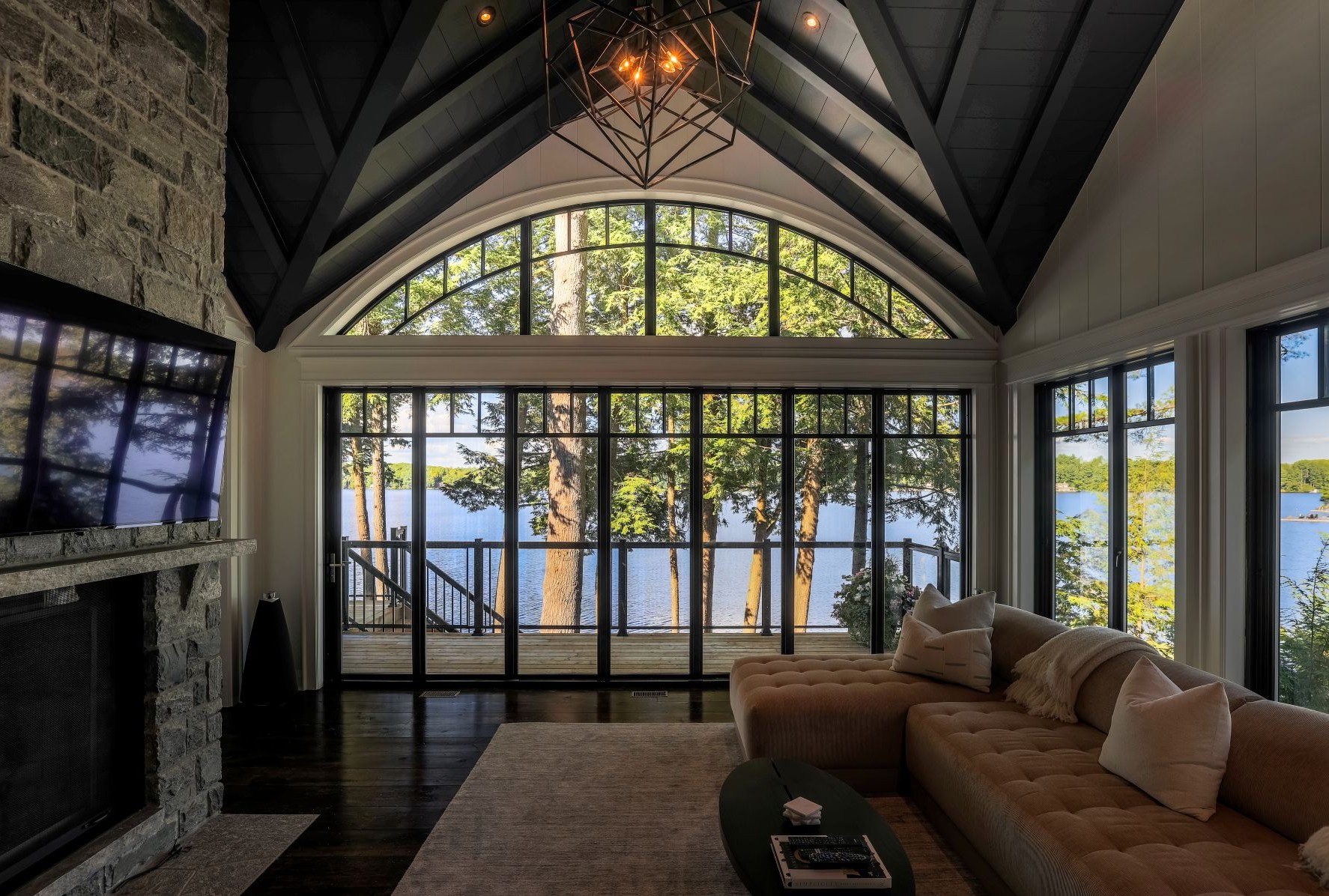
Installing an arched window is significantly more complex than installing a standard rectangular unit. Here are some things to consider (that will probably make you hire experienced professionals):
- The masonry match: in a replacement scenario, the arch of the window must be a perfect fit for the arch of the brick or stone opening down to the millimeter. Professionals often create a physical template of the opening to send to the manufacturer. If it's off by even a fraction, you’ll end up with "gap-fill" caulking that looks messy and eventually leaks.
- Structural integrity: arches are naturally strong, but the rough opening (the hole in your wall) needs specialized framing to support the weight of the header. A pro ensures that the curved top is properly supported so the wall doesn't settle and crack the glass. This might imply some structural modifications.
- The weather seal: achieving a 100% airtight seal on a curve is notoriously difficult. Professional installers like those from Magic use specialized flashing and flexible sealants that can follow the radius of the window without buckling or creating pockets where water can sit and cause rot.
Where to Install an Arched Window
Arch windows can't be installed just anywhere. You'll have to consider their placement carefully. Even better - if possible, talk to a designer who can give you some tips. Your home might feel a bit busy if the windows aren't installed strategically.
Generally, here are the best places to install arched windows.
1. The Transitional Dead Zones
Stairwell landings and long hallways are often the most boring parts of a house. A tall lancet or a simple semicircular arched window here acts like a lighthouse, pulling you toward the light and making a utility space feel like a gallery.
2. Above a Focal Point Unit
The arched transom is a favorite bold-statement trick among designers for a kitchen or a primary bedroom. If you have a beautiful set of French doors or a large picture window, adding a curved transom above them draws the eye all the way to the ceiling, making the room feel twice as tall without actually changing the footprint.
3. The Sanctuary Bathroom
There is something deeply relaxing about a curve. Placing a frosted elliptical window above a soaking tub provides soft, diffused light and a sense of spa luxury. It breaks up the hard, cold surfaces of tile and stone that dominate bathrooms.
4. Interior Borrowed Light
Don't limit yourself to exterior walls! You can also install an arched window in an interior wall - say, between a dark hallway and a sun-drenched home office. This allows light to travel through the house while keeping the rooms acoustically separate.
Looking for Arched Windows? Contact Magic!
Magic teams have extensive experience in manufacturing and installing specialty windows, including arched windows. In fact, our teams are eager to work on your project, fully personalizing it depending on your preferences and needs. Because we manufacture our window units right here in Ontario, we can customize them in countless ways to bring the arched windows of your dreams to life!
Plus, Magic window units feature numerous technologically advanced features that will truly transform window functionality. Curious to learn more? Book a free consultation today!
FAQs
How much do arched windows cost?
On average, arched windows cost between $800 and $3,000, although some large units can reach $4,000 or more.
Do arched windows open?
Most arched windows are fixed and do not open, which is why they’re often used as decorative or picture windows. However, some designs combine a fixed arched top with operable sections below (like casement or double-hung windows) to let fresh air in.
Are arched windows energy-efficient?
Arched windows can be energy-efficient, especially when they are fixed units, because they have no moving parts. Their performance depends heavily on glazing, sealing quality, and glass area. Larger curved panes may increase heat gain or loss if not properly insulated.
How to cover arched windows?
Arched windows are usually covered with custom fan blinds, cellular shades, shutters, or curtains mounted above the arch to frame the whole opening. Many homeowners leave the curved top uncovered and only cover the rectangular portion to maintain the architectural look.
Do arched windows increase home value?
Yes, arched windows can increase curb appeal and perceived architectural quality, which may increase resale value. Some estimates suggest a return on investment of up to about 85% when installing arched windows made of high-quality materials.
Can you get custom blinds for arched windows?
Yes, custom blinds and shades are widely available for arched windows, including fan-style blinds and specialty cellular shades designed to fit the curve. Because they are made to measure, these treatments usually cost more than standard rectangular blinds.
Are there curtains for arched windows?
Yes, there are curtains for arched windows. They’re typically mounted higher and wider than the window to cover the entire opening or simply frame the arch for a decorative effect.
Are arched windows expensive?
Arched windows are usually more expensive than rectangular windows because curved glass and frames require custom manufacturing and specialized installation. Fixed arched units may start around a few hundred dollars, but complex or operable designs can cost significantly more.