
Energy Efficient Windows
How Many kWh Does the Average Home Use? A Canadian Guide
Most people don’t think too much about electricity consumption until the number on the bill feels quite high. Maybe it jumped from last month. Maybe your neighbour mentioned their bill is half yours. Maybe you're installing solar panels and suddenly need to know how many kWh you actually use.
So, how many kWh does the average home use in Canada? Let’s find out.
Quick Answer: How Many kWh Does the Average Canadian Home Use?
A typical Canadian household uses roughly 11,135 kWh of electricity per year, or around 928 kWh per month.
That said, this number varies across Canada and highly depends on the size of the home, how many people inhabit it, and other factors. A Toronto condo with gas heating might use 400 kWh/month. A large all-electric home in rural BC might use 2,500 kWh/month.
This figure covers electricity only. Most Canadian homes also burn natural gas or heating oil for space heating and hot water, and that energy doesn't show up on your hydro bill.
At Ontario's typical electricity prices, 1,000 kWh/month works out to roughly $120-$150 per month before fixed charges and taxes, though this varies by utility and time of use.
What Is a Killowatt-Hour?
A kilowatt-hour (kWh) is a unit of energy that measures how much electricity you consume over time. It’s basically the energy that is used by a 1,000-watt (1 kW) appliance running for one hour.
If you run your kettle (about 2,000 watts) for 30 minutes, the energy usage is 1 kWh. If you leave a 100-watt light bulb on for 10 hours, the energy consumption is again 1 kWh. That's the unit your utility uses to measure and charge for electricity, and it's the standard used across utilities, regulators, and solar guides in Canada.
You'll notice that government statistics sometimes talk about household energy in gigajoules (GJ) rather than kilowatt-hours. Statistics Canada surveys use GJ because they're measuring all home energy together, including natural gas and heating oil. One gigajoule equals roughly 278 kWh. So when you see a figure like "100 GJ of average house use," that's about 27,800 kWh in total energy, only part of which is electricity.
How Many kWh Does the Average Home Use in Canada?

The average kWh usage of a Canadian home is roughly 11,135 kWh of electricity per year, varying slightly depending on your geographic location. Based on official 2021 statistics, here is the average power consumption per household per year for different regions in Canada:
- Newfoundland and Labrador: 15,166 kWh
- Prince Edward Island: 9,666 kWh
- Nova Scotia: 10,638 kWh
- New Brunswick: 16,166 kWh
- Quebec: 17,111 kWh
- Ontario: 8,333 kWh
- Manitoba: 11,833 kWh
- Saskatchewan: 7,000 kWh
- Alberta: 6,472 kWh
- British Columbia: 9,027 kWh
kWh Energy Consumption Per Year vs. Per Month vs. Per Day
The national average of 11,135 kWh per year translates into about 928 kWh per month and about 30 kWh per day. Naturally, the number will be different every month. Your January bill might be higher than your July bill, for example. Consumption peaks in winter due to heating needs and more time spent indoors.
Annual averages are useful for solar panel sizing and annual electric bill comparisons. Monthly figures are more useful if you’re trying to understand how much energy you use. They match your billing cycle and are easiest to track.
Provincial and Home-Type Differences
"Average Canadian home" covers a lot of ground. A home in Winnipeg, where winters hit -30°C, uses electricity very differently from one in Victoria, BC, where heating demand is mild year-round. The type of heating fuel matters just as much as the climate.
Ontario: Benchmarking Against a "Typical" Customer
The Ontario Energy Board sets its standard bill comparison at 750 kWh/month, which works out to about 9,000 kWh/year. This is the benchmark Hydro One and Toronto Hydro use when showing you a "typical" customer comparison on your bill.
If your average usage is consistently above 750 kWh/month and you heat with natural gas, your electricity bills deserve a closer look. If you heat electrically, 750 kWh/month would be low; you'd expect more like 1,500 kWh/month, depending on home size and insulation.
Houses vs. Apartments; Electric vs. Non-Electric Heating
Detached homes with electric heating typically use the most electricity of any housing type in Canada, often 2-3 times the average household electricity consumption seen in a gas-heated apartment. Apartments and condos tend to have lower electricity usage, partly because of shared walls that reduce heat loss, and partly because gas often handles heating and hot water.
Total energy consumption across all fuels can be similar between a gas-heated house and an electric-heated one. The gas-heated home uses less electricity but more natural gas. From an electricity bill perspective, though, the difference is dramatic.
Is Your Overall Energy Usage Low, Average, Or High?
Here's a rough framework of energy usage for Ontario homes:
These ranges assume a typical Ontario family of 2-4, a properly functioning HVAC system, and an insulation standard common in homes built after 1990. Older homes, poor window seals, and air leaks can push usage 20-40% above the top of each range.
What Influences How Many kWh Your Home Uses

There are five main factors that influence your electricity consumption more than anything else: regional climate, heating fuel, home size, the age and efficiency of your equipment, and how tight your building envelope is.
Climate and Heating Fuel
Cold winters increase heating demand. Hot summers increase cooling demand.
An Ontario home on natural gas pays for winter warmth through its gas bill, not its hydro bill. The same home in Quebec, heated by electric baseboards, pays for all of it through electricity. Portable electric heaters can also noticeably increase the home's energy usage. This is the single biggest reason provincial averages differ so much.
Ontario's time-of-use pricing adds another layer: it doesn't change your total monthly kWh usage, but it affects when you run major loads and, as a result, how much you pay per kWh. Shifting laundry to off-peak hours won't lower your electricity use, but it can lower your electricity costs.
Home Size, Layout, and Occupancy
Larger homes typically consume more electricity, but not in a simple linear way. A well-insulated 3,000 sq ft home with good windows can use less energy than a drafty 1,500 sq ft house without proper insulation. The house’s layout matters just as much. High ceilings and open plans are harder to heat and cool efficiently than rooms with lower ceilings and doors.
More household members consume more hot water, do more laundry, cook more, and have more lights and screens running simultaneously. A two-person household and a five-person household living in identical homes will show noticeably different electricity usage, often 20-40% more for the larger family.
Appliances, Lighting, and Hot Water
Electric water heaters are one of the biggest electricity users in Canadian homes, often accounting for 15-20% of total electricity consumption. Electric dryers, dishwashers, and washing machines add up too, especially if you have older appliances.
The difference between an older fridge from 2005 and a modern energy-efficient appliance can be 200-400 kWh per year. Multiply that across two old fridges and a chest freezer in the garage, and you're looking at a meaningful chunk of your annual kWh.
Lighting is also important. A home that has fully switched to LEDs might save 200-500 kWh/year. Still, that doesn’t help save as much as replacing an old electric water heater, improving your heating system, or sealing your building envelope.
Building Envelope, Windows, and Doors
Heating accounts for the largest single share of home energy use in Canada. Statistics Canada data consistently show space heating as the top energy end-use for Canadian households. When your home loses heat faster through poorly insulated walls, single-pane windows, or drafty door frames, your heating system has to work harder and longer to maintain the same indoor temperature.
This is where windows and doors get underestimated. They don't consume electricity directly. But inefficient or improperly installed windows and doors can account for roughly a third of a home's heat loss.
For a home with electric heating, every degree of extra heat loss translates directly into more kWh. For a gas-heated home, it means more natural gas consumption and a higher gas bill, with electricity bills affected mainly through increased HVAC fan and motor run time.
Systems that Use the Most Electricity in a Canadian Home

In most Canadian households, a small number of systems account for the majority of electricity use, according to Natural Resources Canada:
- Space heating (if electric) – the largest contributor by far in all-electric homes, especially in provinces like Quebec and Manitoba; homes with electric heating can reach 1,500 kWh to 2,500 kWh per month during winter peaks.
- Water heater – typically responsible for 18% of total electricity use
- Clothes dryer – one of the highest-consumption appliances due to heat generation
- Refrigerator and freezer – always running, making them a constant energy draw year-round
- Central air conditioner (if present) – can significantly increase summer electricity usage
How Can You Lower Your Energy Consumption?
You don't have to live in a cold environment to use less electricity. Most of the changes that actually lower your energy bill are about running your home more efficiently, not making it less comfortable. In the following sections, we’ll explain some methods for saving energy, but you can also read our expanded guide on this topic.
Low- And No-Cost Changes
Drop your thermostat 1-2°C at night and when no one is home. Each degree of setback saves roughly 2-3% on heating costs. A programmable or smart thermostat automates this without any daily effort and typically pays for itself in under a year.
Use blinds and curtains strategically. On cold nights, closing heavy curtains over windows reduces heat loss from the glass surface. On sunny winter days, opening south-facing blinds lets solar heat in for free.
If you're on time-of-use pricing, shift major loads to off-peak hours. Do laundry and run your dishwasher at night, for example, not during the evening peak. This won't lower your kWh, but it lowers what you pay per kWh, which reduces your electricity bills without any change in behaviour.
Targeted Efficiency Upgrades
Old fridges and freezers are quite energy hogs. It might be worth it to replace them with current ENERGY STAR models.
Focus on air sealing, too. Foam and caulk around window frames, door frames, electrical outlets on exterior walls, and attic hatches costs very little and can meaningfully reduce both heating and cooling loads.
If you have electric baseboard heaters, it might be worth it to replace them with a heat pump. This is often considered one of the most impactful energy-efficient upgrades available in most Canadian homes.
For windows and doors, it’s best to take things slowly. Start with the units that are most exposed (north and west-facing in most of Canada), most drafty, or oldest. A single poorly-performing patio door can account for more heat loss than several standard windows combined.
When to Think About Solar or Backup Power
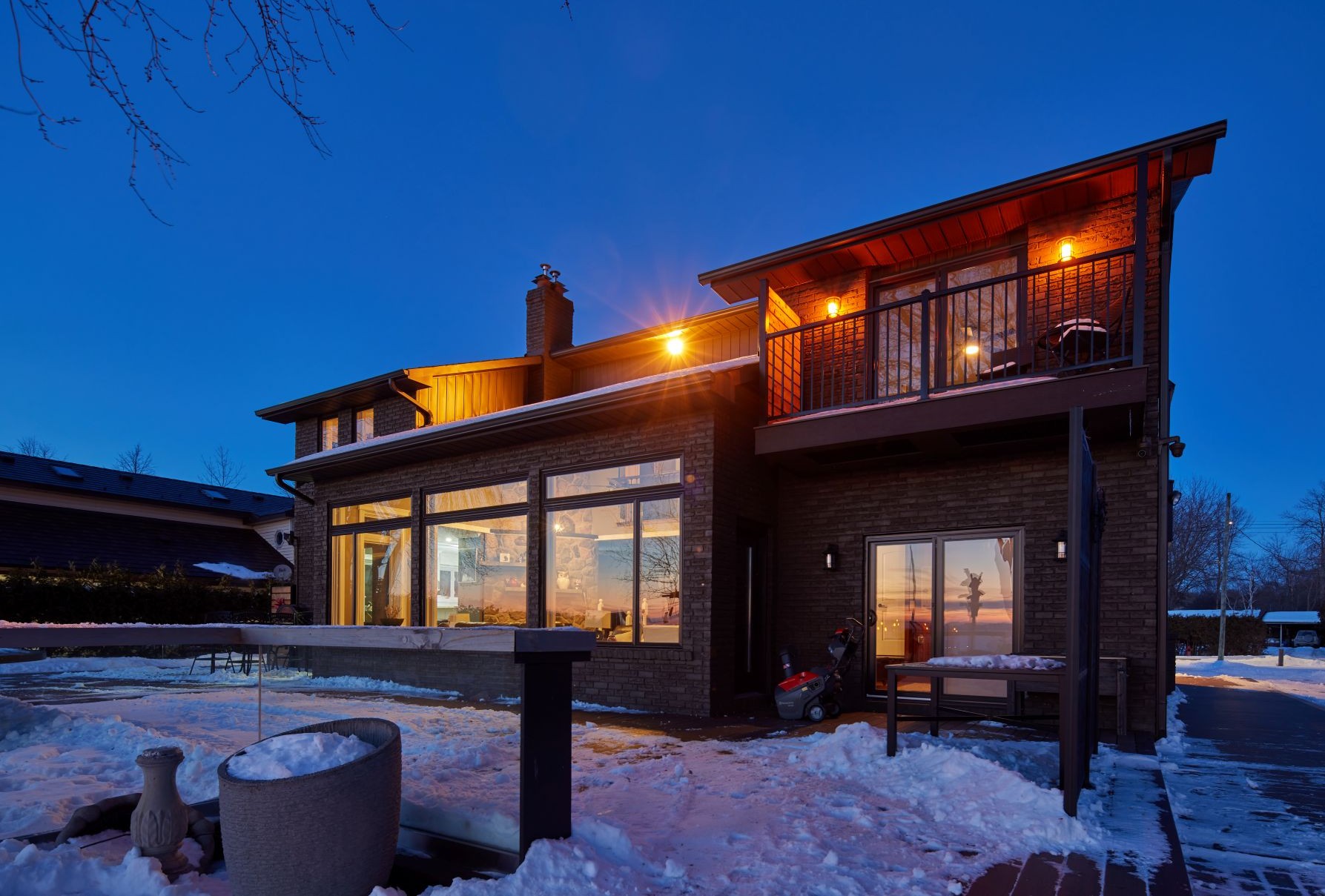
Switching to solar power is one of the most impactful changes you can make to reduce your energy costs. Solar panels can provide a sustainable energy source that reduces environmental impact. However, doing this makes more sense after you've optimized your consumption and your home's energy efficiency.
Your monthly kWh history, which you can pull from your utility's online portal, is the starting point for any conversation about relying on solar power. Solar providers need to know your actual electricity use across all seasons to size a system correctly. Knowing your home's kWh per day profile through the year matters as much as the annual total.
How Windows and Doors Quietly Push Your kWh Up
Windows and doors are not the first thing most people think of when their electricity bill is high. Because they don’t directly increase energy consumption.
The issue is heat loss and air leakage, which force your heating and cooling equipment to run longer and work harder, driving up your kWh month after month.
Common Window and Door Problems that Waste Energy
- Drafts and air leaks are the most obvious signs. Run your hand around window frames and door frames on a cold day. If you feel cool air moving, you have a gap. Older homes and homes with windows that have shifted slightly over time are especially prone to this. It might sound unimportant, but those drafts can really make your home cold, given how freezing Canadian winters are. Sliding windows and hung windows are also more prone to being drafty compared to casement or awning windows.
- Single-pane windows transfer heat almost directly between inside and outside. Even basic double-pane glass from the 1980s and 1990s performs poorly by today's standards. The glass itself may be intact, and the window may look fine, but its thermal performance is inadequate for Canadian winters.
- Worn weatherstripping on doors leaves gaps along the threshold and frame that allow hot or cold air in continuously. You might close the door completely and still feel a draft at your feet. Warped frames, common in older homes, create irregular gaps that no amount of weatherstripping can fully seal.
- Heavy condensation on the inside of your windows in winter, or frost forming on the glass, tells you the window surface temperature is too cold. This happens when the insulating value of the window is low. A window with good thermal performance stays warmer on the interior surface because it's not transferring heat out as fast.
How Much Difference Efficient Windows and Doors Can Make

Government and technical guidance generally indicate that upgrading from old single-pane or early-generation double-pane windows to current ENERGY STAR-rated units can cut window-related heat loss by 20-40%. For homes where windows account for a meaningful share of total heat loss, this translates to noticeable kWh savings.
Two specifications matter most for Canadian conditions. U-factor measures how much heat flows through the window; lower is better. For more details on U-factors for Canadian homes, check our comprehensive guide on the topic.
Another energy rating to consider is the Solar Heat Gain Coefficient (SHGC), which measures how much solar energy the window lets in. In cold climates, a higher SHGC on south-facing windows can offset heating loads, while a lower SHGC on west-facing windows reduces summer demand on cooling systems.
We also have a complete guide on energy performance ratings explained for Canada.
Exterior doors matter for the same reasons, particularly patio doors and older steel or hollow-core entry doors, which can lose a significant amount of heat through the door surface itself, not just the gaps around the frame.
Quick Self-Check: Are Your Windows and Doors Part of the Problem?
Run through this list for your home:
- Can you feel a draft near closed windows or doors when the wind blows?
- Is there heavy condensation or frost on the interior surface of windows in winter?
- Do rooms near large windows feel noticeably colder than rooms without?
- Are window frames or door frames visibly warped, cracked, or separated from the surrounding wall?
- Do you hear noticeably more traffic noise through closed windows than you used to?
- Are any windows still single-pane or original to a home built before 1990?
- Do you feel drafts at the bottom of your front door?
Two or more "yes" answers suggest that your windows or doors are contributing to excess heat loss. If your electricity bills or gas bills are higher than those of nearby homes of similar size, scheduling a home energy audit can help you identify areas for improvement in energy efficiency.
The Bottom Line
The average house in Canada uses around 11,135 kWh of electricity per year, or roughly 928 kWh per month. But that number reflects the middle of a very wide range influenced by province, heating fuel, home size, occupant habits, equipment age, and how well the building holds heat.
Your bill is the most reliable data point you have. Twelve months of kWh history can tell you much more than any national average. If your usage is consistently higher than that of comparable homes nearby, the building envelope, including your windows and doors, might be a good place to start your home’s conversion to energy efficiency.
Magic offers ENERGY STAR-certified windows and doors rated for Canadian conditions, as well as technologically advanced front doors with a unique weather-protection system. So, if you're seeing high heating bills or persistent comfort problems in rooms near exterior windows, you can book a free consultation to assess the condition of your windows and doors.
FAQs
Is 32 kWh per day normal?
An overall energy consumption of around 32 kWh per day is normal in Canadian homes. It sits well within national averages.
How many kWh per day does an average household use in Canada?
An average Canadian household uses roughly 30 kWh per day. That said, this number varies based on your location, climate, house size, number of household members, and other factors.
How many kWh does the average home use per month?
The average home energy usage per month is around 928 kWh. That said, this number varies based on your location, climate, house size, number of household members, and other factors.
Is 10 kWh enough to run a house?
No, 10 kWh is not enough to run a typical house for a full day. The average Canadian home uses around 30 kWh per day, so 10 kWh would only cover a fraction of normal daily consumption. It can sustain basic lighting, fridge, Wi-Fi, small electronics, and occasional appliance use, but it won't sustain electric heating, electric water heater, dryer use, or even use. Ten kWh might be enough only in small, highly efficient apartments and well-insulated homes with gas heating.
How to calculate my household's daily kWh usage?
To calculate your household's daily kWh usage, add up your total electricity usage over the last year and divide by 365.
What is the average household energy consumption in Toronto?
The average household in Toronto consumes approximately 750 kWh per month, translating to roughly 9,000-9,500 kWh annually.