
Window Cleaning
Is White Mold Dangerous? Risks, Hidden Causes, and Safe Removal
White mold growing in your home is a problem you should take seriously, no matter how harmless it might look. Many homeowners see a pale, powdery patch on a basement wall or a white fuzzy growth on a window sill and assume it's nothing compared to that alarming black mold they've heard about. That assumption can cost you your health and your home's structural integrity.
This guide breaks down what white mold actually is, what it does to your body, where it hides, how to get rid of it safely, and how to stop it from coming back. So, is white mold dangerous? Let’s find out.
Quick Answer: Is White Mold Dangerous?
Yes, white mold can be dangerous. Any indoor mold may cause health issues and damage materials over time. The level of risk depends on the mold species, exposure duration, and individual sensitivity, but all indoor mold should be removed promptly.
Here are some things you need to know about white mold:
- White mold is not a specific species. The term refers to several molds that appear white.
- White mold can cause respiratory symptoms and allergic reactions, as well as more severe reactions in infants and people with other health issues.
- Its color does not determine toxicity.
- White mold often grows in damp areas like basements, attics, and window frames.
- All indoor mold should be removed and moisture sources fixed.
What Is White Mold?
"White mold" isn't a scientific classification. Different mold species can appear white or pale at certain points in their life cycle, including Aspergillus, Penicillium, Cladosporium, and Chaetomium. In other words, the same mold can look white when it's young, then shift to green, gray, or near-black as it matures. So, the white patch you wiped off last month and the dark colony growing next to your window frame could be the exact same species.
What Does White Mold Look Like?
White mold can look like a powdery film, a cottony mat, or a spider-web-like growth on wood, drywall, stored cardboard boxes, or masonry. It blends right in on pale surfaces like painted walls, concrete, or light-colored wood.
A lot of homeowners mistake white mold for dust, mineral residue, or old paint residue. By the time it becomes obvious enough to notice, the mold problem has usually grown much larger than what's visible on the surface.
White Mold vs Efflorescence
On basement walls and foundation concrete, the most common white mold look-alike is efflorescence. These are salt deposits left behind when water moves through masonry and evaporates, leaving minerals on the surface.
Two simple tests can help you differentiate white mold from efflorescence. First: brush the white material; efflorescence brushes off cleanly as a fine powder; white mold smears or stays put. Second: add a few drops of water; salt deposits dissolve; mold doesn't.
A musty odor is another reliable signal. If the area smells earthy or damp, you're almost certainly dealing with mold, not salt deposits.
How Dangerous Is White Mold to Your Health?
Like any other mold type, white mold exposure comes with health risks and can be dangerous. How much risk you’re at depends on your health, on how long you’ve been exposed to mold, and on what mold species we’re specifically talking about.
Types of Mold by Health Risk
Generally, indoor molds are grouped into the following categories, based on their potential health risks:
- Allergenic molds are the most common and cause allergies. They affect especially people who are already allergic or asthmatic. Allergenic molds can cause dermatitis, a runny nose, red eyes, sneezing, asthma attacks, and irritation to the eyes, skin, nose, and throat. Among the mold species that can cause mold allergies are some Aspergillus species, Alternaria, Cladosporium, and some Penicillium species.
- Pathogenic molds cause infections like histoplasmosis. These are more dangerous for people with suppressed immune systems. Healthy individuals with strong immune systems typically experience no reactions to pathogenic mold species. Pathogenic molds include A. fumigatus, A. flavus, Cryptococcus neoformans, and Histoplasma capsulatum. Pathogenic molds don't grow around windows and other areas indoors. They can be found in the soil or in bird droppings.
- Toxigenic molds produce mycotoxins that can be highly dangerous in some situations. The health risks associated with them range from short-term irritation to immunosuppression.
White Mold Toxicity Symptoms
The most common health effects caused by white mold exposure are respiratory, although skin reactions are also possible. If you’ve been exposed to white mold, you might notice:
- Sneezing
- A runny nose
- A stuffy nose
- Coughing
- Wheezing
- Itchy and watery eyes
- Skin rash
- A persistent sore throat
- Fatigue
These symptoms often mimic seasonal allergies, which is one reason mold exposure goes undetected for so long. If your allergy symptoms are worse at home than outside, or if you start feeling better when you leave for a few days, they might be caused by mold.
People with asthma, allergies, COPD, or other chronic lung conditions experience more severe flare-ups around indoor mold, including white mold. Even a small amount of mold growth can trigger an asthma attack in a sensitized person.
Who Is at the Highest Risk of Mold Exposure Issues?
Some individuals are more sensitive to mold exposure, including:
- Infants and young children
- Older adults
- People with asthma or allergies
- Individuals with weakened immune systems
- People with chronic lung conditions
Mycotoxins and More Serious Effects
Some white mold species produce mycotoxins. These are chemical compounds that the mold releases as it grows. At higher exposure levels, mycotoxins have been linked to neurological symptoms, fatigue, headaches, and, in some cases, effects on organs.
This is where the conversation about toxic mold gets complicated. You can't look at a colony and know whether it's producing mycotoxins. Lab testing can tell you the species, but even then, toxin production varies depending on conditions. The solution is the same as in the case of all other mold types growing indoors: remove all indoor mold and fix the moisture source. Don't try to rank colonies by how dangerous they look.
Is White Fuzzy Mold on Food Dangerous?
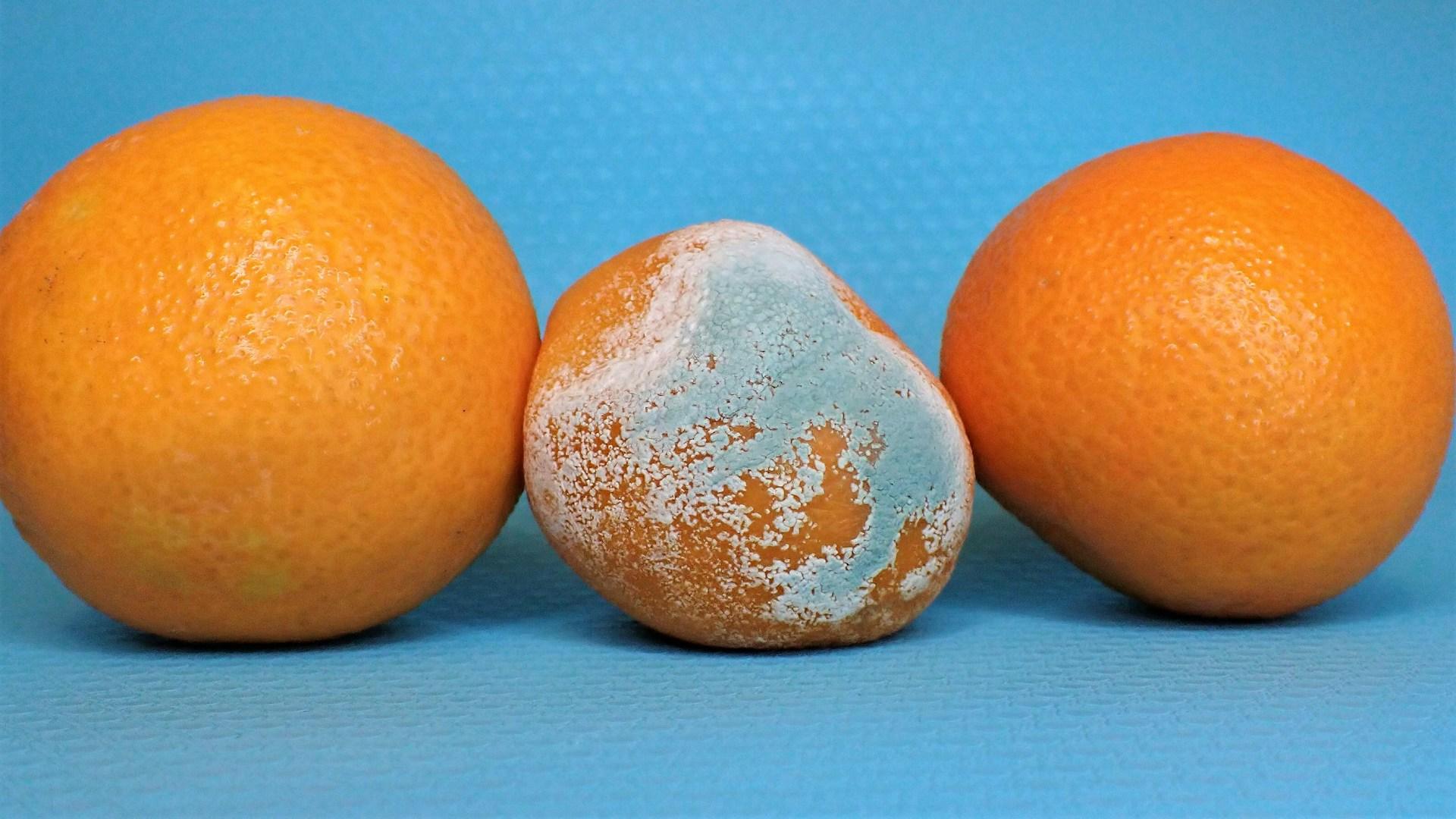
Yes, white fuzzy mold on food can be dangerous, so you should throw the food away. White fuzzy mold on food is not a different, safer category of mold. It's the same family of organisms growing on an organic surface, and that surface happens to be something you're about to eat.
The fuzzy texture you see on a strawberry, a piece of bread, or a leftover in the back of your fridge is the mold's above-surface growth, made up of thread-like structures and spore-bearing stalks. What you don't see is the network of roots the mold has already sent into the food below the surface. By the time you can see fuzz, the contamination goes deeper than the visible patch.
Can you just cut the moldy part off?
For some foods, it's ok to just cut away the mold. The USDA distinguishes between hard and soft foods on this question.
Hard, low-moisture cheeses like aged cheddar, parmesan, or gruyère can be salvaged if you cut at least 2.5 cm (1 inch) around and below the mold spot. The dense, dry texture of the cheese limits how far mold roots penetrate. The same applies to hard salami and dry-cured hams, and to firm vegetables like carrots, cabbage, and bell peppers.
Soft and high-moisture foods like bread, soft cheese, yogurt, sour cream, cooked grains, cooked meat, casseroles, fruit, and anything with visible liquid need to go in the bin. The moisture content of these foods lets mold roots travel fast and far from the visible growth. Cutting around the fuzzy patch leaves behind contamination you can't see.
White Mold vs Black Mold: Which Is Worse?
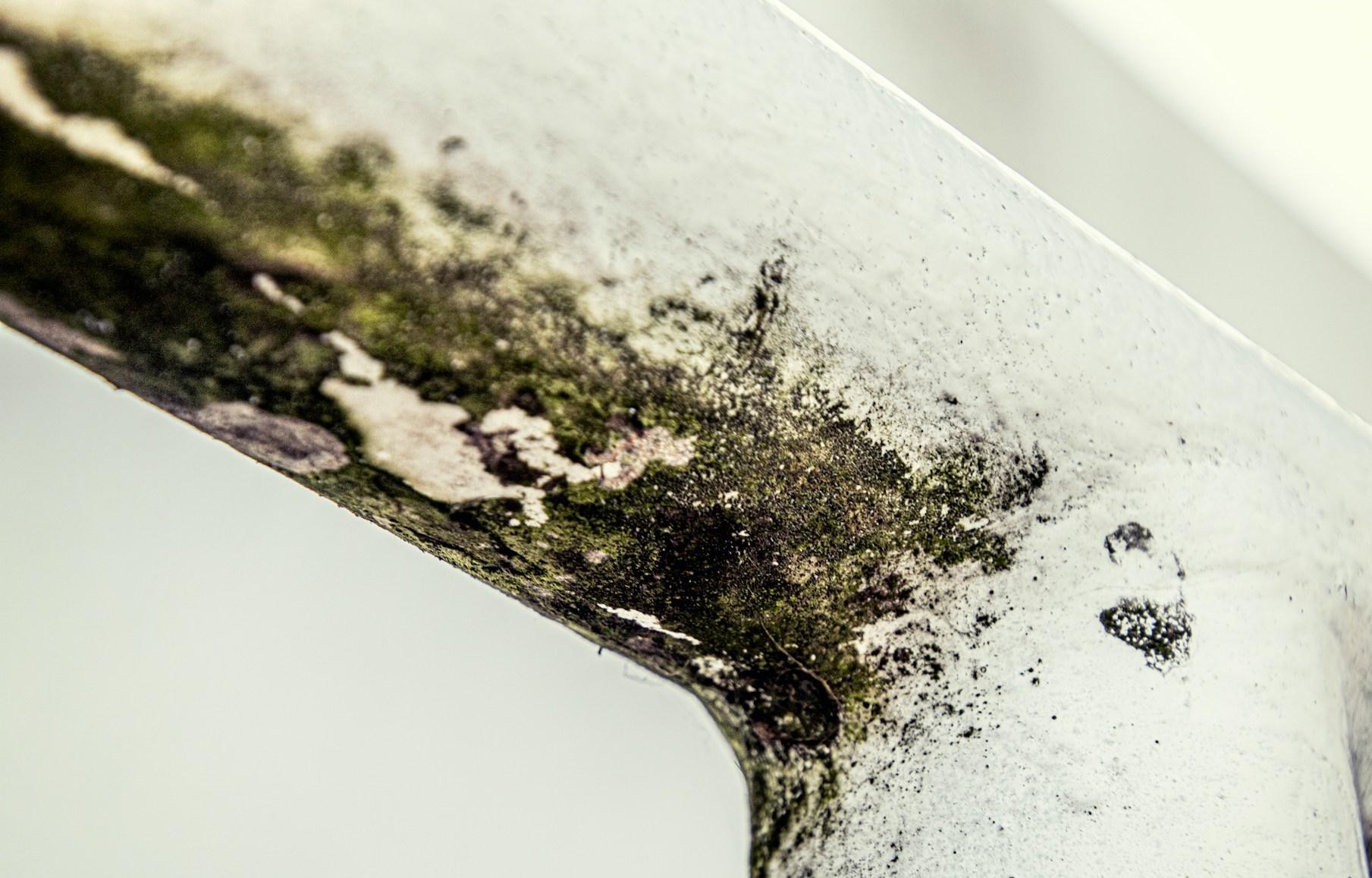
White mold refers to a variety of fungal species that appear white or light gray, typically growing on organic materials like wood, plants, or food. Black mold usually refers to Stachybotrys chartarum, a dark greenish-black fungus associated with higher mycotoxin production, especially in damp indoor environments. Other mold species that are less toxic can also be black-colored.
White mold and black mold can be equally dangerous, depending on the species. It’s not recommended to assess the health risks of a specific mold solely based on its color.
Both white-looking and black-looking mold can belong to allergenic, pathogenic, or toxigenic molds. For example, mold that appears black can belong to the Aspergillus genus. Many species in this genus are allergenic. In some cases, however, the black-colored mold you're seeing is the infamous toxic black mold from the Stachybotrys chartarum species, which is a toxigenic mold. It's highly toxic because of the mycotoxins it releases. The same is valid for white mold. Until you know what species it is, you cannot properly assess how dangerous it is. In other words, color alone tells you almost nothing useful about risk.
Where Does White Mold Grow Indoors?
Mold grows wherever the habitat meets its needs: high moisture, organic materials, and lack of ventilation. Here are some of the most common locations.
High-Risk Areas in a Home
- Basements and crawlspaces. Damp concrete, exposed soil, and any past water intrusion make these spaces ideal for white mold to thrive. Moisture buildup in a basement can feed white mold growing on wood framing, stored boxes, and drywall for months before you find it.
- Attics. Roof leaks and poor ventilation are the main culprits behind white mold growth in attics. Mold on attic roof sheathing and framing is common and often goes unnoticed until a home mold inspection or roof repair reveals it in attic corners and along ridge lines.
- Bathrooms and kitchens. Frequent steam, condensation, and inadequate exhaust fans create exactly the conditions in which mold thrives. Ceiling tiles in bathrooms are a particularly common spot.
- Behind wallpaper and inside wall cavities. Water-damaged drywall and wood after any kind of leak or flooding are prime locations. Mold growing inside walls often produces a musty odor before it becomes visible.
Around Windows and Exterior Doors

White mold often grows on window sills, frames, and seals. Why? Because that’s exactly where condensation forms and creates the perfect environment for mold growth.
When warm, moist indoor air contacts a cold window or door surface, it drops below its dew point and condenses. That water wets the surrounding wood, caulking, and trim repeatedly over the winter. Poorly insulated windows, single-pane glass, metal frames without thermal breaks, failed weatherstripping, and leaky frames make this worse. The cold surface stays wet, and white mold colonizes the frame, sill, and nearby drywall.
If you see bubbling paint or discoloration along the edge of a window frame, that's often a sign that mold is already growing behind the surface.
HVAC Systems and Hidden Locations
Air conditioning systems and air ducts are among the more troubling locations for mold. A contaminated HVAC system distributes spores throughout the entire home every time it runs. Some white mold species are particularly common in ductwork and on cooling coils.
Cardboard boxes, clothing, and upholstered furniture that are stored in damp places are also highly susceptible to white mold growth. They absorb moisture and become food for mold. These items can act as reservoirs that repeatedly reseed mold growth on nearby surfaces even after you clean the walls.
What Causes White Mold Growth?
The white mold growth recipe is quite simple: moisture (above 60%) + food (organic materials like cardboard or even dust) + lack of ventilation. Take away any one of those three, and mold won’t grow anymore.
Mold spores are everywhere, indoors and outdoors, all the time. You can't eliminate them. What you can control is whether they have the right conditions to grow. Indoor humidity above about 60 percent, visible condensation on cold surfaces, or any history of water leaks dramatically raise your risk. Mold can grow on wet organic materials like wood within 24 to 48 hours under the right conditions, so it’s important to solve any issues promptly.
Common Moisture Sources in Canadian Homes
Roof leaks are among the most damaging because water infiltrates slowly and spreads through insulation and framing before any visible sign appears inside the home. The same applies to slow plumbing leaks inside walls.
Foundation cracks and seasonal groundwater seepage are also common in Canada, particularly during spring (because of melting snow) or after heavy rains. Excess moisture coming through the foundation walls keeps the basement air humid enough for mold to grow.
Every day sources add up, too: improper air circulation, long hot showers without exhaust fans running, cooking without ventilation, drying clothes indoors, and unvented gas heaters all push moisture into indoor air. In humid climates, air conditioning systems that aren't sized or maintained properly can also raise indoor humidity rather than reduce it.
Is It Really White Mold? How to Identify White Mold Safely
While we do not recommend trying to identify the type of mold you’re dealing with yourself, you can examine it so you can provide mold remediation teams with as many details as possible.
Look for velvety or powdery white patches, spider-web-like threads, or cottony mats on wood, drywall, cardboard, ceiling tiles, or fabric. The texture and growth pattern are usually distinctive once you know what to look for. Hard surfaces like tile or metal may show a thin white film rather than the fuzzy growth you'd see on wood.
The musty smell is often the first clue. If a basement, closet, or room smells earthy or damp when you walk in, check surfaces carefully, especially behind furniture, in attic corners, under sinks, and around window frames.
Don't aggressively brush or vacuum large patches of visible mold to identify it. That releases spores into the air and dramatically increases the amount you inhale. If you need to get close, wear a mask.
Is It Ever Safe to Ignore White Mold?
Visible or hidden mold growth in residential buildings may pose health risks. No established safe exposure limit exists for indoor mold.
Small patches of mold can spread rapidly. Mold growing on a surface is sending roots (called hyphae) into the material below. What looks like a 10 cm patch on your wall could have hyphae several centimetres into the drywall.
On the other hand, if you notice just a few spots of white mold on bathroom tile grout, that’s a bit different than widespread growth on basement floor joists. The tile is a hard, non-porous surface in a room you can ventilate. You can clean it carefully and monitor it.
A rough rule of thumb used by many remediation professionals: you can try removing mold yourself as long as it grows on small areas, roughly under 3 square metres, on accessible non-porous surfaces in spaces without vulnerable occupants. Anything beyond that warrants professional mold control.
DIY vs Professional White Mold Removal
When DIY Is Reasonable
DIY cleanup is recommended for:
- Small patches (roughly under 3 square metres) on non-porous surfaces like tile, sealed concrete, or glass
- Mold confined to a bathroom sill, shower caulking, or a window frame, with no hidden damage visible
- Homes with no infants, elderly residents, immunocompromised people, or anyone experiencing unexplained respiratory symptoms
Follow the surface-specific cleaning steps below, use proper ventilation, and monitor the area for return growth over the following weeks.
When to Bring in Professionals
Contact a reputable mold remediation company when:
- Mold covers a large area, keeps returning, or has grown on structural wood, insulation, or inside wall or ceiling cavities.
- Anyone in the household is an infant, an elderly person, or immunocompromised, or if anyone has unexplained or worsening respiratory symptoms.
- Mold has been found in HVAC systems or air ducts.
- The growth followed a major water event: flooding, sewage backup, or a burst pipe.
A qualified mold remediation contractor will inspect the affected areas, map moisture sources before touching anything, and conduct mold testing to identify the mold species. They'll set up containment to prevent spores from spreading to clean areas of the home, remove contaminated porous materials like drywall and insulation, use HEPA filtration to capture airborne mold spores during the process, dry and dehumidify the space, and give you a clear plan for preventing future mold growth in the same area.
How to Clean Small White Mold Patches Yourself?
Protect Yourself First
Before you touch anything, put on personal protective equipment. At minimum: nitrile gloves, safety goggles, and a quality mask. An N95 respirator is better than a basic dust mask if you're working with more than a few small spots.
Open windows in the room you're working in to bring in fresh air. Close the door to the rest of the house. Don't run a fan that blows directly across the moldy area; that spreads spores into adjacent rooms.
Cleaning Non-Porous vs Porous Materials
For hard surfaces, tile, glass, metal, and sealed concrete, wipe the mold with a detergent solution, rinse thoroughly, and dry the surface completely. Some people use a diluted bleach solution (roughly one cup of bleach per gallon of water) on non-porous surfaces per product label directions. Allow the area to fully dry before considering it done.
For porous materials like carpet, ceiling tiles, or drywall with deep mold penetration, cleaning rarely works. Mold roots into the material and survives surface treatment. Usually, the only solution for heavily colonized porous surfaces is to remove and replace said surface.
Materials like wood framing are a borderline case. Surface mold on wood can sometimes be sanded, cleaned with an appropriate solution, and treated with an encapsulant if the wood remains structurally sound. If the wood is soft, dark, or crumbling, you should replace it.
Dealing with Mold on Window Sills and Frames
Wipe up condensation from window sills regularly, especially in winter. If you see mold on painted or sealed sills and frames, clean it with a vinegar or bleach solution (as long as it won’t damage the frame material), rinse, and dry thoroughly.
Recurring mold on window frames is almost always a moisture problem, not a cleaning problem. The mold comes back because condensation or a leak keeps the surface wet. Cleaning it won’t fix the source of the moisture.
How to Prevent Mold Growth

Once you've cleaned the mold (or a professional team has), it's important to make sure it doesn't grow back so you can keep your home mold-free. Here are some white mold prevention strategies:
- Check relative humidity levels in the house every day. If they rise beyond 60%, run a dehumidifier to remove excess moisture.
- Clean your windows (as well as other surfaces that are prone to white mold growth) regularly. It’s important to remove dust and any other organic matter that serves as a food source for mold.
- Open your windows and doors twice a day to ventilate your house.
- Use exhaust fans in kitchens and bathrooms during and after 15-20 minutes of cooking and showering.
- Replace worn-out weather stripping and caulking on windows and doors, or use other insulating solutions.
- Replace your windows if they are single-pane or old. In some cases, this will solve all your mold problems.
- Every time you notice condensation on your windows, wipe it down as soon as possible. This will prevent water from seeping into the frames, window sills, and walls.
- Place silica gel near windows (but make sure your children or pets have no access to it!). Silica gel is a moisture-absorbent material. It can be really helpful during the night if you can’t run the dehumidifier.
- Apply mold-resistant paints or sprays around the windows and on walls (but only after cleaning the existing mold).
- Use HEPA air purifiers to reduce white mold spores and improve indoor air quality.
- Fix leaks immediately.
- Make sure the ground around your foundation slopes away from the house, not toward it.
- Clean gutters and downspouts regularly so water drains away from the foundation.
When Is White Mold Growth an Emergency?
Get immediate professional help:
- If you find widespread white mold following flooding or sewage backup, especially on structural framing, large areas of drywall, or insulation
- If white mold grows inside your HVAC system, because every time the system runs, it distributes mold spores to every room in the house
- If the mold spreads rapidly in a room inhabited by infants or people with certain health conditions
If anyone in the household is experiencing sudden or severe breathing problems, chest tightness, persistent nosebleeds, or symptoms that ease when they leave the home and return when they come back, get medical advice promptly and arrange a professional mold assessment.
FAQs
Is white mold on wood dangerous?
Yes, white mold on wood can cause the same allergy‑like and respiratory symptoms caused by inhaling mold spores of other species. It also signals excess moisture that can damage the wood itself and cause structural damage to surrounding materials, so it should be remediated and the moisture source fixed.
Is white mold in the hot tub dangerous?
White water mold in a hot tub is usually described as more of a sanitation problem than a highly toxic organism, but it means your water is poorly disinfected. Because inadequate sanitation allows other microbes that can cause rashes or infections to flourish, you should not use the tub until the system is thoroughly cleaned and rebalanced.
Is white mold on firewood dangerous?
Light white mold on otherwise dry firewood that brushes off easily is generally considered low‑risk, especially if burned outdoors, but it still releases spores that can bother people with allergies or asthma. Heavily moldy or rotting logs or wood with dark molds should be avoided and removed from the pile because they indicate decay and a higher potential for harmful exposures.
Is white mold on plant soil dangerous?
White mold or mildew on plant soil is mainly a plant‑health and over‑watering issue and is not usually directly toxic to humans, though it can indicate high humidity and poor airflow. However, the spores can still trigger allergy or asthma symptoms in sensitive people, so it is wise to scrape it off, ensure proper drainage and ventilation, and avoid disturbing it indoors.
Is white mold on clothes dangerous?
Yes, mold on clothes, including white mold, can cause respiratory problems, skin irritation, and worsening asthma when the spores are inhaled or come into contact with the skin. Contaminated clothes should be cleaned thoroughly or discarded if growth is extensive, because ongoing use keeps exposing you to spores and potential mycotoxins.
Can you live in a house with white mold?
You can physically live in a house with white mold, but health agencies link ongoing indoor mold exposure to cough, wheeze, asthma symptoms, and other respiratory effects, especially in vulnerable people. Guidelines therefore recommend finding and fixing the moisture source and removing mold as soon as possible.
How long does it take for white mold in your home to affect you?
There is no fixed timeframe. More sensitive people can react within minutes to hours of exposure with sneezing, itchy eyes, coughing, or asthma symptoms, while others may notice nothing at first. More chronic problems, such as persistent respiratory symptoms or allergic sensitization, are associated with repeated or long‑term exposure over days to months in damp, moldy environments.