
Window Styles & Comparisons
Modern Window Styles: Latest Technologies and Trends
Most people pick windows by what looks good in a showroom. That's a fine starting point, but modern window design has moved well past appearances.
The windows available today reflect a shift in how we incorporate light, air, energy efficiency, and a seamless indoor-outdoor connection into our home designs. This guide covers the styles that define that shift!
We'll discuss modern window styles, how they work, and why they've become the standard for contemporary homes and renovations!
Quick Facts: Top Modern Window Styles
- Casement windows, awning windows, and sliding windows are popular for their combination of practicality, ventilation, and classic style.
- Bay and bow windows add architectural character and functional space to homes.
- Picture windows are fixed windows with minimal frames that provide expansive views and abundant natural light.
- Smart windows with automated features are becoming increasingly popular for their ability to optimize indoor comfort and energy efficiency.
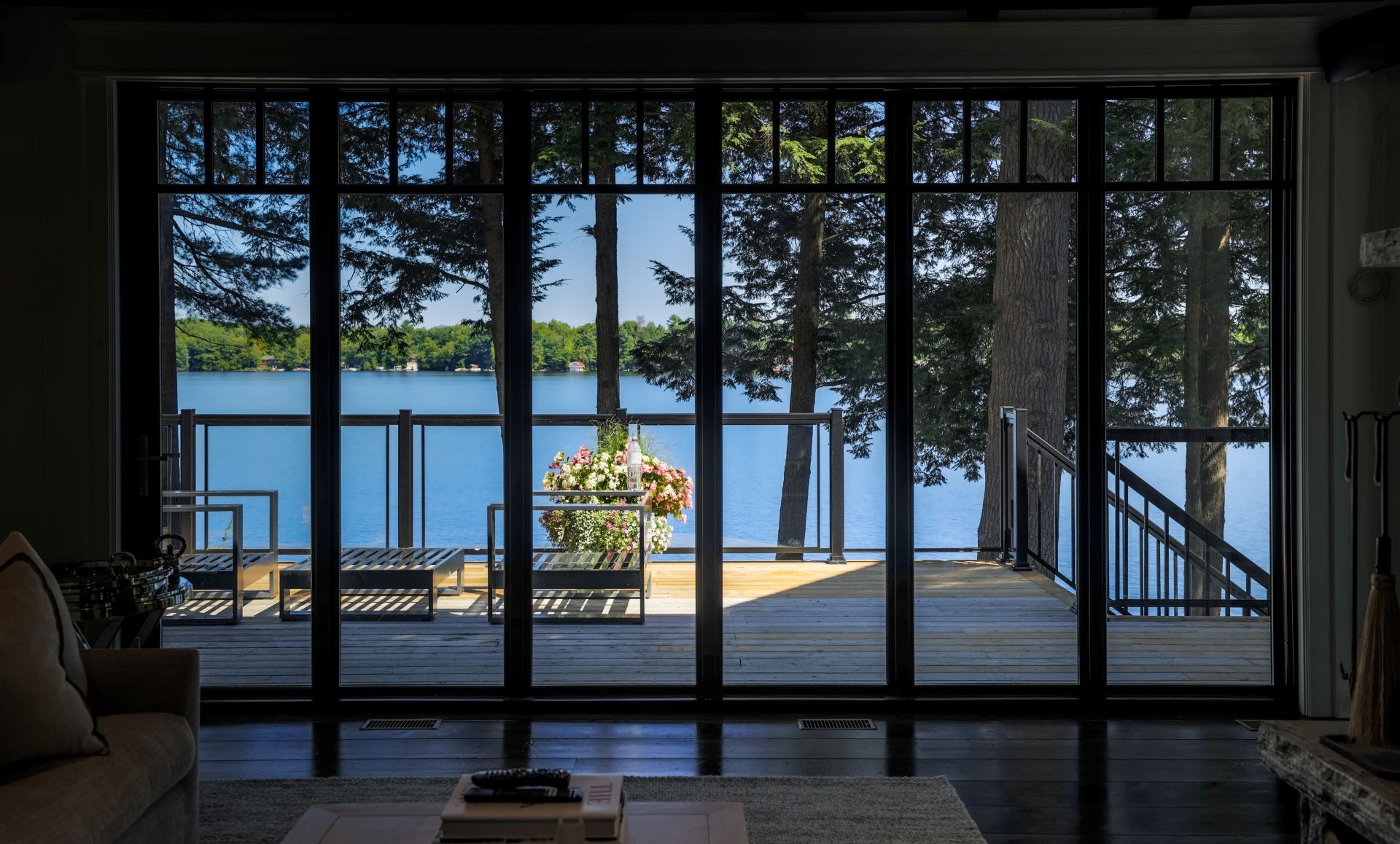
- Floor-to-ceiling windows have become a favorite in modern homes. They offer panoramic views and create a smooth transition between indoor and outdoor spaces.
- Custom-shaped and large-pane windows are increasingly used as statement pieces in modern architecture.
- Energy efficiency remains a defining factor in window choice across Canada.
Most Popular Window Styles in Modern Homes
Before getting into specific styles, it's worth being clear about what "modern" means here. It's not just about clean lines or minimalist frames, though those are part of it.
Modern windows have the following characteristics: large glass areas relative to frame size, energy-efficient construction (double or triple glazing, low-E coatings, thermally broken frames), and hardware that's designed to operate well for decades without becoming an eyesore. They also tend to be adaptable. They work in a 1960s bungalow being updated just as well as in a new build.
At Magic, the products are designed with those priorities in mind. And the top window styles below represent what that looks like in practice.
Casement Windows

A casement window is hinged on one side and opens outwards. It is operated by a crank handle at the base. Simple mechanism, reliable seal, and the ability to catch cross-breezes by angling the sash: these are the reasons casements have been a residential standard for decades and still dominate contemporary window specifications.
What makes the casement specifically suitable for modern homes is the hardware and the frame. Today, casement windows use multipoint locking systems that engage at several points along the frame when you close them, not just at the crank. That matters for both security and energy performance.
Moreover, modern casement windows don’t use cranks anymore, because they’re mechanically flawed. Magic’s casement windows, for example, use our patented Parallex Hardware system, which incorporates a handle mechanism and a track system, so the sash slides smoothly along the track, staying anchored both at the top and at the bottom.
Frame-wise, modern casements tend toward slim profiles, either aluminum-clad wood, fiberglass, or uPVC with reinforced skeletons and corners. The goal is to maximize the glass area. A casement with a narrow frame in a standard rough opening gives you noticeably more light than the same-sized window from twenty years ago.
They also work well in combinations. A pair of casements flanking a fixed picture window is one of the most common configurations in contemporary residential design. You get fresh air on the sides, an unobstructed, panoramic view through the center, and a symmetrical façade from the street.
Awning Windows

An awning window is hinged at the top and swings outwards from the bottom. Its name refers to the way the sash opens. It basically acts as a small canopy over the opening. Rain can't get in directly. This means you can leave an awning window open during light rain, something you can't do with most other operable styles.
That rain resistance makes awnings a great choice for high-humidity spaces: bathrooms, laundry rooms, and kitchens. But they've also moved into living areas and bedrooms, where they’re typically installed above or below a fixed window. They can also be stacked in a series to create a wall of glass with continuous ventilation.
From a design standpoint, awning windows give you a horizontal emphasis. A row of awning windows along a wall reads as a band of glass rather than individual punctures in the façade. In a low-ceiling room, that horizontal line can make the space feel wider. In a basement, a high-set awning window (or more!) lets in light and ventilation without compromising privacy at street level.
Bay and Bow Windows

Bay windows project outwards from the exterior wall. They typically have a large central window flanked by two angled side units. The angle is usually 30 or 45 degrees. A bow window is the curved version: instead of two angled windows, you get a series of equal-width windows arranged in a gentle arc, usually four to six units. The individual windows in a bow window are usually narrower than those in a bay window.
Both styles create a bump-out from the exterior that enhances the home's curb appeal and becomes usable interior space. You can use it as a reading nook, for extra seating, and as a window bench. Or you can just turn it into a sill for plants. That spatial quality is part of why they've stayed relevant for centuries.
The modern interpretation of bay/bow windows has moved away from the heavily ornamented Victorian versions and toward something cleaner. You're much more likely to see casement or picture window units in the flanking positions rather than double-hung units with grille patterns. Also, the roofline over the projection tends to be flat or low-slope rather than a steep copper or shingle cap.
From a comfort and energy-efficiency perspective, bay and bow windows have historically been a weak-point structure. Luckily, now they have a better frame construction and insulated end panels, so they're just as energy-efficient as other windows.
Sliding Windows
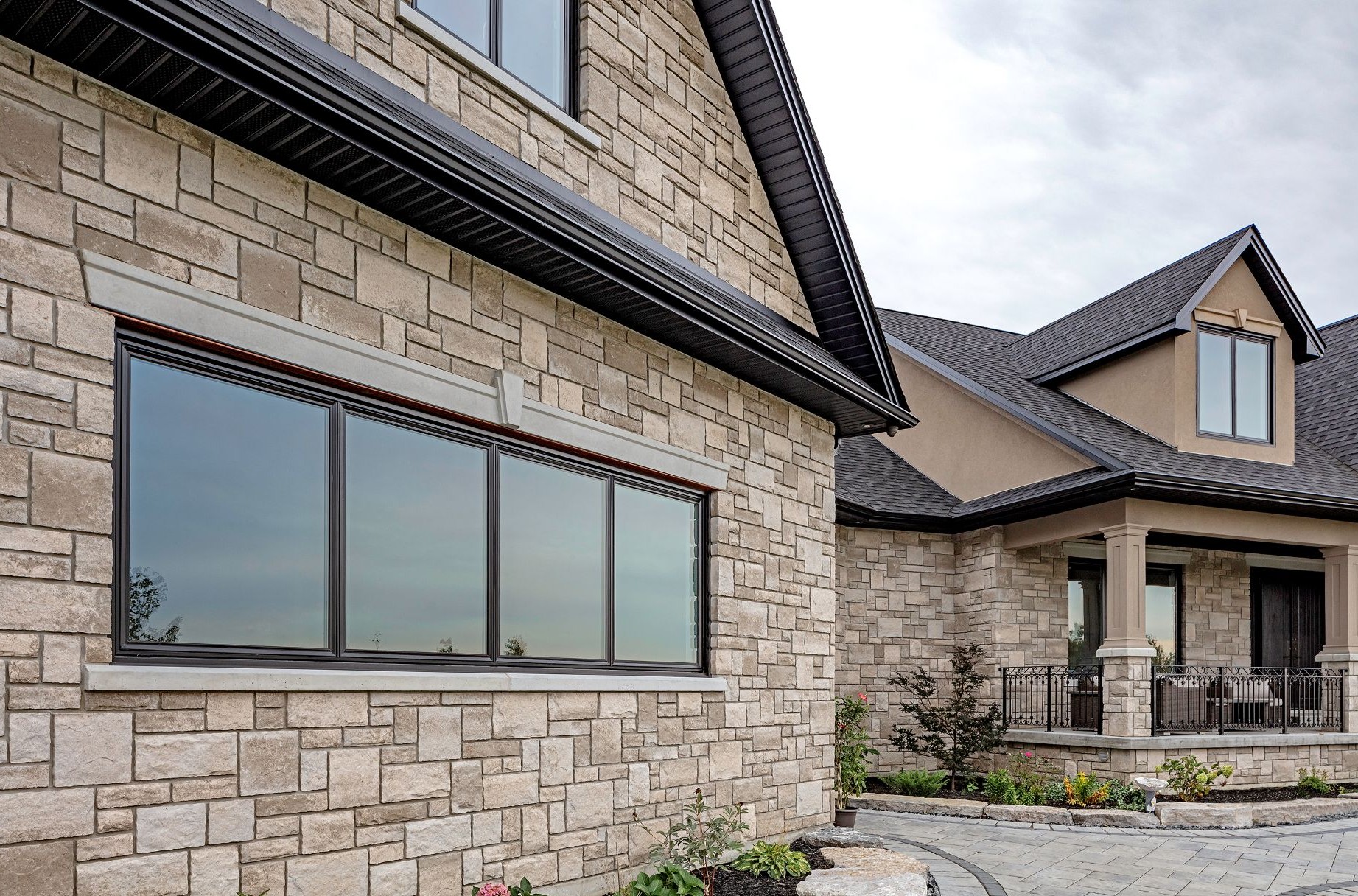
Sliding windows move horizontally along a track. One sash is typically fixed; the other slides past it. No hinges, no crank, no sash swinging into the room or out over a deck. You just push.
That simplicity is both a strength and a limitation. Sliding windows are reliable because there's less hardware to fail, and they work well in spaces where an outswing casement would be impractical: above a kitchen counter, beside a patio where the sash would interfere with foot traffic, or in a wide opening where a casement would require too much force to crank fully open.
The limitation is the seal. A sliding sash compresses against a weatherstrip. So, you don’t get the same seal as the one offered by the continuous perimeter compression of a casement, which means the air sealing isn't as tight. In a climate like Toronto's, that gap in performance is worth knowing about before you spec a sliding window in a room where energy performance is a priority.
Where sliding windows shine in contemporary design is scale. A wide horizontal slider can fill a wall opening that would require three or four casements to achieve the same glass area. Paired with a matching fixed panel on either side, a wide slider reads almost like a window wall at a fraction of the cost.
Transom Windows

A transom is a window installed above a door or another window, in the horizontal band of space between the top of the opening and the ceiling or header above. Transoms can be fixed or operable, though fixed transoms are more common in residential construction.
Transom windows exist for light. In the past, in older buildings with deep floor plates and no open-plan layouts, transoms above interior doors allowed light to travel through the building from one room to the next. Things haven’t changed too much over the years, and transoms are still incredibly popular, mainly because contemporary-style homes favor maximum natural light and glazing area.
Why are they considered modern? A few reasons. First, they work well with tall ceiling heights, which have become standard in new construction over the past two decades. Second, they integrate well with the kind of uncluttered façade that contemporary design tends toward.
At Magic, transom units can be ordered to match the profile and glazing of the adjacent primary windows, so the overall assembly reads as a unified system, not just an add-on. They can also take different forms: arched, triangular, or rectangular designs!
Picture Windows
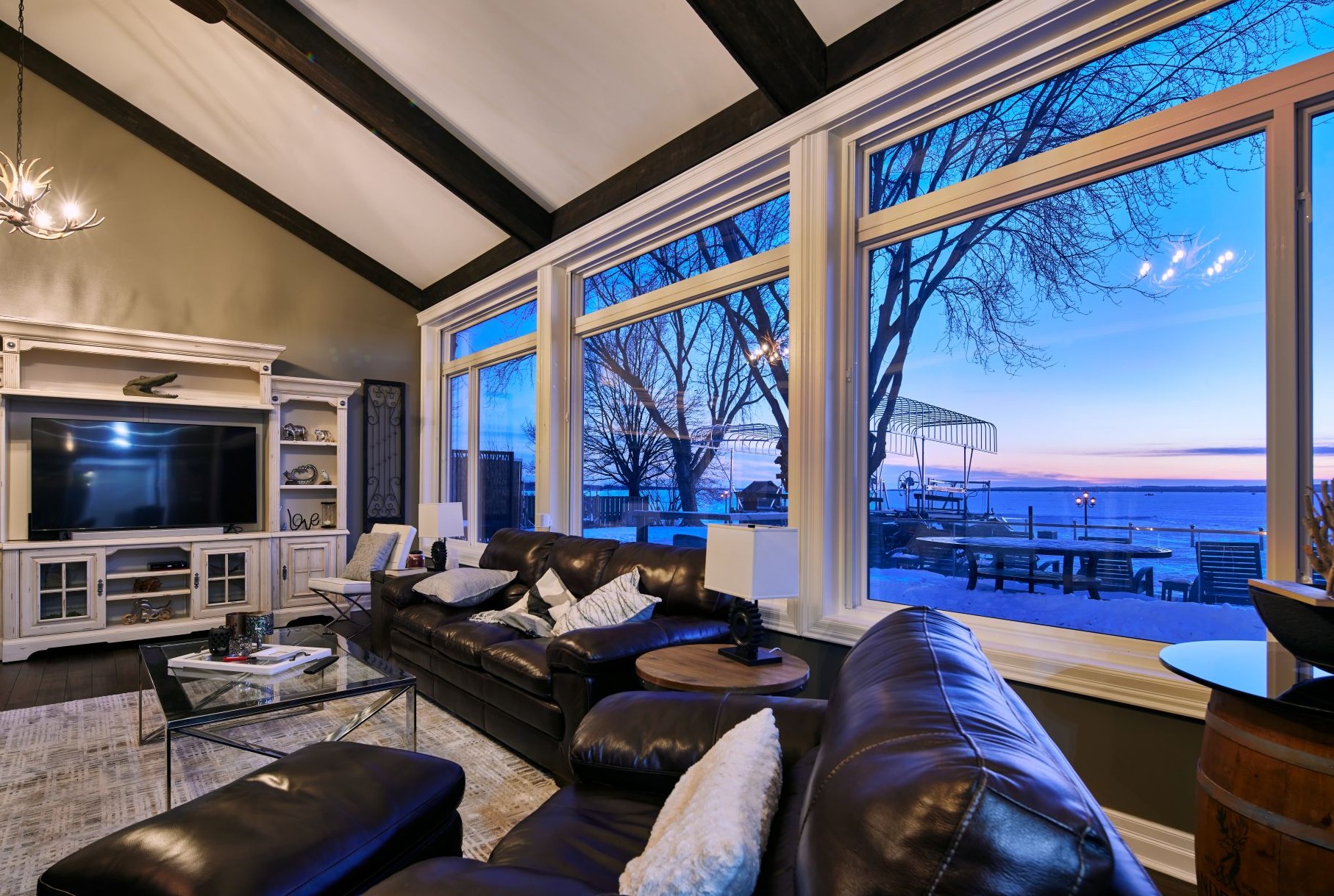
A picture window is a large, fixed (non-operable) window. No moving parts and no hardware, just glass panes fixed in a frame. The name reflects its purpose: the window frames a view the way a picture frames a subject.
The practical advantages are quite obvious. Because there's no operating mechanism, the frame can be thinner. The seal is permanent, and the window doesn't degrade the way an operable one does over time. The glass area relative to the overall window size is higher than any operable style. And it's typically the most energy-efficient option, since a fixed unit with no movable sash has fewer paths for air infiltration.
Large picture windows make the most sense where the view justifies it and where ventilation needs are met elsewhere. In a living room facing a ravine or a backyard with significant landscaping, a floor-to-ceiling or near-floor-to-ceiling picture window does what no other window type can!
The evolution of picture windows over the past decade has largely been about frame size. Current manufacturing allows for very large insulated glass units in a single uninterrupted pane with a frame that's less than 3 inches wide on all four sides. How amazing is that?!
Specialty-Shaped Windows

These windows have become more and more popular in recent years! Specialty-shaped windows include anything that isn't rectangular: arched tops, circles, ovals, triangles, trapezoids, hexagonal designs, and custom geometric shapes. They're almost always fixed units, since operating hardware for non-rectangular sashes is complex and rarely worth it.
The role of a custom-shaped window in a modern home is usually one of two things: structural accent or light source. As a structural accent, a round or arched window can mark the peak of a gable, signal an entry, or break up a large blank wall. As a light source, a fixed geometric window placed at a high point on a wall or ceiling brings in daylight without any framing or obstruction.
What keeps specialty windows from feeling dated or ornate is how they're integrated. An arched window surrounded by detailed woodwork and applied trim reads as traditional. The same arch with a clean flush and no applied detail reads as contemporary.
Magic, for example, custom-fabricates specialty shapes to match standard profile and glazing specifications, so a round window can have the same frame appearance and energy performance as the rectangular windows elsewhere in the project.
Window Walls
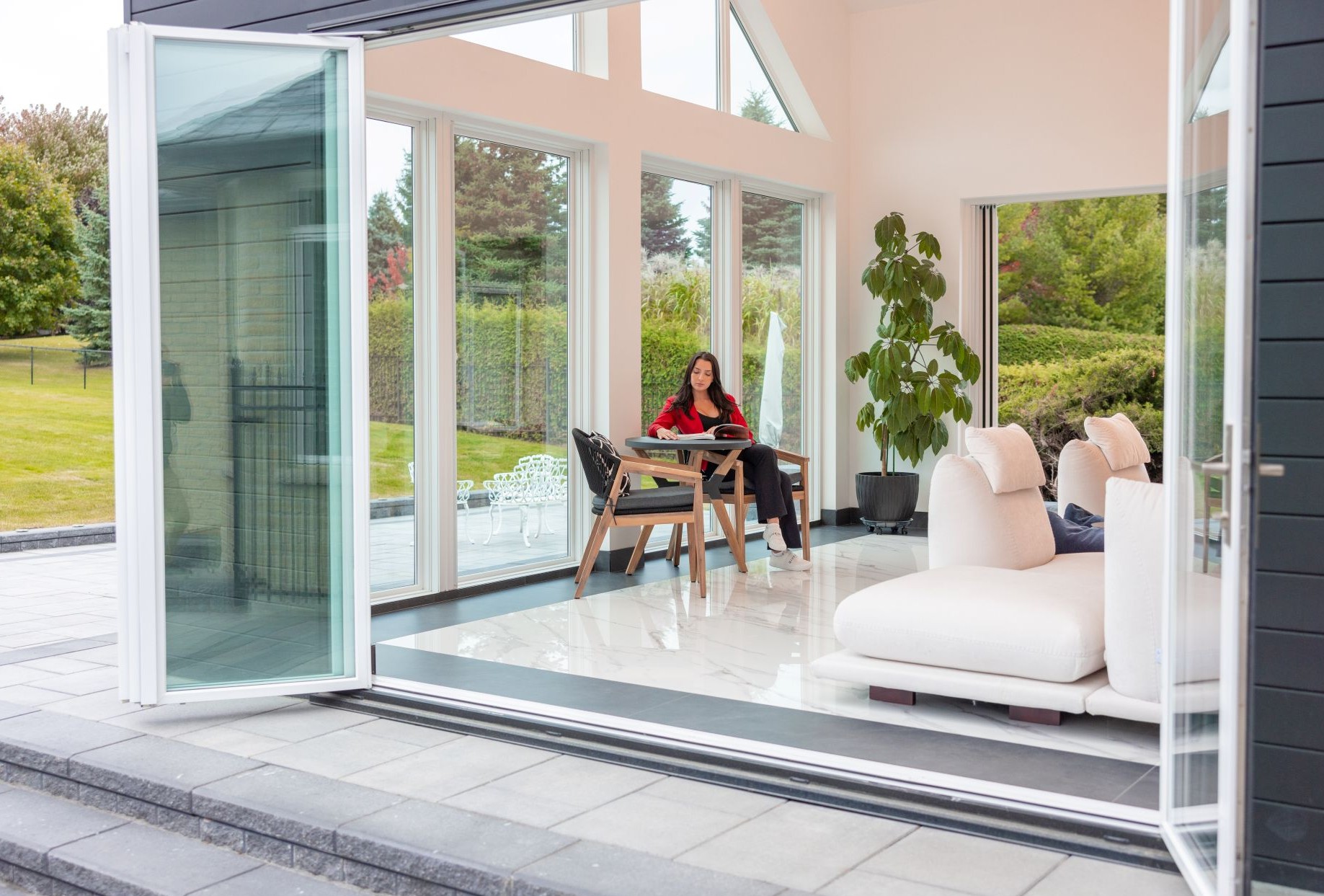
A window wall is exactly what it sounds like: a wall made primarily or entirely of glass to enhance the connection between indoor and outdoor spaces for expansive views.
Window walls have been part of commercial and institutional architecture for decades. What's changed is how accessible they've become for residential construction, and how the thermal performance has caught up with the aesthetic ambition.
A contemporary-style residential window wall typically combines fixed glass panels with one or more large sliding or lift-and-slide door units that allow the wall to open or multiple narrower units that slide along a track and stack neatly on one side. The framing, usually composite (aluminum/steel skeleton + vinyl wrapping), is designed to be as thin as structurally possible.
From an energy-efficiency standpoint, a well-spec'd window wall performs better than you might expect. Double-glazed panels with low-E coatings, gas fills, and warm-edge spacers can achieve incredibly low U-values. Plus, the solar heat gain in winter can be a net positive in a south-facing installation. In Toronto's climate, that matters a lot.
Modern Window Combinations: How Styles Work Together
The more interesting modern design decisions are usually about how different window options relate to each other on a wall or across a façade.
Here are some combinations that work consistently in contemporary residential design.
Picture Window Flanked by Casement
The fixed center panel handles the view; the casements provide ventilation. This structure with large panes works in living rooms, dining rooms, or anywhere you want a broad horizontal band of glass. The casements can be inswing or outswing, depending on whether there's a deck or landscaping directly outside.
Stacked Awning Units
Three or four horizontal awning windows stacked vertically or arranged in a row create a glass surface that works particularly well in spaces where privacy matters but light doesn't: stairwells, bathrooms, or as a high clerestory band in a tall-ceilinged room.
Transom Above a Casement or Picture Window
This combination increases the overall glass area without requiring a larger rough opening if structural constraints are an issue. It also raises the apparent ceiling height of the room, since the eye follows the glass upward. When the transom and the primary window share the same frame profile, the assembly reads as a tall unified unit.
Design Details that Matter
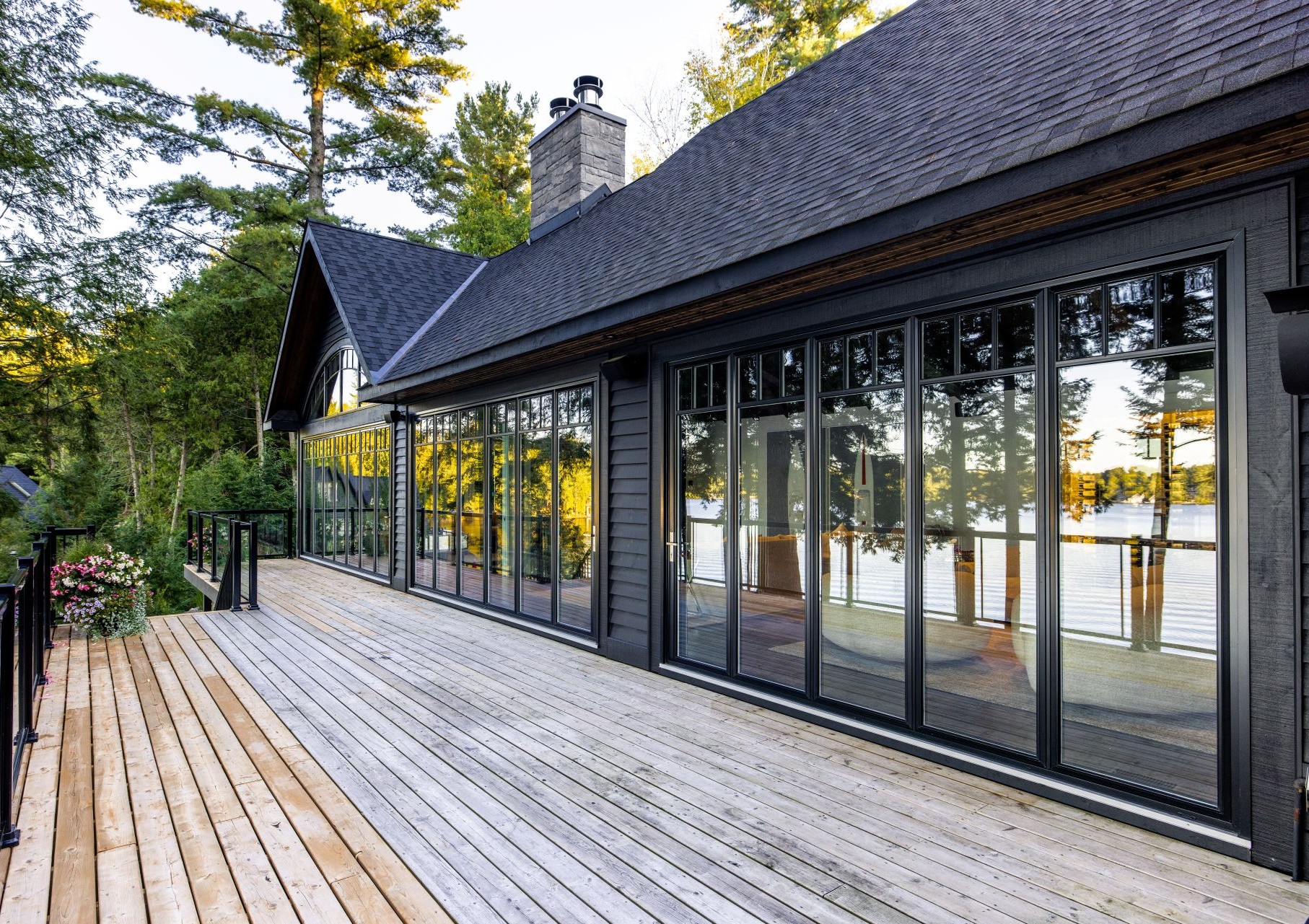
The window type definitely matters a lot, but there are some details that change how the window looks and performs over the years, so make sure not to dismiss them without consideration!
Frame Color and Finish
White frames read as traditional in most contexts. That’s why, nowadays, homeowners like to experiment with colors. For instance, matte black, dark bronze, and anthracite gray have become the default for contemporary work. In fact, black windows are now a top choice in the window industry, being primarily installed in homes where they can create a striking contrast.
Also, the frame color should relate to other elements in the space (hardware, railings, light fixtures) rather than just defaulting to whatever comes standard.
Interior Trim Profile
Flat casing with a minimal reveal reads contemporary. Detailed molding profiles with back bands and built-up assemblies read traditional.
The trim should match or deliberately contrast with the window frame finish. And don’t forget that using the same color on the window trim and on the wall is a consistent pattern in current residential interiors.
Sill Depth and Material
Go for a deep sill. It’s functional (it holds things) and visual (it grounds the window in the wall plane).
In contemporary installations, sills are often done with materials that match the countertop or flooring (stone, porcelain tile, or engineered wood). Painted wood can sometimes look outdated. That material continuity between the floor plane and the window plane reinforces the connection between the interior and the exterior.
Grid Patterns and Divided Lites
Grille patterns are optional on most windows and largely a style decision. In fact, contemporary work tends toward no grilles. At most, homeowners chose a single horizontal bar at mid-height in a casement or double-hung to suggest a divided lite without the visual noise of a full grid.
But if you do use grilles, try SDL (simulated divided lite) or TDL (true divided lite), as they look better than internal muntin grilles installed between the glass panes.
Glazing Specifications
For Toronto's climate, the minimum for a contemporary installation is double glazing with a low-E coating and argon fills. Triple glazing is worth considering for north-facing exposures or for spaces where acoustic performance matters, as the extra glass layer adds meaningful sound attenuation. An alternative is Magic’s thermal blind, which acts as a third pane of glass, making double-glazed windows just as energy-efficient as triple-glazed windows.
Smart Glass
Smart glass, also called switchable glass or electrochromic glass, changes its tint in response to an electrical current. In its clear state, it looks like standard glazing. Apply voltage, and it shifts to a frosted or tinted state that blocks light and visibility. The transition takes a few seconds and can be controlled by a wall switch, a phone, or a building automation system.
You can use smart glass in a bathroom window or a glass partition that needs privacy on demand, but natural light when it's not in use is the most common residential application. You can also use it in glass office walls, skylights in west-facing rooms that overheat in afternoon sun, and bedroom windows where blackout blinds are otherwise needed.
On the other hand, smart windows are expensive. The installed cost for residential applications in Canada typically runs several times the cost of equivalent standard glazing. It also requires a power source.
Acoustic Performance
Windows are the weakest link in any building envelope when it comes to sound. An exterior wall with proper insulation might have an STC (sound transmission class) rating in the 50s. A standard double-glazed window sits around STC 28-32. Every sound you hear from outside, traffic, neighbors, trains, is coming through the glass, not through the walls.
This matters more in some locations than others. A detached home on a quiet residential street in Etobicoke has different acoustic demands than a condo or townhouse on a busy arterial road in downtown Toronto. But even in quieter neighborhoods, acoustic performance has become a bigger consideration as more people work from home and spend more time in their living spaces.
The variables that affect acoustic performance are glass thickness, air gap between panes, and whether the two panes are the same thickness or different. Sometimes, manufacturers use panes of different thicknesses (say, 4mm and 6mm) with a wider air gap, as this construction improves acoustic performance. Some manufacturers also offer laminated glass on one or both panes. The PVB interlayer in laminated glass is particularly effective at damping sound transmission.
If acoustic performance is a priority for your project, it's worth discussing glazing specifications with Magic directly, especially since our thermal blinds also have soundproofing properties.
How Much Do Modern Windows Cost?
A window can cost anywhere from $400 to $4,500+. For example, a standard casement window can cost anywhere from $400 to over $2,500 installed, depending on size, frame material, glazing spec, and who's doing the installation. So instead of a number, here's how to think about what drives cost:
- Frame material is the first variable. uPVC (vinyl) is the most affordable and performs well thermally, but the profiles tend to be thicker than aluminum or fiberglass. Aluminum-clad wood and fiberglass cost more upfront and last longer, hold paint better, and allow for slimmer sightlines.
- Glazing spec adds cost in a predictable way. Standard double-glazed with argon and low-E is the baseline. Triple glazing adds 20-40% to the glass cost. Acoustic glazing with laminated panes and asymmetric glass adds a similar premium. Smart glass is in a different category entirely.
- Size and shape matter more than people expect. Larger glass units cost more per unit but less per square foot of glass area than smaller windows, up to a point. Uniquely shaped windows carry a fabrication premium because they require custom work and can't be produced in standard runs.
- Installation is often underestimated. Replacing a window in an existing opening with no structural changes is straightforward. Enlarging an opening, adding a bay window projection, or installing a window wall requires structural work that can cost as much as the windows themselves.
For a Toronto homeowner doing a full window replacement, a realistic budget for mid-range fiberglass or aluminum-clad units with good glazing runs $15,000 to $45,000+ installed, depending on the variables above.
How to Choose Your Windows?

The right window for any project depends on climate, budget, existing home architecture, and what you actually need the window to do.
If ventilation is the primary need, go for casements and awnings. They outperform double-hung windows for the same rough opening size because the entire sash opens rather than just half of it.
If view and light are the priority, go for fixed picture windows or a window wall section. These will outperform any operable style.
If you're working with a heritage property or a style-driven renovation, consider a window manufacturer that can provide specialty shapes and bay windows.
And if you're not sure about how to choose new windows, the most useful thing you can do is work with a professional team that will assess your needs, budget, and home's architectural style and come up with a fully tailored solution. Magic works with homeowners and contractors across Toronto on exactly these decisions. Plus, our showroom lets you see the frame profiles, hardware, and glazing options at full scale, which makes a significant difference compared to choosing from a catalog or a screen.
Curious to learn more? Book a free consultation today!
FAQs
Are single-hung windows still in style?
Single-hung windows, with their fixed upper sash, are still quite popular, although casements and sliders are currently gaining more territory. Hung windows are more and more preferred for traditional home designs rather than contemporary ones for their timeless aesthetic appeal.
What are the latest trends in window styles?
The latest trends in window styles include large glass panels, slim frames, and minimalist designs that maximize natural light and outdoor views. Dark frame colors (especially black), energy-efficient glazing, and sustainable materials are also becoming increasingly popular.
What is the modern look for windows?
Modern windows typically feature clean lines, thin frames, and large panes of glass that create a sleek and minimalist appearance. Dark or black frames and floor-to-ceiling windows are commonly used to achieve a contemporary architectural look.
Which window is trending now?
Windows with black frames and oversized glass panels are among the biggest current trends because they create a strong contrast and a modern aesthetic. Flush casement and large picture windows are also widely used in new builds and renovations.
What styles of windows are most popular?
Popular window styles today include casement windows, large picture windows, and modern flush designs with slim frames. Homeowners favor these because they provide better natural light, energy efficiency, and a clean contemporary look.