Patio Doors
4 Types of Patio Doors: Pros, Cons, and How to Choose
With so many patio door options on the market, it's only natural that you're finding it a bit challenging to choose the right one! Should you go with classic French doors that swing open dramatically? Space-saving sliding glass doors? Or maybe folding patio doors that transform an entire wall into an opening?
If you still don't have an answer, the Magic team is here to help you choose the best replacement patio doors!
The four main types of patio doors are hinged/French doors, sliding patio doors, bifold doors, and multi-slide doors.
In the following sections, we'll discuss different types of patio doors, their benefits, and their disadvantages. We'll also share some tips about materials, glazing options, and security features.
4 Main Types of Patio Doors: Pros, Cons, and Differences
There are 4 main types of patio doors on the market, which we'll discuss in detail below. Before we take a closer look at them, here's a quick comparison table:
1. Hinged & French Patio Doors
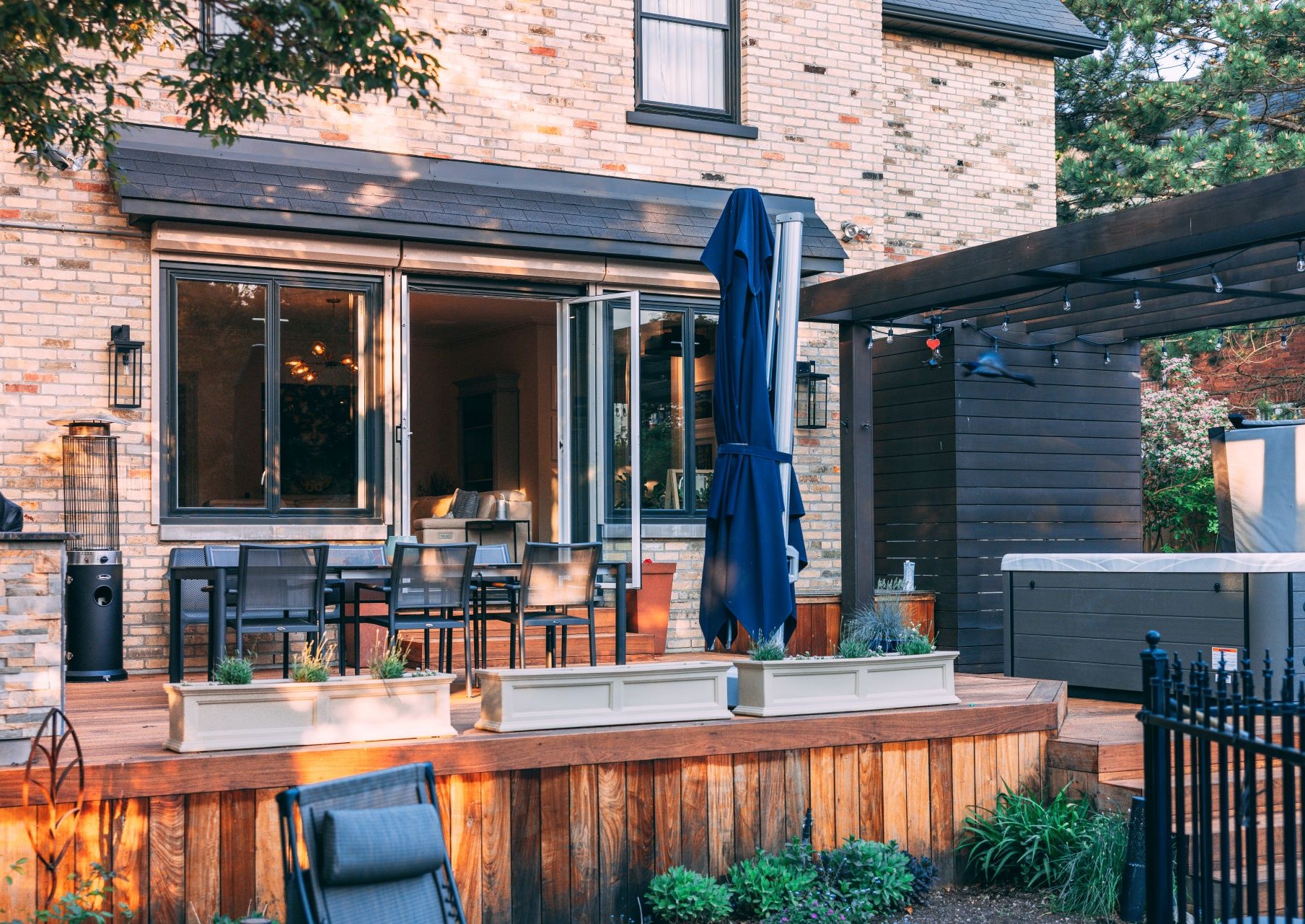
French patio doors are a type of hinged patio door. While a hinged patio door can consist of a single operable panel, French doors typically feature two hinged panels that meet in the centre. They often have divided glass panes with a grille pattern.
These doors swing open either inward or outward. Inward-swinging doors need clear floor space inside your home, which means that you'll have to arrange your furniture carefully. Outward-swinging doors work well when indoor space is tight, but they may get blocked by snow in cold climates.
Here are some popular French patio door styles:
- Single operable panel with a fixed sidelight
- Double doors where both panels swing (true French doors)
- Double doors with sidelights on one or both sides
- Doors with transom windows above for additional space and light
From a design perspective, French patio doors create a strong focal point and work beautifully with traditional home styles.
French Patio Doors Advantages
- Classic architectural appeal: French doors add a timeless, upscale look that complements both traditional and contemporary homes.
- Wide, unobstructed opening: when both panels are open, they create a generous entryway that’s ideal for entertaining.
- Full glass panels: large glass panes maximize daylight and improve the visual connection between indoor and outdoor spaces.
- Flexible ventilation: you can open one door or both, depending on airflow needs.
- Customization options: available in wood, fiberglass, aluminum, and composite with various grille patterns and finishes.
French Patio Doors Disadvantages
- Requires swing clearance: the doors need exterior space to open, which can limit furniture placement.
- Weather exposure: hinged designs may be more vulnerable to wind stress if not properly secured.
- Sealing complexity: the meeting rail between doors can be a potential weak point for air or water infiltration.
- Higher cost: premium materials and craftsmanship can increase upfront investment compared to simpler sliding systems.
- Limited views: French doors can limit the view when closed because of their frame structure, compared to sliding or bi-fold doors.
2. Sliding Patio Doors
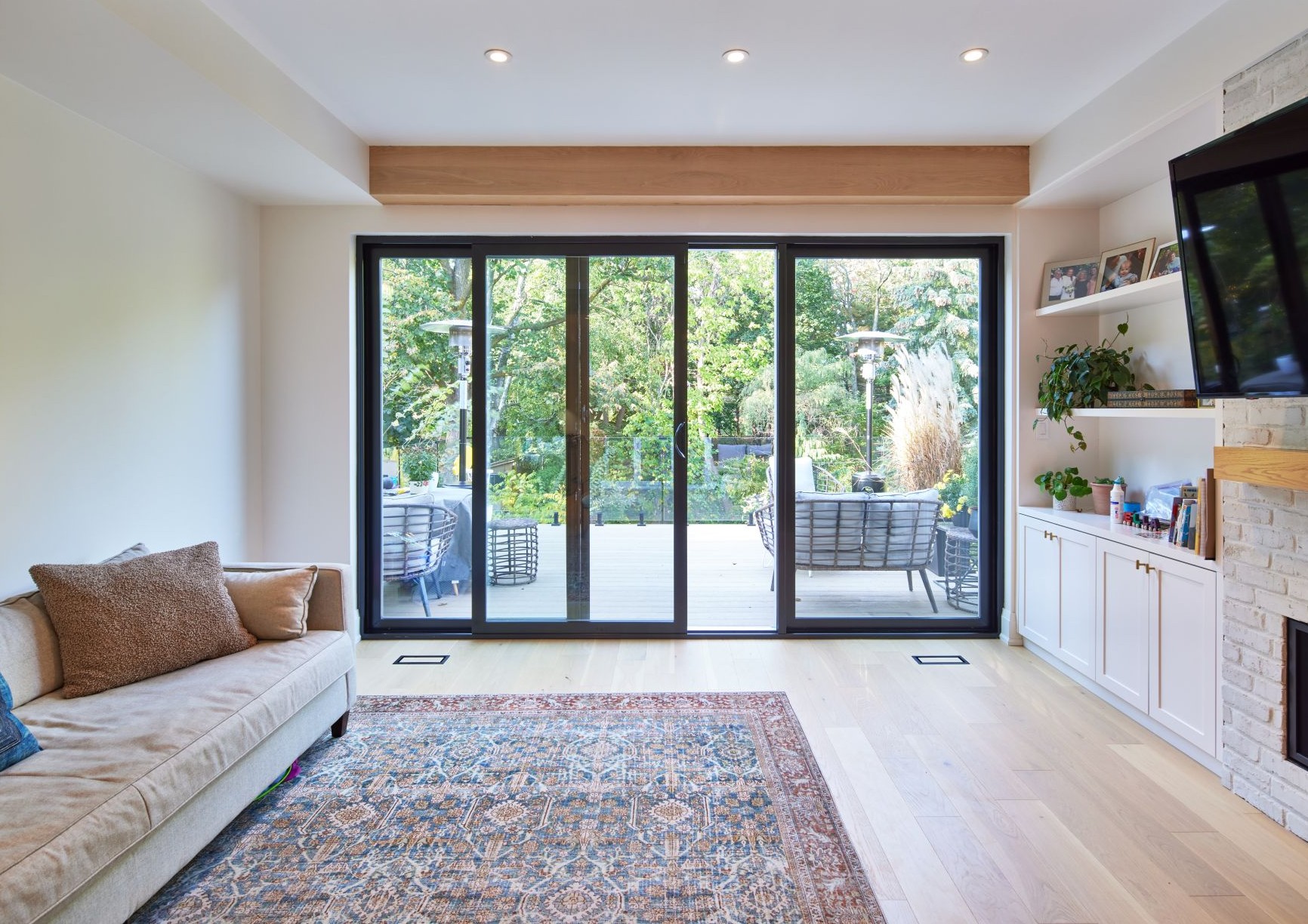
Sliding patio doors feature 2-4 large glass panels, with at least one panel sliding horizontally along a track while the others remain fixed.
The reason for their popularity comes down to space. Sliding glass doors don’t need any swing clearance. They're excellent for smaller patios or rooms where furniture is close to the door. The panels glide parallel to the wall rather than eating into your floor space. But these doors do need plenty of wall space.
Here are some common sliding patio door types:
- 2-panel sliding doors: One sliding panel, one fixed. The standard choice for most homes.
- 3-panel sliding doors: Typically one or two sliding panels with fixed panels. Offers wider openings.
- 4-panel sliding doors: Often two panels slide towards opposite ends, meeting in the middle for easy access.
Sliding Glass Doors Advantages
- Space-saving design: panels slide instead of swinging, making them ideal for tight floor plans.
- Panoramic views: minimal framing provides expansive outdoor visibility.
- Smooth operation: quality rollers allow easy opening even for large panels.
- Energy-efficient glazing options: modern sliding doors support double or triple-pane insulated glass.
- Lower maintenance: fewer moving parts compared to hinged systems.
Sliding Glass Doors Disadvantages
- Track maintenance: dirt and debris can impair performance if tracks aren’t cleaned regularly.
- Limited opening width: only one side typically opens at a time.
- Security concerns: lower-end models may be easier to force open without reinforced locks.
- Seal wear over time: sliding seals can degrade, reducing energy performance if not maintained.
3. Bifold Patio Doors
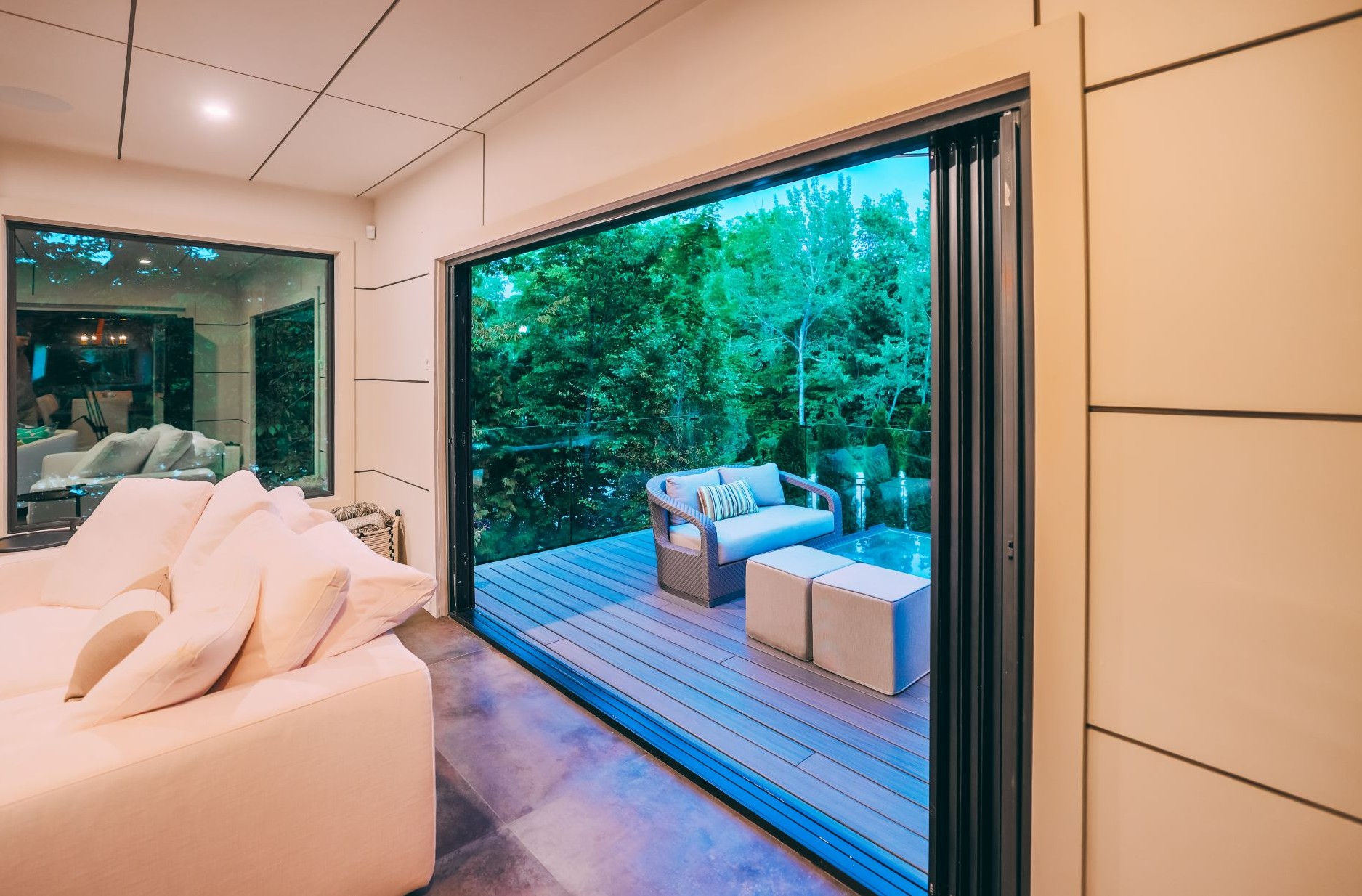
Bifold patio doors, also called folding doors, consist of multiple glass panels connected with hinges. They fold and stack against one another like an accordion. When fully open, the panels stack neatly to one or both sides of the opening.
These folding glass doors are ideal for very wide openings where homeowners want to blur the line between inside and outside. They create a seamless transition between your kitchen or living area and your deck, patio, or garden, for example. Perfect for entertainment!
Common bifold door configurations:
- Smaller openings typically use 3-4 panels
- Medium openings work with 5-6 panels
- Full wall installations can use 7+ panels, creating dramatically large openings
- Panels can fold to one side or split to fold to both sides
The main advantages of bifold patio doors center on how much of the wall actually opens. Unlike sliding doors that always have one panel fixed, bi-fold doors can open widely, up to 90% of the frame width. This makes them outstanding for summer entertaining and bringing fresh air and outdoor views fully into your living spaces.
Bifold Doors Advantages
- Maximum opening width: ideal for indoor-outdoor living and entertaining.
- Modern aesthetic: clean lines and minimal framing for contemporary architecture.
- Flexible configurations: panels can be arranged to open partially or fully.
- Strong visual impact: creates a dramatic transition between interior and exterior spaces.
Bifold Doors Disadvantages
- Higher installation complexity: requires precise alignment and structural support.
- Cost: typically more expensive than sliding or French doors.
- Stacking space required: folded panels occupy wall space when open.
- Hardware wear: hinges and rollers may require periodic adjustment
4. Multi-Slide Patio Doors
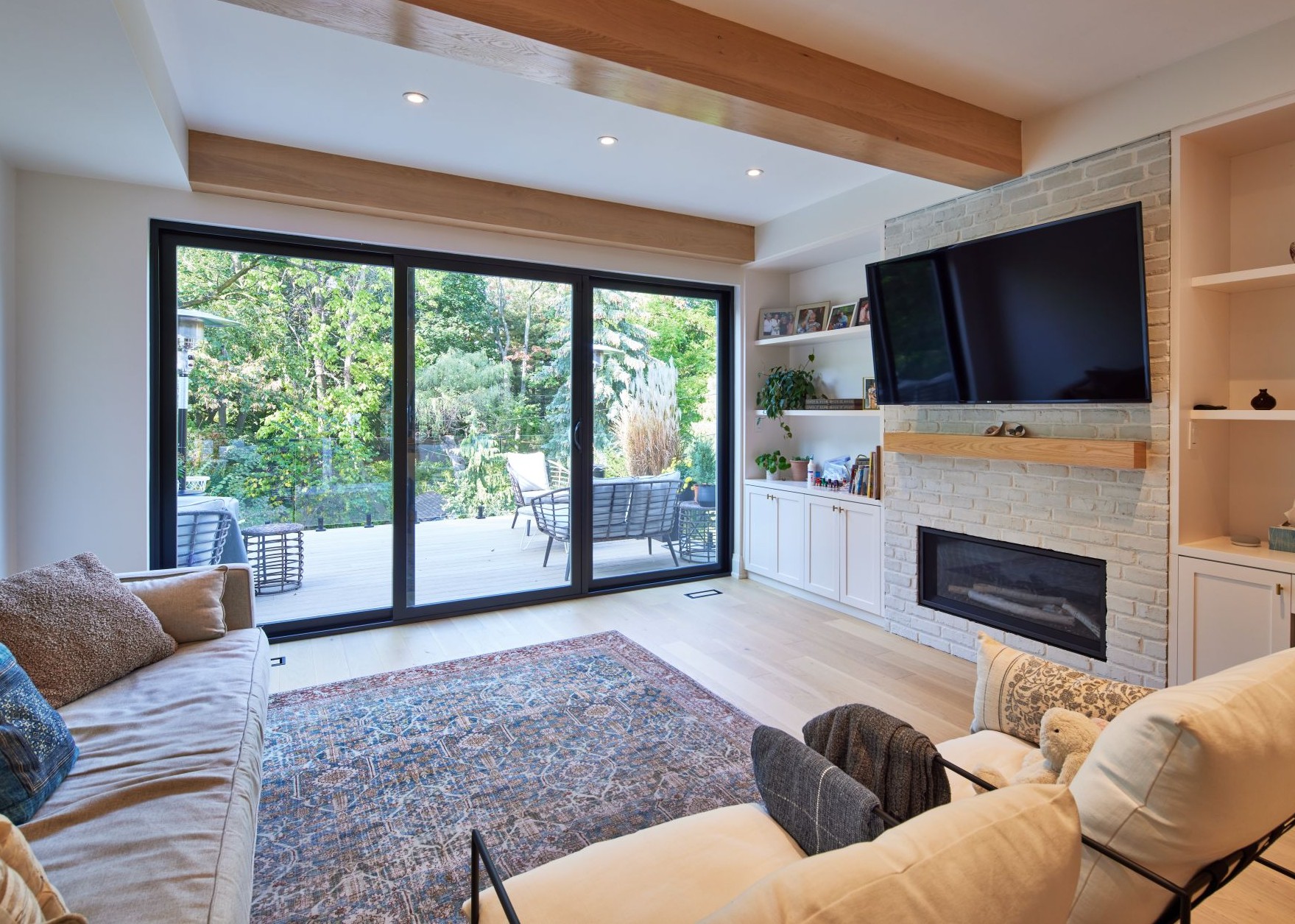
Multi-slide patio doors feature several large panels that slide and stack or disappear into a wall pocket. They’re designed for expansive openings and luxury architectural projects. These systems emphasize minimal visual barriers and seamless transitions to outdoor living areas.
Multi-slide patio doors are often grouped into stacking doors and pocket doors. They’re commonly used in high-end homes, resort-style builds, and properties prioritizing panoramic views and natural light.
Multi-Slide Patio Doors Advantages
- Massive openings: panels can span entire walls for unobstructed indoor-outdoor flow.
- Architectural statement: enhances property value and home curb appeal.
- Pocketing capability: some systems hide completely inside walls.
- High-performance glass: supports advanced thermal and acoustic insulation.
- Smooth engineered movement: designed to handle heavy glass with precision hardware.
Multi-Slide Patio Doors Disadvantages
- Premium cost: among the most expensive patio door options.
- Structural requirements: may require reinforced framing or engineering.
- Professional installation is essential: improper setup compromises performance.
- Maintenance sensitivity: large panels demand careful track and roller upkeep.
- Weight and complexity: repairs can be specialized and costly.
Materials for Patio Doors
The patio door material you choose determines how long your doors last, how much maintenance they need, and how well they insulate your home. Getting this right matters as much as choosing the door style itself.
Here are some common frame materials for patio doors:
And here are some facts you need to know about these materials:
- Vinyl patio doors are affordable. But they can expand and contract in high temperatures. This affects their operation and longevity.
- Wood patio doors offer warmth and charm. But they require routine maintenance to preserve their appearance.
- Aluminum patio doors are stronger than vinyl. But they are not ideal in extreme temperatures due to poor insulation (unless used in composite frames like Hybrid Fusion Frame).
- Fiberglass patio doors are energy efficient and require minimal maintenance, making them a durable option. But they are not so readily available on the market and don't have a lot of customization options.
Are Patio Doors Energy-Efficient?
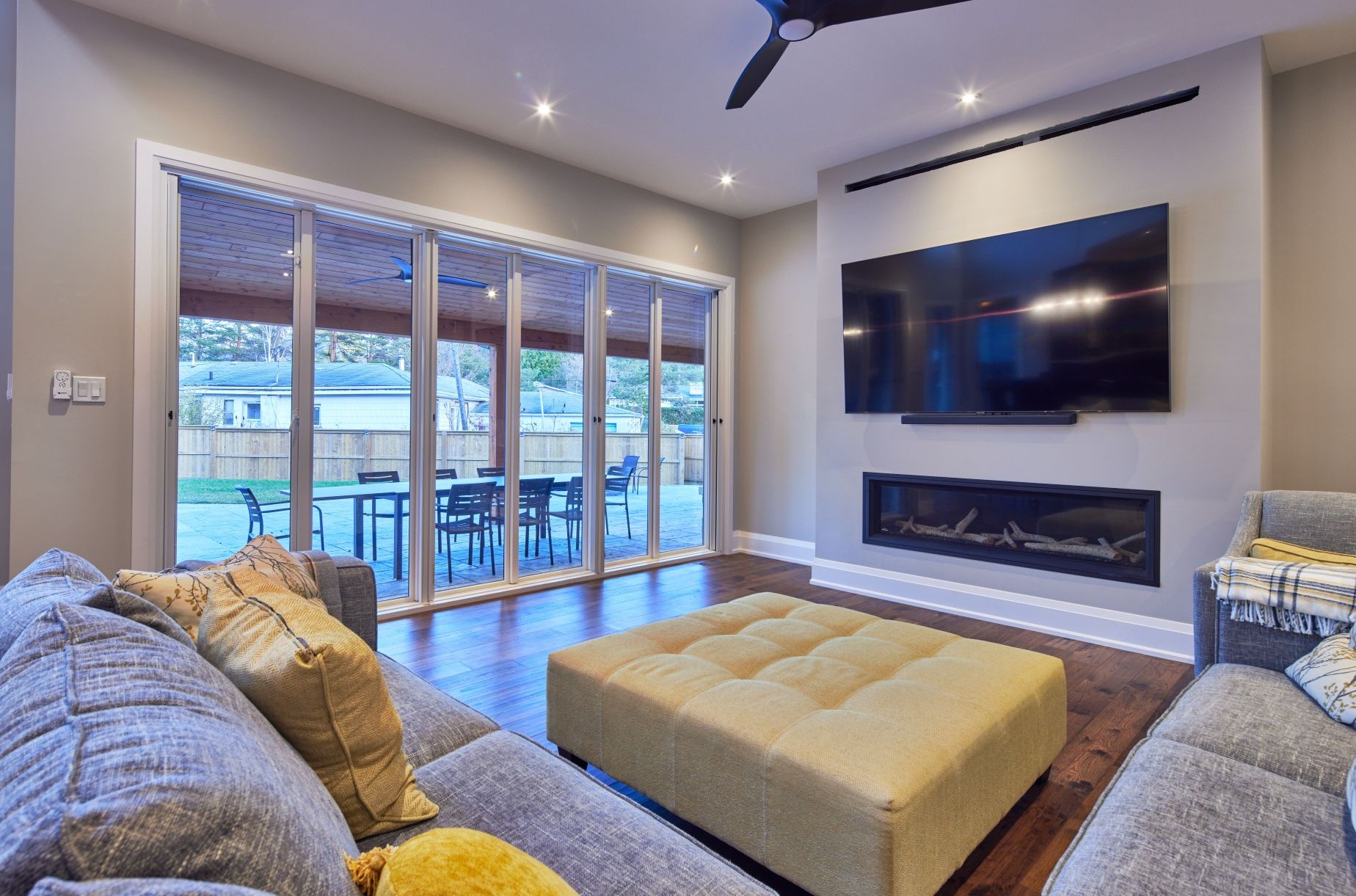
Modern patio doors can be highly energy efficient and suitable for the weather in Canada. Their efficiency depends less on door style and more on materials, glazing technology, and installation quality.
Energy-efficient patio doors should have:
- Low-E coatings that reflect heat while allowing visible light
- Double or triple-pane glass with argon or krypton gas fills
- Thermally broken frames that reduce heat transfer
- High-quality weatherstripping to prevent air leakage
- Professional sealing and flashing during installation
- High-quality hardware
Sliding, French, bifold, and multi-slide doors can all achieve strong thermal performance when they meet energy certification standards such as ENERGY STAR. Poor installation, however, can negate even the best-rated door.
Patio Door Replacement: Glass Options
Because patio doors have large glazing areas, you'll have to choose the glass type carefully. It has a major impact on both your safety and your home's energy efficiency. Here are some glass options for your patio doors.
Tempered Safety Glass
Tempered glass is standard in most patio doors. It’s heat-treated to be several times stronger than regular glass and shatters into small, blunt pieces instead of sharp shards. Building codes require tempered glass in doors for injury protection.
Laminated Glass
Laminated glass adds an extra layer of security compared to tempered glass. It has two glass layers bonded with a plastic interlayer. Even when broken, the glass stays adhered to the film. Laminated glass improves:
- Break-in resistance
- Hurricane impact protection
- Noise reduction
- UV blocking
Acoustic Laminated Glass
Acoustic laminated glass in patio doors provides reduced sound transmission. It's perfect for homes near traffic, airports, or dense urban environments.
Double-Pane Insulated Glass
Double-pane glass consists of two glass layers with a sealed air or gas-filled gap. This is the baseline for energy-efficient doors and dramatically reduces heat transfer compared to single-pane glass.
Triple-Pane Insulated Glass
Triple-pane insulated glass has a third layer and a second air chamber. It provides superior insulation and sound reduction, but increases weight and cost. Not all sliding systems can support triple-pane units because of how heavy the panels are.
Low-E Coated Glass
Low-E glass has microscopic metallic coatings that reflect infrared heat while allowing visible light through. Low-emissivity glass coatings help reduce solar heat gain and improve energy efficiency in patio doors.
Patio Doors Security Features
Modern patio doors offer enhanced durability and security features if they're equipped with the right hardware and glazing. Patio door security weaknesses are usually found in low-end models or poor installation, not the door style itself. Here are some key security features to look for:
- Multi-point locking systems, which are an important security feature for patio doors
- Anti-lift mechanisms, especially for sliding patio doors
- Reinforced strike plates
- Deadbolts
- Smart locks and sensors
- Child safety locks
Why Does Installation Matter More Than Door Type?
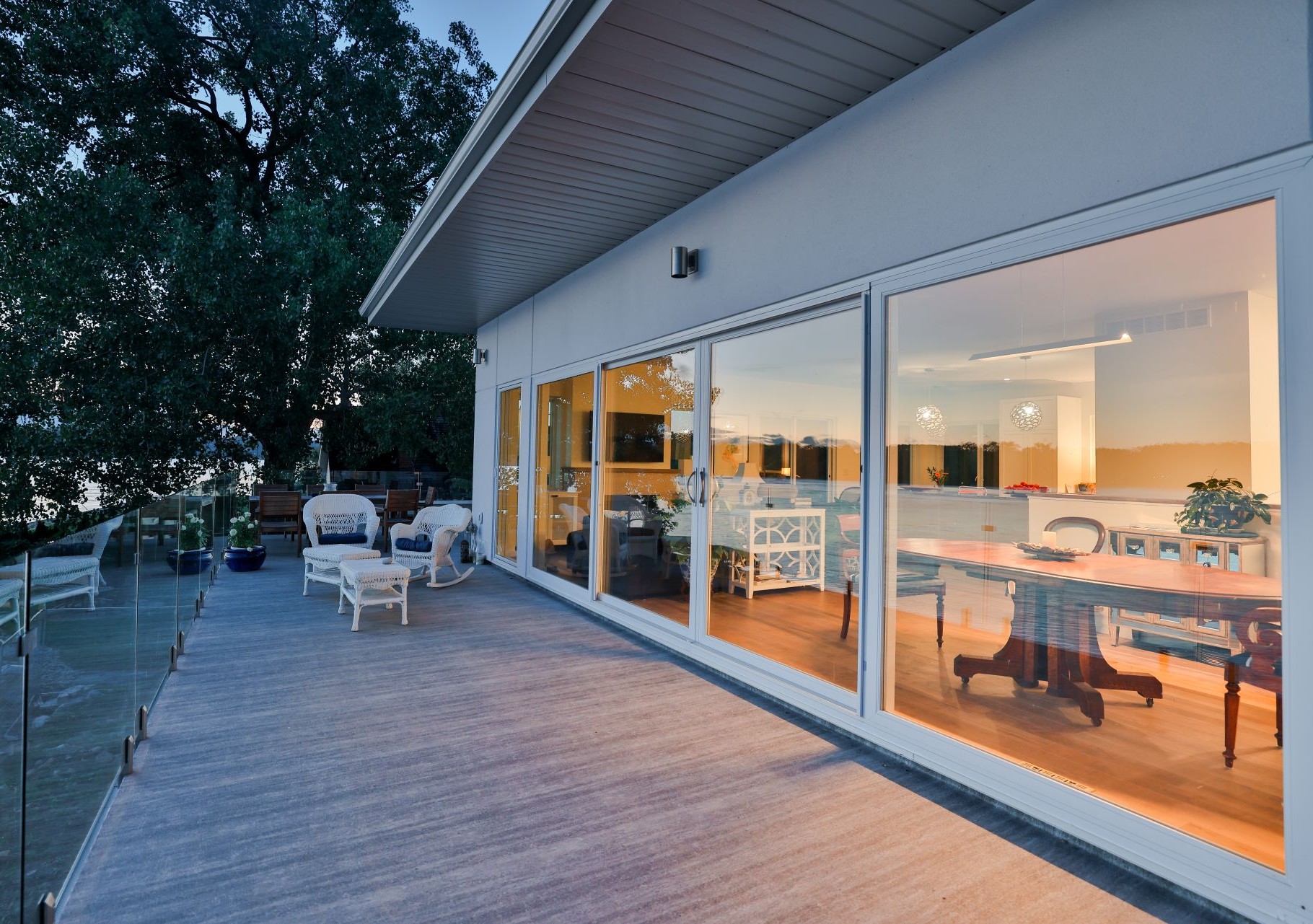
A premium patio door installed poorly will perform worse than a budget door installed correctly. As a matter of fact, many long-term issues blamed on the product are actually caused by poor installation. Moreover, correct sealing is essential for all types of patio doors to prevent air leaks and ensure energy efficiency. That's why it's strongly recommended to opt for expert installation. Professional installers can ensure proper:
- Waterproofing and flashing
- Structural support
- Level and plumb alignment
- Air sealing
- Manufacturer warranty compliance
How Much Do Patio Doors Cost?
On average, patio doors cost between $2,000 and $40,000+, depending on door type, size, frame material, glazing, customization, and installation requirements. Here are some average patio door costs that may help you get a bigger picture of what to expect:
How Long Do Patio Doors Last?
Patio doors can last between 20 and 40 years. Their lifespan depends on material quality, climate exposure, maintenance, and installation.
Here are the typical lifespans by frame material:
- Vinyl/uPVC patio doors: 20 years
- Aluminum patio doors (thermally broken): 30-40 years
- Fiberglass/composite patio doors: 30-40 years
- Wood patio doors (well-maintained): 30+ years
- Hybrid Fusion Frame: 40 years
How to Choose the Best Patio Door Replacement for Your Home
When planning a patio door replacement, try to match the door type to your space, your climate, your lifestyle, and your willingness to maintain it. As such, here are some tips that may help you find the right patio doors!
Space and Layout
Before falling in love with a door style, think carefully whether it's really good for your home. Measure your available space carefully. You might find the most beautifully looking hinged or French doors, but if there isn't enough clearance for them to open easily, you'll unfortunately have to choose another patio door system.
Think about How You’ll Use the Door
Will this door serve as a main everyday entrance? Or will it only be used for occasional access for entertaining? High-traffic doors should operate smoothly, with minimal effort. Sliding doors are usually the best in this case.
If you have a large patio and are often hosting parties, you can go for larger bifold door systems.
Climate Suitability
In cold-weather regions, prioritize well-insulated frames (composite, timber, or thermally broken aluminium) paired with double or triple glazing and low-E coatings. These details can limit your patio door choices (e.g., large glass door panels might not pair well with triple-glazing, as they would be quite heavy).
Moreover, doors that open outward may get blocked by snow in colder regions, something to factor into your swing direction choice.
Enhanced Security and Maintenance
All door types can now be equipped with modern multi-point locking systems. However, hinged doors with deadbolts remain the safest option. And don't forget about tempered or laminated glass for protection and safety.
For frame materials, be honest about how much time you're actually willing to spend on maintenance. Wooden frames look beautiful but need periodic repainting or refinishing. Aluminium and uPVC, on the other hand, are low-maintenance, but they don't offer the same aesthetic value.
Magic Patio Door Systems: What Sets Them Apart?
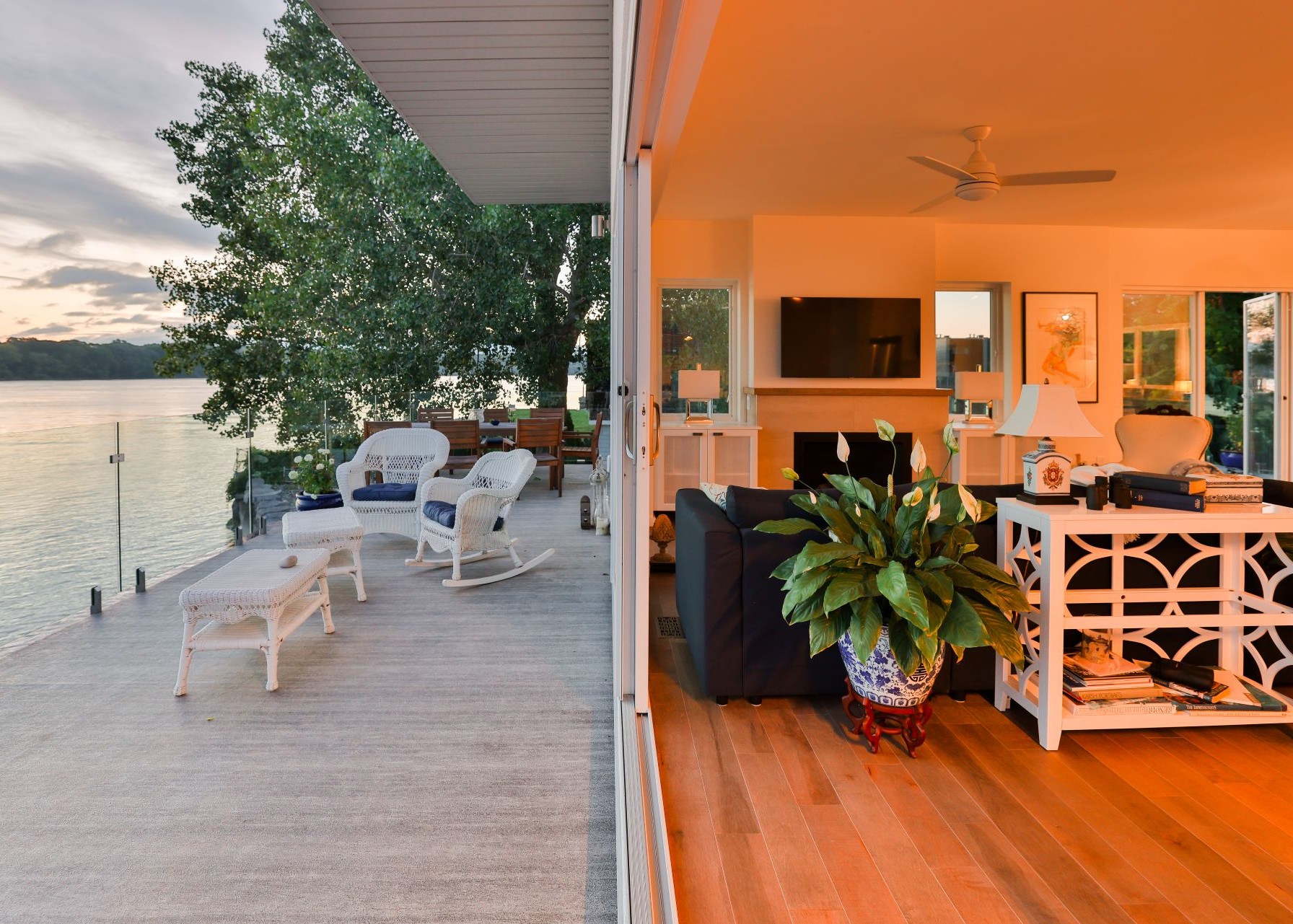
Looking for patio doors in Ontario built specifically for Canadian homes? Meet Magic - one of the leading window and door manufacturers in the region! And here's why our products may be a good choice for your home.
Hybrid Fusion Frame Technology
Magic patio doors use a proprietary Hybrid Fusion Frame, a composite of galvanized steel, aluminum, and uPVC, combining structural strength with excellent thermal performance. Magic frames are more rigid and durable than conventional vinyl or aluminum frames. They also have slimmer profiles and larger uninterrupted glass areas.
Exceptional Slide Performance
Magic’s sliding patio doors are equipped with eight stainless-steel wheels on an elevated track system. This ensures ultra-smooth operation even when the tracks are exposed to debris. This design also reduces dragging and wear, improving door longevity and your experience in using the doors!
Superior Energy Efficiency
All Magic window and door systems are ENERGY STAR-certified. They are more energy-efficient than other units on the market because of their superior frame material, a larger gas-filled gap between the glass panes, and higher quality control, as we manufacture all our units right here in Ontario.
Built-In Retractable Screens
Rather than using traditional fixed screens that block view and light, Magic integrates retractable bug screens into the door frame. These screens disappear completely when not needed, increasing natural light and outdoor visibility.
Integrated Shades and Blinds
Optional solar screens and thermal blinds integrated into the Magic patio door enhance comfort and performance: solar screens reduce solar heat gain, and thermal blinds can boost thermal performance by up to 40%, functioning similarly to a third pane of glass.
Security Beyond Standard
Magic’s sliding patio doors achieve a Grade 40 security rating, the highest attainable for residential patio systems in North America. They have dual-point locking mechanisms and optional kick locks, providing significantly greater resistance to forced entry than typical patio door hardware.
Independent Panel Control
Unlike traditional multi-slide or bi-fold systems, each panel within a Magic Window Wall operates independently with Parallex® hardware. This means you can open just one or two panels for custom airflow, access, and views. Or you can open them all for a fantastic view!
Curious to learn more about Magic windows, patio doors, and front doors? Book a free consultation with Magic!
FAQs
What are the main types of sliding patio doors?
The main types of sliding patio doors are traditional two-panel sliders, multi-panel (three or four panels) sliders, pocket sliding doors that disappear into the wall, and bypass configurations where panels slide behind each other. These differ primarily in opening width, wall integration, and how much unobstructed access they provide.
What are some types of blinds for patio doors?
The main types of blinds for patio doors include vertical blinds, panel track blinds, cellular (honeycomb) shades, and sheer vertical blinds.
What is the difference between a hinged patio door and a French door?
A hinged patio door is a single door panel that swings open and operates like an entry door. A French door has two hinged doors that meet in the center; they swing outward or inward.
What type of sliding patio door is best?
No sliding patio doors are the best for every home. Choose sliding patio doors based on the available wall space and desired opening width. Two-panel sliders are a common choice for standard openings, while three- and four-panel systems can provide wider access. Pocket and stacking systems are options when homeowners want larger openings or panels that stack out of the main view.
What patio doors are best?
No patio doors are the best for every home. Choose patio doors based on your space, climate, budget, and desired opening size. Sliding patio doors work well when floor space is limited, French doors suit traditional designs and flexible ventilation, while bifold and multi-slide systems are better suited to very wide openings and indoor-outdoor living. For Canadian homes, look for energy-efficient glazing, well-insulated frames, quality weatherstripping, and durable hardware.
What are the alternatives to sliding glass doors?
Alternatives to sliding glass doors include French doors, bi-fold (accordion) doors, and stacking glass doors that create larger architectural openings.