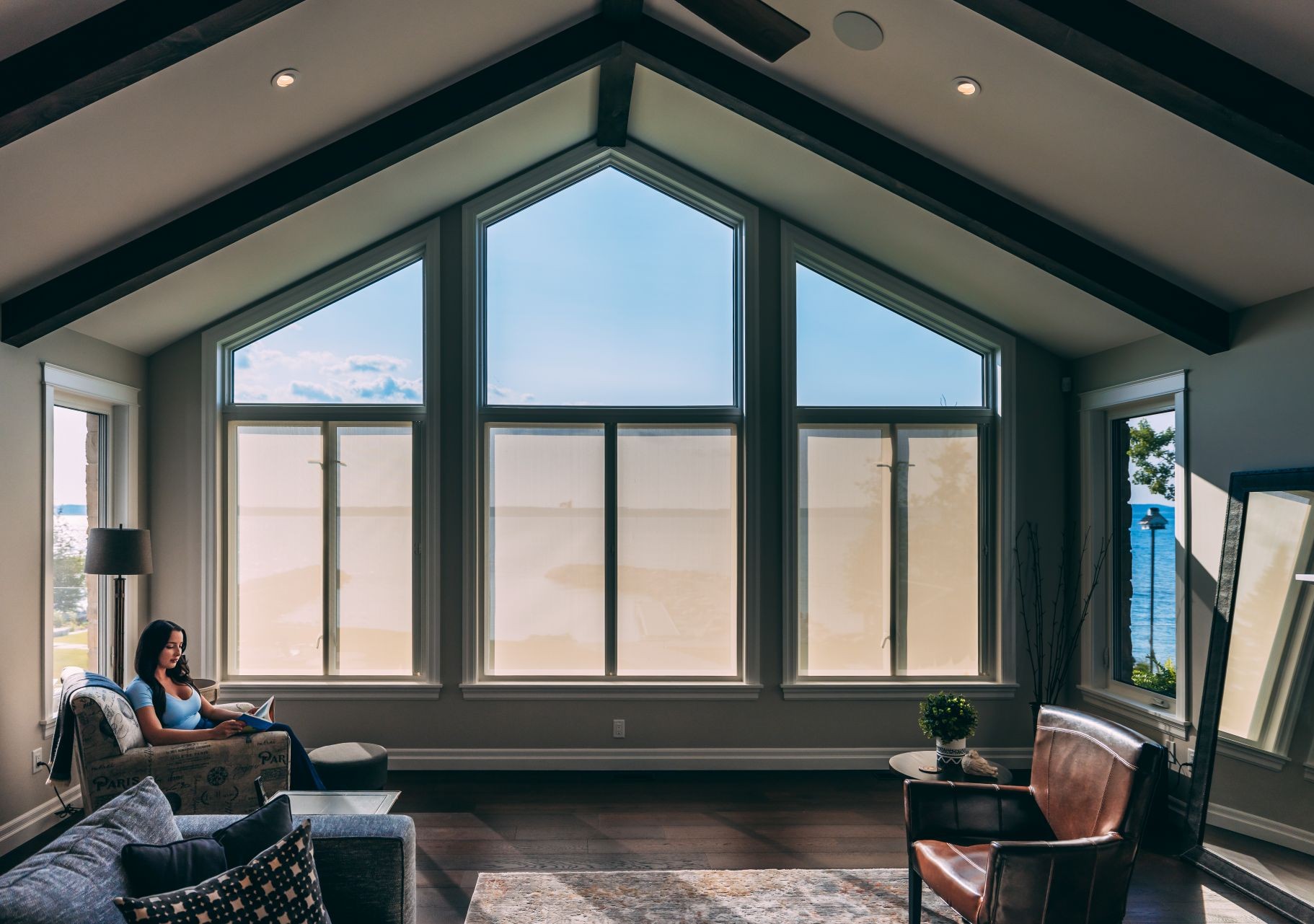
Window Treatment & Styles
Window Coverings: Ideas, Types, and Trends for Canadian Homes
The room’s freshly painted. All furniture in place. Everything looks great. Except your windows, which seem to need a finishing touch - the window coverings!
Window coverings are very important. Besides improving the room’s design and atmosphere, they also manage light, protect your privacy, and keep your heating bill from spiralling in January.
So whether you're outfitting a downtown Toronto condo with floor-to-ceiling glass or a suburban family home in Mississauga with a dozen different window shapes, this guide has you covered - we’ve prepared a comprehensive list of window coverings: ideas, types, and trends you can rely on!
How to Choose Window Coverings?
Many people pick window coverings based on what they see at a showroom or on Pinterest. Of course, choosing them based on how they look and how they’d make your room feel is not wrong. It’s just that there are more things to consider besides this, including:
- Light control. Do you want to block light completely, soften it, or let it flood in? The answer changes by room.
- Privacy. Are you street-level in a dense neighbourhood? Ground-floor condos in Toronto's downtown core practically require a layered strategy to provide privacy and keep those nosy neighbors from looking in!
- Energy efficiency. Canadian winters are brutal, so if you have older windows or single-pane windows, it’s worth it to prioritize energy efficiency above everything else. Some window coverings can meaningfully reduce heat loss through glass.
- Moisture and maintenance. Kitchens and bathrooms need moisture-resistant materials. A gorgeous linen Roman shade looks wonderful until it gets moldy.
- Window size and type. Floor-to-ceiling glass, patio sliders, bay windows, and small bathroom casements need different window coverings.
Window Treatment Ideas by Type
Some options have been around for decades because they really work. Here's a breakdown of the most favored window treatments.
Roller Shades
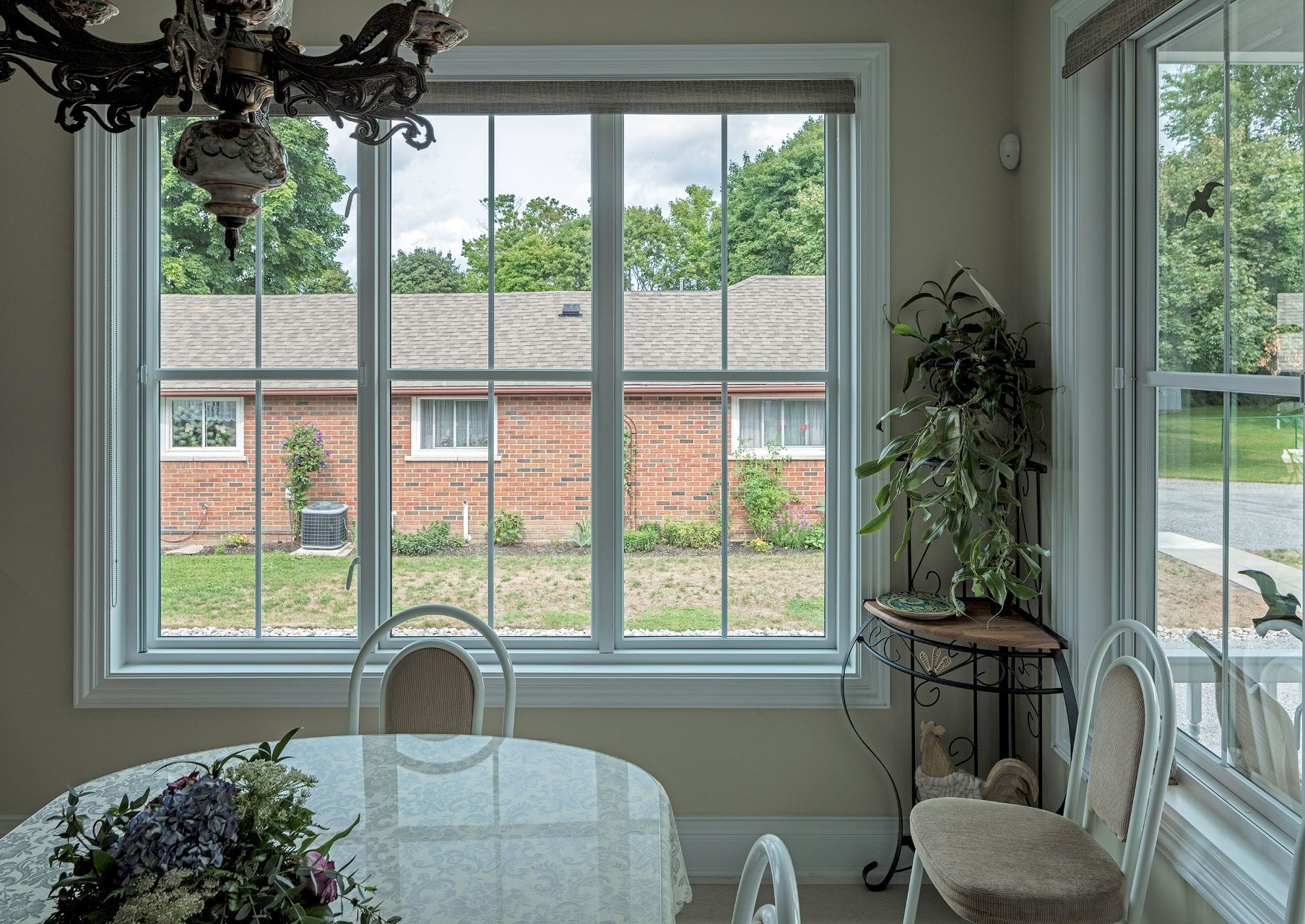
Roller shades are one of the most popular choices for Canadian homes. And for good reason. They have a clean profile, are easy to operate, and come in a wide range of fabrics, from sheer materials that gently filter light to full blackout options that completely block the light.
Inside-mount rollers in a neutral fabric are particularly useful for condos or small houses. They make rooms feel open and don't add visual clutter. If you want a softer look, you can pair them with side curtain panels. That combination works well in living rooms where you need light control during the afternoon and a warmer atmosphere in the evening.
Roman Shades
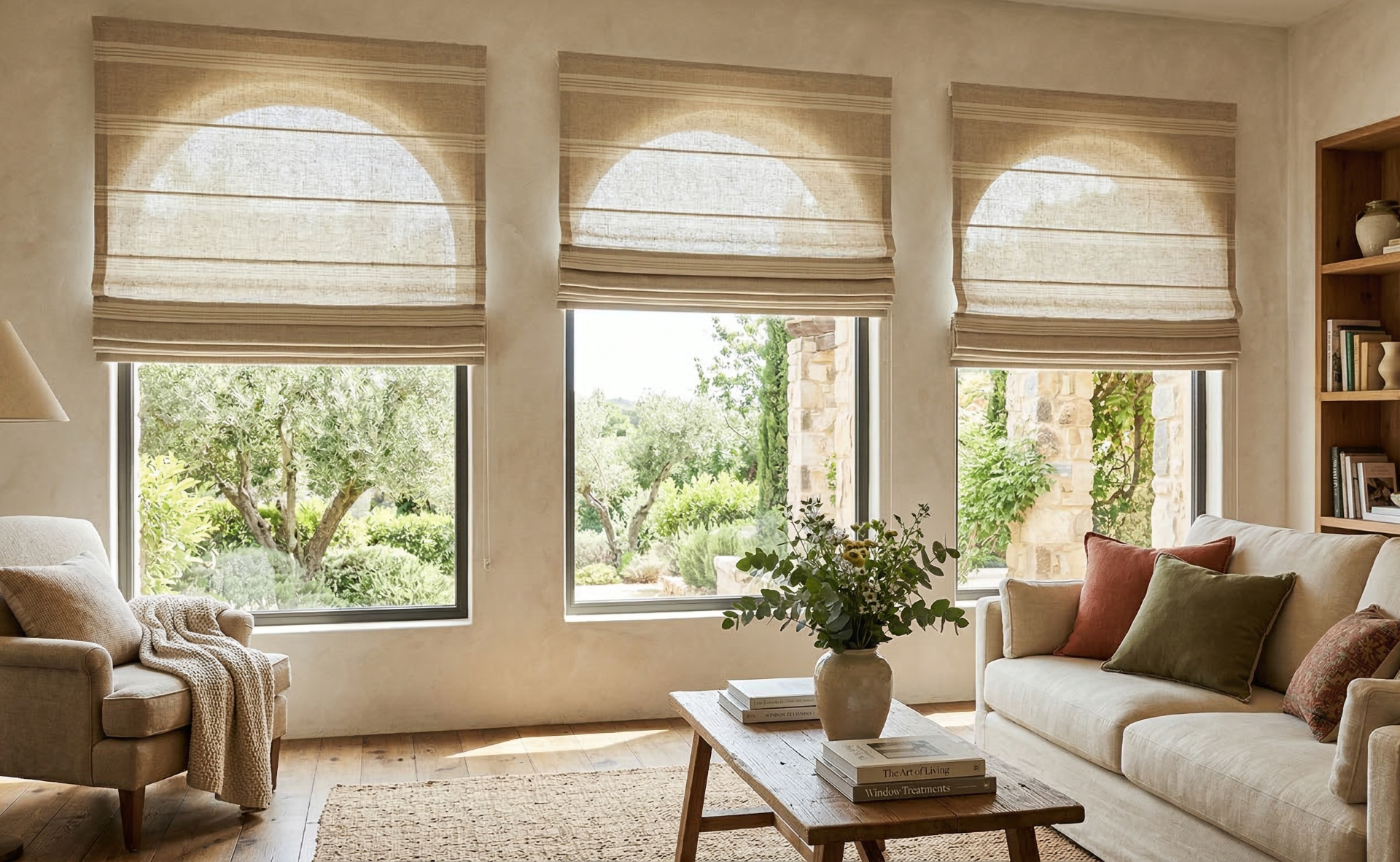
Roman shades look more sophisticated than a basic roller and, at the same time, less heavy than full drapes. They fold into horizontal pleats when raised and lie flat when lowered, giving a room a clean, tailored appearance.
They work particularly well in dining rooms and bedrooms: a deep navy flat Roman shade in a home office, or a soft linen relaxed Roman shade above a kitchen sink.
If you choose a textured fabric for your Roman shades, they can also add more dimension.
Wood and Faux-Wood Blinds
Wood blinds bring warmth to any room; that’s what makes them stand out among other window treatments. They have multiple slats that you can tilt for light control or raise fully for an unobstructed view. They work well in living rooms, especially with warmer colour palettes like terracotta, soft greens, or warm whites.
One important note for Canadian homes, though: real wood doesn't do well with humidity. In kitchens or bathrooms, faux-wood blinds (typically PVC or composite) are much better. Also, if you live in a humid environment, it’s best to avoid wood blinds altogether unless you’re always keeping your home’s humidity levels in check, meaning below 60%.
Faux-wood blinds look nearly identical to real wood, actually, so you’re not losing much if you choose this option. They won't warp, crack, or bow over time.
Sheer Curtains
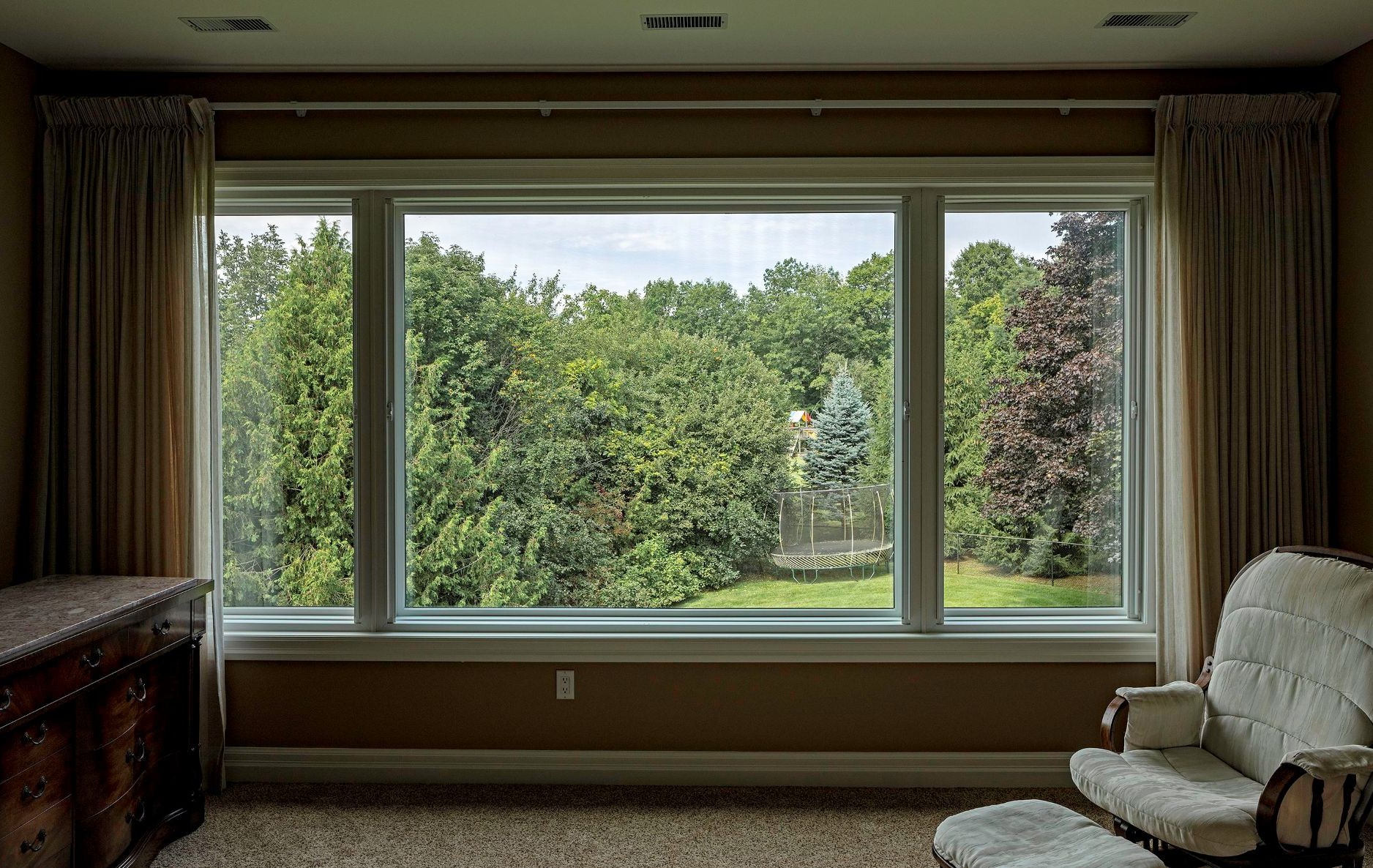
Sheers diffuse direct sunlight while maintaining privacy during the day, especially when you're slightly set back from the street.
If you live in one of Toronto's tightly packed neighbourhoods, you can install sheer curtains over blinds. This way, you can raise the blinds during the day without compromising your privacy.
Woven Wood Shades

Woven wood shades are perfect if you want to introduce natural texture into a room but don't want to make it feel heavy. They’re typically made from organic materials like bamboo, jute, grasses, or rattan woven together into a flexible shade that filters light beautifully.
These shades are especially popular in living rooms, dining rooms, and sunrooms. Why? Because they soften natural light beautifully, creating a pleasant atmosphere! They can be paired particularly well with neutral colour palettes, natural wood furniture, and indoor plants.
One thing to keep in mind is that shades with a woven texture are usually light-filtering, not blackout. If you want better privacy control in a bedroom, you can add an extra layer of privacy liner or combine it with curtain panels.
Panel Track Shades
Panel track shades are essentially a more modern version of vertical blinds. Instead of having narrow slats, they have wide fabric panels that slide smoothly along a track.
They’re especially practical for large windows and sliding glass doors. The panels stack neatly to the side without getting in the way, so you can easily access your outdoor space.
Panel track shades are very popular in modern condos and homes with floor-to-ceiling windows, especially if you want a clean and stylish finish.
Vertical Blinds
Vertical blinds have been around for decades! While they're often considered outdated, they’re still one of the most practical options for large windows and patio doors.
Their vertical slats can tilt to control light and privacy, and they can be pulled completely to the side when you want an unobstructed view. Because they’re easy to operate and durable, they’re commonly used for sliding doors that lead to balconies or backyards.
If you want a more updated look, you can get modern vertical blinds in textured fabrics, neutral colours, and softer materials that don't look as office-like.
Lined Drapes and Curtains

Full-length curtains are sometimes dismissed as heavy or old-fashioned, but they can look quite beautiful when incorporated well into a design. A lined or interlined drape, for instance, can be very practical in bedrooms or living rooms. The lining adds insulation against cold glass, reduces drafts, and, in a blackout version, blocks morning or afternoon summer light.
If you want to make the windows look larger or if you’re installing them in a small room, hang drapery panels high (close to the ceiling) and wide (well beyond the window frame). This simple trick can create a more polished look.
Plantation Shutters
Plantation shutters feature wide horizontal louvers that tilt to control light and airflow. Because they’re mounted directly onto the window frame, they provide excellent privacy and a very polished appearance. Also, plantation shutters are sturdy enough to withstand minor impacts and can almost completely block the sun's rays.
Plantation shutters work particularly well in traditional homes, coastal interiors, and transitional designs. They’re also extremely durable and easy to clean. This makes them a good option for living rooms, bedrooms, and even kitchens. So, if you're aiming for something timeless and elegant, these are definitely worth considering.
Café Curtains
Café curtains cover only the lower half of a window, leaving the upper portion open for natural light. They’re a simple but very charming solution, especially in kitchens or breakfast nooks.
This style originated in European cafés, where the goal was to maintain privacy from the street while still letting sunlight fill the space. Today, café curtains are often made from cotton or linen fabrics that give the room a relaxed and welcoming feel.
They work especially well in homes where windows face the street, and full privacy isn’t necessary.
Valances

Valances are decorative fabric panels installed across the top of a window. Their main role is aesthetic rather than functional. But they can help hide hardware elements like curtain rods or roller shade mechanisms.
They’re often paired with blinds or shades underneath. For example, simple roller shades can feel much more polished when topped with valances.
Valances are most commonly used in traditional interiors, kitchens, and dining rooms where you want to soften the window area and tie the rest of the decor together.
Motorized Shades
Motorized shades are becoming increasingly common in modern homes. Instead of pulling a cord or chain, you operate them using a remote control, wall switch, or smartphone app.
They’re particularly useful for large windows, hard-to-reach skylights, or floor-to-ceiling glass in rooms where you might find it inconvenient to operate the window treatments manually.
Motorized shades can also be integrated into smart home systems. This allows you to schedule them to open in the morning and close in the evening automatically. Besides making things much more convenient for you, this advantage can also help regulate indoor temperature by reducing heat gain during sunny afternoons.
Energy-Efficient Window Treatment Ideas
Windows are one of the biggest sources of heat loss and heat gain in a home. Nowadays, most homes already have double-glazed units that can significantly reduce heat gain and loss. Still, some older homes might have single-pane windows or outdated double-pane ones that can affect the overall energy efficiency of the home. In this case, it’s probably worth it to prioritize energy efficiency in window treatments.
Cellular (Honeycomb) Shades
Cellular shades have a unique internal structure with hollow cells that trap air. That trapped air acts as insulation. Single-cell shades offer decent performance; double- or triple-cell shades are noticeably more effective and worth considering for north-facing windows or rooms that stay cold in winter.
Honeycomb shades also have a clean, simple appearance and are a practical choice for any home with older or drafty windows. Nonetheless, they're certainly not the most aesthetically pleasing window treatments and usually block more light than other options.
Solar Shades
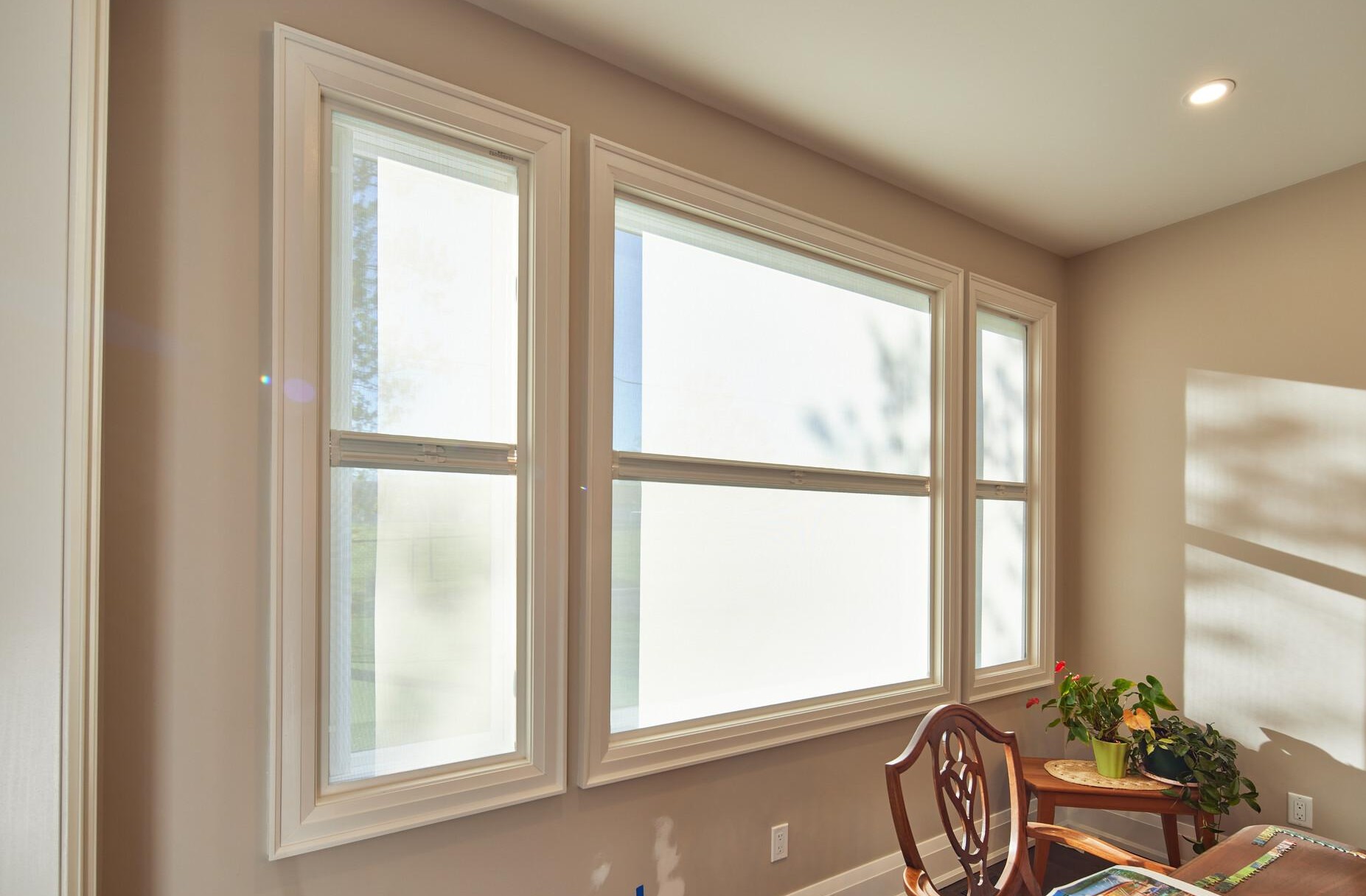
Solar shades are designed to cut glare and UV radiation while keeping your view of the city intact. The "openness factor" (typically ranging from 1% to 14%) tells you how much light and visibility the fabric allows. A 3% openness shade significantly reduces glare but limits the view; a 10% shade gives you a clearer sightline with moderate light control.
Solar shades are particularly useful for home offices - no more adjusting your monitor to avoid a glare patch! Plus, they also protect your interior from UV damage.
Moreover, you can get solar shades with a modern design. Magic’s solar shades, for example, feature our Slide’N’Hide technology that makes them fully retractable. When not needed, the solar shades remain hidden within the frame, so you can enjoy that pleasant morning winter sun, for example, or the outdoor views. When you need to cover the windows, all you have to do is pull the solar shades out of their cartridges. As simple as that!
Thermal Blinds

Thermal blinds are made of an insulating material aimed at reducing heat transfer. Some of them are made of semi-transparent materials, while others are opaque. Magic’s thermal blinds, for instance, are opaque, blocking the sunlight completely. They act as a third pane of glass, significantly lowering a window’s U-value and thus improving energy efficiency.
Magic’s thermal blinds are also perfect for privacy and can improve your windows’ soundproofing capabilities. Plus, they feature our Slide’N’Hide technology, meaning they’re fully retractable. If you install both the solar shades and the thermal blinds, you get year-round protection, as you can easily switch from one to the other.
Window Covering Ideas by Room
Here are some window covering ideas based on the room you’re renovating or redecorating.
Living Room

The living room usually calls for the most flexibility: bright and open during the day, comfortable and private in the evening. In this case, you can go for a light-filtering roller or solar shade as living room window coverings. You can also add floor-length side panels that bring warmth and make the window look more substantial.
For patio doors leading to a balcony or backyard, go for vertical blinds, a sliding panel track, or fully retractable solar shades. They are practical and add a touch of elegance. But after all, whatever you choose here needs to stack back neatly so it doesn't block the door.
Bedroom
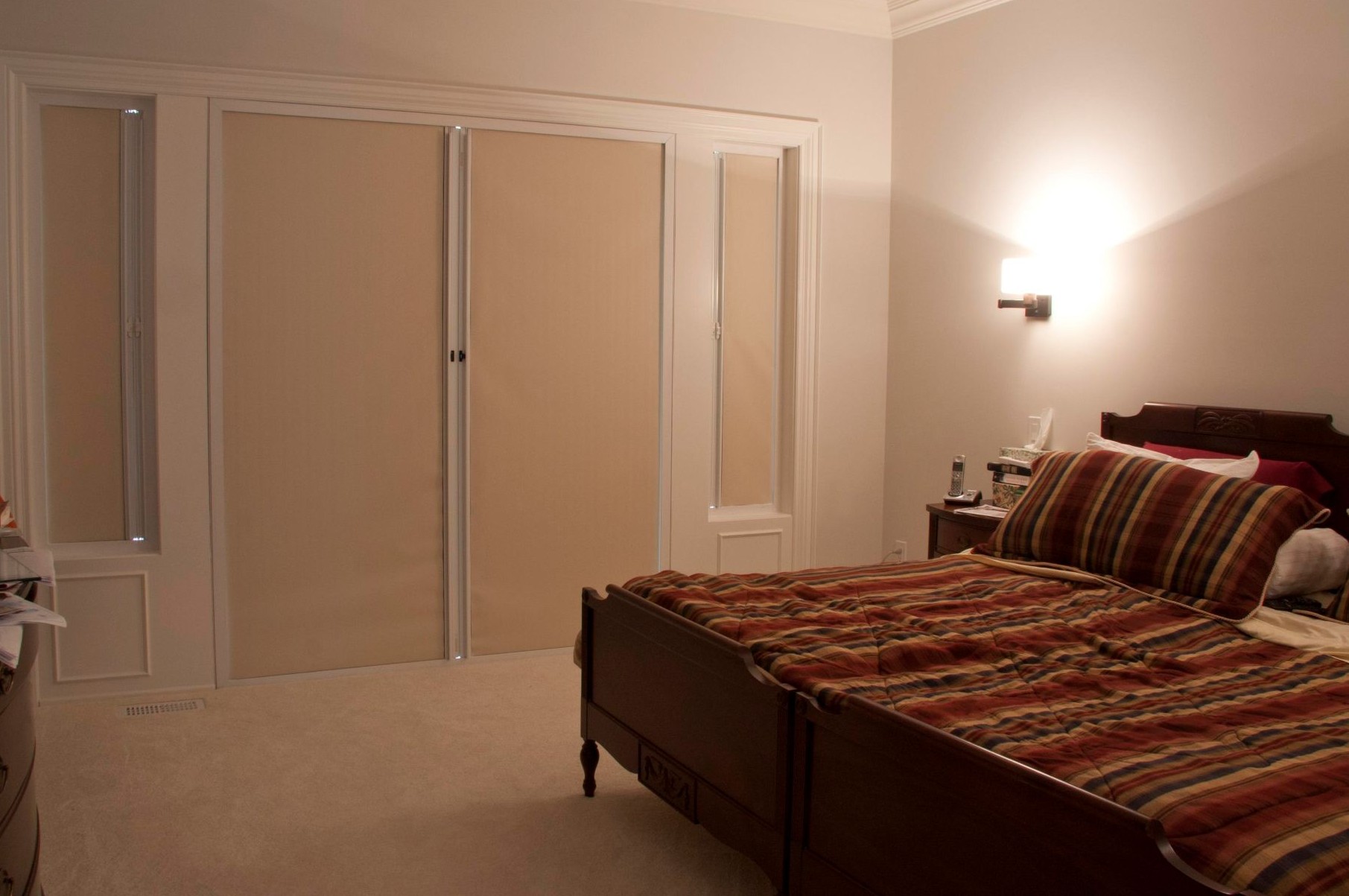
Light control matters the most in the bedroom. Blackout roller shades or Magic’s thermal blinds are usually the best, and they work well. If you want something that looks more intentional, layer a blackout roller behind curtain panels: the shade blocks the light, the curtains add the visual layer.
Top-down/bottom-up shades are also a good choice for bedrooms that face another building or a busy street. They let you bring in natural light from the upper portion of the window while keeping the lower half blocked from view.
And since the bedroom should feel restful above all, always think about what will help you properly rest. Maybe even get some window treatments that have soundproofing capabilities.
Kitchen
In the kitchen, avoid anything that will absorb cooking smells or warp from steam. Your best kitchen window covering choices are faux-wood blinds or easy-wipe vinyl roller shades. Café curtains (a panel covering only the bottom half of the window) are also practical and aesthetically pleasing for kitchens, especially those that face the street. However, they may absorb smells, so you'll have to wash them more often.
Bathroom
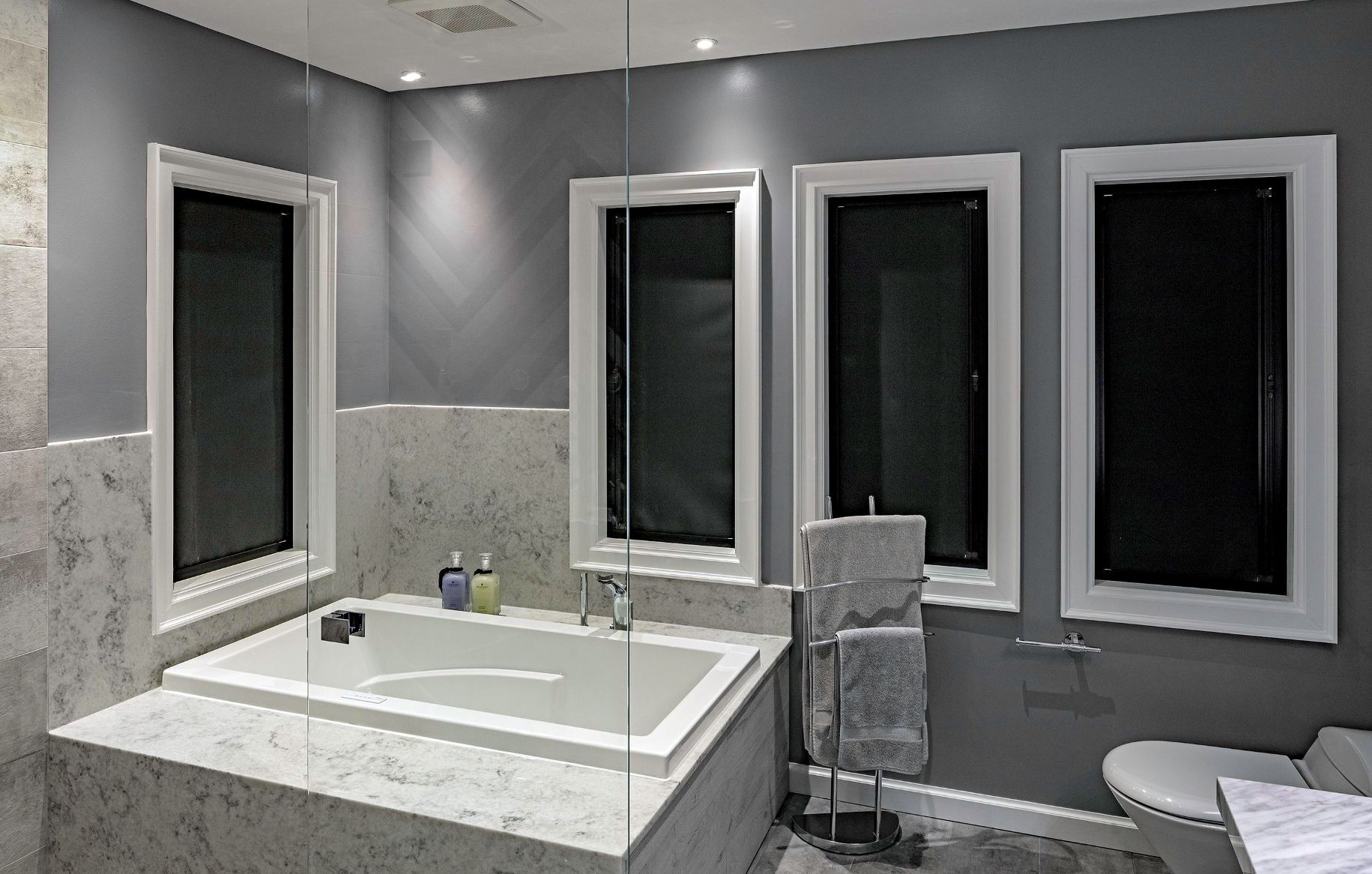
Privacy is the main priority in the bathroom, but you also have to prioritize moisture-resistant materials for bathroom window coverings. Faux-wood blinds or moisture-resistant roller shades are the most dependable choices for this space. But if your bathroom window is frosted, you may only need valances to create a finished look.
Home Office
In home offices or even media rooms, glare management is a priority. In this case, go for solar shades or light-filtering rollers, as they cut direct sun without darkening the room. In fact, solar shades block up to 99% of UV rays and glare while preserving the view. This can really help during long work sessions, because natural light is known to boost productivity. Sheer curtains alone usually aren't enough on a bright afternoon. They look good, but don't do much for screen glare.
Window Covering Ideas by Window Type
Naturally, standard rectangular windows can be designed with the same window treatments in the entire home. But if you have bay windows, floor-to-ceiling windows, or large sliding doors, you'll have to invest more time in finding the perfect window treatments for them. If you have specialty-shaped windows... Well, that's even more complicated!
Bay and Bow Windows
Bay and bow windows can be quite tricky to cover, especially bow windows, because they have a round shape. Most commonly, homeowners go for Roman shades or roller shades for bay and bow windows, because they can be installed on each individual panel. This allows you to control light independently while maintaining the shape of the window.
Another option is installing a curved curtain rod and hanging drapes that frame the entire bay. For a more cohesive look, some homeowners choose the same textile for all panels.
Floor-to-Ceiling Windows
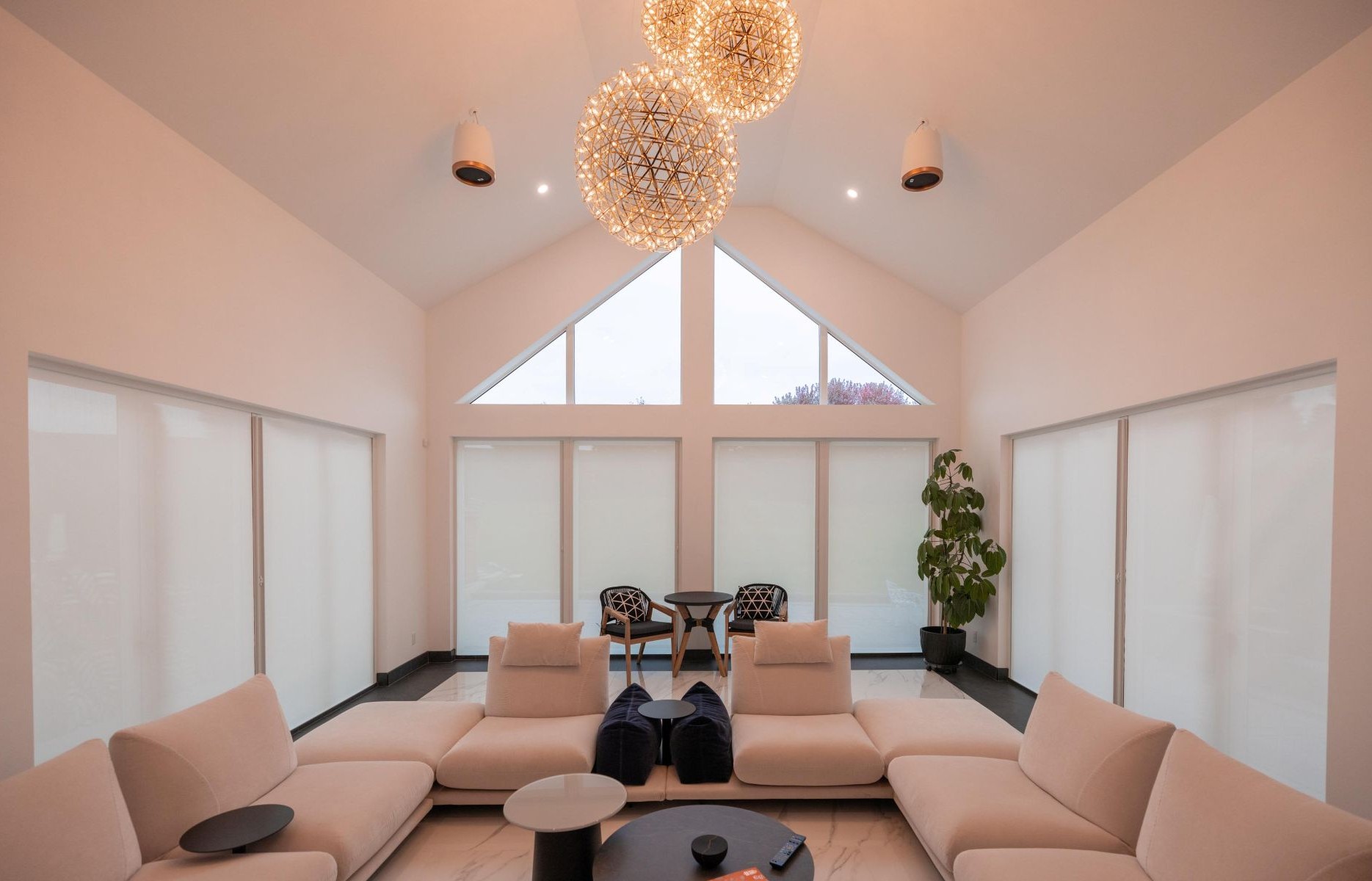
Large windows benefit from treatments that don’t interrupt the view too much. Go for solar shades, roller shades, and panel track systems that can stay well-hidden and keep the design clean.
If you want something softer, try hanging curtains mounted close to the ceiling, but it's best to choose light materials so they don't steal your windows' thunder.
Sliding Glass Doors
Sliding doors need coverings that move easily and don't block access. You can try vertical blinds, retractable blinds, panel track shades, and sliding curtain panels, for example. They are the most practical choices because they stack neatly to the side or, in the case of Magic blinds, stay completely hidden.
Small Windows
For smaller windows, prioritize simplicity. You don't want heavy window dressing for small windows, because that will make them appear even smaller. Many homeowners choose inside-mount roller shades, Roman shades, or faux-wood blinds. These options keep the design clean and are perfect if you don't want to overwhelm the space.
If the window is located in a kitchen or bathroom, try café curtains. They can add a decorative touch and maintain some privacy. But don't forget that they can get moldy!
Window Covering Ideas by Interior Style
Undoubtedly, the right window treatments should complement your interior design. It can sometimes be difficult to find the perfect match, especially if you have to take into account multiple factors and can't prioritize style above anything else. But don't give up! You'll get there! And here are some tips from Magic experts that can help you along the way.
Modern and Minimalist Interiors
Modern homes favour clean lines and simple materials. Many homeowners aiming for a minimalist interior choose roller shades, solar shades, and panel track systems. They blend into the architecture and don’t add visual clutter, two important aspects in modern design. Neutral colours like white, beige, or soft grey are often used to keep the design calm.
Traditional Interiors
Traditional spaces often incorporate richer fabrics and more decorative window treatments. Roman shades, lined dramatic drapes, and plantation shutters work particularly well in these environments. You can even go for interesting patterns if you choose fabrics! If you're looking for heavier fabrics like velvet or linen, that's also not a bad idea! According to designers, they are actually great for traditional interiors!
Scandinavian Style
Scandinavian interiors are all about light, simplicity, and natural materials. Sheer curtains, faux wood blinds, woven shades, and Roman shades are commonly used in Scandinavian designs. The goal here is to maintain a bright, airy feeling while still providing some privacy.
Farmhouse Style
Farmhouse interiors favour relaxed textures and cozy materials: café curtains, woven wood shades, soft linen drapes.
These coverings often feature neutral colours and natural fabrics that complement wood furniture and rustic design elements.
Contemporary Condos
Inside-mount roller shades, solar shades, and motorized blinds are particularly common in urban condos because they keep the design streamlined and also offer strong light control. These options also work well with floor-to-ceiling glass that’s typical in many newer condo buildings.
Window Covering Trends in Canada Right Now
Minimalist, built-in looks are highly popular in Canada right now, especially for modern condos. This typically means slim rollers mounted inside the window frame, ceiling-track systems with simple linen panels, and hardware that blends into the architecture. The goal is for the covering to disappear when open and look intentional when closed.
And let’s not forget about bold patterns and colours used as focal points, as they’re making a comeback! A patterned Roman shade in an otherwise neutral room. Or deep green velvet curtains in a white dining room. Wouldn’t these look nice?!
Last but not least, modern trends in window treatments emphasize natural materials like woven wood, bamboo, and linen, as well as energy efficiency. For example, woven wood shades are an eco-friendly window treatment made from organic materials and are completely recyclable.
FAQs
What can I put on windows instead of curtains?
Instead of curtains on windows, you can use roller shades, Roman shades, blinds, shutters, or solar shades. These options look cleaner than curtains and can offer better light control, privacy, or energy efficiency, depending on the room.
What are the latest trends in window coverings?
Current trends in window coverings include layered window treatments, woven wood shades, café curtains, outside-mounted Roman shades, and statement drapery with richer texture and detail. Designers are also favouring warmer hardware finishes and motorized shades for convenience and a more custom look.
What window treatments are going out of style?
The following window treatments are going out of style: heavily ornate valances, short curtains, flimsy blinds, and some older, generic curtain styles. Many designers now prefer cleaner lines, better layering, and more tailored treatments.
What can I put on my windows so I can see out but nobody can see in?
So you can see out, but nobody can see in, you can install solar shades, sheer shades, and daytime privacy window film. They can preserve your outward view during the day while reducing visibility from outside. However, at night, you’ll usually still need an additional layer for full privacy.