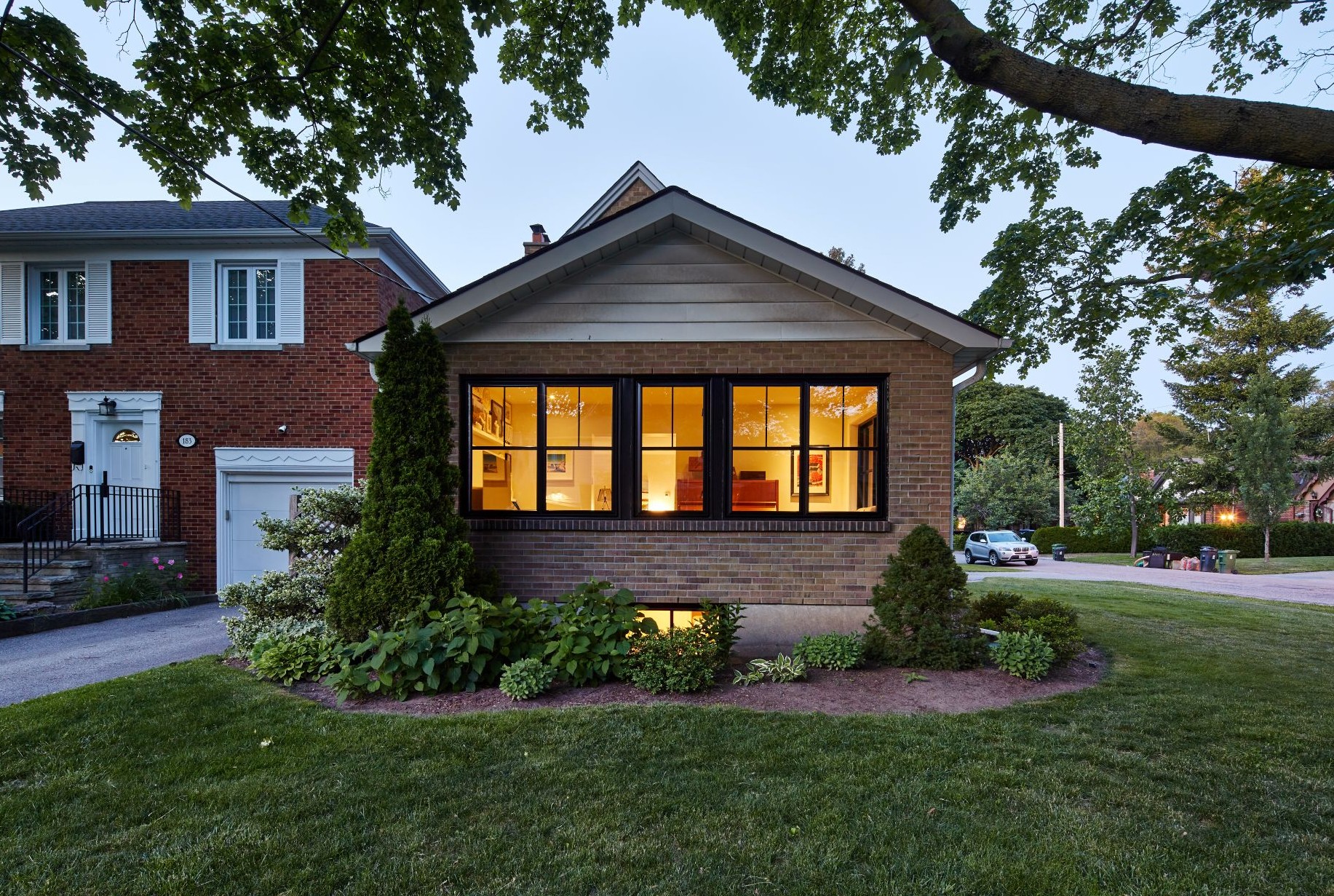
Window Treatment & Styles
19+ Best Basement Bedroom Ideas!
Creating a bedroom in your basement might sound like settling for less, but done right, a basement bedroom can become one of the most coveted spaces in your home! With the right approach, that dark, cramped underground area can serve as a great place for a bedroom that rivals any upstairs suite, maybe even surpasses it in terms of coziness and functionality!
It’s challenging; we won’t sugarcoat the truth. Low ceilings, limited natural light, potential humidity issues, awkward architectural features… These are just a few hurdles you'll face. But these challenges are absolutely solvable with smart interior design choices and strategic planning!
So, are you looking for some basement bedroom ideas? We've got plenty!
The 19 Best Basement Bedroom Ideas for Your Space
Before jumping into pretty basement bedroom design ideas, let's talk about what makes this space different from other rooms in your house.
Basements are inherently darker, cooler, and often more humid than above-ground spaces. The concrete walls and floors absorb moisture. Plus, there's limited airflow. Additionally, building codes require specific safety features - most importantly, an egress window for emergency exit.
In the following sections, we’ll explain how you can handle any basement issues to create a perfectly functional and comfortable space!
1. Install Recessed Downlights for Low Ceilings

Lighting is everything in a basement bedroom.
Bad lighting will make even the most beautifully decorated space feel depressing. Good lighting, on the other hand, can completely transform a basement into a warm retreat!
Recessed downlights are your best friend here. Also called can lights, recessed downlights sit flush with the ceiling, which is crucial when you're already dealing with low headroom. They don't intrude into the space and provide clean, focused illumination without visual clutter. The key is spacing them strategically: roughly 4 to 6 feet apart for even coverage.
2. Use Flat Panel LED Lights for Very Low Ceilings
You can also install flat panel LED lights, especially for basements with particularly low ceilings. These thin, modern fixtures provide wide, even illumination across the entire room without the visual bulk of traditional lighting fixtures. They feel contemporary and don't eat into your already limited vertical space.
3. Layer the Lights
Furthermore, make sure to layer your lighting for the best results. You want general ambient lighting from your overhead lighting, plus task lighting for reading or working, plus accent lighting for ambiance. Warm white LEDs (2700K–3000K) are usually the best because they mimic natural daylight and create a more welcoming atmosphere than harsh, cool-toned lighting.
And don't skip the dimmers! A dimmable lighting system is genuinely transformative in a basement bedroom.
4. Tackle the Natural Light Question
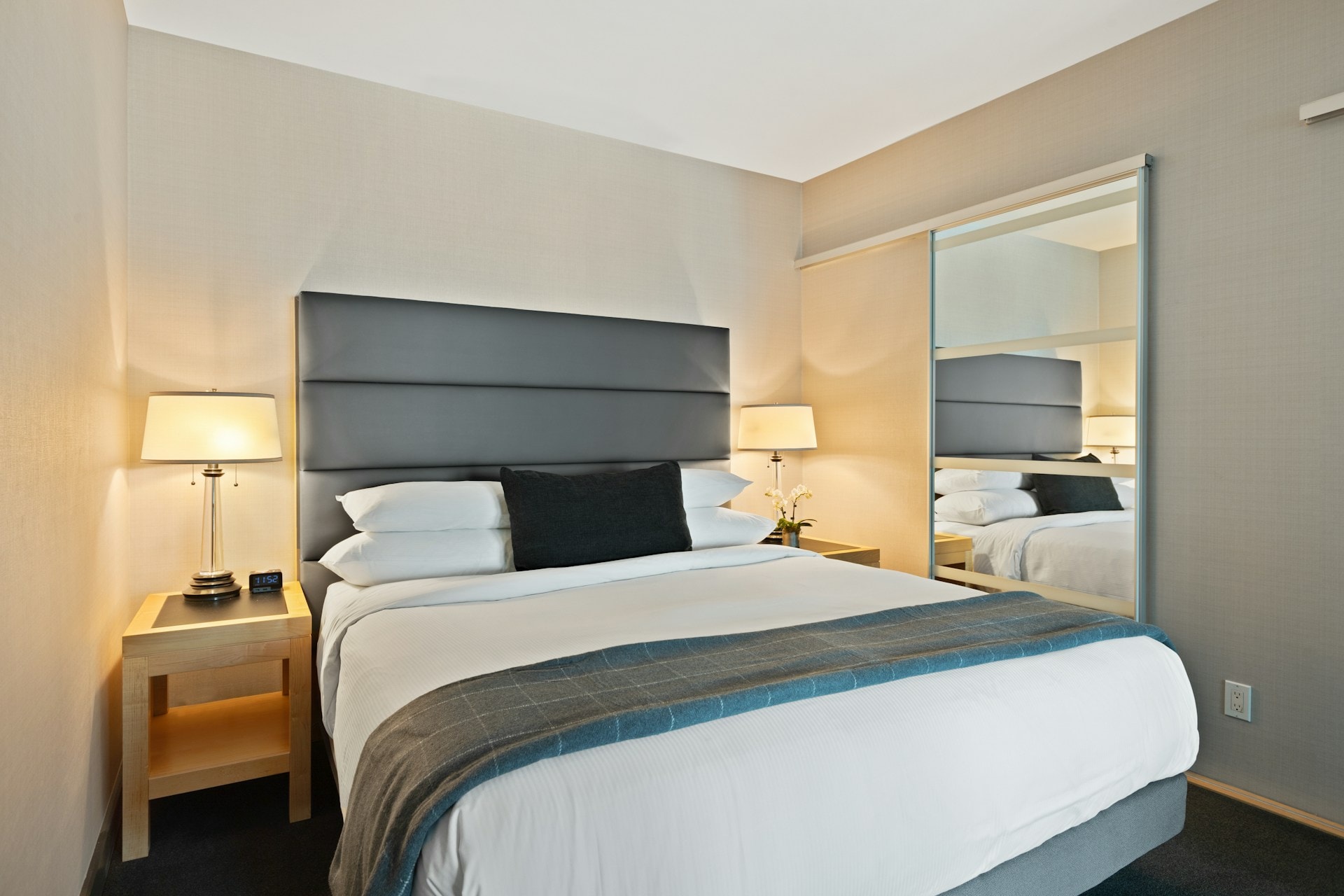
If your basement has windows, you're already winning half the battle. (In fact, if you’re using your basement as a bedroom, it must absolutely have at least one window!).
Go for a basement bedroom design where the bed is close to the window. But keep in mind that most building codes require the bed to stay away from egress windows if they block emergency exits.
And let’s not forget the best method there is: add large mirrors! Mirrors are a designer's secret weapon in dark spaces. They bounce light around, create the illusion of depth, and make the room feel larger than it actually is.
5. Choose Your Paint Color Wisely
Pure white walls often make a basement feel cold and flat. Instead, choose warm, neutral paint colors with undertones that keep the space feeling cozy. Moreover, go for a high light reflective value (LRV) to enhance brightness.
Benjamin Moore's Muslin is a warm beige with subtle pink undertones that can make your guest bedroom feel like a truly inviting space! You can also go for Sherwin-Williams' Origami White, which has creamy undertones that prevent it from looking sterile even in basements with minimal natural light. Benjamin Moore's Collingwood is another excellent choice. It's a warm greige (gray-beige hybrid) with violet undertones.
The goal is to choose a color that feels light enough to brighten the basement space but warm enough to prevent that cold, institutional basement feeling.
6. Want A Bolder Color? No Problem!
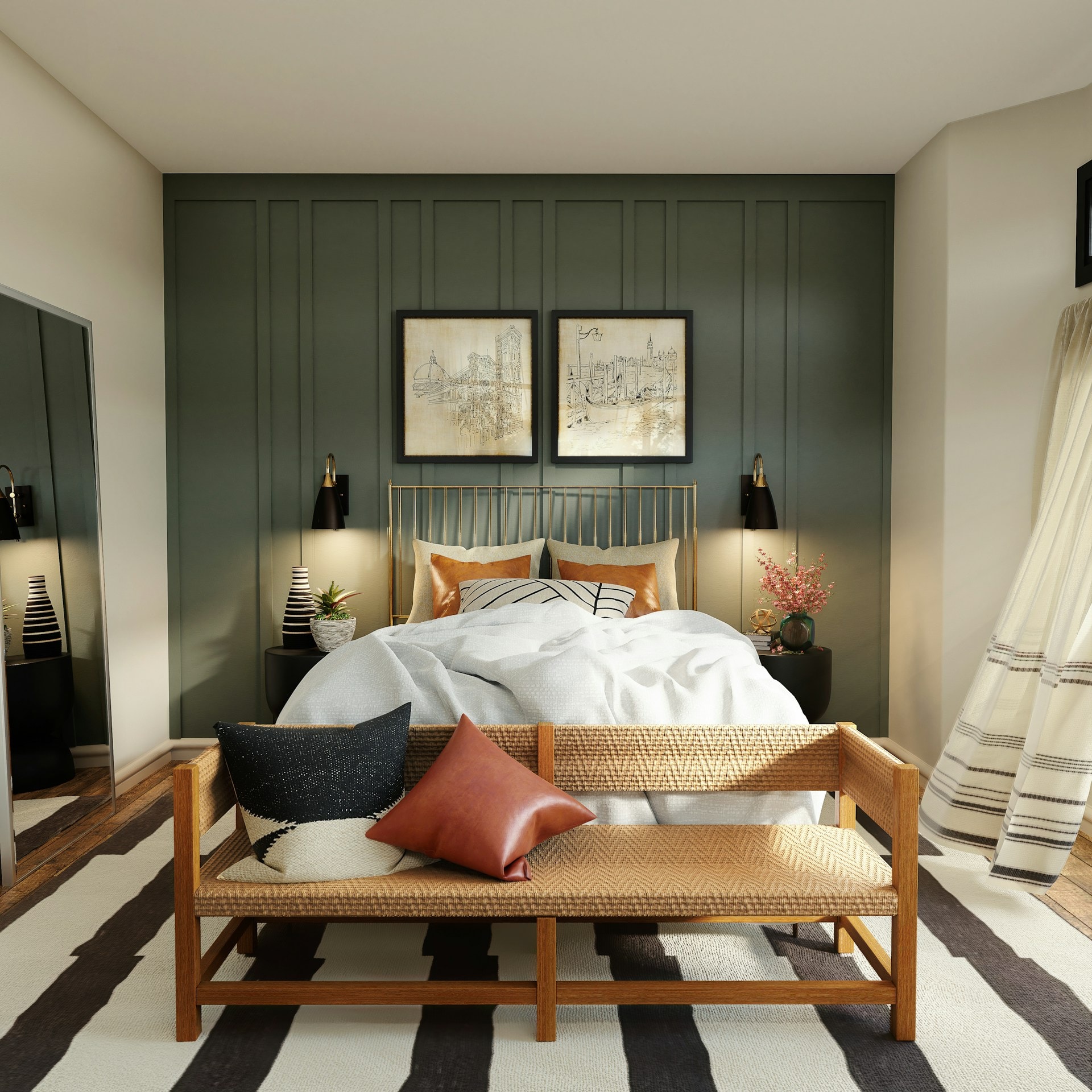
While warm neutrals are undoubtedly the safest choices, don't feel limited to beige. Many modern basement bedrooms have bolder palettes, which give the space so much character! It’s just that you’ll have to put a bit more thought into the design. Here are some interesting combinations you might like:
- Terracotta and Natural Wood
- Teal and Warm Neutrals with gold accents
- Lavender and Gray
- Yellow and Natural Wood
7. Address the Humidity Issue (Non-Negotiable)
Here's something many people skip, and then they regret it: humidity control. Basements tend to have higher humidity levels because they're partially underground and surrounded by soil. The ideal humidity for a basement is between 30% and 50%. Above 60%, you're inviting mold, mildew, and musty odors.
Therefore, invest in a quality dehumidifier. For a basement bedroom larger than 200 square feet, get a unit specifically sized for your square footage.
Then, improve air circulation. Open the window/s every day for at least half an hour. And install ceiling fans or box fans to keep air moving. If possible, consider a fresh air ventilator (FAV) or heat recovery ventilator (HRV) that brings in fresh outdoor air while removing humid indoor air.
Last but not least, basement walls often have small cracks where moisture seeps in, so make sure to seal these with an appropriate sealant. Then, add a vapor barrier before applying any insulation.
8. Plan the Layout Strategically
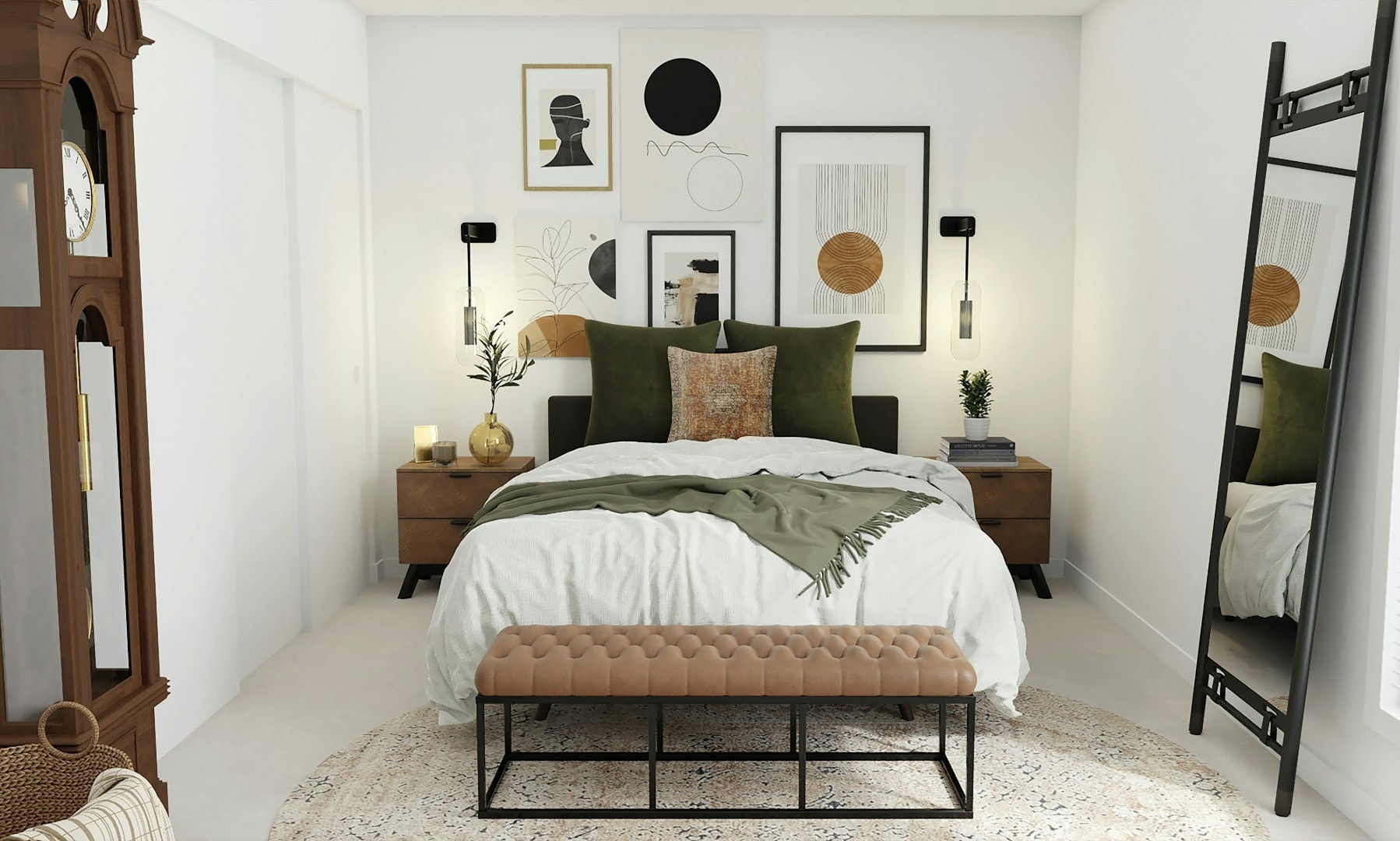
Even if you have a small bedroom in the basement, you can certainly make it feel spacious and functional. Here are some tips in this regard:
- Use vertical space aggressively. Install floating shelves above the nightstands, create wall-mounted storage, and use tall, narrow storage units. This keeps the floor open and makes the room feel less cramped.
- Consider an open layout. If you're converting a basement with multiple rooms, removing unnecessary partition walls expands sightlines and creates flexibility. Define different zones using area carpets, lighting, or subtle design cues rather than walls.
- Invest in multipurpose furniture. A storage ottoman doubles as seating and hides clutter; a sofa bed works for both sitting and sleeping; nesting tables save space when not in use.
9. Create Visual Interest and Focal Points
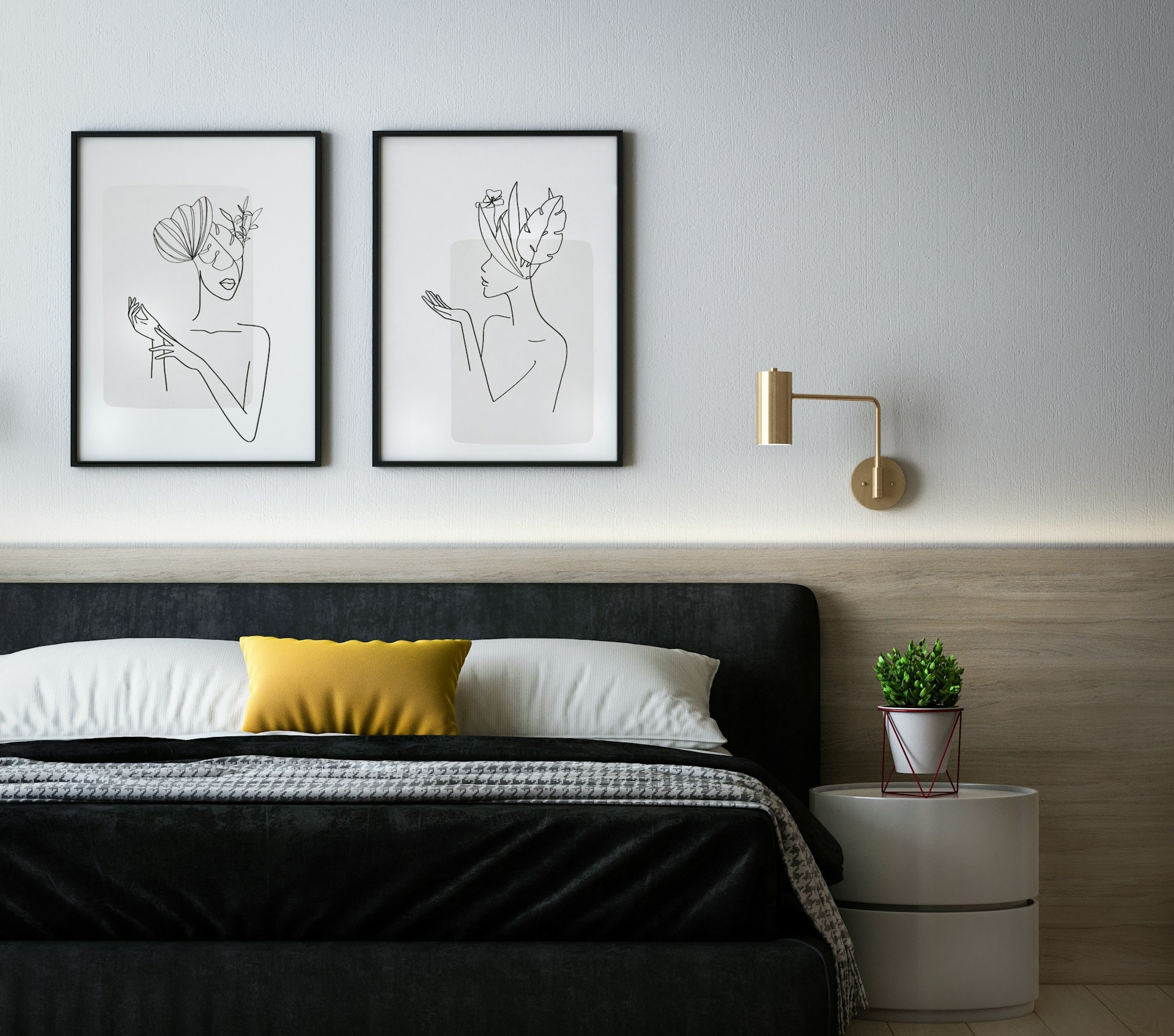
A basement bedroom needs personality. This is where you can really have fun with your basement bedroom design! Here are some tips:
- Hang artwork on the walls. Large, impressive pieces distract from any basement limitations and give the room a bit of character. Think oversized abstract prints, gallery walls, or botanical art… Whatever speaks to you!
- Incorporate exposed brick if you have it. If your basement walls have exposed brick (common in older homes), take advantage of it! Brick adds warmth, visual interest, and texture.
- Layer in cozy textiles. Use a variety of textures (faux fur, bouclé blankets, waffle weave throws) to add depth and coziness. You can also buy a large, soft area rug, as it can help ground the space and make it feel less cold and institutional.
- Add a window seat if you have a window.
10. What About the Low Ceilings?
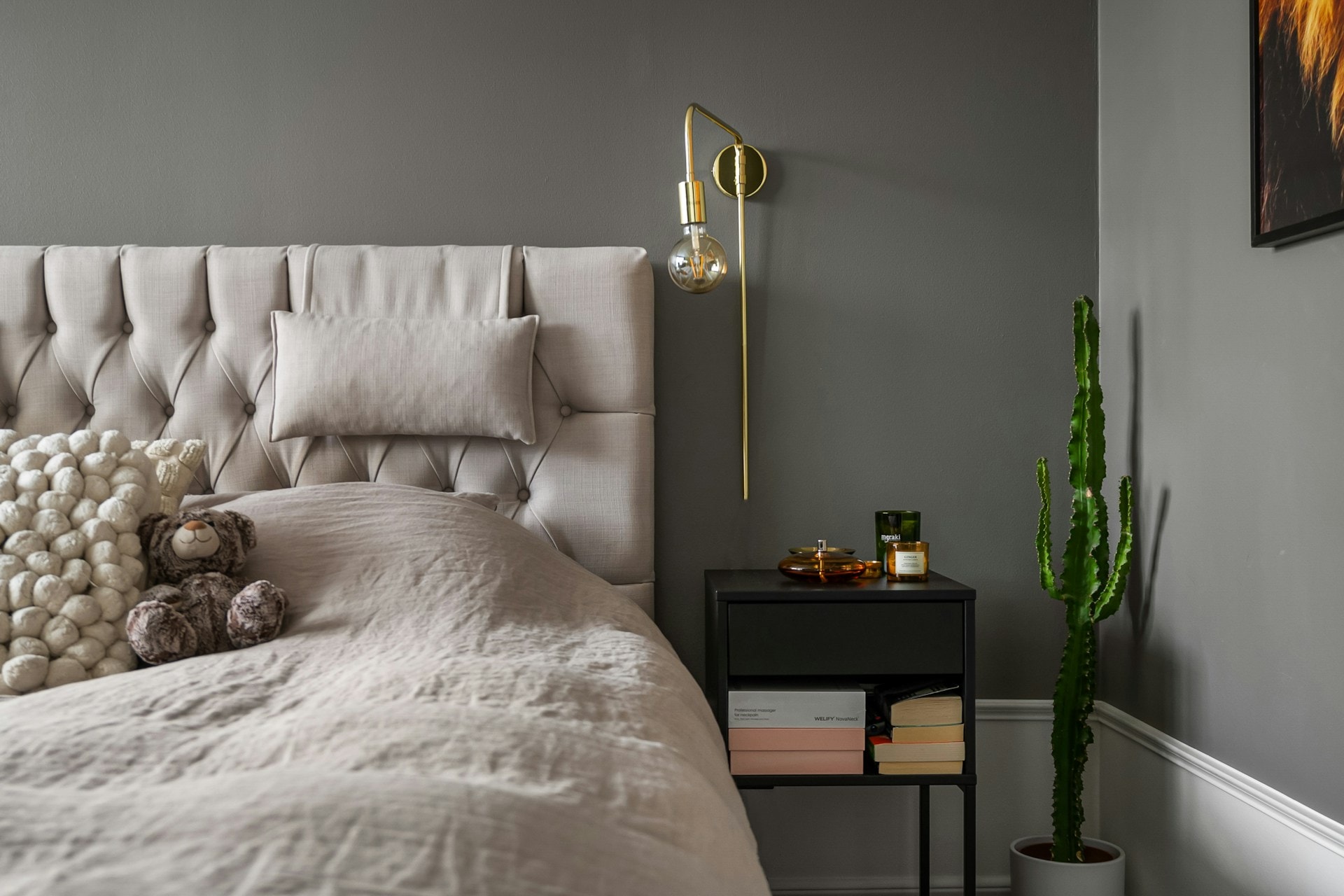
Low ceilings are probably the most challenging aspect of basement bedrooms. Here are some design elements and strategies that actually work in this regard:
- Install a recessed ceiling with height variation. Instead of dropping the entire ceiling, create a recessed design where the ceiling height varies by zone. Keep the ceiling higher over the bed and lower in less critical areas. Paint different ceiling sections different colours to enhance the layering effect.
- Use canless recessed lights. These sit completely flush with the ceiling, offering bright light without reducing headroom.
- Keep furniture low-profile. Choose platform beds or beds with low frames rather than traditional high beds with footboards. This visually reduces the ceiling height impact.
- Paint the ceiling a light color or the same color as the walls. A white or light-colored ceiling reflects light and feels less oppressive than a darker ceiling. It is also recommended to use a glossy or satin finish for the ceiling.
- Use floor-to-ceiling curtains or install floor-to-ceiling bookshelves or closets, as they’ll make the room look taller and serve as additional space to store stuff. A wall-to-wall fitted bookcase, for example, can become a strong decorative element that gives your interior a truly personal touch.
11. Flooring Choices
Basement flooring needs to be practical (moisture-resistant) and beautiful (it's still your bedroom, after all).
Most designers recommend luxury vinyl plank (LVP), as it's durable, water-resistant, affordable, and comes in tons of styles. It can mimic hardwood, tile, or concrete. However, polished concrete could work beautifully in a modern basement bedroom, too. Just seal it properly to protect against moisture. Hardwood flooring, as well as laminate or tile work too, as long as you choose moisture-resistant varieties.
Whatever flooring you choose, add a large area rug. This softens the cold basement feeling, defines the space, and makes your feet happy when you get out of bed in the morning!
12. Think of Smart Storage Solutions
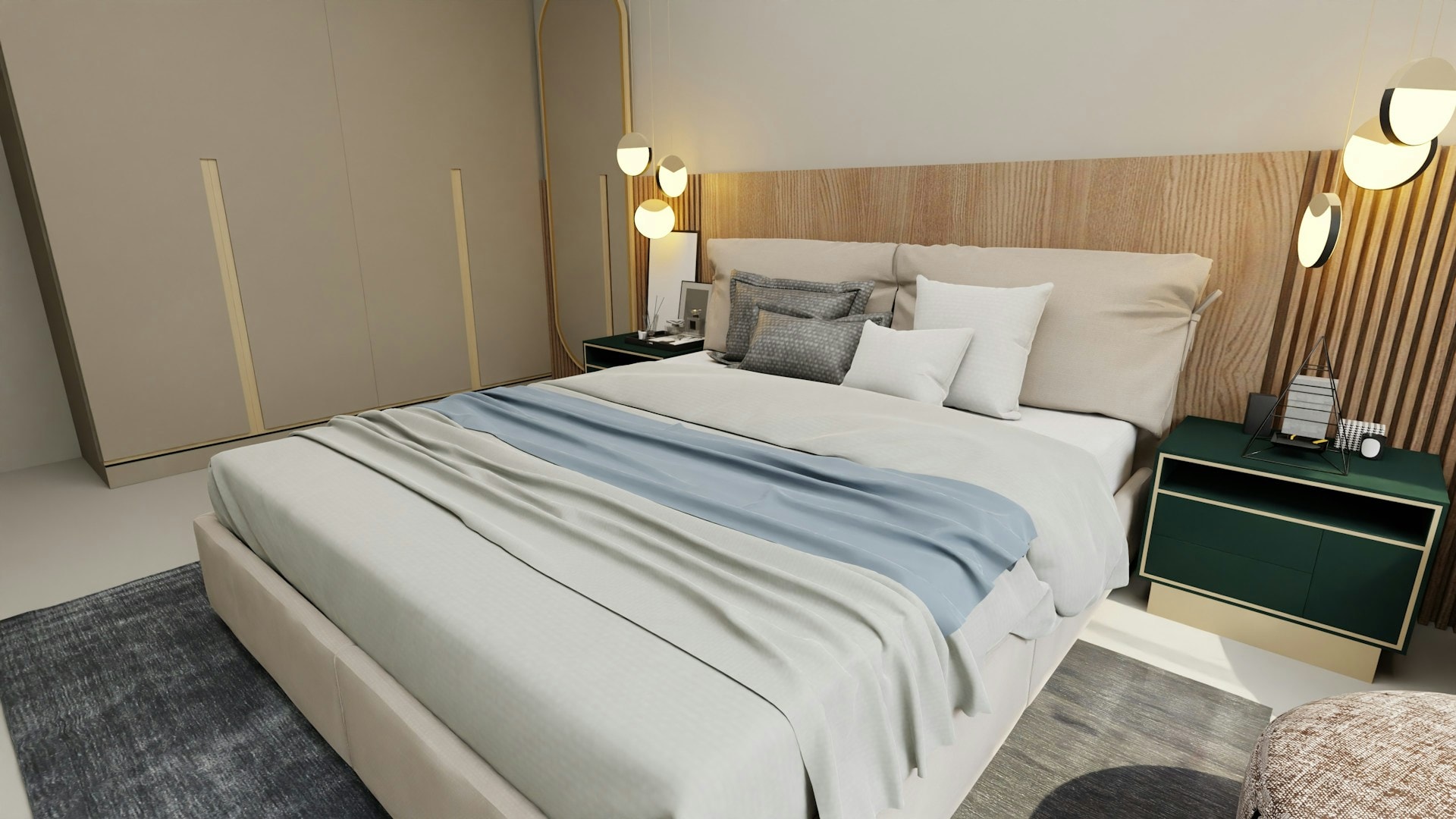
Basement bedrooms often come with architectural issues such as support columns, bulkheads, or sloped ceilings. You can make these unnoticeable with storage solutions. For example, built-in wardrobes can be designed around columns or tucked under bulkheads. On the other hand, low-ceiling areas are ideal for dressers, shelving, or bench-style storage rather than tall cabinets.
Under-bed storage is another excellent solution. Drawers or lift-up platforms provide generous space for seasonal clothing, extra bedding, or shoes without taking up valuable floor area. You can also install wall-mounted nightstands and floating shelves.
13. Use Wall Treatments to Add Depth
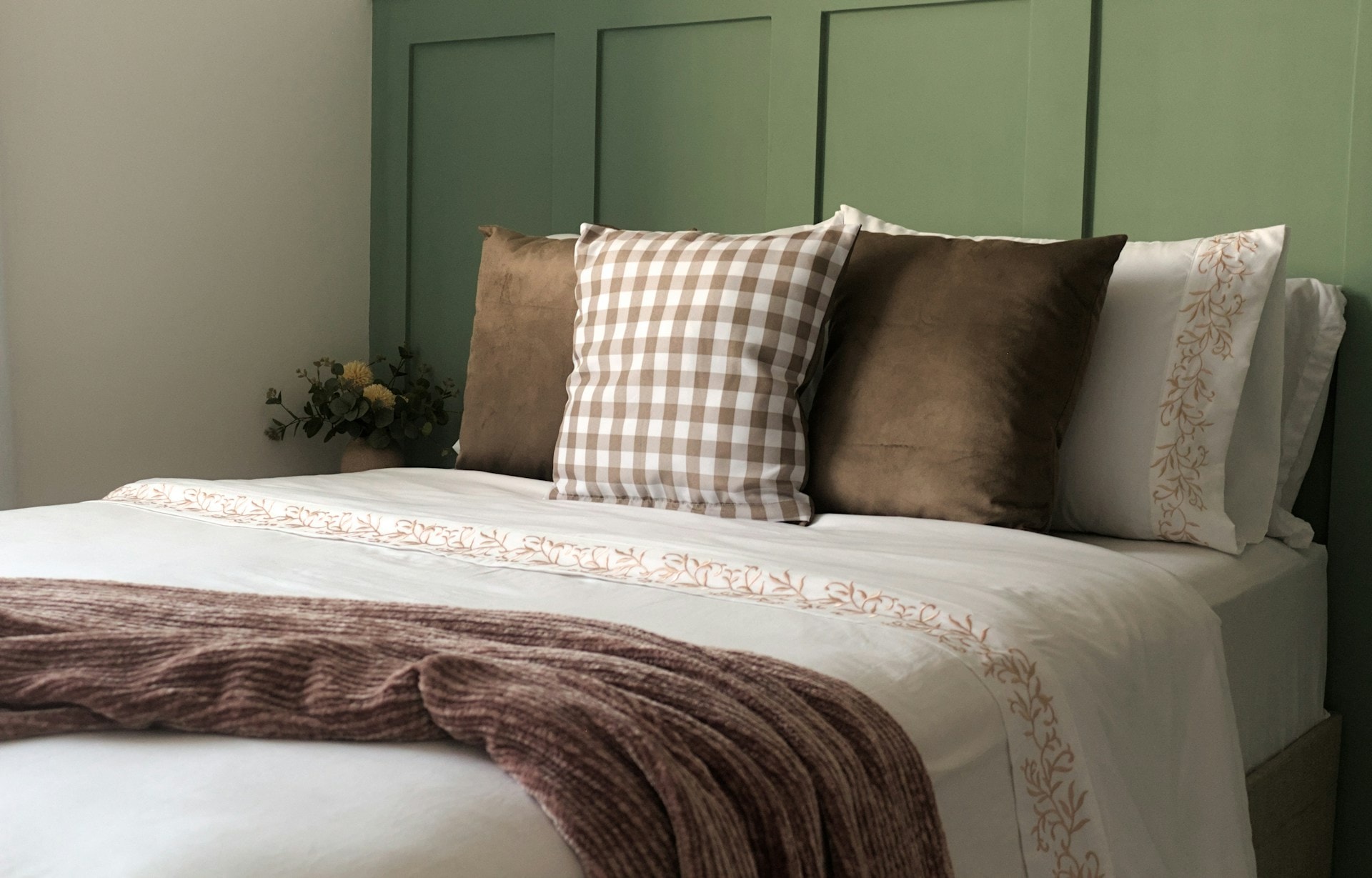
Plain walls can make a basement bedroom feel unfinished or overly utilitarian. Because of this, many homeowners go for wall treatments for more depth.
For instance, vertical wall treatments, such as wood slats or subtle paneling, can help draw the eye upward and make ceilings feel higher. Molding details like board-and-batten or simple picture-frame trim elevate the space without overwhelming it.
Wallpaper is another effective option, particularly designs with soft texture or organic patterns.
14. Design a Cozy Reading or Lounge Nook

If the space allows, incorporate a small seating area (preferably, in a corner) that would serve as a lovely reading or lounge nook where you can rest at the end of a busy day!
You just need a comfortable accent chair paired with a floor lamp, or a small loveseat at the foot of the bed. If the bedroom has a window, go for a built-in bench or window seat.
And don't forget to layer the nook with soft textiles: blankets, cushions, and a small side table.
15. Make the Bed Wall a Strong Focal Point
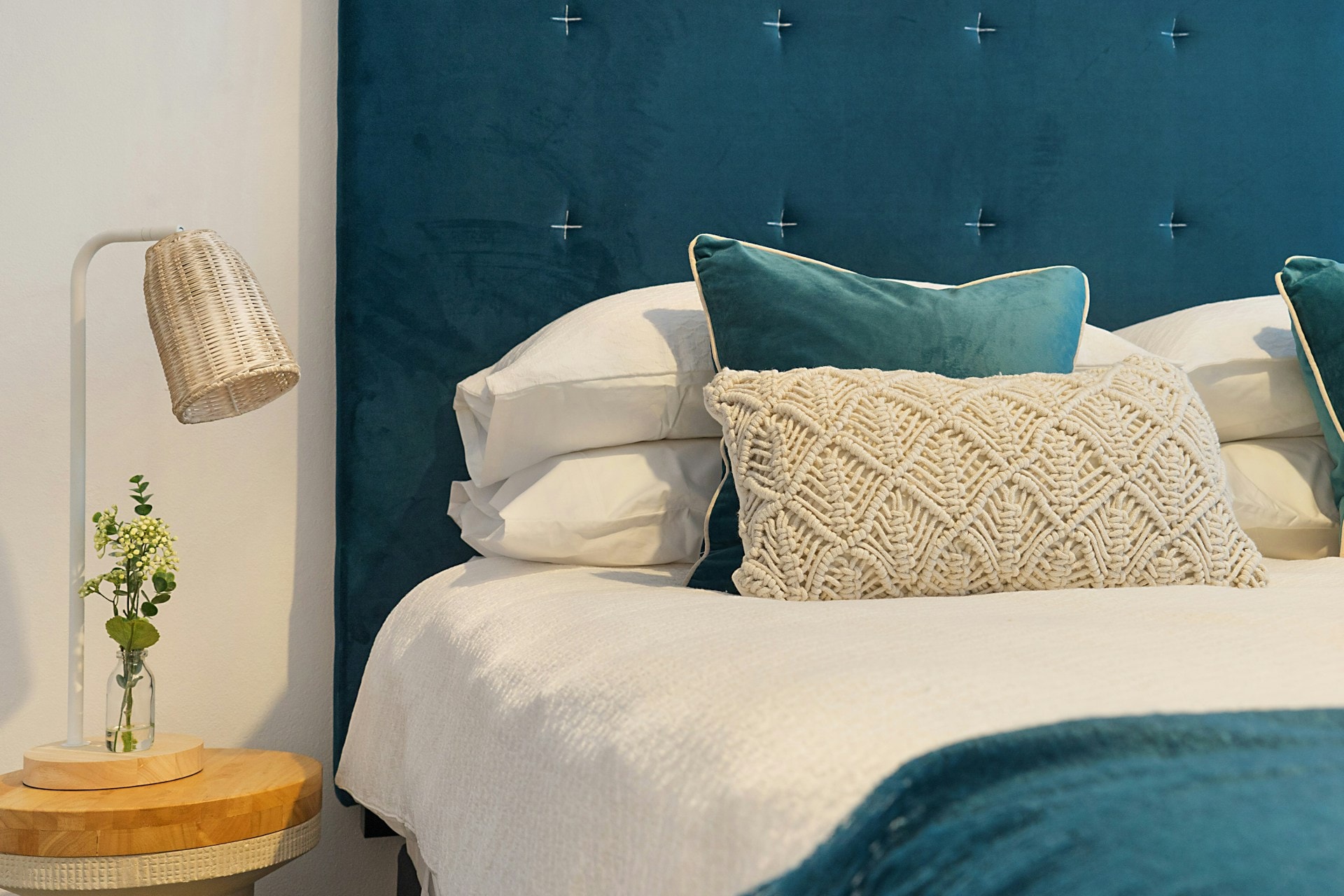
In a basement bedroom, the bed wall should clearly anchor the space, serving as an accent wall. Because most basements lack architectural features, you can make the space feel more balanced if you focus on the bed wall.
You can, for example, choose a bolder wallpaper or paint color for it. You can also go for wood paneling or an upholstered headboard that spans wider than the bed itself.
Oversized artwork centered above the bed can further strengthen the focal point.
16. Know Your Building Code Requirements
We need to be straightforward here: if you're creating a bedroom in your basement, you must comply with local building codes. The most critical requirement is the egress window, which is basically an emergency exit.
Here are the minimum requirements for egress windows, according to the Ontario Building Code:
- An unobstructed opening area of at least 0.35 sq m (3.77 sq ft)
- A width and height of at least 380 mm (15 in).
- Installed not higher than 1.5 m (4.9 ft) above the floor.
For the complete list of egress window requirements, you can check our comprehensive guide on this topic.
Make sure to check with your local building department before starting your project. These size requirements often vary by region, and you don't want to invest time and money only to discover your home design violates code.
17. Design for Comfort, Quiet, and Peace of Mind
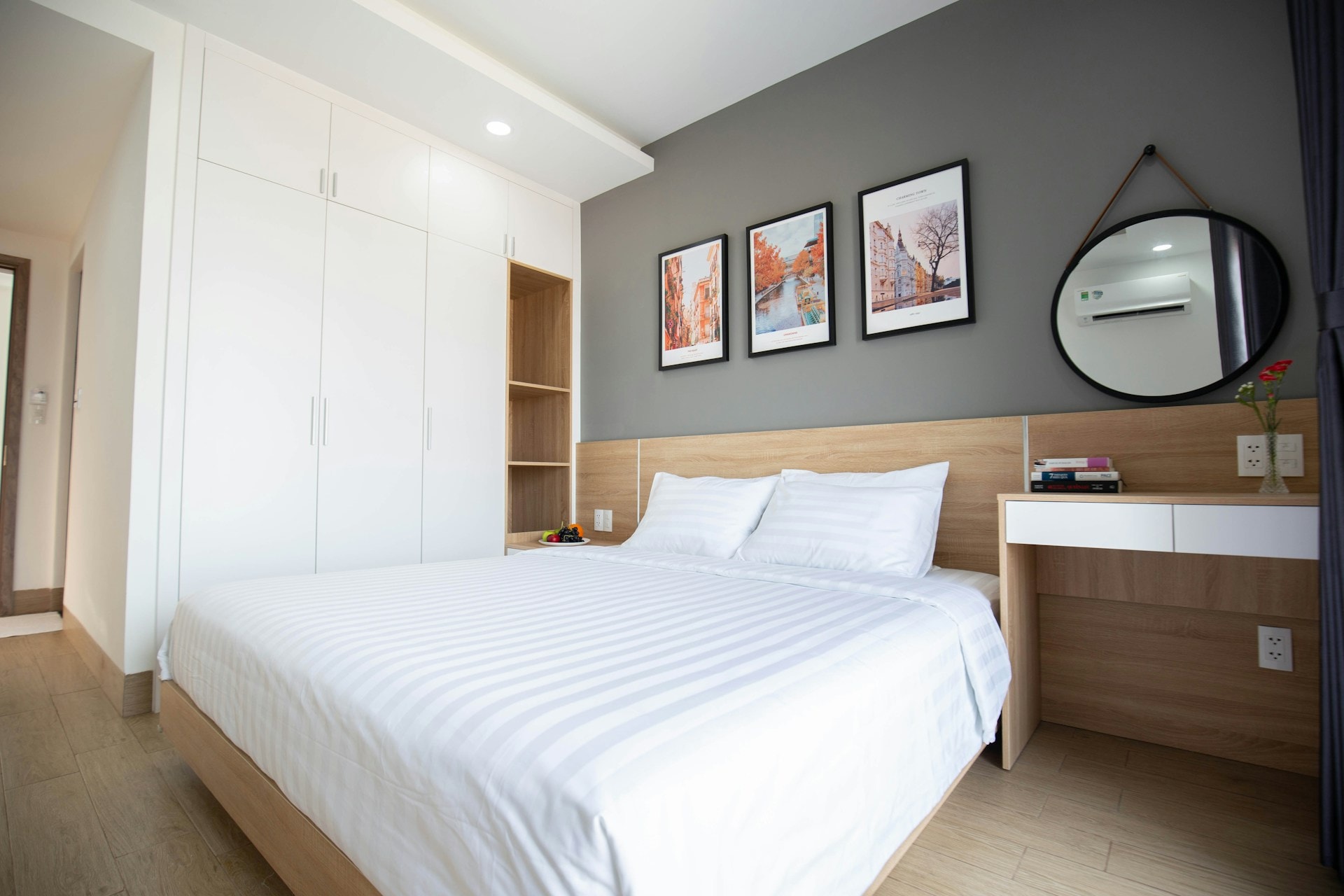
Because basements sit below the main living areas, consider soundproofing them a bit. In some cases, it's enough to simply use some rugs and curtains. You might also have to replace the window if you live in a noisy neighborhood and if the window is old or single-glazed.
And don't forget about maintaining the temperature. Basements naturally stay cooler, which is often ideal for sleeping, but the room should still feel cozy.
Furthermore, since basement bedrooms are below the ground, keep in mind other safety considerations besides egress windows. You might have to install interconnected smoke and carbon monoxide detectors, use fire-rated drywall where needed, and avoid overloading outlets.
18. Avoid These Mistakes!
Even with good intentions, certain design choices can undermine the final result. Here are some mistakes you should avoid:
- Relying on a single light source. One overhead fixture is never enough in a basement.
- Using dark colors without balance. Dark walls can look beautiful, but only when paired with adequate lighting and lighter finishes.
- Overcrowding the room. Too much furniture makes low ceilings and limited square footage feel even tighter.
- Ignoring texture. Flat surfaces everywhere can make the space feel cold and unfinished.
- Blocking or underutilizing windows. Natural light is precious in a basement. Never waste it.
- Choosing furniture that’s too tall or bulky. Low-profile pieces always work better in basement bedrooms.
19. Basement Bedroom Ideas on a Budget
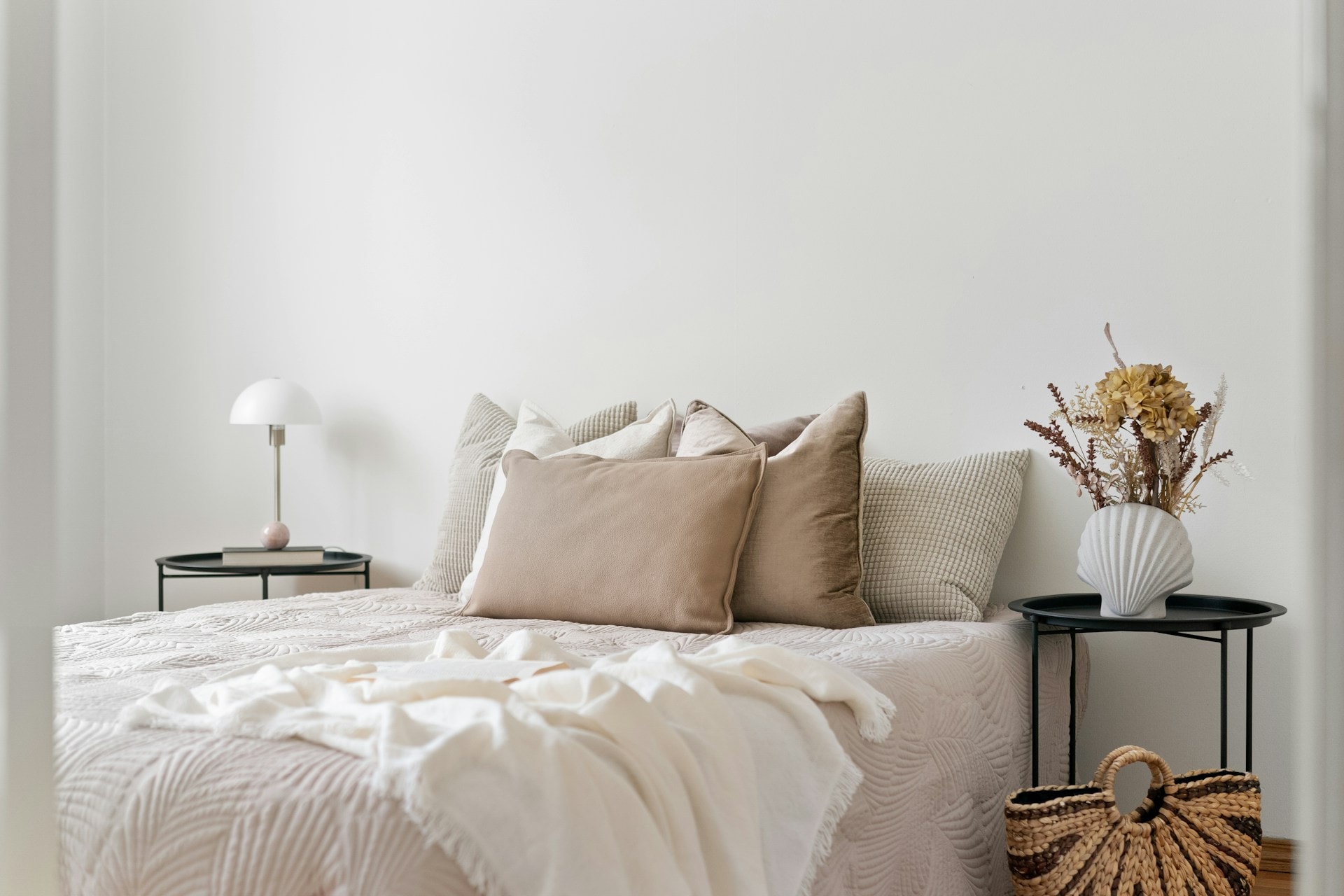
Here are some basement bedroom ideas if you're on a budget:
- Find furniture on the secondhand market.
- Layer textiles for coziness.
- Create DIY storage solutions and repurpose old items (old wooden crates as bedside tables or ladder shelves for storage)
- Create a gallery wall with framed prints and mirrors.
- Prioritize impact over cost and invest in good lighting, comfortable bedding, and one or two statement pieces.
- Focus on design elements that create the perfect atmosphere.
- Combine paint, textiles, lighting, and thrifted treasures.
Don't Underestimate the Power of Windows In Basement - Get the Best Ones!
Basement windows are truly transformative! Because your basement sits below ground level, natural light is already scarce, which means every window becomes precious for brightness, fresh air, and that feeling of connection to the outside world.
Plus, a poorly designed or outdated window is also drafty, it traps heat in summer, it gets condensation in winter, and it makes the whole room feel a bit bleak. On the flip side, a high-quality window, wisely sized, shaped, and installed, floods the room with light! It also helps keep the temperature steady, and it actually makes the space feel livable and comfortable.
From a design standpoint, quality windows also mean you get slimmer frames and more glazing area. When you're working with limited natural light, that extra glass surface truly makes a difference.
Why Magic Windows are the Best for Ontario Basements

If you're in Ontario and thinking about upgrading your basement bedroom windows, book a free consultation with Magic, as we've got the best ones for the Canadian climate!
First off, Magic uses the unique Hybrid Fusion Frame, which combines vinyl, aluminum, and steel. This combination gives you the best of all three materials: the durability of metal and the energy efficiency of vinyl.
Why does this matter for basements specifically? Our frames are much stronger (and have ultra slim profiles!) than conventional vinyl or composite windows and they handle Ontario's freeze-thaw cycles easily. The steel and aluminum skeleton keeps everything rigid while the vinyl delivers superior insulation.
Another smart feature is the patented Hi-Flo Drainage System, which is invaluable in a basement, as it completely eliminates water buildup.
Furthermore, Magic's patented Parallex hardware replaces the crank mechanism with a simple push-out function. Beyond convenience, this design actually improves energy efficiency through tighter seals and creates wider openings for better ventilation and views. It's especially important if you need an egress window, since the Parallex system makes emergency escape quick and easy.
Last but not least, Magic manufactures all the units right here in Ontario. And they all come with a 40-year warranty - that's how much we believe in our technologies!
Frequently Asked Questions
Are basement bedrooms a good idea?
Yes, basement bedrooms can be an excellent idea when designed thoughtfully. They're cost-effective, private, and can feel luxurious with proper attention to lighting, humidity control, and décor. However, you'll have to address issues like moisture, limited natural light, and low ceilings.
Is it healthy to sleep in the basement?
Sleeping in a basement is generally safe if humidity levels are properly controlled (between 30-50%) and if the space is properly ventilated. The biggest health consideration is ensuring your basement bedroom has an egress window for emergency exit and fresh air circulation.
Can I make a bedroom in my basement?
Absolutely, you can legally create a bedroom in your basement as long as you comply with local building codes, which typically require an egress window, proper ceiling height, adequate lighting, and ventilation.
How to make a basement bedroom less depressing?
To make a basement bedroom less depressing, focus on three core elements: install layered, warm lighting (recessed lights, floor lamps, table lamps, and string lights), choose warm neutral paint colors with light reflective value, and add generous textiles like rugs and throw blankets to create coziness. You can also use warm wood tones in furniture.