Window Styles & Comparisons
Standard Basement Window Size: A Complete Guide
Looking for new windows for your basement? Or maybe you're remodeling your basement, designing it as a bedroom, and want the best basement windows on the market for egress...
Either way, most homeowners have one major concern when shopping for basement windows, especially if they're below ground level: what size should they go for? Do all basements need an egress window? How large should the window well be?
To help you find the best choice for your basement area, today we'll discuss everything you need to know about the standard basement window size.
But before that, let's clarify one small but very important detail: not all basements require egress windows. Because of this, we will discuss both egress window requirements and standard sizes for windows installed for purely ventilation or light needs.
Standard Basement Window Sizes: A Quick Comparison
Before we discuss more details about standard sizes and local building codes, here's a quick comparison:
We have not included hung windows because they are rarely installed in basements, given that they are taller than they are wide.
Egress Window Sizes for Basements
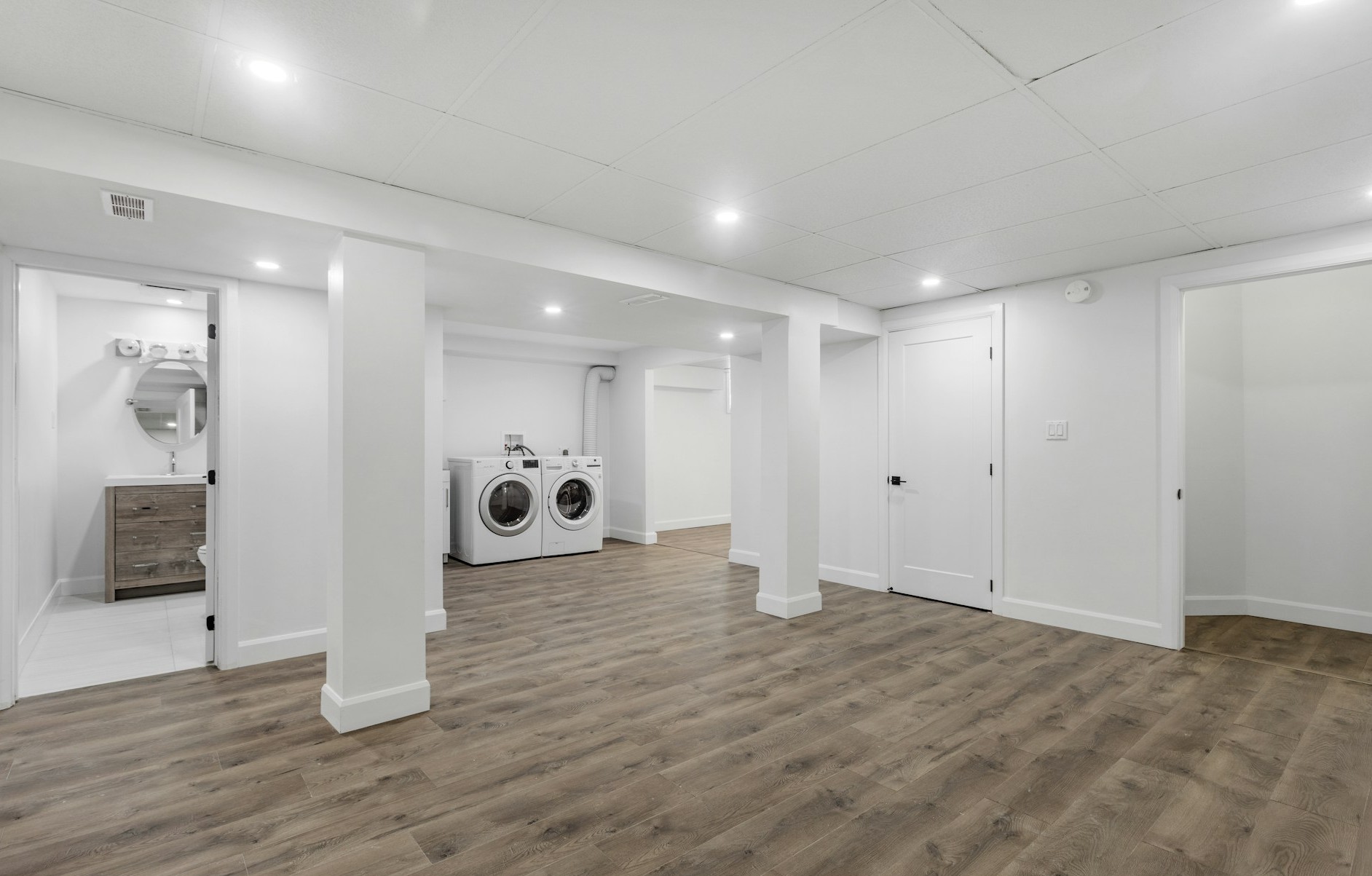
Egress windows are windows that serve as emergency exits. Because of this, they have to meet specific building code requirements. Egress windows are required in every bedroom and basement living space to ensure safety during emergencies. So, if your basement is designed as a bedroom, it needs an egress window.
Here are the egress window size requirements for basements, as per the National Building Code of Canada:
- The window must have a clear opening of at least 0.35 sq m or 3.77 sq ft.
- The window must not be installed higher than 1.5 m or 4.9 ft above the floor level. If it is installed higher, there should be something that one can climb onto to reach the window, such as a piece of furniture.
- The window must have a height and a width of at least 380 mm or 15 in.
- The window must stay open without the need for additional support.
- The window must be easily openable from the basement without the need for special tools or special knowledge.
- If there are security bars, they must open easily without keys, tools, or special knowledge.
- If the window is below ground level, it must have a window well. The window well must:
- Have at least 760 mm or 30 in of clearance.
- Have an easily openable protective cover.
- Have enough space for the sash to open easily, without obstructing the exit.
Don't forget that these requirements vary based on where you're located, so make sure to confirm them with the local building department.
Examples of Windows that Meet Egress Requirements
Here are some examples of window sizes that meet egress requirements for basements:
Remember that it's not enough to just meet minimum width and height requirements. You also have to keep in mind the minimum area requirements. And don't forget to consider the frame size too.
Standard Window Size vs Clear Opening Size
If a window measures 24 x 36 inches, this size is not the actual size of the window opening area, which is essential if the window serves as egress.
There are several factors that can make the clear-opening size smaller, including:
- Frame thickness. Vinyl, fiberglass, and wood frames add measurable depth and width, reducing the clear window opening.
- Window sash design. Operable windows, such as casement and sliding units, have additional hardware and window sash components that reduce the usable opening area.
In short, keep in mind that the window size mentioned in the product offering may not provide the required clear-open area for egress requirements. Therefore, always make sure to confirm the clear opening size with the manufacturer for precise measurements.
Non-Egress Basement Windows Sizes
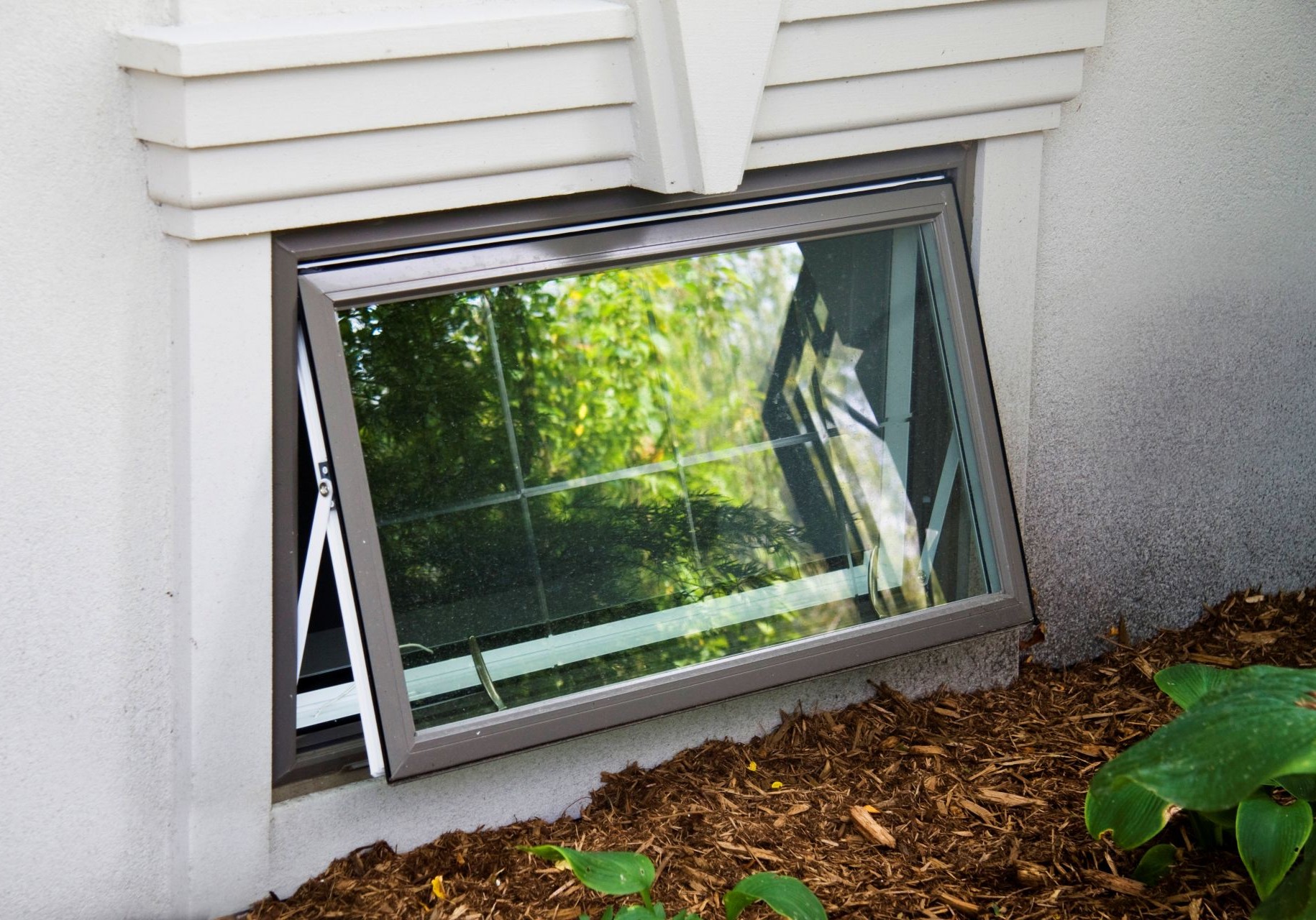
Egress windows are mandatory only when a basement is classified as habitable space or contains specific functional areas such as bedrooms. In many cases, a basement can legally use smaller, non-egress windows. For example, let's say you're using your basement only for storage or as an uninhabited utility area. If it is not intended for occupancy, most building codes do not require it to have an emergency escape.
Since non-egress basement windows do not have to meet fixed minimum clear-opening requirements, you can customize them however you want. Below, you'll find the standard sizes for different types of basement windows, but you can always confirm with the manufacturer if it's possible to adjust them based on your basement's needs.
Awning Window Sizes
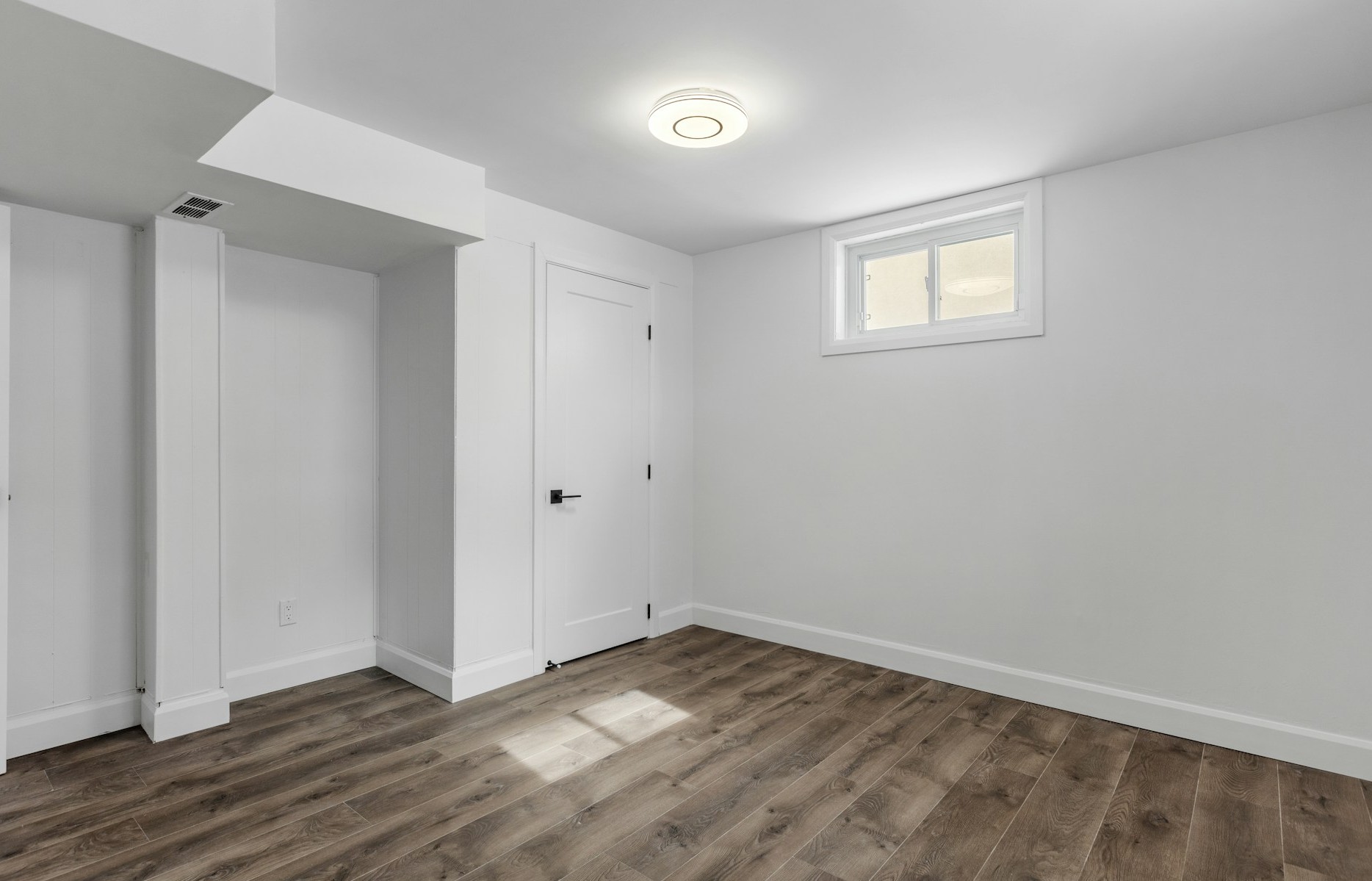
Awning windows are the most commonly installed non-egress basement units due to their compact nature and outward opening mechanism, which means you can keep the window open when it rains. Standard basement awning window sizes include:
- 24 x 24 inches
- 36 x 24 inches
- 48 x 24 inches
Keep in mind that awning windows do not meet egress requirements because they only open up to a 45-degree angle.
Sliding Window Sizes
Sliding windows are also quite popular for basements, particularly when there's no extra space for the sash to swing outwards. However, sliding windows do need a wider rough opening, since two sashes are required.
Most homeowners choose slider windows measuring 36 x 24 inches or 36 x 36 inches for their basements.
Casement Window Sizes
Casement windows are probably the best for basements because they are highly energy-efficient and seal tightly against water intrusion, but also open widely (to a 90-degree angle) for natural ventilation. Casement windows come in various sizes, including:
- 28 x 42 inches
- 24 x 42 inches
- 30 x 48 inches
Window Wells That Do Not Need to Meet Egress Dimensions
Window wells for non-egress units do not need to meet the depth, width, or ladder requirements associated with egress wells. This flexibility offers several benefits:
- Shallower wells that simplify drainage and soil management
- Narrower wells that are compatible with tight side yards or landscaping constraints
- Reduced excavation costs for retrofit installations
Although the window well can be smaller, proper drainage is critical when installing egress windows and non-egress windows below ground level to prevent flooding and ice build-up.
Light and Ventilation Requirements for Non-Egress Windows
Even when a basement window is not required to serve as an easy escape during emergencies, many building codes still impose minimum standards for natural light and ventilation. For example, according to the Ontario Building Code:
- A basement recreation room or an unfinished basement requires a window with a minimum glazing area that equals 4% of the area served.
- Bedrooms or other finished rooms (including basement bedrooms), require windows with a minimum glazing area that equals 5% of the area served.
- Kitchens (including basement kitchens) require windows with a minimum glazing area that equals 10% of the area served.
Furthermore, the minimum openable area for ventilation is often set at 4% of the floor area.
Keep in mind that these requirements vary depending on where you're located.
Basement Access Requirements That May Affect Window Sizing
Beyond egress requirements, the National Building Code of Canada mandates additional access to basements under specific conditions.
Although these requirements are separate from egress rules, they can influence window sizing and determine whether a basement window must meet minimum dimensions for emergency or firefighter access.
According to the National Building Code of Canada, any basement that:
- Is not sprinklered, and
- Exceeds 25 metres in either length or width
must be provided with direct access to the outdoors.
This access can be achieved in one of the following ways.
1. A Door or Window Meeting Minimum Access Dimensions
The opening must meet the following minimum clear-opening requirements:
- Height: at least 1,100 mm
- Width: at least 550 mm
- Maximum sill height: 900 mm above the finished floor
These dimensions are intended to permit safe and efficient entry in case of fire or other emergency scenarios.
2. An Interior Stairway Accessible from the Outdoors
Instead of a door or window directly in the basement wall, access may also be provided by an exterior entrance leading to an internal staircase that descends to the basement level.
Looking for Basement Windows? Book a Consultation with Magic!
If you're looking for new windows for your basement, whether egress ones or not, and want them to excel from every perspective, Magic's the answer!
At Magic, we manufacture our window units right here in Ontario, which is why our products are among the best on the market - we can oversee the manufacturing process, incorporate the best-performing materials, and customize them however you want to achieve superior energy efficiency, security, and functionality!
If you want to learn more about Magic products, book your free consultation with us, and one of our product specialists will provide you with everything you need to know about basement windows!
FAQs
What is the standard size of a basement window?
There is no single universal standard size for basement windows in Canada. However, the most common non-egress sizes typically range from 24x24 to 30x48 inches for awning, sliding, casement, and hopper windows.
Do all basements need an egress window?
No, not all basements need an egress window. Only habitable spaces like bedrooms or living areas need an egress window for emergency escape under the National Building Code of Canada. Storage or utility basements can use smaller standard windows solely for light and ventilation.
What is the legal size of a basement window in Ontario?
In Ontario, basement windows for habitable spaces must meet the Ontario Building Code requirements: 4-5% of floor area for light, a minimum clear opening of 0.35 sq m, and no dimension under 380 mm.
What is the minimum size for an egress window in a basement?
The minimum size for a basement egress window in Canada is a clear opening of 0.35 sq m (3.77 sq ft), with no dimension less than 380 mm (15 in). The window must open fully easily, without tools. If there's a window well, it must have at least 760 mm clearance.
Is it illegal to have a bedroom in the basement without an egress window?
Yes, it is illegal to have a basement bedroom without an egress window or direct exterior door, as it violates emergency escape requirements for a habitable sleeping area. Non-compliance can fail inspections, void insurance, and lower resale value.