
Window Cleaning
Best Way to Clean Windows: Get a Streak-Free Shine Every Time
Windows seem simple to clean, right? Just spray, wipe, and done! Except that sometimes the smudges keep coming back, and no matter how much you scrub, the glass never quite looks clear.
The best way to clean windows depends on a few things. Whether you're working on interior or exterior glass. How much dirt and grime you're dealing with. Whether you're fighting hard water stains, grease, paint, stickers, or a particular window type that makes access tricky. Luckily, no matter which of these describes your situation, you'll find the right solution below.
In short, the best way to clean windows is to remove loose dust first, apply a quality glass cleaner or a homemade vinegar solution, scrub with a microfiber cloth or applicator, and remove the solution with a squeegee from top to bottom. Finish by wiping the edges with a dry microfiber cloth to prevent streaks.
Quick Answer: Window Cleaning in 8 Steps
- Gather suitable window cleaning tools.
- Choose a window cleaning solution
- Dust the window, frame, and sill.
- Clean the window screens.
- Wash the glass and scrub gently to loosen dirt and grime.
- Remove the solution using a squeegee or microfiber cloth.
- Buff away remaining moisture.
- Inspect the window from different angles.
As easy as that! Let's break down exactly how to do each step properly, so you get a streak-free finish every time.
Step 1: Gather the Right Window Cleaning Supplies
Before you touch a single pane, get your window cleaning tools together. Having everything on hand will really help you, especially if you don't want that cleaner to dry on the glass and leave streaks! Here are the tools you'll need:
- What's the best cloth for cleaning windows? A microfiber cloth is the top pick. It leaves far fewer lint marks and streaks than paper towels, and it can be washed and reused.
- Are paper towels or newspaper good for cleaning glass? Not really. It was a popular trick decades ago, but newsprint ink can smudge on modern glass and coated windows, while paper towels leave streaks.
Step 2: Pick the Best Window Cleaning Solution
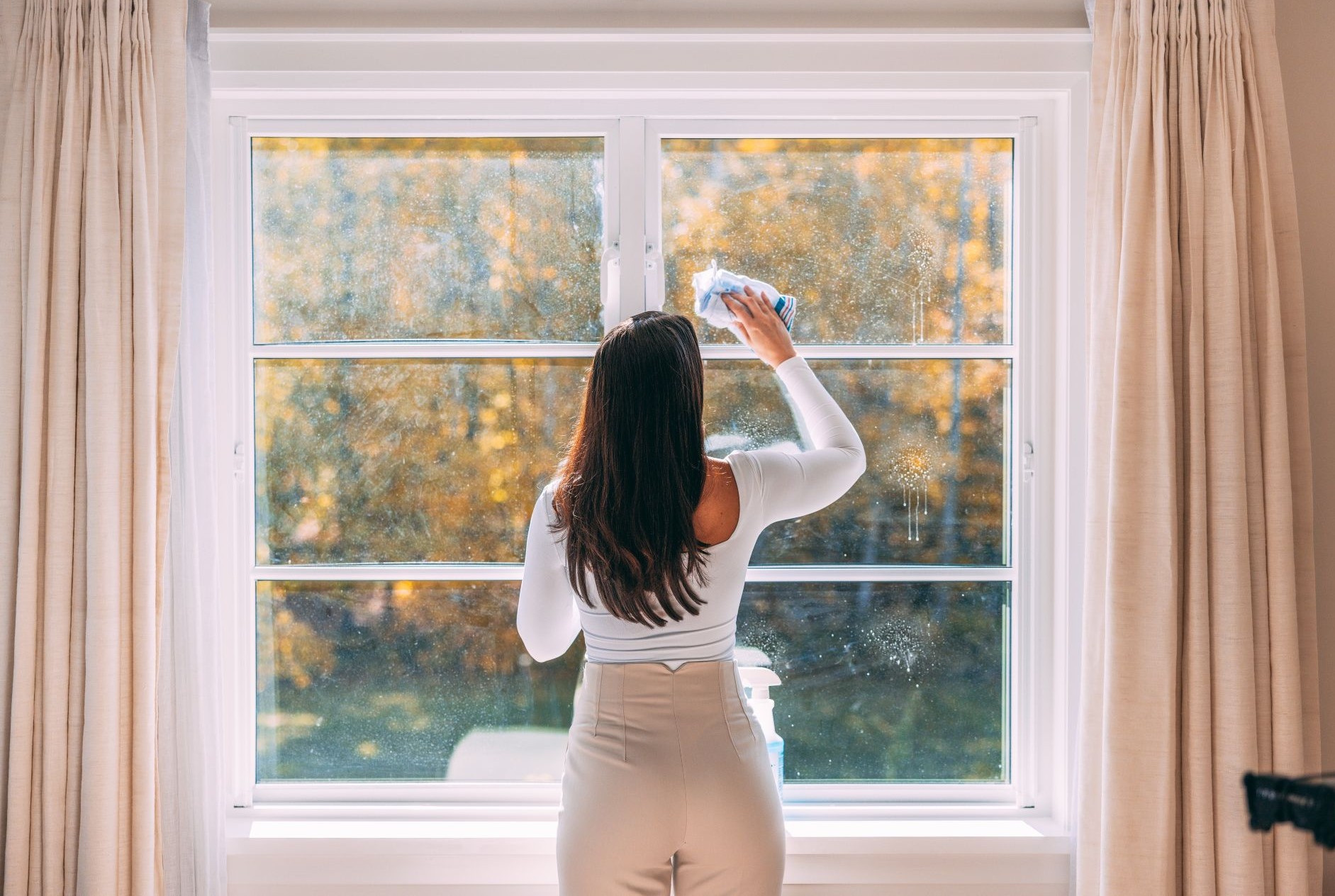
Here are the most commonly used window cleaning solutions:
- Dish Soap + Water: best for general dirt, pollen, and fingerprints. Mix a small amount of dish soap with warm water in a bucket, and you've got an effective, budget-friendly cleaner for routine washing.
- Vinegar Solution: a 50/50 mix of white vinegar and water cleans windows effectively and is one of the most reliable natural options out there. White vinegar's acidity helps break down dirt and grime, and it's especially good for light mineral deposits.
- Lemon Juice + Water + Vinegar: this mix can be slightly more effective than a simple vinegar solution. Just mix 2 tablespoons of lemon juice with 1 cup of water and 1 tablespoon of white vinegar.
- Commercial Glass Cleaner: best for grease and indoor windows, especially in kitchens. These formulas are designed to evaporate quickly and cut through fingerprints and cooking residue with minimal scrubbing.
- Hard Water Stain Removers: if there are hard water stains that can't be removed with any of the solutions above, you might need a stronger vinegar mix or a dedicated descaling product.
What's the best homemade window cleaner? A 50/50 vinegar and water solution, or warm water with a few drops of dish soap, handles most routine cleaning without any special products.
Is vinegar better than glass cleaner? For everyday grime and mineral deposits, vinegar performs just as well as many commercial cleaners, and it's more affordable. For heavy grease, a commercial glass cleaner may work faster.
Does dish soap leave streaks? Only if you use too much. A small amount goes a long way; too much soap creates a residue that causes streaks.
Step 3: Remove Dust Before Using Water
Dust should be removed from window frames, tracks, and sills before you clean the glass.
If you clean the glass before the frame, the dirt and dust from the frame will drip right back onto the pane you've just cleaned, undoing your work before you've even finished.
If possible, remove the window sash to clean the tracks as well. Vacuum out loose debris first, then use a brush or an old toothbrush with a little dish soap and water to scrub built-up grime from the tracks.
Don't forget the locks, handles, and cranks. A quick wipe-down keeps them looking sharp, and a drop of lubricant on moving hardware keeps everything opening and closing smoothly.
Why does this matter so much? Because dust plus water equals mud. Skip this step, and you'll just be smearing grit around the glass instead of lifting it off.
Step 4: Clean Window Screens
Remove the screens, wash them with a soft brush and mild soap, rinse thoroughly, and let them air dry before putting them back. If you leave the screens full of dirt, that dirt may eventually end up on your glass, especially if it's windy.
Step 5: Wash the Glass Properly
Dip your sponge or scrubber into the cleaning liquid and work the entire surface of the glass, starting at the top and working downward in overlapping strokes. This prevents dirty water from dripping onto sections you've already cleaned.
Circular motions can work for loosening stubborn dirt, but for the main wash, a consistent vertical or horizontal pattern gives you more even, predictable coverage. This way, it's also easier to spot where you've already been.
Step 6: Remove the Solution
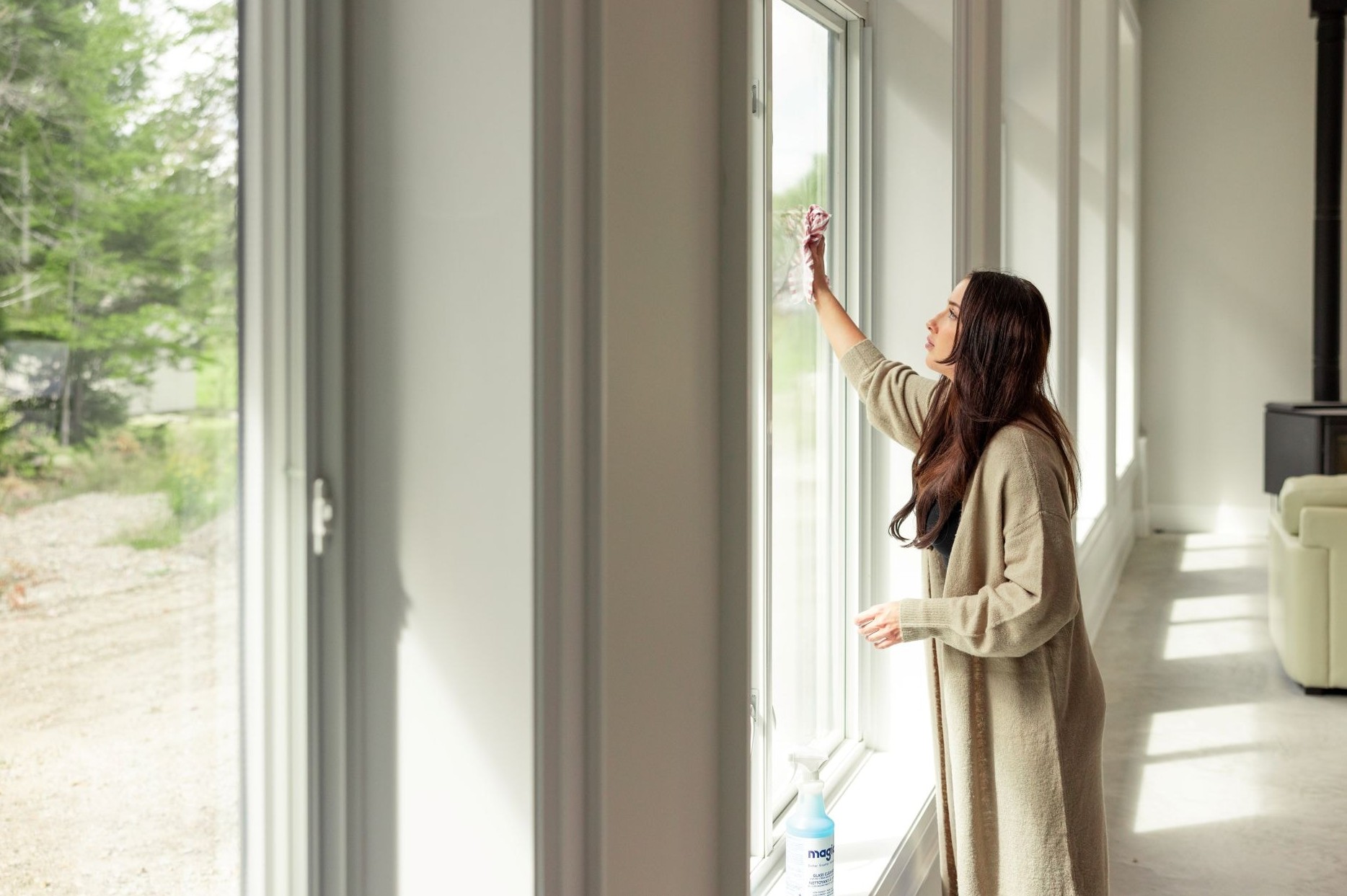
This step is the key to achieving a streak-free finish. You can use a squeegee or a microfiber cloth.
Using a squeegee:
- Hold your squeegee at a 45-degree angle. Move it from top to bottom slowly.
- Wipe the squeegee (do this after every pass).
- Start again from the top, moving the squeegee slightly over the previous line.
Using a microfiber cloth:
- Clean the glass from top to bottom in a zig-zag motion.
- Don't take the microfiber cloth off the glass and move slowly.
Step 7: Buff Away Remaining Moisture
Once the bulk of the solution is gone, take another dry microfiber cloth and buff the edges and corners the squeegee couldn't quite reach. Use quick, light motions.
Avoid paper towels here. They're more likely to leave lint and faint streaks behind than a proper microfiber or lint-free cloth.
Step 8: Inspect Windows From Different Angles
Before you call it done, step back and inspect your windows, check your work in different lighting. Sunlight reveals every last streak, even if you might not notice it indoors. So, walk around, check from an angle, and catch anything you missed while the glass is still easy to re-wipe.
Bonus Step: How to Handle Stubborn Window Problems
Removing Hard Water Stains
Mineral deposits from sprinklers or hard water leave behind a chalky, spotty film. A stronger vinegar solution, citric acid, or a specialized hard water remover can dissolve these stubborn water spots. Let the solution sit for a few minutes before scrubbing.
We have a more comprehensive guide on how to get hard water stains off glass if you're struggling with this.
Removing Paint
A plastic scraper is your safest bet for removing paint. It can be used on wet glass at a low, careful angle. Plastic scrapers can lift dried paint without scratching the surface. Just make sure to lubricate the glass first and never use a blade on tempered or coated glass.
Removing Stickers and Adhesive
To remove stickers and adhesive, use warm water to soften the sticker, and then use rubbing alcohol or a dedicated adhesive remover to break down the sticky residue left behind.
If it's not working, read our guide on how to remove stickers from glass without scratching the glass surface.
Removing Tree Sap
Rubbing alcohol or mineral spirits will dissolve sap without damaging the glass. You can also use specialty removers if you're dealing with a heavily sap-covered window.
Removing Bird Droppings
To remove bird droppings from window glass, let the area soak first with a wet cloth. Then, clean the window as usual. Avoid scraping dried droppings off dry glass, because it can scratch the surface.
Removing Grease
Kitchen windows are usually covered in grease. In this case, you might need a degreasing dish soap or commercial glass cleaner that sometimes removes cooking residue better than vinegar.
Removing Salt Spray
Coastal homes deal with a constant film of salt. To remove salt spray from windows, rinse them thoroughly with water before applying your cleaning solution to avoid just spreading the residue around.
Cleaning Mold Around Window Edges
Mold on the glass itself usually wipes away with a vinegar solution. Mold on the frame or sealant may need a dedicated mold cleaner (check our guide on cleaning mold from windows for step-by-step instructions). Keep in mind that persistent mold can be a sign of a bigger moisture issue worth investigating.
Removing Scratches
Superficial scratches can sometimes be buffed out with baking soda, toothpaste, nail polish, metal polish, steel wool, or commercial products designed for scratch removal. Deep scratches are much harder to remove. Read our detailed guide on how to remove scratches from glass.
When's The Best Time to Clean Windows?
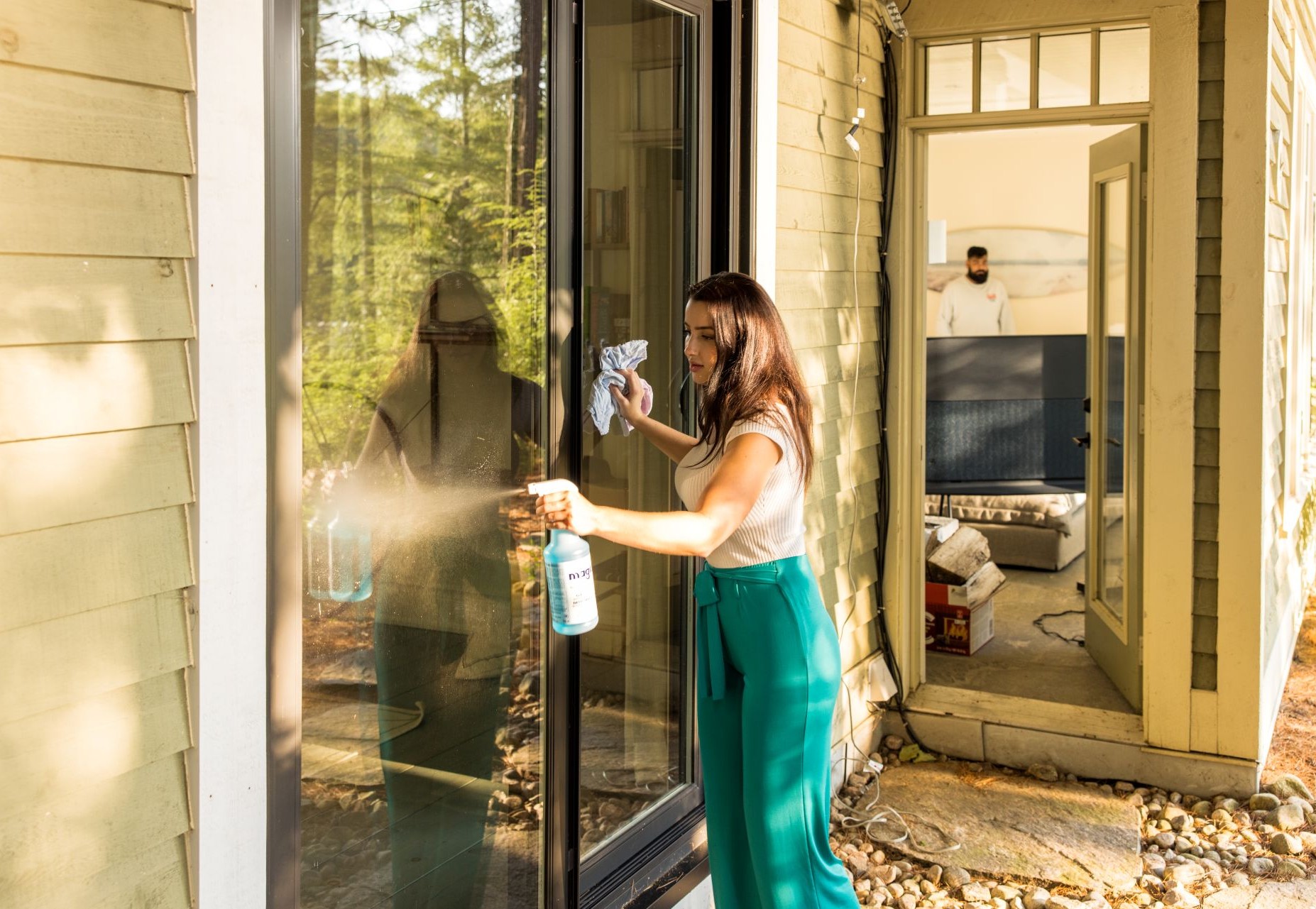
The best time to clean windows is on a cool, cloudy day. Sun and heat cause your cleaning solution to evaporate before you can wipe it away, and that fast evaporation is exactly what leaves streaks behind.
Avoid freezing temperatures too. The solution can freeze right on the glass. Cool, overcast weather is the sweet spot every time.
Common Window Cleaning Mistakes
- Cleaning in direct sunlight
- Using too much cleaning solution
- Wiping with a dirty microfiber cloth
- Reaching for paper towels instead of microfiber
- Skipping the dust removal step
- Using a dirty squeegee blade
- Cleaning with hard, mineral-heavy water
- Cleaning only the glass and ignoring the frame, tracks, and screens
Best Way to Clean Different Types of Windows
Here are some window cleaning tips for different window types:
- Double-hung windows: Tilt the sashes inward for easy interior access. Don't forget to clean the tracks between the two sashes.
- Casement windows: If cleaning crank windows, crank the window fully open to clean the outside windows from inside, if possible. Don't skip the hinge and crank hardware.
- Awning windows: Clean from underneath as they open outward. Don't miss the top edge, which collects the most dirt.
- Sliding windows: Remove the sash if possible for full access to the track. Don't forget to remove the debris packed into the sliding track.
- Picture windows: Since these don't open, exterior access usually requires a squeegee on an extension pole or a professional. Avoid using too much pressure on large panes, risking cracks.
- Skylights: A soft brush and an extension pole are essential for skylights. Don't attempt this without proper fall protection.
- Bay windows: Clean each pane individually and pay attention to the angled seams where dirt collects.
- Basement windows: These often need extra scrubbing for dirt and cobwebs from ground-level exposure. Make sure to clean the window well and check if the drainage system works properly.
How Often Should You Clean Windows?
Monthly cleaning is generally enough to keep interior windows free of smudges, while exterior windows typically hold up fine with a twice-a-year deep clean or more often if you're dealing with coastal air or heavy traffic dust.
Window Cleaning Safety Tips
- Use a stable, properly rated ladder, and never lean it against the window frame itself.
- Have a spotter for second-story windows whenever possible.
- Keep ladders and extension poles well clear of any nearby power lines.
- Skip the pressure washer on window glass. It's easy to force water behind the seals or crack the pane.
- Check whether your glass is tempered before using a razor blade anywhere near it.
- If your windows have a Low-E coating, avoid abrasive cleaners, steel wool, or harsh scraping unless the manufacturer specifically allows it.
Window Cleaning Troubleshooting Guide
Frequently Asked Questions
What's the best way to clean windows without streaks?
The best way to clean windows without streaks is to use a vinegar or glass cleaner solution, scrub gently, then remove it completely with a squeegee, wiping the blade after each pass. Finish by drying the edges with a microfiber cloth on a cool, cloudy day for the best results.
What's the best homemade window cleaner?
A 50/50 mix of white vinegar and distilled water is a reliable, inexpensive homemade window cleaner that cuts through everyday dirt and light mineral deposits without leaving residue behind.
Why do my windows still look streaky?
Windows usually look streaky after having been cleaned if you've used too much cleaner, a dirty cloth or squeegee blade, or cleaned in direct sunlight, which causes the solution to evaporate before you can wipe it away.
Can you use dish soap to clean windows?
Yes, a small amount of dish soap mixed with warm water removes dirt, pollen, and fingerprints on windows.
Is newspaper still good for cleaning windows?
It's not recommended to use newspaper for cleaning windows. Modern coated glass and newsprint ink don't mix well, and a microfiber cloth simply performs better.
How often should windows be cleaned?
Clean interior windows monthly and exterior windows about twice a year. Do this more frequently if you live in a coastal or high-traffic area.
Can you clean windows with hard water?
It's best to avoid cleaning windows with hard water. Hard water leaves mineral deposits behind, which is exactly what causes those stubborn water spots in the first place.
What's the safest way to clean second-story windows?
To clean second-story windows, use a sturdy extension pole from the ground whenever possible, or hire a professional with the right ladder and safety equipment.