Energy Efficient Windows
Ceiling Fan Direction: Here's Everything You Need to Know
Your ceiling fan is doing one of two jobs, depending on which way it spins. If you get the direction right, you’ll stay comfortable. If you get it wrong, you'll be wasting electricity while your furnace or AC works harder than it needs to.
So, if you’re wondering which direction you should set your ceiling fan at, keep reading! This guide covers everything you need to know about ceiling fan direction: the right settings by season, how to check your fan’s direction right now, room-by-room tips, and how to optimize ventilation with your windows and doors.
Quick Answer: Ceiling Fan Direction
In summer, your ceiling fan should spin counterclockwise. In winter, it should spin clockwise. In spring or fall, adjust it depending on whether it's hot (counterclockwise) or cold (clockwise).
Right Ceiling Fan Direction for Summer
In summer, you should set your ceiling fan direction counterclockwise. In this direction, the ceiling fan blades should lead with the upturned edge as they spin.
Ceiling fan cools people, not rooms. The ceiling fan direction basically impacts perceived temperature in summer because it creates a wind chill effect. The wind chill effect occurs when the air motion speeds up the rate of heat transfer from the body to the surrounding atmosphere. It speeds up the evaporation of perspiration on human skin.
A counterclockwise fan at medium speed in summer can make you experience 26°C (79°F) as 23°C (72°F), for example, except that the actual temperature stays at 26°C (79°F). That’s why, during the warmer months, you can set the air conditioning thermostat a few degrees higher than normal, as long as the ceiling fan is in operation. This can really reduce power consumption.
Best Ceiling Fan Direction for Winter
In winter, you should set your ceiling fan direction clockwise at a low speed.
Normally, warmer air rises to the ceiling and cold air sinks. This means that the cool air stays close to the floor, which makes people feel cold. It can be 5-8°C warmer near the ceiling than at floor level in a room with high ceilings. If the ceiling fan rotates clockwise, it helps the warmer air circulate throughout the room, so it gets evenly distributed across your living space.
Spring and Fall Ceiling Fan Direction
If the room feels stuffy in either spring or fall, run the ceiling fan counterclockwise at low speed. You can also open windows and doors if outdoor conditions allow it.
If the room feels cold, run the ceiling fan clockwise at low speed.
How to Tell If Your Ceiling Fan Is Spinning the Right Way

To understand if your ceiling fan turns the right way:
- Turn the fan on at a medium speed and stand directly under it.
- If you feel a clear downward breeze on your face and arms, the ceiling fan is spinning counterclockwise. That’s good for summer.
- If you feel very little or nothing, the ceiling fan is spinning clockwise. That’s good for winter.
- If you feel a strong cool breeze in winter, your fan is set in the wrong direction, or the fan's speed is too high.
You can also check your ceiling fan’s direction by observing its blade tilt:
- Look up at the fan blades while the fan is running.
- If the leading edge of each blade (the higher edge, the one that cuts through the air first) is in front, the ceiling fan is set to counterclockwise, summer mode.
- You can also just watch which way the blades appear to rotate. Most people can tell clockwise from counterclockwise once the fan is running at medium speed.
How to Change Ceiling Fan Direction?
Here’s how you can change your ceiling fan direction:
- Turn off the fan completely and wait for the blades to stop spinning. Never attempt to change the direction while it's running.
- Get a sturdy ladder to reach the fan. Have someone help you.
- Locate the direction switch. Look for a small slide switch - for most ceiling fans, it's on the motor housing (the central body of the fan).
- Slide the switch:
- If it’s an up/down switch, set the down position for counterclockwise and the up position for clockwise.
- If it’s a side-to-side switch, the left position is usually for counterclockwise and the right position is usually for clockwise.
- Climb down the ladder and safely turn the ceiling fan back on. Observe the blade directions from below.
Room-By-Room Tips for Ceiling Fan Direction
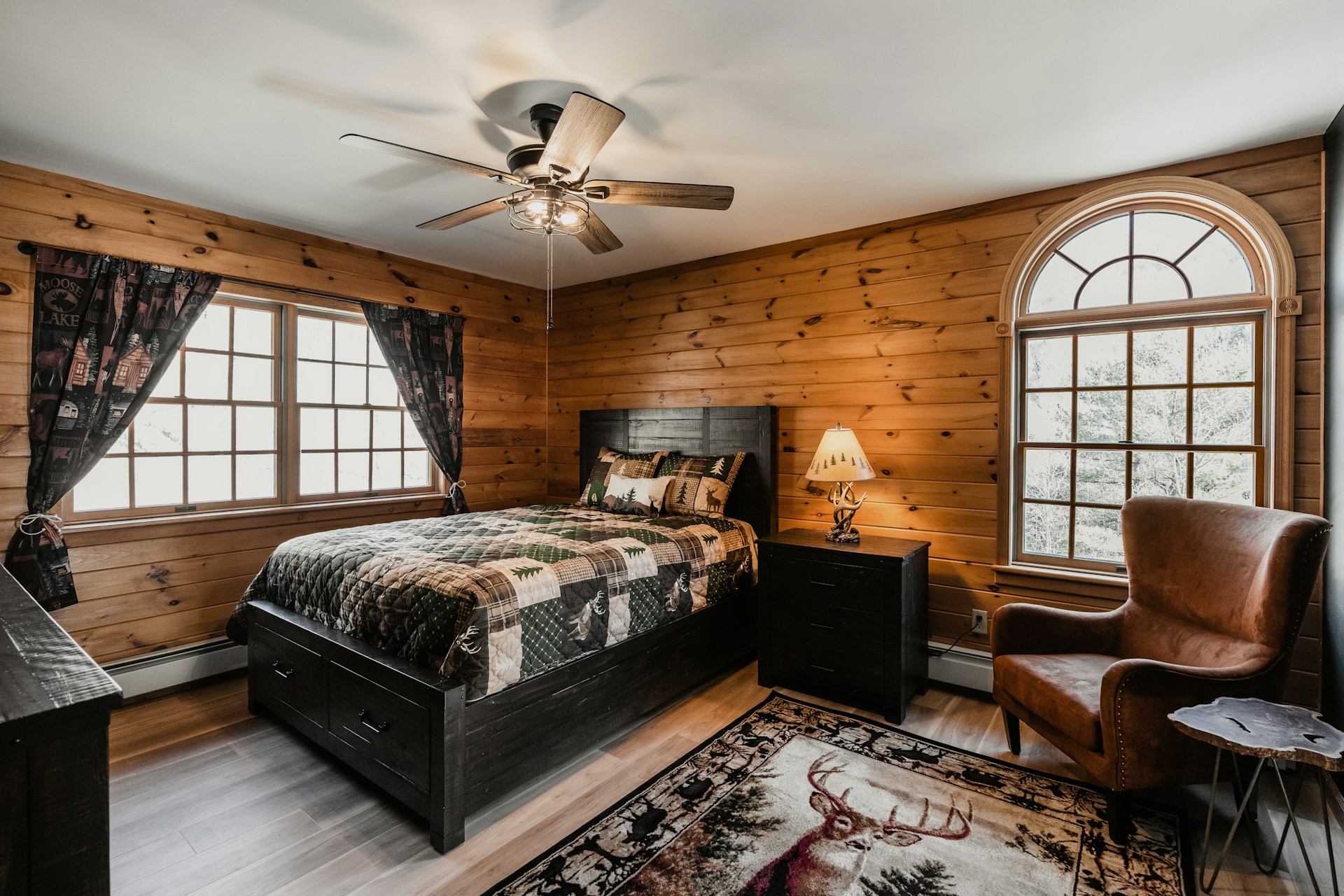
Ceiling Fan Direction: Bedroom

In summer, run the bedroom ceiling fan counterclockwise at medium speed. In winter, run it at low speed clockwise.
The main concern in a bedroom is avoiding a direct draft on you while you sleep. If possible, in summer, position your bed so the fan isn't blowing straight down on your face. If it still bothers you, set it at low speed. In winter, low speed clockwise is almost imperceptible.
For rooms with low ceilings or flush mount fans close to the ceiling, always use the low speed. The blades are closer to you, and the airflow is more concentrated.
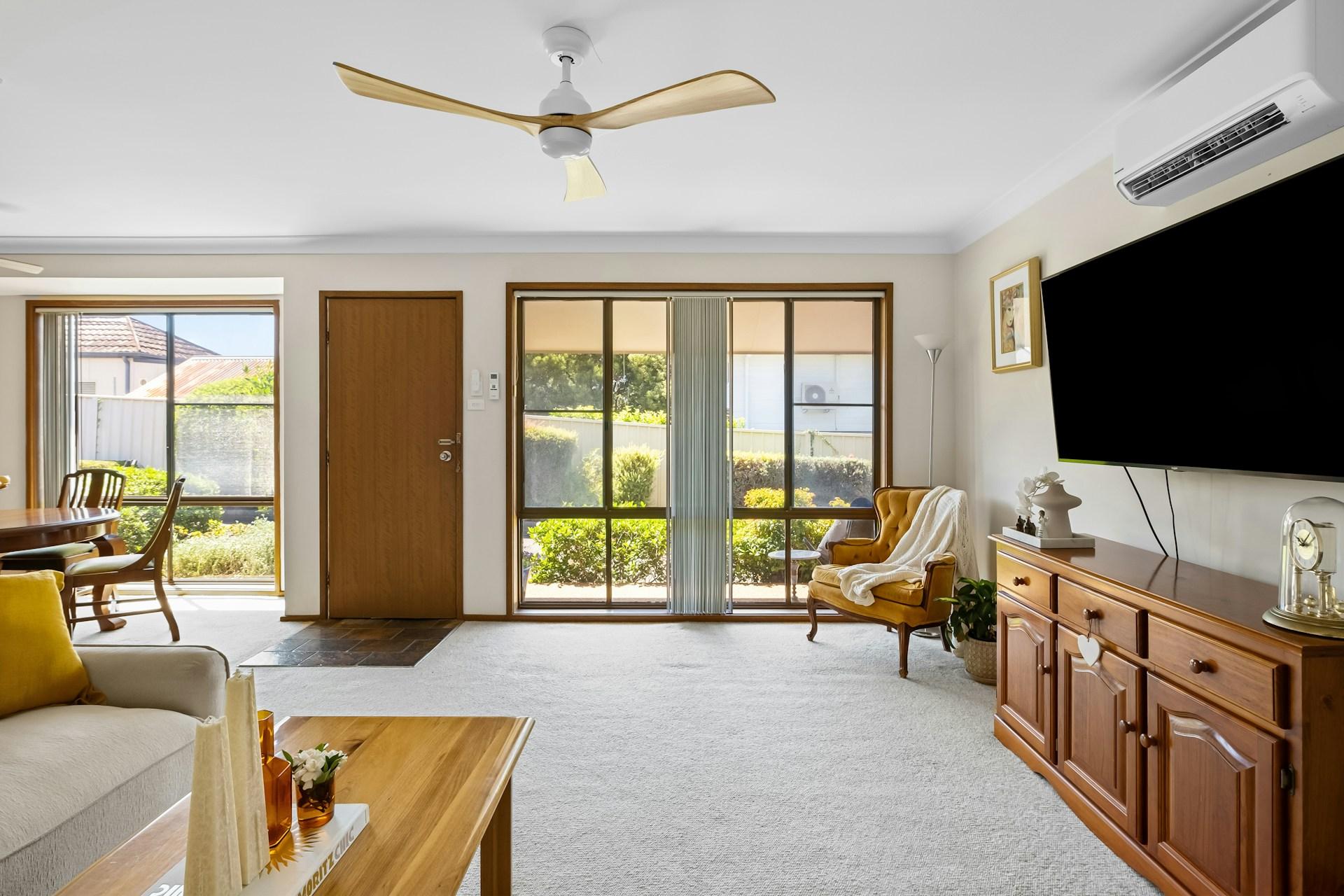
Ceiling Fan Direction: Living Room and Open-Concept Spaces
Large open rooms often need two fans or a larger fan to cover the space.
A single fan in a large open-concept room will only effectively cool the area directly under it. If your living area and dining room share the space, it might be worth it to install two fans spaced apart.
Rooms with high ceilings benefit from winter mode more than rooms with standard 8-foot ceilings, because the temperature difference between floor and ceiling is greater. Run clockwise at low speed, and you'll notice the floors feel warmer.
Large patio doors or sliding doors in living rooms can introduce drafts that work against your fan's airflow. Well-sealed door systems from Magic minimize this problem, keeping the conditioned air your fan is circulating inside where it belongs.
Ceiling Fan Direction: Kitchens
In the kitchen, set your ceiling fan counterclockwise at a medium speed for the summer setting and clockwise at a low speed for winter use. If the kitchen feels hot in winter after an entire day of cooking, set it counterclockwise at a low or medium speed.
Leave the fan at medium speed rather than high so it doesn't create uncomfortable drafts over food on the counter or table.
Ceiling Fan Direction Affects HVAC Efficiency
Correct fan direction reduces hot and cold spots, which means that your HVAC system runs more efficiently.
A furnace or heat pump works hardest when some areas of your home are significantly colder than others, because the system has to compensate for those cold zones. Ceiling fans in a clockwise direction at low speed during winter even out the temperature distribution. Fewer cold spots mean fewer heating cycles.
With central AC, a counterclockwise fan helps distribute the conditioned air your ducts deliver. Rooms that normally feel stuffy or inconsistently cooled often improve with a fan running at medium speed.
When to Adjust Thermostat Settings
Once you've set your fan to the correct direction and speed, try adjusting your thermostat by 2°C. In summer, raise it by 2°C and see if you still feel comfortable. In winter, lower it by 2°C and check the same.
Give it a day before judging. If you don’t feel comfortable, step back to 1°C.
Your Ceiling Fan Doesn’t Help? Here’s Why!
If you’ve set the ceiling fan direction correctly but don’t see any improvements, here’s what may have happened:
- The fan blades are dusty. This can reduce their efficiency over time because the blades that are covered in dust don’t move air as well. It’s best to clean them a few times a year.
- There’s furniture directly under the fan that can block airflow to the rest of the room.
- The room is too big for one ceiling fan to ensure proper airflow throughout the entire space.
- Your windows and doors are improperly insulated if you still feel drafts in winter.
- The fan blades may be unbalanced if your ceiling fan wobbles and makes noises. A wobbling fan doesn’t circulate air properly. And it also stresses the mounting hardware. Your ceiling fan should have a balancing kit, which can help you solve the issue.
Can You Open Windows If the Ceiling Fan Is Running?
If your ceiling fan operates at counterclockwise and if the outdoor air is cooler than the indoor air, you can certainly open windows and doors.
Open the windows on opposite sides of a room and run the fan at medium speed to move that cooler air through.
Avoid running the fan at high speed with the windows open if the outdoor air is already humid or hot. You'd just be circulating uncomfortable air faster.
Can a Ceiling Fan Pull in Outside Air?
A ceiling fan mostly recirculates indoor air. It doesn't draw outdoor air in on its own. But with windows or doors open, especially those on opposite sides of the room, the air movement that the fan creates can help pull outdoor air through openings and distribute it across the room faster than it would move on its own.
The effect is stronger when there's a temperature difference between the inside and the outside, and when openings are positioned on different sides of the room to allow cross-ventilation.
How Your Windows And Doors Affect Ventilation
Good air circulation from a fan depends partly on your home's envelope. Drafty windows or doors introduce uncontrolled air, which can work against the direction and flow your fan is creating.
High-performance windows and doors with proper weatherstripping and tight seals allow you to control ventilation on your terms: open when you want fresh air, keep them closed and sealed when you don't. This means that your ceiling fan can do its job without cold drafts in winter or hot, humid air sneaking in during summer.
Magic products are built specifically for this, providing year-round weather control. Our windows and well-sealed door systems allow you to operate them strategically when conditions are right, then close off completely when they're not. They're manufactured right here in Ontario, built specifically for Canadian homes and Canadian weather. Curious to learn more? Book a free consultation today!
Why Does Ceiling Fan Direction Matter so Much in Canada?

In Canada, the heating season is long, and the summers are short but hot. Using the correct fan direction for each season has a bigger effect on comfort and heating costs here than in milder climates.
Long Winters, Short Summers: Unique Comfort Needs
In most Canadian regions, you're running a heating system for 5-7 months of the year. The winter clockwise setting directly supports that. By circulating warm air that pools near the ceiling back down to where you're sitting, you get more value from every dollar you spend on heat.
Summer in Canada can arrive quickly and get intense. During those months, a counterclockwise ceiling fan paired with your air conditioner lets you cool your home more efficiently.
More Energy Savings with Proper Settings
Running your ceiling fan in the right direction lets most homeowners raise their air conditioner thermostat by about 2-4°C during the summer months and lower their heating thermostat by a similar amount in winter, without a noticeable drop in comfort. This translates into a significant reduction in your energy bills over the months you're running those systems, as your home's energy efficiency improves.
The exact savings depend on your home, though, and other factors that influence energy consumption, such as the insulation of your windows and doors.
Ceiling Fan Direction Myths
Myth 1: Fan direction changes the room temperature. Reality: Fans don't change the temperature. They change how you feel in a specific room (see the explanation above).
Myth 2: Winter mode doesn't matter much. Reality: Turning your ceiling fan in winter can actually reduce your heating costs if used correctly (see how exactly above).
Myth 3: Fans should run all the time to save energy. Reality: Fans cool people only, so it should run only while you're in that room. If you leave the fan on in an empty room, you waste electricity.
Myth 5: Higher speed always means better cooling. Reality: More speed doesn't equal more comfort. If it spins too fast, the air may dry out, you might feel uncomfortable, and it can be noisy.
Tips on Mounting a Ceiling Fan Correctly
- Mount the ceiling fan with the blades about 2.1-2.7 meters (7-9 feet) above the floor. If the fan is installed too high, the airflow weakens before it reaches you. If it is too low, it can feel uncomfortable and even unsafe.
- There should be a gap of at least 20-30 cm (8-12 inches) between the blades and the ceiling.
- The blades should be at least 45-60 cm (18-24 in) away from the walls.
- There's no need to install the ceiling fan in the exact center of the room. It works best when it is positioned over the areas where people spend the most time.
- In larger rooms, one fan is often not enough. Two might be more effective.
- Choose the right downrod length, as it can also affect the fan's effectiveness.
- Make sure the fan is properly secured and balanced.
- Keep the area around the fan clear.
- Match the fan size to the room:
- Small rooms:
- 75-105 cm (30-42 inches) fans
- Medium rooms: 105-132 cm (42-52 inches) fans
- Large rooms: 132 cm+ (52 inches or more), or multiple fans
FAQs
Which way should a ceiling fan go to cool down a room?
A ceiling fan should rotate counterclockwise when viewed from below to cool down a room. This creates a wind-chill effect that makes you feel cooler.
How do I know if my ceiling fan is for summer or winter?
To know if your ceiling fan is in the summer or winter setting, turn the fan on and stand underneath it to check the airflow. If you feel a strong breeze, it is in summer mode; if there is little to no direct airflow, it is in winter mode.
Which direction to put a ceiling fan?
The correct ceiling fan direction depends on the season and your goal. Use counterclockwise for cooling in summer and clockwise at low speed for circulating warm air in winter.
Why do you reverse your ceiling fans in the winter?
Reversing the fan to clockwise helps pull cool air up and push the warm air that is near the ceiling back down along the walls. This redistributes heat more evenly without creating a noticeable draft.