Front Doors
Best Exterior Doors for Cold Weather Canada
Looking for a new entry door, patio door, or maybe garage door? And you live in Canada? If all the door options on the market make you feel a bit overwhelmed, that's totally understandable. The winters in Canada can be so harsh that no door seems to be good enough to withstand the cold, right?
Well, if that's the dilemma you're having now, we can help. In this article, you'll learn more about what exactly to look for in the best exterior doors for cold weather Canada!
Key Takeaways
- For cold Canadian weather, fibreglass or insulated steel entry doors usually give the best balance of thermal performance, durability, and cost.
- Patio doors, basement walkout doors, and side entry doors can contribute as much or more heat loss than the front door, making them important considerations when improving your home's energy performance.
- For excellent thermal insulation properties, look for a low U-factor (aim for ≤ 0.30 for front doors with glazing area), a high insulated core (R ≈ 4-6), high-quality weatherstripping, and thermal breaks in the frame.
- Opt for high-performance glazing (Low-E + argon/krypton + double or triple glazing) on any doors with glass. ENERGY STAR-certified models and doors on Canada’s ENERGY STAR lists are a safe starting point.
Quick Overview: Best Exterior Doors for Cold Weather in Canada
Key Features for Cold-Weather Exterior Doors for Canada

If you live in Canada, you know that simply choosing a good-looking door is not enough. There are so many factors to consider when looking for a new door that it's incredibly easy to feel overwhelmed, especially if that's your first time replacing your front door.
Therefore, in the following sections, we'll discuss what you should look for/ask the manufacturers about if you want to find the right exterior door for your home!
Energy Performance Ratings
The two main ratings to compare across different models are:
- The U-factor, which measures how fast heat passes through; lower U-factors are better; many energy-efficient exterior doors in Canada are in the ≤0.30 range.
- R-value, which measures the door's thermal resistance; higher R-values are better; many manufacturers sometimes list door R-values.
For comparison purposes, here are the typical R-values of different materials:
- Solid wood doors: R-2 to R-3, sometimes R-4
- Fiberglass: R-4 to R-6, sometimes R-7
- Insulated steel doors: R-4 to R-6
Here are other ratings to check (though some are only valid for doors with glazing area):
- Solar Heat Gain Coefficient (SHGC), which measures how much solar heat passes through; it is measured from 0 to 1: the lower the rating, the less heat passes through
- Visible Transmittance (VT), which measures how much natural light passes through a window; it is measured from 0 to 1: higher VT equals more natural light.
- Air Leakage (AL), which measures how much air passes through a window or door unit; the AL should be lower than 0.3.
All of these details are incredibly important. After all, a door with good energy performance ratings will help you lower your energy bills during freezing winters, as you won't spend that much on heating costs during the winter.
Door Materials

You'll generally find doors made of different door materials:
- Fiberglass exterior doors: excellent thermal performance with insulated polyurethane cores; won’t warp in moisture or cold; can mimic wood grain; good long-term appearance and low maintenance.
- Insulated steel doors: often the most cost-effective high-performance option. Steel skins with a polyurethane core give strong insulation (similar R-values to fiberglass doors) and great security, plus longevity, as steel is a durable material. However, keep in mind that steel exterior doors can dent; they also absolutely need an insulated core because steel in itself is not a good insulating material.
- Solid wood doors: beautiful and timeless design; although wood is a good insulator, it is not as good as fiberglass and insulated steel unless heavily engineered and equipped with extra insulation; it can warp/settle in extreme temperature changes and needs paint/stain maintenance. Not the best first choice purely for thermal performance.
- Composite doors: they combine materials to get stability + insulation; performance varies by manufacturer, so evaluate specs.
Glazing Area
If your door has glass panels (full lite, half lite, sidelights, transoms), those panes will be the thermal weak point unless you go for:
- Low-E coatings (reduce heat transfer)
- Inert gas fills (argon or krypton) between panes
- Double-glazed as a minimum; triple-glazing if you’re in an extremely cold region or want maximum comfort
- High-performing warm-edge spacers
Frames, Thresholds, and Thermal Breaks
A door’s slab is only part of the system. The frame and the threshold, as well as how the door is installed matter as much.
For example, thermally broken frames (or insulated composite frames) reduce conduction between inside and outside.
Furthermore, integrated sill pans and high-quality thresholds can stop water and air infiltration, which is critical in freeze-thaw cycles. Even better if you can install adjustable thresholds. Advanced weather stripping also makes a big difference in drafts.
And, when possible, install pre-hung systems (the door is already mounted in a new frame with proper weatherproofing), especially in older houses where the frame might be compromised.
Extra Weather Sealing Technologies

Some advanced exterior door systems have additional sealing technologies that make the units even more energy-efficient. For example, Magic front doors are equipped with:
- 40% more insulation
- An integrated anodized aluminum rain deflector that drives water away from the door
- Multi-pocket compression seal rebated directly into the slab
- Multi-point compression on both the slab and frame
- An integrated door sweep with a proprietary U-channel design that auto-locks the slab's compression seal directly into the frame, eliminating gaps completely
Our front doors are engineered specifically for the Canadian cold winters, sealing your entryway completely!
Security, Hardware, and Finish
If you're looking for superior insulation, go for a multi-point lock system. It locks the door at multiple points, which also ensures greater energy efficiency.
Moreover, make sure that the hardware of your choice is of high quality and can withstand the freezing temperatures in Canada.
For finishes, keep in mind that paint or factory finishes on fibreglass/steel doors will withstand cold better than the finishes on wooden doors over time.
Installation: Don’t Skimp (This Is the Most Important Part)
Even the best door will underperform if installed poorly. Poor installation can lead to gaps and misalignments, which can affect the energy efficiency of the door and the house. Therefore, professional installation is highly recommended. Here are the key tasks installers must handle:
- Proper flashing and housewrap integration so water is diverted away from the opening.
- Sill pan under the threshold to prevent water intrusion (very important in freeze/thaw).
- Correct shimming to square the frame without creating thermal bridges, and then insulating the gap (low-expansion foam or backer rod + caulk as appropriate).
- Tight alignment for smooth operation and uniform compression on weatherstripping.
Professional installers should also know and follow the national and provincial building code requirements.
Cost Expectations and Rebates in Canada
Door prices vary widely with style, glazing, and whether you do pre-hung replacement or a slab swap.
As of recent years, expect several hundred to a few thousand CAD per door, plus installation; high-end glazed assemblies or custom doors cost more.
There are federal and provincial programs that may cover part of the cost if the door is ENERGY STAR-certified and you follow the program's rules (they often require pre-/post-energy assessments or specific product lists).
Shopping Checklist (Use This When You Call the Suppliers)
Treat this checklist like your rapid “must-ask” list:
- Ask for the whole-unit U-factor (not just slab). Aim for ≤ 0.30, lower if you can.
- If the door has glass panes, confirm whether it's possible to add Low-E + argon/krypton and whether the unit is double or triple-pane glass.
- Best door materials: fibreglass doors or well-insulated doors made of steel are recommended for cold climates; ask about core type (polyurethane is common).
- Frame: are thermal break/insulated door frames and pre-hung options available? Are the sill pan and flashing included?
- Weatherstripping type and air leakage rating.
- Warranty details (finish, slab, glass seals) and expected lead time.
- Ask the installer to explain flashing, sill pan, shimming, and gap insulation methods. If they can’t clearly describe this, get another quote.
Extra: Storm Doors
Storm doors are most commonly installed in front of main entry doors, but they can also be used on side and rear exterior doors that experience significant wind, rain, or snow exposure.
Other Exterior Door Types and Considerations for Cold Weather
When most homeowners think of exterior doors, they default to the front entry. But in reality, the front door is just one part of a much larger system of exterior openings that impact energy efficiency, comfort, and security.
In many Canadian homes, secondary exterior doors can collectively contribute as much or more heat loss than the front door itself, mainly because they are often older, less insulated, or installed with lower-cost hardware.
Patio Doors (Sliding, French)
Patio doors are typically the largest glazed openings in a home and therefore represent one of the most significant energy performance challenges.
Sliding patio doors are popular because they save space and are easy to operate, but their track-based system introduces inherent air leakage risks. Over time, rollers wear down and alignment shifts, which can reduce sealing pressure along the vertical edges.
French doors generally provide better sealing performance because they close against a central mullion and can accommodate multi-point locking systems. However, their performance is highly dependent on precise installation and frame rigidity.
Across all patio door types, glazing performance is critical. Double or triple glazing with Low-E coatings and argon or krypton gas fills is typically required in colder Canadian regions to reduce radiant heat loss through the glass surface.
Side and Rear Exterior Doors
Side and rear doors are often considered secondary construction elements, which is precisely why they are a frequent source of inefficiency in homes.
These doors are usually installed in less visible areas, such as side yards or backyard access points, which leads many homeowners and builders to prioritize cost over performance.
However, these doors are often exposed to harsh conditions such as wind tunnels between houses, snow drift accumulation, and direct rain exposure with less architectural protection. As a result, even a modest performance gap in weatherstripping or frame sealing can lead to noticeable drafts and energy loss.
Basement Walkout Doors
Basement exterior doors operate under very different environmental conditions than above-grade entry points.
They are typically subject to:
- soil-level moisture exposure
- snow buildup against the door base
- hydrostatic pressure from surrounding ground conditions
- higher risk of thermal bridging due to foundation connection
Because of this, insulated steel doors are most commonly used in these applications due to their structural rigidity and resistance to moisture deformation.
In colder climates, basement walkout doors often require more frequent inspection than main entry doors.
Garage-to-House Entry Doors
Although not always considered “true exterior doors,” garage entry doors that connect conditioned living spaces to unconditioned garages function as critical thermal and safety boundaries.
These doors are required to meet fire separation codes in many Canadian jurisdictions, but energy performance is often overlooked.
Because garages often experience extreme temperature fluctuations, air infiltration through these doors can significantly affect adjacent interior comfort zones.
The Best Exterior Door Based on Your Location in Canada
You know all too well that the doors that work in Vancouver aren't necessarily ideal for Winnipeg, for example. When you're looking for exterior doors, match the door’s insulation, materials, and glazing to the local weather conditions.
1. Western Canada (BC Coast: Vancouver, Victoria)
These regions have mild winters, which are wet and rainy and experience occasional snow.
Fibreglass or insulated steel doors with double glazing are usually enough for homes in these regions. Moisture resistance is more important than extreme R-values, so avoid solid wood doors unless properly sealed.
Focus on doors with high-quality weatherstripping around the edges of the door, which prevents leaks and keeps homes warm. Moreover, choose corrosion-resistant finishes to withstand heavy rain. You can also install storm doors to protect the main door from moisture and wear.
Double-pane patio doors with low-E coatings and argon gas usually perform well in this region in terms of energy efficiency
2. Prairie Provinces (Alberta, Saskatchewan, Manitoba)
These regions get very cold winters, with snow and wind, and hot summers.
Fibreglass or insulated steel doors with high R-values (R5-R7) and low U-factors are the best. Triple-glazed sidelights or half-lite doors are recommended if you want maximum light without sacrificing insulation.
Look for thermally broken frames and pre-hung doors with proper sill pans. Wind resistance is crucial here, so go for a solid core and multi-point locks for extra stability.
Patio doors should ideally feature triple-pane glazing and thermally broken frames to minimize heat loss during extreme winter conditions.
3. Central Canada (Ontario, Quebec)
Central Canada gets cold winters and humid summers.
Fibreglass, insulated steel, or high-performance composite doors work well for these regions. Triple-glazing for doors with glass inserts is recommended in Northern Ontario, while double-glazing is generally enough in southern Ontario.
Keep in mind that condensation can be an issue in humid areas, so make sure that the glass units in both front doors and patio doors have warm-edge spacers and low-E coatings. Proper weatherstripping is also essential to prevent drafts.
4. Eastern Canada (Maritimes: Nova Scotia, New Brunswick, PE)
The winters in these regions are cold and experience strong coastal winds. Summers are mild and rainy.
Fibreglass doors with polyurethane cores or insulated steel doors with weather-resistant coatings are the best for homes in these areas. Also, look for multi-point locking systems to withstand wind pressure.
And don't forget about the salt. It can corrode metal finishes, so pick doors with corrosion-resistant hardware.
Get the Best Exterior Doors with Magic!
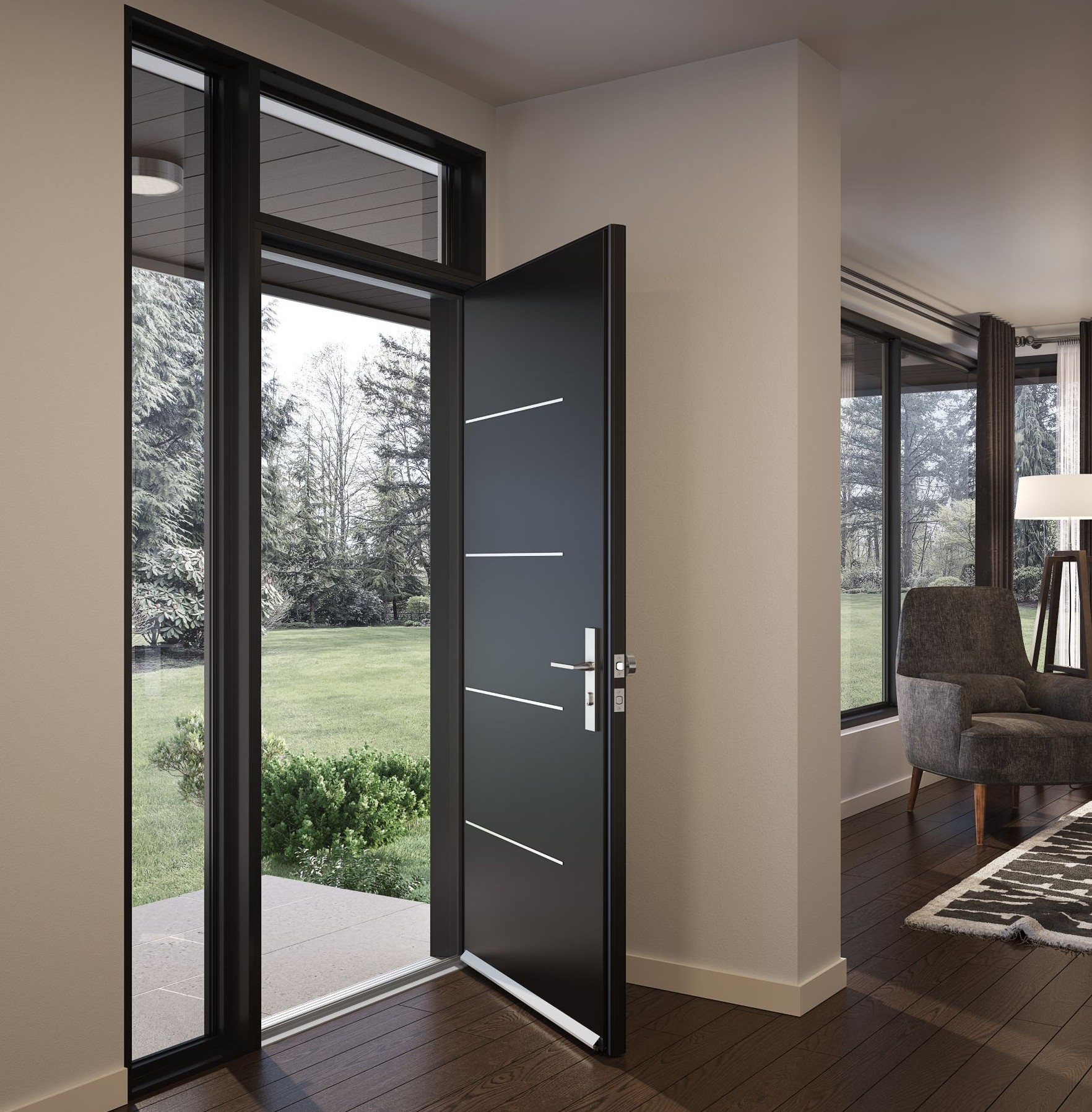
If you're renovating your home or building a new one and you're located in Canada, you want high-performance glazing, superior insulation, plus modern style, especially if you care about curb appeal and natural light! That's exactly where Magic units excel! In fact, they're manufactured right here in Ontario, having been engineered specifically for the cold weather in Canada.
Magic Front Door Features
Our front doors feature:
- 40% more insulation
- Multi-pocket compression seal rebated directly into the slab
- Multi-point compression on both the slab and frame
- An integrated door sweep with a proprietary U-channel design that auto-locks the slab's compression seal directly into the frame, eliminating gaps completely
- An integrated anodized aluminum rain deflector that drives water away from the door
In short, it is exactly what you need for the cold winters in Canada! Ultimately, Magic front entry doors can withstand the harshest weather conditions and still perform at their best!
Magic Patio Door Features
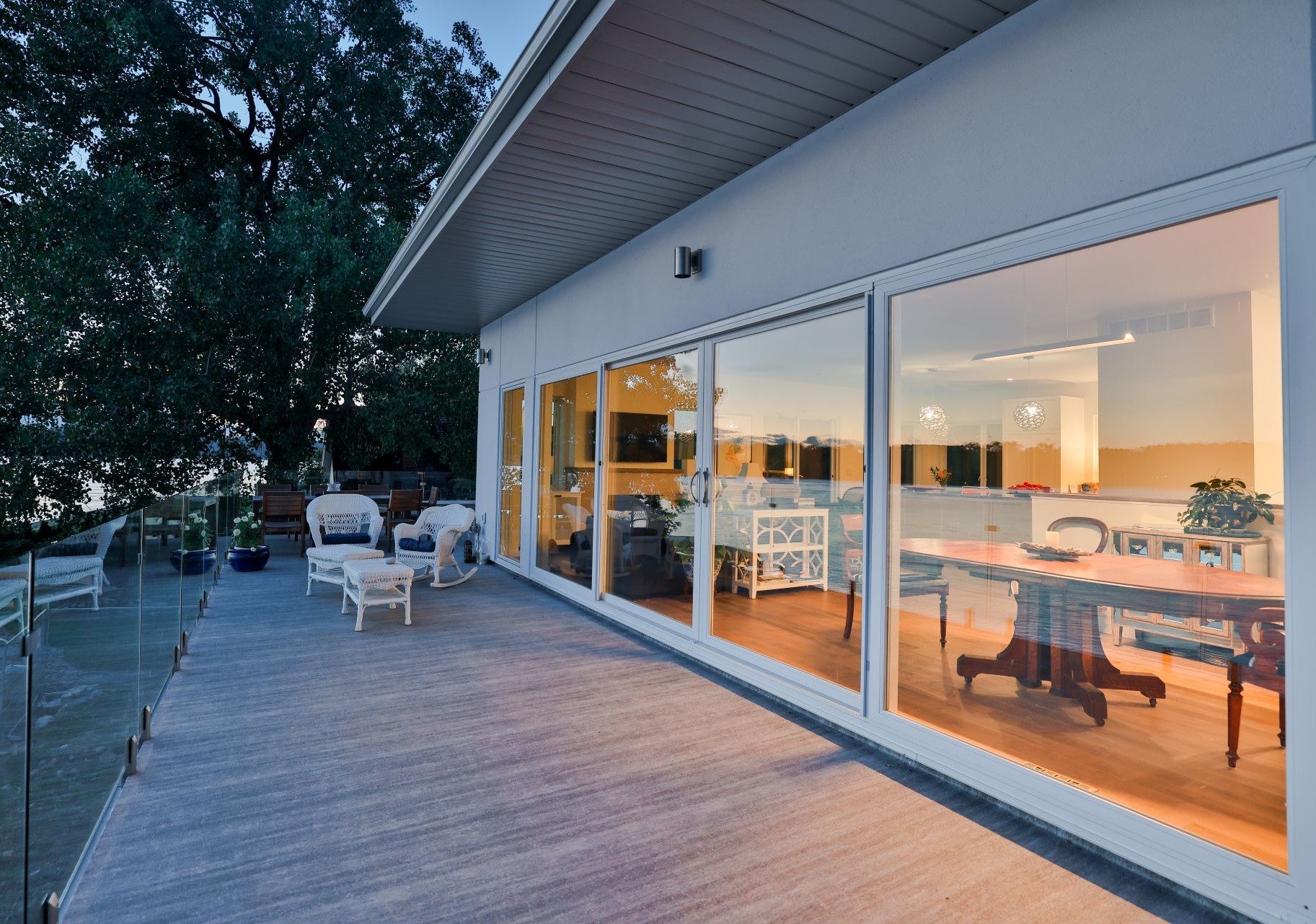
Patio doors are often the weak point in a home's thermal envelope (lots of glass, potential air leaks, bigger openings). Magic's patio door systems try to address these head-on:
- Hybrid Fusion Frame + thermal‑grade glass: our French doors and sliding patio doors combine a strong, composite frame skeleton with carefully engineered glass (insulated, high‑quality sealing, good gas fills, Low‑E coatings).
- Energy-efficient glazing (IGUs) + blinds/shades integration: our units have larger gas‑filled spaces, durable seals, the best-performing warm‑edge spacers, and even optional built-in solar shades or thermal blinds. Those blinds can act kind of like an extra glazing layer when closed, helping reduce heat loss in frigid winters or overheating in summer.
- Strong security + smooth operation: our patio doors use galvanized steel and aluminum frame skeletons, a robust track and wheel system, and a multi-point locking system with a high security rating, which also matters in extreme cold, where you may want proper sealing doors that don’t loosen or warp over time.
Even more, some of Magic's patio doors are considered among Canada's best exterior doors, as they qualify for the ENERGY STAR Most Efficient rating (check them here).
Magic Window Wall Features
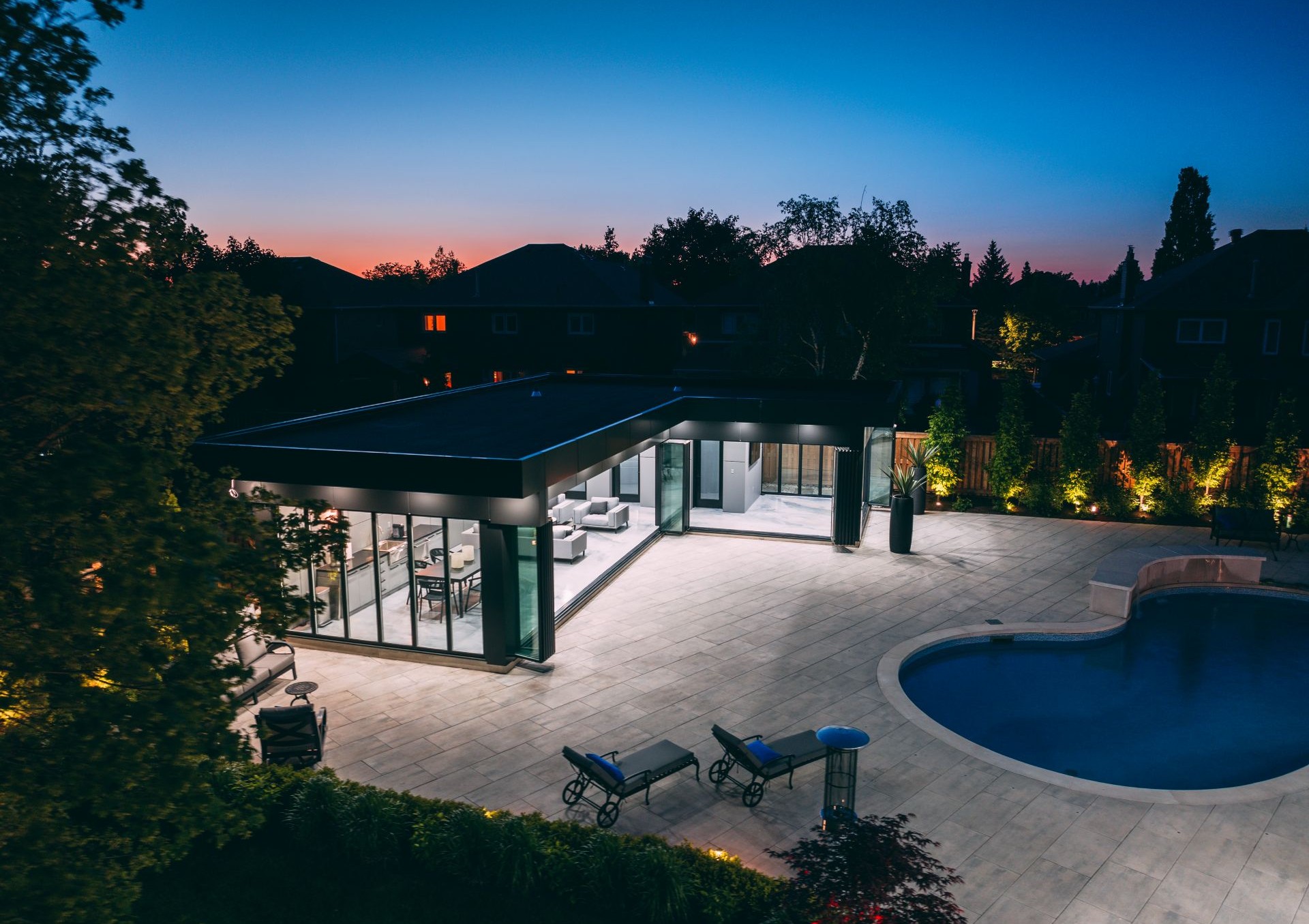
Magic's Window Wall system is deliberately built for year-round Canadian weather resistance. Here's why it's especially compelling for cold weather:
- Airtight compression sealing between panels: unlike many bi‑fold or multi‑panel glass walls that rely on hinges or overlapping sashes (which can leak), Magic’s panels interlock and form a tight seal when closed, ensuring a strong barrier against heat loss.
- No hinges or exposed hardware: our patented Parallex hardware eliminates traditional hinges, which are often a weak point under freezing, shifting, or expansion/contraction. Without those mechanical vulnerabilities, the system stays stable across temperature swings.
- Glass & frame technology tuned for extreme climate: our Window Wall glazing units have more insulating gas, better spacers, and durable seals. Combined with our composite frames, this means better insulation and durability than many cheaper glass‑wall systems.
- Flexibility: full glass wall vs. partial-opening/ventilation modes; since each panel operates independently, you can open just part of the wall for ventilation or leave it closed for maximum insulation.
So, if you can't find the right entry door for your home, book your free consultation with Magic! One of our experienced door professionals will help you find the perfect door that can successfully withstand the harsh winter in your region!
Frequently Asked Questions
What are the best exterior doors for cold weather?
The best exterior doors for cold weather are fiberglass or insulated steel doors. Magic's steel doors are the best for Ontario homes, as they feature 30% more steel, 40% more insulation, and advanced weather sealing technologies.
Which exterior door loses the most heat?
In most homes, older patio doors lose more heat than front doors because they contain significantly more glass and have larger overall surface areas.
What is the best material for doors in cold weather?
The best materials for doors in cold weather are fiberglass and insulated steel with high-density foam cores.
What type of exterior door has the best insulation?
Magic's exterior doors have the best insulation. They have 40% more insulation than standard doors and multiple advanced weather sealing technologies that eliminate gaps completely.
Which is better, wood, steel, or fiberglass front door?
Wood, steel, and fiberglass are all good for front doors, but you should choose based on your preferences and budget, as well as the climate in your region. Wood is generally preferred for its aesthetics, steel for its strength and durability, and fiberglass for its energy efficiency.
Why is energy efficiency important for exterior doors?
Energy efficiency in exterior doors is crucial as it minimizes heat loss and reduces energy consumption, ultimately leading to lower heating bills during colder months. Energy-efficient doors can significantly enhance your home's comfort and sustainability.
Should I replace my patio door or front door first?
If your primary goal is energy savings, replacing an older patio door often provides a larger improvement because patio doors usually have more glass area and greater potential for air leakage.
What is the role of weatherstripping in exterior doors?
Weatherstripping is essential for preventing drafts and cold air from entering around exterior doors, thus enhancing energy efficiency and ensuring a comfortable indoor environment.
Why is door maintenance important in cold climates?
Door maintenance is extremely important in cold climates because door parts can worn out faster in freezing temperatures. Therefore, regular maintenance is essential for exterior doors to ensure their longevity and performance in cold weather.