
Window Styles & Comparisons
Floor-to-Ceiling Windows: Pros, Cons & Expert Tips
In recent years, floor-to-ceiling windows have become a top choice for homeowners. They are undoubtedly attractive for modern homes: expansive views, plenty of natural light, contemporary design, unmatched curb appeal... But are they really worth it? And, more importantly, are floor-to-ceiling windows suitable for your home? Let's find out!
In this guide, you'll learn everything you need to know about floor-to-ceiling windows. By the end of our article, you'll know whether you'll be including them into your home upgrade plans or not!
Quick Answer: Are Floor-to-Ceiling Windows Worth It?
Floor-to-ceiling windows are full-height glass panels that extend from the finished floor to the ceiling, replacing sections of traditional walls with expansive glazing. They maximize natural light, provide uninterrupted views, and create a strong indoor-outdoor connection in your living space.
Floor-to-ceiling windows are common in modern and contemporary homes. They are typically built from fixed and/or operable window units or window wall systems and require proper structural framing, safety glass, and permits. When designed with high-performance glazing and quality frames, floor-to-ceiling windows can be energy-efficient, but they cost significantly more than standard windows.
What Are Floor-to-Ceiling Windows?

Floor-to-ceiling windows are full-height glazed areas that run continuously from the finished floor to the ceiling. They basically replace portions of traditional walls with expansive glass panels. Floor-to-ceiling windows are sometimes called glass walls or window walls.
Floor-to-ceiling windows are usually made from picture windows, casement window units, awning windows, tilt-and-turn systems, or fixed panels mixed together as one large expanse of glass.
The height of floor-to-ceiling windows ranges from about 8 feet in mid-century ranch homes to 10-12 feet in new builds and loft conversions. They feature modern slim-profile mullions that can be minimized for a seamless connection between indoors and outdoors. On that account, these windows are commonly used in modern homes due to their clean lines and abundant glass, perfect for unobstructed views.
Unlike standard windows that sit within existing wall cavities, floor-to-ceiling windows often require structural framing (steel or engineered lumber) around the opening.
Floor-to-Ceiling Windows vs. Curtain Walls
Floor-to-ceiling window walls are typically installed slab-to-slab on each floor, functioning like very tall individual windows. They’re common in single-family homes and low-rise buildings where ceiling heights stay under 12 feet per floor.
Curtain walls are continuous, non-load-bearing glass systems that can span multiple stories. They hang from the building’s primary frame, in front of the concrete slabs. You’ll see them on office buildings, high-rise towers, and commercial buildings.
There's a big cost difference between them. Window walls are much more affordable for modern homes than curtain walls because they use conventional window frame systems and simpler anchoring details.
Floor-to-Ceiling Windows: Pros and Cons
Here’s a quick summary of the main advantages and disadvantages of floor-to-ceiling windows so you can weigh them against your specific situation.
Floor-to-Ceiling Windows Advantages
- Dramatically more natural light
- Expansive views that make rooms feel larger and connect the interior to the exterior
- Contemporary design with a clean, modern aesthetic appeal
- Enhanced well-being from daylight exposure
- Potential 7-15% increase in resale value and curb appeal
- Passive solar heat gain if installed strategically
Floor-to-Ceiling Windows Disadvantages
- Higher upfront cost than standard windows
- Privacy concerns, especially in urban settings, street-facing, or neighboring-facing walls, where passers-by can easily see inside
- More maintenance for cleaning and seal inspection
- Reduced energy efficiency because of the large glass surface, leading to higher heating and cooling costs (without high-performance glazing)
- Furniture placement limitations since you can’t put pieces against a glass wall
- Safety issues from damage caused by debris/flying objects and from break-ins
- Structural and permit requirements
Key Benefits of Floor-to-Ceiling Windows
The main advantages of large windows come down to four areas: light, views and space perception, well-being, and increased resale value.
Natural Light
Increased natural light is the most obvious benefit of floor-to-ceiling windows. South- and west-facing glass can provide all-day or afternoon sun. This reduces the need to use artificial lighting and can potentially lower utility bills, especially in winter.
Physical and Mental Wellbeing
The natural light coming from windows can have a positive impact on both your physical and mental well-being. It can help regulate your circadian rhythm, improve your mood, and increase your productivity, especially if you work from home.
Moreover, some studies link the lack of natural light in working environments to higher stress levels, so having plenty of natural light in your house might help you lower your stress levels.
Uninterrupted Views and Better Look
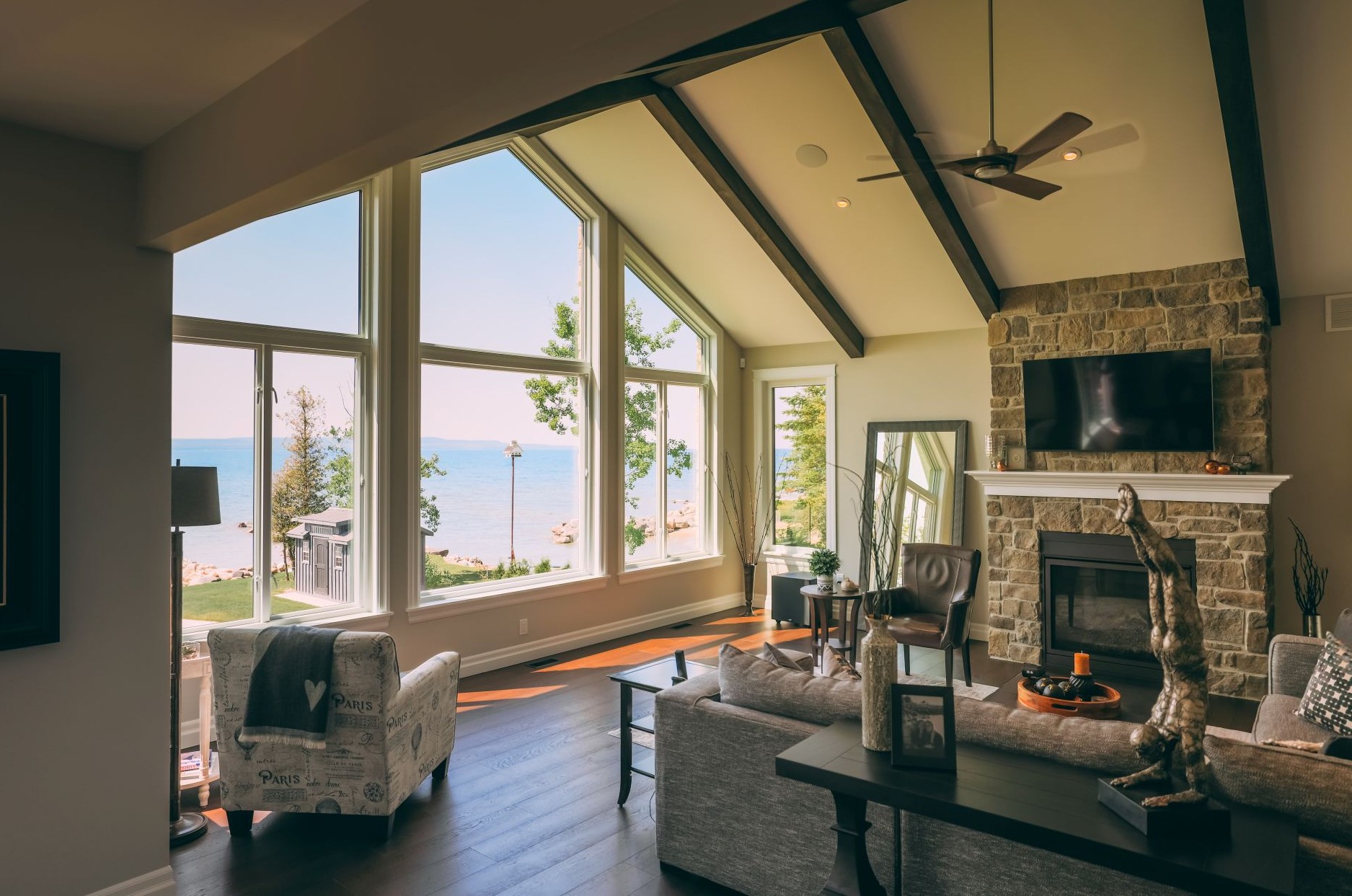
Floor-to-ceiling windows blur the line between indoor and outdoor living! From a design impact standpoint, floor-to-ceiling windows create clean lines and a contemporary look while offering a better connection to outdoor decks, patios, and balconies, making a living room or dining room feel like it extends into nature!
Higher Property Value and Better Curb Appeal
High-end floor-to-ceiling windows can significantly enhance property value due to their modern and luxurious appeal. They influence how a property is perceived, experienced, and positioned in the market, specifically because of the benefits mentioned above.
From a market signaling perspective, floor-to-ceiling windows are strongly associated with contemporary or high-end architecture, custom or architect-designed construction, as well as higher build costs and intentional design decisions.
Externally, expansive glazed walls create a distinctive facade that breaks up flat wall planes and adds visual rhythm, giving it a more dynamic appearance.
Where Can You Install Floor-to-Ceiling Windows?

Since it's not a standard window, you can't install a floor-to-ceiling window just anywhere in your house. However, floor-to-ceiling windows can become focal points in:
- Living rooms with outward-facing walls
- Dining rooms oriented toward gardens or courtyards (floor-to-ceiling windows are often preferred in dining rooms for design interest and for making the space feel larger)
- Bedrooms, but only with careful orientation: east-facing for gentle morning light that helps you wake naturally, or north-facing for softer, all-day light without harsh glare
- Staircases and double-height spaces like two-story entry foyers
- Large kitchens
- Smaller spaces, where walls can accommodate expansive glazing areas that would make the space feel larger
Design Options: Fixed vs. Operable, Layouts & Frame Styles
More often than not, homeowners mix different types of windows for their floor-to-ceiling units for both aesthetics and ventilation needs. However, there's another popular option: installing fully operable window walls like those from Magic (see more details below).
Fixed Windows
Fixed (non-operable) panes offer the cleanest, least obstructed views and lower maintenance requirements. They’re ideal in tall or hard-to-reach upper areas where you wouldn’t open a window anyway. They're also more energy-efficient, thus perfect for floor-to-ceiling windows.
Operable Windows
Operable window options like casement, awning, or tilt-and-turn are often placed at reachable heights. They provide fresh air and cross-ventilation without sacrificing the overall glass wall look. Many homeowners use smaller windows like awning windows at the top for ventilation and install large picture windows below.
Window Walls

Floor-to-ceiling windows can also consist of doors. In other words, they can have large glass panes that operate like sliding glass doors or bi-fold doors, as in the photo above, instead of fixed/operable windows.
For example, Magic's window wall system consists of multiple glass panels that interlock tightly when closed, creating large glazing areas for expansive views. If you want to open the window wall, you simply have to slide and stack all the panels to one side, and the entire opening remains unobstructed.
This is often the best option for both functionality and energy efficiency.
Floor-to-Ceiling Windows: Energy Efficiency, Glazing & Comfort
Large glass areas can significantly affect heating and cooling. Consequently, it's necessary to choose energy-efficient floor-to-ceiling windows or window walls with proper window treatments to prevent excessive heat gain in summer and heat loss in winter. It goes without saying that ENERGY STAR-certified windows are the best in this particular glazing arrangement.
Here are some tips from our experts that can help you make the best choice.
Choose Double Pane Glass
Single-pane windows are definitely a no for floor-to-ceiling windows. Double-pane is usually the best for large glazed walls, unless you live in Northern Canada, where it gets incredibly cold in winter.
For regions like Toronto, double-pane glazing with gas fills (krypton or argon gas) is more than enough for good energy efficiency. Why not triple-pane glass? Because it is usually not recommended for large glazing areas. Triple-pane units are much heavier than double-pane units, their installation is much more complex, and the cost is significantly higher.
However, if you live in Northern Canada, where winters are much colder than in Toronto, you can go for triple-pane windows (if it's structurally possible), as they offer maximum insulation and enhanced durability for energy efficiency.
For an extra insulating layer, you can install Magic's thermal blinds, which act as a third pane for our windows and window walls, lowering their U-value to 0.17.
Add Low-E Coatings
Low E coatings (low emissivity) reflect heat while allowing visible light to pass through. Different SHGC (solar heat gain coefficient) values work better in different climates: lower SHGC for hot climates to reduce cooling loads, higher SHGC in cold climates to capture free solar heat.
Because of this, low-E coatings are installed on different glass surfaces, depending on your climate. But they are incredibly thin, almost transparent, so they do not affect visibility.
Choose Energy-Efficient Frame Materials
The frame material is the most important element in a window's structural integrity, especially in regions like Toronto, where temperature fluctuations are so common. Floor-to-ceiling windows are usually made from aluminum, wood, vinyl, fiberglass, or composite materials, each with their advantages and disadvantages.
Given that you're installing large glazing areas, the frame material must be strong and durable enough to withstand the weight of the glass and withstand temperature fluctuations without warping and cracking.
Let's take vinyl, for example. Vinyl is a very good insulator, which is why it is the most popular window frame material. However, vinyl expands and contracts with temperature fluctuations, and in extreme climates, it can warp and crack. As a consequence, vinyl frames are sometimes reinforced with steel or aluminum (or both, as in the case of Magic), so they can withstand these temperature changes without damage and so they can insulate well.
Don't Forget About Window Treatments
Window treatments are absolutely necessary for floor-to-ceiling windows - not only for privacy, but also for energy efficiency. You might have to cover them during the summer, for example, to avoid excessive heat gain. You can get thermal curtains, for example, cellular shades, or Magic's solar shades/thermal blinds.
Building Codes, Safety & Permits for Floor-to-Ceiling Windows
Full-height glass is subject to safety glazing rules and often requires a building permit.
For example, you might have to use safety glass like tempered or laminate glass. You might also have to take into account guard and fall-protection requirements if the windows are used on upper floors with sills close to the floor. Building codes often require barriers to prevent falls, especially in homes with children or in bedrooms. Moreover, a structural engineer review is typically necessary when removing load-bearing wall sections.
Most municipalities require building permits for enlarging window openings or creating a new floor-to-ceiling opening. Inspections will verify structural adequacy, egress compliance, and proper installation of flashing and weatherproofing.
Privacy and Solar Control Solutions for Floor-to-Ceiling Windows

Privacy and solar heat gain are two of the most common concerns with floor-to-ceiling windows, but both can be effectively managed through design and technology.
Privacy Solutions
Our experts recommend the following privacy solutions for floor-to-ceiling windows:
- Sheer curtains or roller shades for daytime privacy without blocking light
- Cellular or thermal blinds for nighttime privacy and insulation
- Frosted, etched, or fritted glass in bedrooms, bathrooms, or street-facing areas
- Strategic landscaping, such as hedges, trees, or privacy screens
Solar Control & Glare Reduction
These solar control and glare reduction solutions are incredibly useful for floor-to-ceiling windows:
- Low-E coatings tailored to climate and orientation
- Exterior shading devices, overhangs, or pergolas
- Solar shades that reduce heat gain while preserving views
- Interior thermal blinds that act as an additional insulating layer in winter
Climate-Specific Guidance for Floor-to-Ceiling Windows in Canada
Below, you'll find some important tips that can help you design your floor-to-ceiling windows according to your location in Canada.
Cold and Mixed Climates (Most of Canada)
- Double-pane glazing with argon or krypton gas is typically sufficient for this region when paired with high-quality frames and Low-E coatings.
- Triple-pane glass is not always recommended for very large units due to weight, cost, and installation complexity, unless you're located in extreme northern climates.
- Look for low U-values and appropriate SHGC values depending on orientation:
- Higher SHGC for south-facing windows to capture passive solar heat in cold climates
- Lower SHGC for west-facing windows to reduce summer overheating
Frame Performance Matters More in Canada
Because of large temperature swings:
- Frames must resist expansion and contraction.
- Reinforced frames (steel- or aluminum-reinforced vinyl, fiberglass, or thermally broken aluminum) perform better over time.
- Poor frame performance can negate the benefits of high-performance glass.
Floor-to-Ceiling Windows: Maintenance

If you want to install floor-to-ceiling windows, it's important to learn their maintenance requirements, because it can influence your final decision - there is much more glass to clean, after all.
Ultimately, floor-to-ceiling windows require more maintenance than standard windows because of the larger glass area. And given that part of that glass can be difficult to reach, you might need some extra tools for cleaning and maintenance.
Magic experts recommend cleaning floor-to-ceiling windows at least twice a year. Clean them more frequently if you live in a coastal area where salt spray builds up or in urban locations with higher pollution levels. You might need an extension pole or a ladder to clean both inside and outside glass panes.
Furthermore, floor-to-ceiling windows can have a major impact on energy efficiency. On that account, we recommend inspecting seals, gaskets, and caulking every year to catch air or water leaks early. Failed seals can cause energy loss, condensation between panes, and eventually water damage to surrounding finishes.
Floor-to-Ceiling Window Cost Factors in 2026: What to Budget For
In 2026, floor-to-ceiling windows can cost between $5,000 to $50,000, or between $700 and $3,000+ per linear foot, depending on the type of windows you're using, as well as on their width. For example, some homeowners choose to fill entire walls with windows, in which case the price is significantly higher.
The final price also depends on:
- Glass type (tempered/laminated)
- Number of panes (double/triple)
- Low-E coatings
- Frame material
- Window treatments
- Window design and size (custom/standard)
- Window operation (fixed/operable)
- Hardware quality for the operable sections
- The need for structural modifications to support their weight, which can make the installation more complex
Are Floor-to-Ceiling Windows Worth It?
Floor-to-ceiling windows are worth it for homeowners who want more light indoors, expansive views, and architectural impact, but also for those who are prepared to account for the added cost, planning, and performance requirements.
Who Should Choose Floor-to-Ceiling Windows?
Floor-to-ceiling windows are a good choice if you:
- Own a property with desirable views (gardens, ravines, water, open landscapes, or city skylines)
- Value natural daylight and want brighter, more open interior spaces
- Are building a custom home or undertaking a major renovation where structural changes are already planned
- Prefer contemporary or modern architecture
- Are willing to invest in high-performance glazing, proper framing, and window treatments
- Want to improve resale appeal in markets where modern design is valued
Who Should Not Choose Floor-to-Ceiling Windows?
From our experience designing and installing full-height windows and window wall systems, floor-to-ceiling windows might not be a good choice for you if you:
- Live on a tight budget and are looking for a purely cost-driven upgrade
- Have limited exterior views or face busy streets or close neighbors
- Are renovating without the ability to modify load-bearing walls
- Prefer traditional architectural styles where large glass walls may look out of place
- Do not want ongoing maintenance or regular glass cleaning
- Need maximum wall space for furniture, storage, or artwork
Contact Magic to Learn More About Our Window Walls Designed for Canada
If you’re considering floor-to-ceiling windows or a full window wall, why not get the best ones?
Magic’s window wall systems are engineered specifically for Canada’s demanding climate. They combine expansive, unobstructed glass with advanced thermal performance, durable reinforced frames, and tight interlocking panels that minimize air leakage and heat loss.
Magic window walls are designed to handle extreme temperature swings, strong winds, and cold winters while maintaining excellent energy efficiency and smooth operation.
To explore whether a Magic window wall system is right for your home, contact us today to speak with an expert and learn more about available options, pricing, and climate-optimized solutions for Canadian homes!
FAQs About Floor-to-Ceiling Windows
What are floor-to-ceiling windows called?
Floor-to-ceiling windows are also called window walls, glazed walls, full-height windows, or simply floor-to-ceiling glass. In commercial contexts, similar systems might be called curtain walls, though that technically refers to a different structural approach.
Can floor-to-ceiling windows be opened?
Yes, floor-to-ceiling windows can be operable if designed as sliding doors, operable window walls, tilt-and-turn panels, or casement-style units. However, many are fixed for structural, cost, or energy-efficiency reasons.
How to insulate floor-to-ceiling windows?
You can insulate floor-to-ceiling windows by using double- or triple-glazed glass with low-E coatings and gas fills such as argon or krypton. Additional thermal performance can be improved with insulated frames, thermal breaks, high-quality window seals, and insulating window treatments like thermal blinds or cellular shades.
Are floor to ceiling windows a good idea?
Floor-to-ceiling windows are a good idea for maximizing light, views, and a sense of openness, especially in modern designs. However, they can increase heat gain, heat loss, and costs if not properly designed for the climate in your region.
How much does floor-to-ceiling glass cost?
In 2026, floor-to-ceiling glass can cost between $700 and $3,000+ per linear foot, which can amount to up to $50,000 or more for expansive glazing areas. They require professional installation with careful planning and execution that might involve rerouting electrical or plumbing lines. They might also require reinforced framing to support their framing. These add to the final cost.
How safe are floor-to-ceiling windows?
Floor-to-ceiling windows are generally safe when made with tempered or laminated safety glass, which is required by building codes. Professional installation, framing, and compliance with local regulations are critical to ensure impact resistance and fall protection.
Can you add floor-to-ceiling windows to an existing house?
You can add floor-to-ceiling windows to an existing house, but this requires a structural review, permits, and typically 4-12 weeks of project time, depending on complexity.
Are floor-to-ceiling windows safe for kids and pets?
Modern floor-to-ceiling windows use safety glass (tempered or laminated) that either shatters into harmless pieces or holds together when broken. Building codes require guards or barriers on upper floors to prevent falls. You can also choose multi-point locking hardware on operable windows for security.