
Front Doors
How to Soundproof a Door: 10 Best Methods
According to WHO guidelines, it is recommended to sleep in bedrooms where noise does not exceed 30 A-weighted decibels (dB(A)), comparable to a whisper, and to work or study in environments where noise does not exceed 35 dB(A).
Therefore, it's of utmost importance for your long-term well-being and productivity to make sure that your environment is not too loud. And soundproofing your doors is one of the first steps towards achieving this.
As such, how to soundproof a door? Let's find out!
Key Takeaways
- Before taking action, determine how well your current door blocks noise. Gaps, poor seals, or hollow-core doors are major culprits, and while small issues can be fixed with DIY solutions, old or poorly insulated doors are often best replaced entirely.
- Replacing your existing door with a solid wood or steel door is one of the most effective ways to reduce noise transmission. Additional options, like acoustic glazing, mass-loaded vinyl, or double-door setups, can significantly improve insulation and energy efficiency.
- Even the smallest gaps can undermine your soundproofing efforts. Use weatherstripping, acoustic caulk, or door seal kits to close gaps and prevent sound leakage. Regularly inspect and maintain these materials to ensure they remain effective over time.
How to Soundproof a Door?
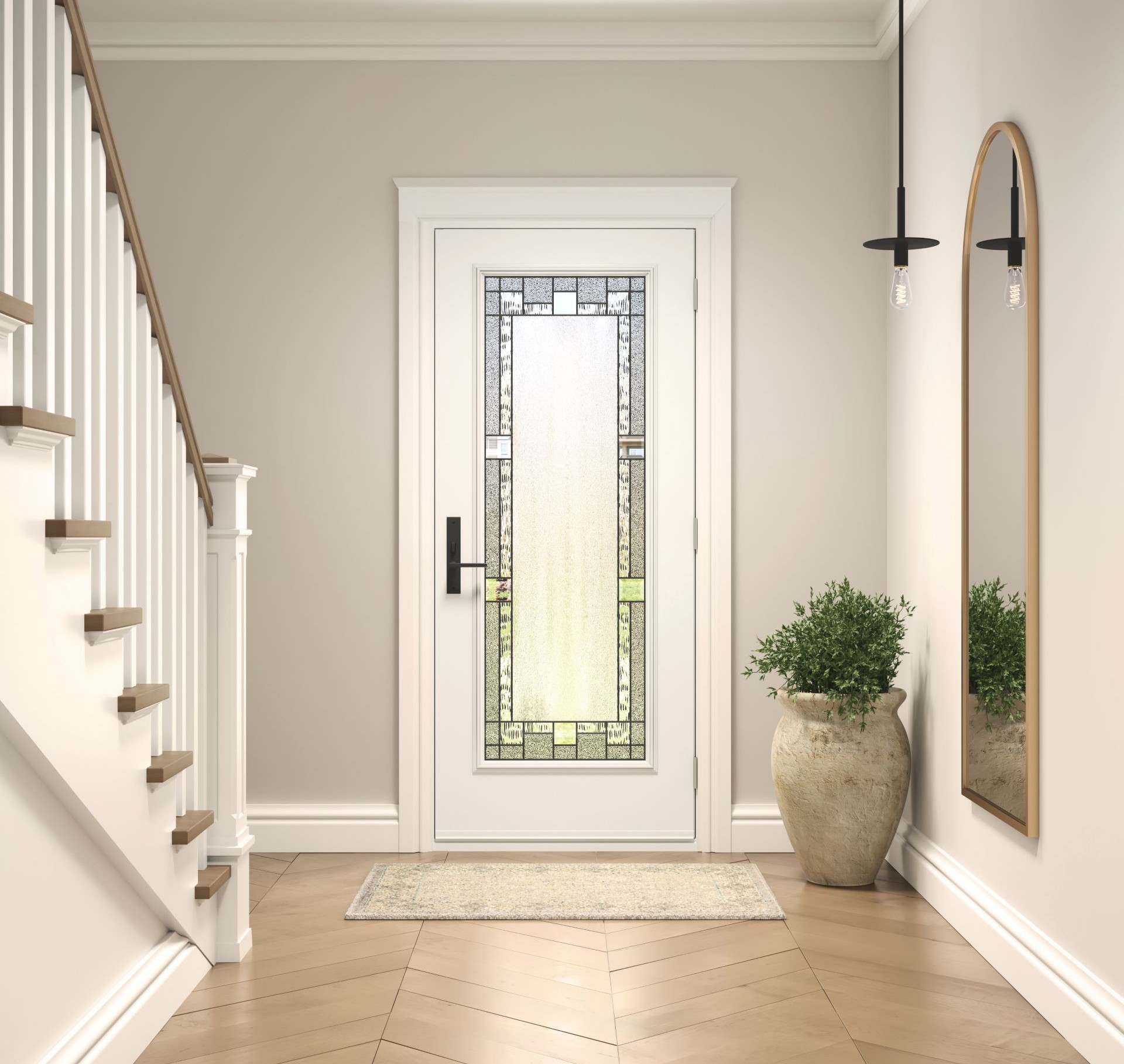
According to the Sleep Foundation, sleeping in a noisy environment can significantly affect your sleep quality. Even the noises that don't actually wake you up have a subconscious effect on your sleep and can disrupt your normal sleep stages. It is also believed that nighttime noise can increase the production of hormones like adrenaline and cortisol. Moreover, spending your daytime hours in a noisy environment can affect your well-being and productivity, especially if you work from home.
And, believe it or not, your windows and doors comprise between 20% and 60% of your house's external walls, which means they are the weak links when it comes to sound insulation. Let's not forget about interior doors as well, because they're also part of the issue.
And how can you solve this problem? There are two key principles that you need to consider:
- Using materials that can absorb the energy in sound waves in a way that, when the sound waves reach the other side of the material, there's little to no energy left.
- Sealing gaps.
1. Start by Assessing Your Door's Soundproofing Needs
Can't find the best solution if you don't know what exactly you're dealing with, right? So, the first step is to understand how well your door insulates against noise. Exterior doors, for example, may lack soundproofing because of:
- A lack of a tight seal
- A poorly installed threshold
- Glazing area
- Gaps around the door unit
Interior doors, on the other hand, are often hollow doors, which means they consist of two wooden panels joined together with a gap between them. And because of this, noise travels easily through them.
In some situations, such as in the case of a weak seal or gaps around the frame, you can rely on some DIY solutions to improve insulation. But if your door is old or hollow, it is probably best to replace it altogether because you will not achieve the same level of noise reduction with DIY solutions as you would with an acoustic door.
2. Replace the Door
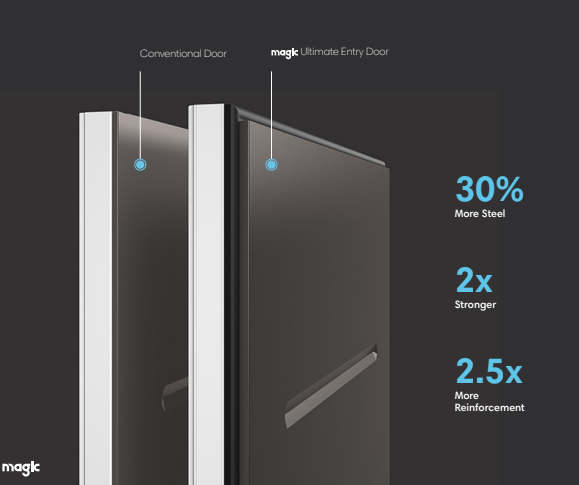
If possible, replace the door with a solid wood door, for instance, or a steel door equipped with acoustic inserts. Doors that insulate well against noise are usually heavy and filled with insulating materials (that also increase its energy efficiency). Plus, if you want your door to incorporate glass, you can also install acoustic glazing.
For example, if you need to replace your exterior door, you can install Magic's Ultimate Entry Door, which has 30% more steel and 40% more insulation compared to other doors on the market.
Furthermore, some door types can be incredibly difficult to seal. Pocket doors, for instance, are notorious for having incredibly poor sound-blocking capabilities, and no soundproofing solution will likely be a permanent solution. In this case, it's best to replace the door.
3. Seal Any Gaps
Inspect your door carefully to spot any gaps because... Just a 1% gap opening can significantly reduce the sound-blocking capability of the door. So, filling gaps is your first line of defense. You can use caulking and weatherstripping to do this.
Apply soundproof weatherstripping along the top and sides of the door frame and acoustic caulk around the edges of the door frame, as well as other gaps. Make sure not to apply caulk between the door and the frame because this can jam the door and damage the hinges. Caulking should only be used outside of the door frame.
If there are larger gaps, you can use acoustic expanding foam to seal them. The foam expands in the gap and seals it fully. After applying it, leave the foam to dry, and then paint over it to prevent UV penetration.
4. Use Soundproofing Materials

If you don't mind altering your door's look, you can apply mass-loaded vinyl (MLV) directly to the door to improve its soundproofing qualities. All you have to do is cut it to fit the size of the door and apply it using adhesive. MLV is designed to do just that: block sound.
Another option is to install acoustic panels, which are designed to absorb sound waves. They're usually made from foam or fiberglass and can be easily attached to the door. However, keep in mind that you may find it a bit difficult to install the acoustic panels around the door handles.
You can also install soundproof curtains or blankets. For interior doors, you can go for wool serge acoustic door curtains, which work by improving the acoustics in a room. An acoustic or soundproof blanket, on the other hand, has 5 layers that stop noise extremely well. They can also be used on exterior doors.
5. Install an Acoustic Door Sweep
Acoustic door sweeps are usually made from acoustic materials designed to create a total barrier between the door and the outside world. They are quite easy to install, especially since most have an adhesive strip that keeps them in place. It's recommended to have a door mat as well, because the door sweep might brush against the floor.
You can also use a standard fabric door sweep for interior doors, but it won't have the same effect as an acoustic door sweep.
6. Use an Automatic Door Bottom
Automatic drop seals lower a dense rubber gasket only when the door closes. This creates an airtight seal against the floor that prevents noise from entering your home. Plus, automatic drop seals don't scrape the floor when you open or close the door.
However, installing an automatic drop seal is more difficult than installing a standard door sweep, but if you have the skills to do it yourself, you can definitely try this method.
7. Double the Door Layer
If the space allows it, install a second door, preferably a solid-core door, a few inches in front of the original. This creates an air gap that acts as a sound barrier, similar to double-glazed windows.
8. Use a Soundproof Door Kit
Getting a soundproof door kit is the easiest method on this list, because it contains multiple soundproofing products that you'll need to solve this problem.
These kits usually include automatic door bottoms (see above), door jamb seals, and other products. The door jamb seals are perfect for the sides and top of the door. Some of them feature a compress O-matic seal and sound-absorbing neoprene acoustic gasketing.
Some door seal kits also include acoustic astragals, which are designed for double doors, sealing off the air gaps where double doors meet.
9. Maintain Your Door Properly

Once you're done with the soundproofing process, schedule a regular maintenance routine. For instance, after installing soundproofing, weatherstripping or applying acoustic sealant, inspect it every few months. Over time, rubber or foam materials can harden, crack, or lose adhesion, and you'll have to reapply them.
Then, check for new gaps or misalignments once in a while to see if the door is still properly sealed. Seasonal changes can cause wood to expand and contract, which creates small spaces around the frame. You can use acoustic caulk to reseal any openings.
And if you're using acoustic materials, make sure to clean them regularly.
10. Arrange Your Furniture Strategically
Sound waves travel differently through a space when they encounter soft, dense, or irregular surfaces. Plus, soft materials absorb sound waves, and they don't bounce around the room. That's why you can really dampen exterior noises by arranging your furniture strategically around the door.
To soundproof a bedroom door, for example, you can place a large, upholstered headboard or bed frame against the wall adjoining the door. You can also add a thick rug or carpet near the doorway and position a bookshelf or a wardrobe near the door.
If it's an interior door between rooms or home offices, you can place a couch or armchair against the wall that shares the door.
And if it's a front door, you can place a coat rack with soft items (scarves, coats, or bags) along the wall near the door, lay a thick doormat both inside and outside the door, and even position a large indoor plant near the entrance, as plants can also scatter sound waves.
Final Thoughts
A quiet home equals better sleep, focus, and overall well-being, so if your doors don't insulate well against noise, now's the perfect time to change that!
If your current doors are letting more noise than comfort in, it might be time for replacement units designed to perform well on every level!
Contact Magic today to get your front door that looks great, insulates better, and keeps unwanted noise exactly where it belongs... outside!
Frequently Asked Questions
What is the Noise Reduction Coefficient?
The Noise Reduction Coefficient (NRC) measures how much sound a material can absorb. It ranges from 0 (no absorption) to 1 (total absorption). A higher NRC is better for doors.
How can I make my door soundproof?
You can make your door soundproof by closing gaps with weatherstripping and caulking, adding a door sweep, and attaching soundproof panels or mass-loaded vinyl to its surface.
Does putting a towel under the door muffle sound?
Yes, putting a towel under the door can slightly muffle sound by blocking some of the air gaps. However, it only offers minimal soundproofing and is not a long-term solution.
How to soundproof a bedroom door from the inside?
To soundproof a bedroom from the inside, take the following soundproofing measures: apply acoustic panels on the door, seal edges with weatherstripping, or hang a thick soundproof curtain or blanket over the door.
How to block out the sound from next door?
To block sound from the next door, try these soundproofing techniques: install heavy curtains, apply acoustic panels to the door, or arrange furniture strategically (place a bookshelf filled with books against the shared wall).
What is the most cost-effective method for soundproofing a door?
The most cost-effective method for soundproofing a door and reducing sound transmission is to use draft stoppers and weatherstripping.
Can I soundproof a hollow-core door?
You can effectively soundproof a hollow-core door by adding mass, sealing any gaps, and incorporating damping materials. These steps will enhance its noise-blocking capabilities despite its inherent limitations.
How effective are acoustic curtains and blankets?
Acoustic curtains and blankets are effective for temporary soundproofing due to their thick, dense materials that absorb sound. For the best results, it is advisable to use them alongside other soundproofing methods.