Window Styles & Comparisons
Round Window: A Complete Homeowner’s Guide
Round windows have fascinated architects and homeowners for centuries! They've been used in historic churches, coastal homes, modern minimalist designs, and more... And it's unsurprising! After all, their unique shape creates an unmatched focal point!
However, round windows aren’t just about aesthetics. They can absolutely elevate curb appeal and bring more natural light into smaller or hard-to-reach areas. But there are also some drawbacks. Their circular shape translates into higher manufacturing costs, more complex installation, and limited options when it comes to blinds or curtains. Plus, because most round windows are fixed units, they do not provide ventilation - unless they are operable, in which case they're even more expensive.
So, are you thinking about adding a round window to your home? In this case, keep reading! In this article, we’ll walk you through the different types, benefits, drawbacks, materials, and design considerations so you can decide whether this architectural feature is the right fit for your home's style.
Quick Answer: Round Windows
A round window, also called a circle window, oculus, or porthole, is a circular window defined by a continuous curved frame without corners. Most round windows are fixed units used as decorative accents. They bring in more natural light and add symmetry and architectural interest to a home’s design. Some round windows can be operable with a pivot design. Round windows are typically installed in gables, stairwells, bathrooms, or entryways. Their energy efficiency depends largely on frame material, glazing quality, and professional installation.
What Are Round Windows?

A round window, often referred to as a circle window, porthole, or oculus, is a specialized architectural feature defined by its continuous, 360-degree curved frame. These windows have a single, unbroken geometric line, compared to standard windows found in most residential constructions, which have a traditional four-point corner structure. Precisely thanks to this lack of sharp angles, round windows can soften the appearance of a room.
These windows were historically used in ships (portholes) and classical European architecture (oculus windows). Today, they still serve as high-impact architectural accents. They provide a symmetrical, balanced look that rectangular-shaped windows simply cannot replicate.
Structurally, the circular frame distributes pressure evenly, but because they do not have corners, they require very specific framing within the wall. In residential settings, they are almost always used as accent windows rather than the primary source of light for a large room.
Types of Round Windows
Although at first it would seem that round windows are just... round, you can actually slightly customize them based on your design preferences and needs.
As such, here are several types of round windows that are popular in modern homes.
Fixed Circular Windows
Fixed circle units are the most popular choice for homeowners. Because they do not open, they offer a completely unobstructed view without the distraction of hinges, cranks, or latches.
These are typically the most energy-efficient round windows available. Without moving parts, the weather stripping is permanent and airtight, which significantly reduces the risk of drafts or moisture leaks. They are a perfect fit for high gables, stairwells, or as decorative portals in hallways.
However, since they don't open, you should consider how you will access the exterior for cleaning, especially if they are installed on a second story.
Pivot Circle Windows
If you love the circular aesthetic but need fresh air, you can install a pivot window. These windows rotate on a central axis, either horizontally (tipping top-to-bottom) or vertically (spinning side-to-side). When opened, the window pane sits perpendicular to the wall, allowing air to flow in around the entire circumference of the circle.
Pivot circle windows do provide excellent ventilation, but they are also more expensive. Pivot round windows have complex hardware elements, which are required to keep the heavy glass circle balanced and secure. They also require high-quality, high-compression seals. If these seals wear out over time, the window can become a source of heat loss.
Oval and Elliptical Windows
While not true circles, oval and elliptical windows are often considered types of round windows.
Vertical ovals are frequently found in Colonial or Queen Anne-style homes. They're commonly installed in entryways or powder rooms to provide a mirror-like silhouette for a touch of elegance.
Horizontal ellipses, on the other hand, have a flattened, wider appearance. These work beautifully in rooms with lower ceilings or positioned above wide furniture pieces, such as a bed's headboard, where a full circle would be too tall for the wall space.
Half-Round Windows

These are segments of a circle that are usually used to complement other windows or doors rather than standing entirely on their own.
Half-rounds, commonly called arch transoms, are typically placed directly on top of a standard rectangular window or a set of French doors. Their main goal is to add visual height without a full structural overhaul.
Quarter-Round Windows

Quarter-rounds are often used in pairs at the peak of a gable. They basically look like a half-round window separated in the center, and the two halves are separate window units.
By placing two quarter-rounds on either side of a central wall stud, you create the illusion of a large window while maintaining the structural integrity of the roof’s peak.
Benefits of Round Windows
Round windows are definitely a smaller architectural detail compared to a massive bay window or sliding patio doors. Still, their impact on a home's atmosphere and design is disproportionately high. If you're not sure whether they're worth it, we've listed all their benefits below to help you decide.
Softening Interior Design
Most modern residential buildings feature hard 90-degree angles: the corners of the walls, the edges of the cabinetry, the frames of standard doors. This can sometimes feel rigid or cold. A round window, which has an organic, almost fluid shape, can really break up the monotony of these harsh lines. When designed carefully, they can immediately make a space feel more curated.
Designers actually often use round windows to create a sense of flow in a room. This geometric contrast is particularly effective in minimalist or modern homes where the simplicity of the circle can act as a centerpiece.
Privacy with Natural Light
One of the most practical benefits of a round window is its ability to enhance natural light without sacrificing your privacy. Because round windows are typically smaller and can be placed higher on the wall, they can bring more natural light into sensitive areas, like bathrooms, dressing rooms, or street-facing bedrooms.
Enhanced Curb Appeal
From an exterior perspective, a round window acts as a true jewel for your home’s facade. Nowadays, most houses have the same design and the same rectangular windows. So, if you want your house to stand out in the real estate market, you can surely achieve this with a circular window unit or an arched window (or more specialty-shaped windows!). This signals that the home has been built with a high level of craftsmanship and attention to detail.
Disadvantages of Round Windows
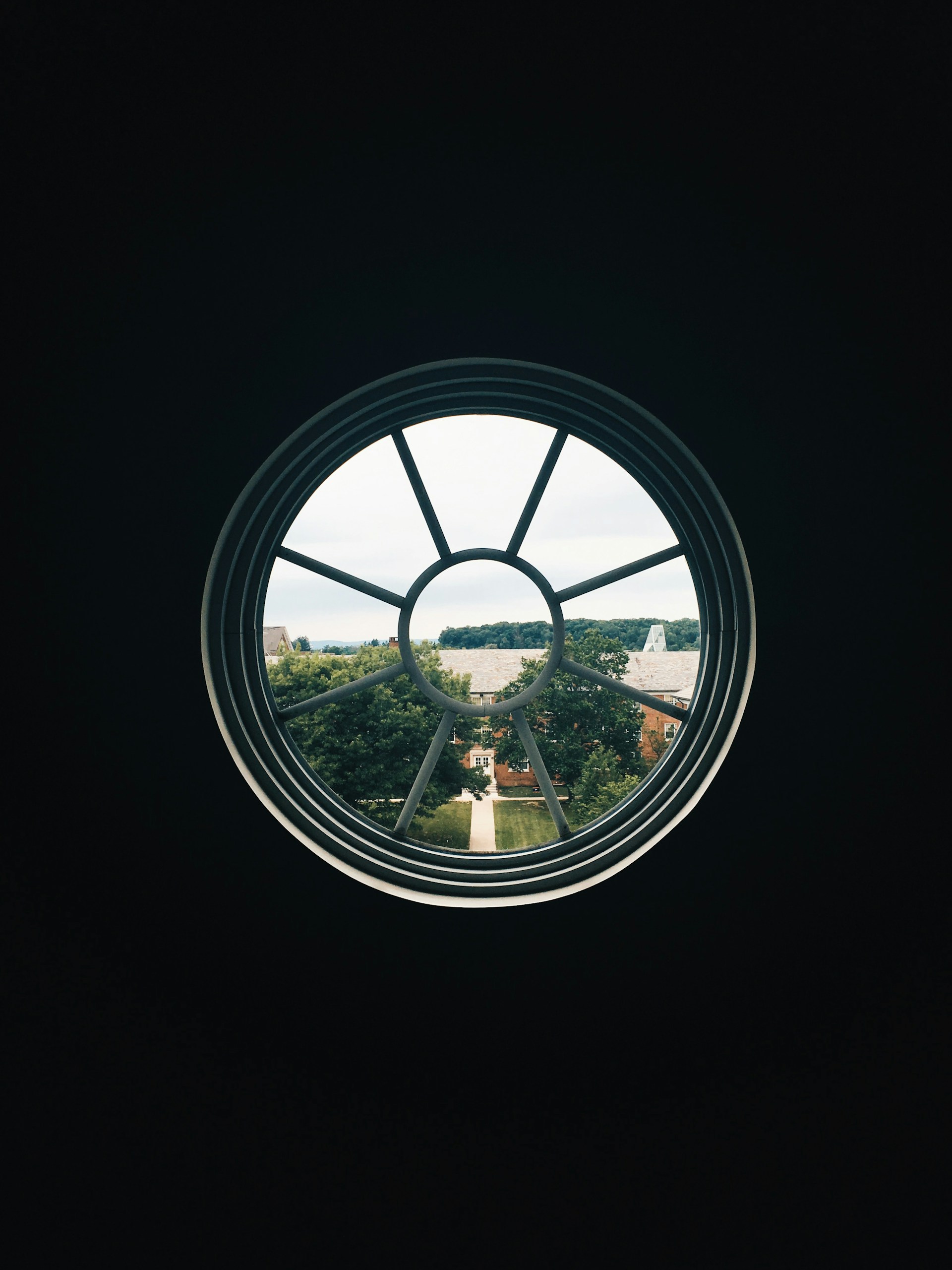
As beautiful as round windows are, they do have some disadvantages that might be decisive for you. Sometimes, the wow factor of a window is not enough, especially when there are maintenance or financial aspects to ponder upon.
Higher Initial Cost
Round windows are considered specialty items. You should expect to pay significantly more for one than you would for a rectangular window of a similar size.
First, the manufacturing process is much more labor-intensive for round windows. Bending frame materials like wood, vinyl, or aluminum into a perfect, seamless 360-degree curve requires specialized machinery and craftsmanship.
Secondly, the glass itself must be precision-cut to fit the circular frame perfectly. Because these aren't mass-produced in the same volume as standard units, the cost per square foot of glass is much higher.
Thirdly, if you want an operable model - this will add to the final window cost. We're talking specialized hardware, complex installation (see below), and superior weather proofing.
Complex Installation
A round window must be installed by a professional. Even someone with extensive DIY experience likely won't be able to install it correctly. The professionals have to cut a perfect circular hole into a structural wall, especially one made of brick, stone, or siding. This is technically demanding.
And then, the rough opening requires specialized framing and curved blocking to ensure the weight of the house is distributed safely around the window.
Perhaps more importantly, the flashing (the waterproof barrier around the window) is much harder to install on a curve than on a straight edge. If the seal isn't executed with millimetric precision, round windows are far more susceptible to water infiltration and leaks, which can lead to rot within the walls.
Window Treatment Challenges
It's really difficult to find off-the-shelf blinds, shades, or curtains for a circular window. Standard window treatments are designed for straight lines and gravity-fed operation.
In this case, homeowners are usually left with three choices: leave the window bare (which can cause issues with glare or heat), pay a premium for custom-made fan shutters or cellular shades that expand into the curve, or mount a straight curtain rod above the circle. The third option defeats the purpose of the window, though, as it hides the very shape you paid a premium to feature.
Limited Ventilation
The vast majority of round windows on the market are fixed windows, meaning they do not open. While this makes them very energy-efficient, it means they contribute nothing to the airflow of your home. If you are installing a round window in a small space like a powder room, you won't be able to rely on it for ventilation unless you invest in a pivoting model.
Pivot windows, which rotate on a central axis, do let air in, but they are even more expensive, harder to seal against drafts, and their hardware can eventually become a point of mechanical failure if not maintained.
Home Design Considerations for Round Windows

You've considered both the advantages and disadvantages of round windows and have come to the conclusion that you definitely want them in your house. What's next?
Now you have to think about the window size, type, orientation, wall placement, and other design considerations, which we'll discuss below.
Size and Proportion
A small circular window acts as a subtle accent. A large round window, on the other hand, becomes an architectural centerpiece, functioning almost like an oversized picture frame for the outdoor view. What role do you want the window to play: supporting character or starring role?
Wall Placement
Where the window sits on the wall matters enormously. If you install the window high on the wall, you'll enjoy both your privacy and plenty of natural light. Eye-level placement creates a focal point, but it requires consideration of what’s visible from both inside and outside.
Relationship to Other Openings
Round windows, even if installed as standalone units, should be incorporated wisely into a room's design. Even if it doesn't seem so at first, they do relate to nearby doors and rectangular windows. And it's important to consider how they all combine, because this determines whether the overall composition feels harmonious or chaotic.
Orientation and Light Quality
Given that round windows are primarily installed for natural light purposes, orientation is very important.
If you want consistent, soft illumination throughout the day, install north-facing round windows. South-facing circles admit abundant warmth and brightness but may create glare. On the other hand, east and west orientations bring dramatic morning or evening light.
Materials for Round Windows
Choosing the right material for a round window is even more critical than for a standard one, as the continuous curve puts unique stress on the frame's structural integrity. In the Canadian climate, where windows must endure the freeze-thaw cycle, the material you choose directly impacts the longevity of your window's seal.
Vinyl
Vinyl remains the most popular and budget-friendly choice for Canadian homeowners. It is naturally resistant to moisture, so it's excellent for high-humidity areas like bathrooms or laundry rooms.
However, because vinyl can expand and contract significantly during extreme Canadian temperature shifts, it is vital to ensure the unit is manufactured with high-quality uPVC to prevent the circular seal from warping over time. Or you can go for hybrid materials that incorporate vinyl and aluminum, for example, which will keep the vinyl intact during temperature fluctuations (see Magic's Hybrid Fusion Frame).
Wood
Wood is the traditional choice for heritage homes or luxury builds. It offers a timeless aesthetic; plus, it can be stained or painted to match any decor.
While wood provides excellent natural insulation, it is high-maintenance. To survive a Canadian winter without rotting or peeling, the exterior must be regularly treated. Without this protection, the moisture from melting snow can settle into the curved grain, leading to warping that can eventually crack the glass.
Fiberglass and Hybrid Materials
Fiberglass and hybrid materials like Magic's Hybrid Fusion Frame are rapidly becoming the gold standard for specialty windows in Canada.
Fiberglass is essentially temperature-blind. It does not expand or contract, which means the airtight seal of your circle window remains intact regardless of the weather outside.
Hybrid frames often combine a rigid aluminum or steel core with a vinyl or fiberglass exterior, offering the best of both materials: the strength to maintain a perfect circle and the thermal properties to keep your heating bills low.
Glazing and Thermal Performance for Round Windows
Because round windows are often placed in hard-to-reach areas where you cannot easily adjust blinds, the glass itself has to do the work of regulating temperature.
For Canadian homes, Low-E (Low-Emissivity) coatings are essential. These microscopic layers reflect heat back to its source. This keeps your furnace’s heat inside during the winter and blocks the sun’s harsh UV rays during humid summers.
Furthermore, you should look for double or triple-pane glazing filled with argon or krypton gas. These gases are denser than air and act as an invisible blanket, slowing down the transfer of cold from the outside glass to the inside.
Since round windows are often decorative and left uncovered, investing in the highest-rated thermal glass ensures that your architectural jewel doesn't become a cold spot in your living room wall.
Where to Install a Round Window?

Because round windows are focal points, they work best in areas where they can frame a specific experience or solve a lighting challenge.
As such, here are the most popular rooms where homeowners choose to install round windows!
Gables and Attics
Round windows are perfect for the front-facing peak of a roof. In a gable, a circular window breaks up the massive triangle of the siding or brickwork.
Beyond aesthetics, round windows installed in the attic can transform the space into a usable, sun-lit room. And they also provide a high-altitude view of the neighborhood.
Bathrooms and Spas
There is something deeply relaxing about the round shape of these windows, which is why they are a favorite in primary bathrooms.
Homeowners usually place round windows above a soaking tub or a vanity, so they can create a spa-like atmosphere. They offer a sense of total seclusion from the outside world while still allowing you to watch the clouds or the sky while you get ready in the morning.
If privacy is a major concern, you can use frosted or seeded glass in a round frame.
Entryways and Mudrooms
A small round window, often called a porthole in this context, is a welcoming touch near a front door. It serves as a stylish alternative to a traditional sidelight, allowing you to see who is at the door while creating a nautical or cottage-inspired entrance.
In a mudroom, where wall space is often occupied by hooks and benches, a round window can be tucked into a smaller footprint than a rectangular one, providing much-needed light to a high-traffic utility space.
Stairwell Landings and Hallways
Stairwells and long hallways are often the most architecturally dead zones of a house. You can completely change how they feel if you install just one round window on a stair landing. As the sun moves, the window casts a sharp, circular spotlight of natural light that travels across the walls and floor, acting as a true piece of art!
Looking for the Best Round Windows? Contact Magic!
For specialty windows, precise engineering, thermal performance expertise, and flawless installation are non-negotiable. That's why partnering with a company like Magic that controls the entire process can really help you make sure that your investment performs as beautifully as it looks.
Magic designs, manufactures, and installs custom windows tailored to Canadian homes, including circular, elliptical, triangular, and other architectural statement pieces. Plus, you can customize them in numerous ways: color, grille pattern, glazing options, and more!
Canadian homeowners choose Magic for its focus on innovation, durability, and design flexibility. Magic teams understand how to integrate round windows into both modern and traditional architecture and can provide guidance on everything window-related: sizing, placement, glazing options, climate needs, and more!
Curious to learn more about our advanced technologies and how they can improve window functionality? Book a free consultation with Magic!
FAQs
Are round windows energy-efficient?
Yes, most round windows are energy-efficient, especially fixed models with double or triple glazing and Low-E coatings. Because they have fewer moving parts, fixed circle windows can be very airtight, but proper flashing and installation are essential to prevent heat loss.
Are round windows expensive?
Round windows are more expensive than standard rectangular windows because they are custom-manufactured and require specialized installation. If you want operable pivot designs and larger diameters, expect to pay significantly more because they have complex hardware and structural framing.
What is a round window in a church called?
A round window in a church is typically called an oculus or, when highly decorative with radial tracery, a rose window. These circular windows are common in classical and Gothic architecture and are often filled with stained glass.
How much do round windows cost?
Round windows cost between $500 and $2,000, depending on materials, size, hardware (if operable), location, and installation complexity.
Can you install a round stained glass window?
Yes, round stained glass windows can be installed in residential buildings. Because stained glass is heavier and more delicate than standard glazing, professional installation and reinforced framing are strongly recommended.
Are there round window blinds?
Yes, custom-made blinds and shutters exist for circular windows, including fan-shaped cellular shades and radial shutters. However, most round windows require made-to-measure treatments, since standard off-the-shelf blinds are designed for rectangular frames.