
Patio Doors
Sliding Door Security: 10 Best Methods to Protect Your Home
Sliding glass patio doors are a favorite among homeowners because they blend indoor comfort with outdoor views for a more comfortable living. But that delightful yet wide glass panel is also among the most targeted entry points for intruders. Burglars know that many sliding doors still rely on weak factory latches, offer a large glass area to exploit, and can sometimes be easily lifted right off their tracks. Ultimately, glass is always going to be a weak point in your home's security system.
The good news is that if you want to improve sliding door security, you don't always need to replace your entire door. Sometimes, you can install some additional security measures to feel safe in your own home. At other times (we'll explain when), a full replacement is necessary. Keep reading to learn everything you need to know about this!
Quick Answer: How to Improve Sliding Door Security
To improve sliding door security, install a physical blocker (security bar or dowel), anti-lift screws in the top track, a reinforced mortise or multi-point lock, and shatter-resistant security film on the glass.
For maximum protection, layer passive defenses (bars, pins, upgraded locks) with active deterrents like glass-break sensors, contact alarms, motion lighting, and security cameras. If your door has single-pane glass, warped frames, damaged tracks, or weak factory hardware, full replacement with a modern multi-point locking sliding door system is the safest long-term solution.
How Do Burglars Break In Through Sliding Glass Patio Doors?

Most break-ins through sliding doors fall into three categories: bypassing the lock, lifting the panel out, and breaking the glass.
Bypassing the Lock
Many older aluminum and vinyl sliding doors still rely on basic latch locks. These can be jiggled, forced with a screwdriver, or manipulated by prying near the handle. If the door isn’t fully closed or has developed play over time, an intruder may reach through a gap to flip the latch from the outside. This lock bypass method takes seconds and leaves almost no visible damage.
How to Prevent Sliding Door Lock Bypass Attacks?
- Install a security bar: the simplest and most effective defense is placing a sturdy security bar or a cut-to-size wooden dowel in the bottom interior track. This physically blocks the door from sliding open even if the lock is bypassed.
- Add a secondary lock: install a pin lock or a loop lock. A pin lock involves drilling a hole through the sliding door frame and into the stationary frame, then inserting a steel pin. A loop lock mounts to the door jamb and loops into a bracket on the door.
- Upgrade the primary hardware: replace the flimsy factory latch with a heavy-duty mortise lock or a twin-point lock that secures the door at two different points on the frame.
- Maintain alignment: check the door periodically to ensure it closes completely flush against the frame, leaving no gaps for tools to be inserted.
Lifting the Panel Out of the Frame
When installers don’t properly adjust roller height or when the tracks wear down, the sliding panel can have excessive clearance at the top. Intruders use a pry bar to raise the door just enough to pull it inward, completely bypassing any lock. This lift attack is surprisingly common on older doors where maintenance has been neglected.
How to Prevent Sliding Door Lift Attacks?
- Install anti-lift screws/pins: open the door and look at the top track. You can drive a few pan-head screws upward into the track directly above the sliding door. Leave the screw heads protruding just enough so the door can still slide freely back and forth without getting damaged, but not enough room for the door to be lifted upward and out.
- Adjust the rollers: locate the adjustment holes at the bottom of the sliding door panel (usually covered by plastic plugs). Use a screwdriver to raise the door so it sits higher in the track. This naturally reduces the gap at the top, making it much harder to lift the door out of the frame.
Smash and Grab
When no one is home, some burglars simply break the tempered glass panel to gain immediate access. Tempered glass shatters into small pieces rather than sharp shards, but that safety feature also means it clears the opening fast.
How to Prevent Sliding Door Smash-and-Grab Break-Ins?
- Apply security window film: this is a thick, transparent polyester film applied directly to the glass. While it won't prevent the glass from shattering, the heavy-duty adhesive holds the shattered pieces firmly in place. A burglar would have to repeatedly strike the glass and cause noisy impacts, so this typically takes much longer than breaking unprotected glass.
- Install glass-break sensors: tie a glass-break sensor into your home security system. These sensors listen for the specific acoustic frequency of shattering glass and will instantly trigger a loud alarm, sending most intruders running before they even enter.
- Use motion-sensor lighting and cameras: smash-and-grab burglars rely on the cover of darkness or lack of surveillance. Install a bright, motion-activated floodlight right above the sliding door, paired with a visible security camera to act as a strong physical deterrent.
Improving Sliding Door Security: 10 Best Methods

Almost every sliding glass door comes with a factory cam-style latch, but this should be treated as a minimum, not your main line of defense.
A typical cam-lock is a small lever near the handle that swings a hook into a keeper on the door frame. These locks are often made from materials that can shear or bend under a strong kick or pry attempt. They work fine for keeping the door closed against wind, but they’re not designed to stop a determined intruder.
Moreover, physical blockers remain some of the simplest and most reliable ways to secure a sliding door. Even if an intruder defeats your lock, these devices physically stop the door from moving.
1. Upgrade to a Mortise Lock
Consider replacing or supplementing the factory latch with a higher-quality mortise lock featuring a hardened steel hook. Unlike surface-mounted cylindrical locks, mortise locks are embedded into the door frame itself, providing superior durability and resistance to prying.
Installation tips for proper alignment:
- Ensure the lock hook fully engages the strike plate when closed.
- Check that the door closes flush with the jamb; gaps reduce lock effectiveness.
- Tighten all screws on the strike plate and keeper.
- Test the lock several times after installation to confirm smooth operation.
2. Install Foot-Operated Locks
Auxiliary sliding door security locks are designed to add extra security to existing patio door locks. For example, you can go for foot locks (sometimes called kick locks) mount at floor level on the fixed panel or track. All you have to do is press down with your foot to engage a bolt into a hole or plate. These are easy to operate daily and add solid resistance against sliding attacks.
3. Go for High-Mounted Auxiliary Locks
For family safety, especially with young children, consider locks mounted higher on the frame. These prevent kids from sliding the door open to access a deck, balcony, or backyard pool. Many building codes actually require such devices in homes with pools.
4. The Classic Wooden Dowel
A 1” diameter wooden dowel cut to length and placed in the bottom track between the sliding panel and jamb costs almost nothing and works remarkably well. When properly sized, it creates a physical barrier that prevents the door from being opened even with the latch defeated.
5. Telescopic Patio Door Security Bar
Modern telescopic security bars are adjustable aluminum or steel bars that hinge up against the frame when not in use. Drop them into place to brace the active panel. Many include keyed locks or push-button releases for faster egress in emergencies, which is important for fire safety and building codes.
6. Track Locks and Clamps
Compact track locks clamp directly onto the upper or lower tracks, creating an adjustable stop. These let you limit how far the door can slide open, which is great for partial ventilation at night while maintaining security.
7. Install Anti-Lift Screws or Pins
Burglars often bypass locks and blockers entirely by using a pry bar to lift the sliding panel up and out of its tracks. To stop this, you can install anti-lift screws in the upper track. Drive a few pan-head screws into the top track directly above the sliding door, leaving just a tiny gap so the door can still glide smoothly. This eliminates the vertical clearance needed to pop the door off its frame.
8. Apply Shatter-Resistant Security Film
Applying a heavy-duty, transparent polyester security film directly to the glass provides a massive upgrade in protection. While it won't stop the glass from breaking if struck with a heavy object, the strong adhesive holds the shattered pieces firmly in the frame. This transforms a quick "smash and grab" into a noisy, time-consuming, and frustrating struggle that usually sends intruders running.
9. Add Smart Sensors and Alarms
Physical barriers are great, but active alerts are just as important. Integrate your sliding door into a home security system using two specific types of sensors:
- Contact Sensors: placed on the frame and the door to trigger an alarm if the door is forced open.
- Glass-Break Sensors: placed in the same room, these listen for the specific acoustic frequency of shattering glass and will trigger the alarm even if the door itself is never opened.
10. Install Exterior Motion Lighting and Cameras
Deterrence is your first line of defense. Smash-and-grab burglars heavily rely on the cover of darkness and privacy. Therefore, installing a bright, motion-activated floodlight positioned above or near the patio door eliminates the shadows where intruders hide. You can also pair this with a highly visible security camera to make your home a much less appealing target from the get-go.
Everyday Habits and Maintenance That Improve Security

Products alone aren’t enough. Your daily habits and basic maintenance affect how secure your sliding door actually is.
Daily Security Habits
- Always lock the door when leaving, even for quick trips to the garage.
- Remove the dowel or bar only when actively using the door.
- Avoid leaving the slider partially opened at night without a secure ventilation stop.
- Check that the door is fully closed before engaging locks (gaps prevent proper latching).
Seasonal Maintenance Checklist
Inspect your hardware twice per year; spring and fall work well:
- Tighten screws on patio door safety locks, handles, and strike plates.
- Lubricate rollers and lock mechanisms with silicone-based spray.
- Check weatherstripping for gaps or deterioration.
- Test anti-lift blocks and security pins.
- Verify alarm sensors are functioning (replace batteries if needed).
- Clean tracks of debris that could prevent full closure.
Signs Your Door Needs Repairs or Replacement
Misaligned doors weaken lock engagement and make prying easier, so it might be time to repair your sliding door. Watch for:
- Door dragging on the track
- Gaps along the jamb when closed
- Visible light at the top corner
- Difficulty latching or unlocking
When to Replace Your Sliding Door for Security Reasons?
Sometimes, no amount of hardware can save a fundamentally compromised door. In this case, a full replacement project is the best long-term option, even if it's more expensive upfront. It is generally time to replace the entire sliding door unit if:
- The frame is warped or rotted. If you have an older aluminum frame that has bent under pressure, or a wood frame suffering from rot, the door will no longer sit flush against the jamb. A door that doesn't close properly leaves a permanent gap that makes prying easy and prevents locks from engaging fully.
- The tracks are irreparably damaged. If the bottom track is severely dented, rusted, or worn down, the door will never glide correctly. More importantly, worn tracks often allow the door to sit too low, creating excessive space at the top that makes the door incredibly easy to lift out of the frame, even if you try to adjust the rollers.
- It has single-pane glass. Many old sliding doors still have single-pane glass. Not only is this terrible for energy efficiency, but it is also incredibly fragile and dangerous when broken (if it's not tempered).
- Hardware incompatibility. If the frame of your current door is too thin, hollow, or damaged to securely hold screws for mortise locks, loop locks, or anti-lift pins, the door can no longer be properly secured.
Modern Technologies in New Sliding Doors
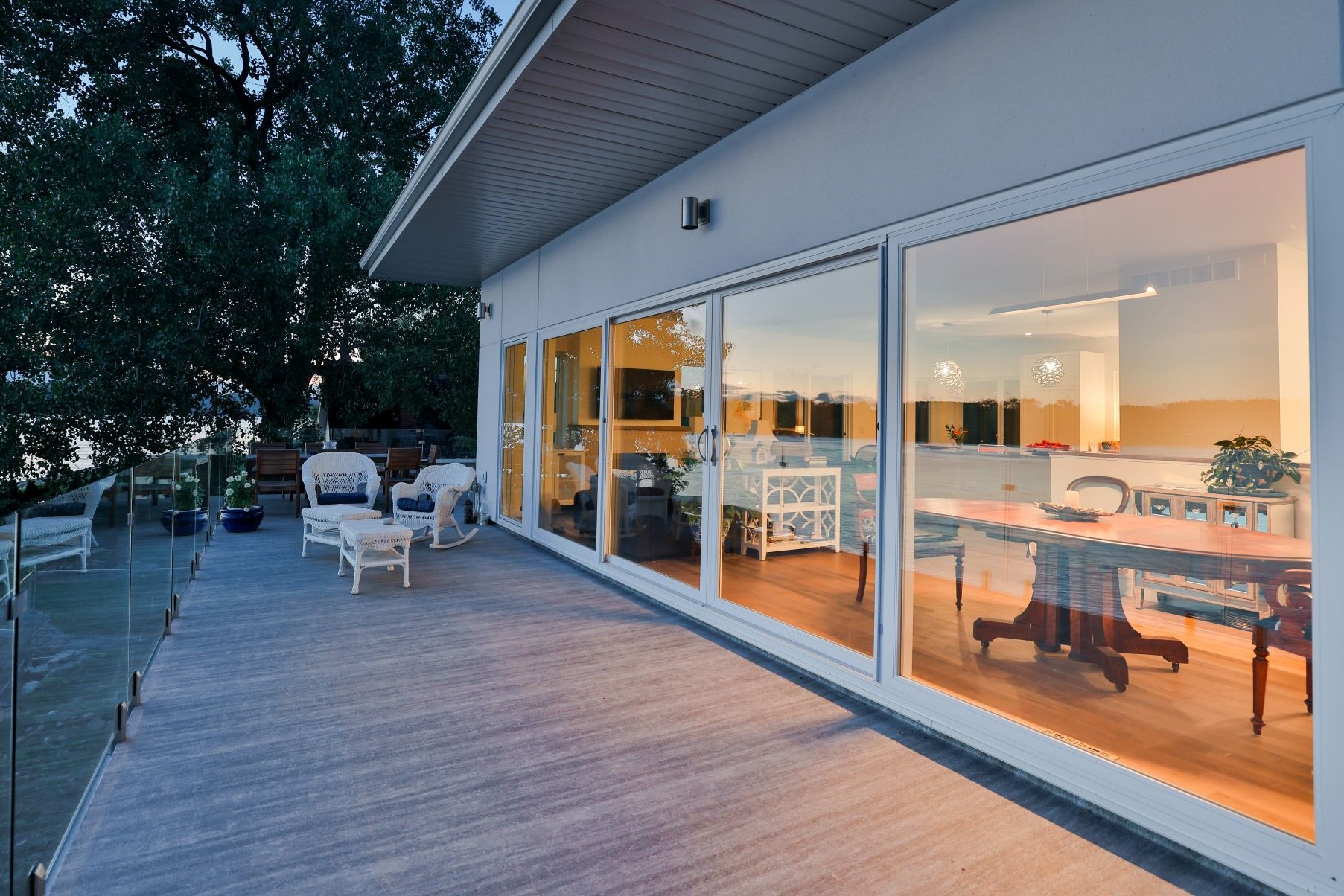
Patio door security has evolved significantly over the last decade. Modern sliding doors are engineered to defeat the most common break-in methods right out of the factory. Here's what you should look for in a new model!
Multi-Point Locking Systems
Instead of a single flimsy cam-latch, high-end modern doors like those from Magic feature multi-point locks. When you throw the lever, two to four heavy-duty, opposite-facing steel hooks engage with the frame simultaneously. This makes it virtually impossible for an intruder to pry the door open or lift it off the track.
Laminated and Impact-Resistant Glass
Modern doors offer glass upgrades that make them similar to a car windshield. Laminated glass features a tough polymer interlayer sandwiched between two panes. If a burglar hits it with a brick, the glass shatters but remains completely bonded to the plastic layer, preventing them from reaching through or walking in.
Integrated Secondary Locks
Many new models come with heavy-duty foot locks (toe locks) or head bolts built directly into the frame design, so you don't have to drill into your new door to add extras blockers.
Reinforced Frame Materials
Modern sliding doors feature reinforced frame materials. Magic sliding doors, for example, are built with our Hybrid Fusion Frame, which combines aluminum, steel, and vinyl. This makes them incredibly sturdy and difficult to break.
Built-in Smart Sensors
Instead of sticking bulky sensors to the glass, many premium doors now come with factory-integrated, invisible contact sensors. These often sync with your home Wi-Fi or security systems to alert you the second the door is opened.
Built-In Blinds
One of the best deterrents is simply keeping your valuables out of sight. Modern doors offer blinds sealed between the panes of glass or fully retractable sliding glass door blinds. This gives you instant privacy, meaning burglars can't peek in to see if the house is empty or worth robbing.
Is It Time to Replace Your Sliding Door? Contact Magic!
While security bars and sensors are great for reinforcing older models, the most effective way to secure your home is to install a door engineered specifically to defeat break-ins.
If you are in the Greater Toronto Area and looking for the ultimate peace of mind, it might be time to look at the sliding door systems from Magic, which have a grade 40 security rating, the highest attainable for sliding doors!
Magic has revolutionized patio door security and design for the Canadian climate. We do not rely on hollow vinyl anymore, as it can easily be pried or bent. Instead, Magic doors feature proprietary Hybrid Fusion Frame technology. This design uses a skeleton of galvanized steel and anodized aluminum wrapped in vinyl, making the frame much stronger than the frames of conventional sliding doors.
Furthermore, Magic sliding doors feature premium dual-point locking systems that anchor the door firmly into the frame, neutralizing the most common lift and pry attacks. Magic even offers built-in retractable Slide & Hide screens and thermal blinds, giving you instant privacy (and even blocking sound!) at the pull of a handle so intruders can't see into your home.
Curious to learn more? Book a free consultation with Magic today!
FAQs
What is a sliding door security bar?
A sliding door security bar is a sturdy physical barrier, often made of metal or wood, that fits horizontally into the bottom track to prevent the door from opening. You basically attach it to one side of the door frame and then extend it to the other side. It is a highly effective backup that keeps the door securely closed even if the primary lock is completely bypassed by an intruder.
What is the best sliding door security lock?
The best sliding door security lock is a heavy-duty, multi-point mortise lock combined with a secondary foot-operated floor lock or security pin. These two locks anchor the door deeply into the frame at multiple points, providing maximum resistance against prying, lifting, and forced entry attempts.
How can I make my sliding door more secure?
You can make your sliding door more secure by layering physical defenses, such as placing a security bar in the bottom track and installing anti-lift screws in the upper frame. Additionally, applying shatter-resistant window film and integrating a glass-break sensor into your alarm system will protect the fragile glass panels from smash-and-grab attacks.
Can you put a security door on a sliding door?
Yes, you can install a sliding security screen door, which features a heavy-duty locking metal frame and reinforced steel mesh, directly over your existing glass sliding door. This upgrade allows you to safely leave the glass door open for fresh air while maintaining a highly resilient physical barrier against potential intruders.
How to prevent kids from opening sliding doors?
To prevent children from opening sliding doors, you should install a high-mounted loop lock or flip-action latch near the top of the door frame where they cannot reach it.
What is a ghost sliding door?
A ghost sliding door is a modern, minimalist interior door system that operates with a concealed overhead track and hidden rollers. Because the hardware is completely invisible, the door panel appears to magically float along the wall as it smoothly glides open and closed.