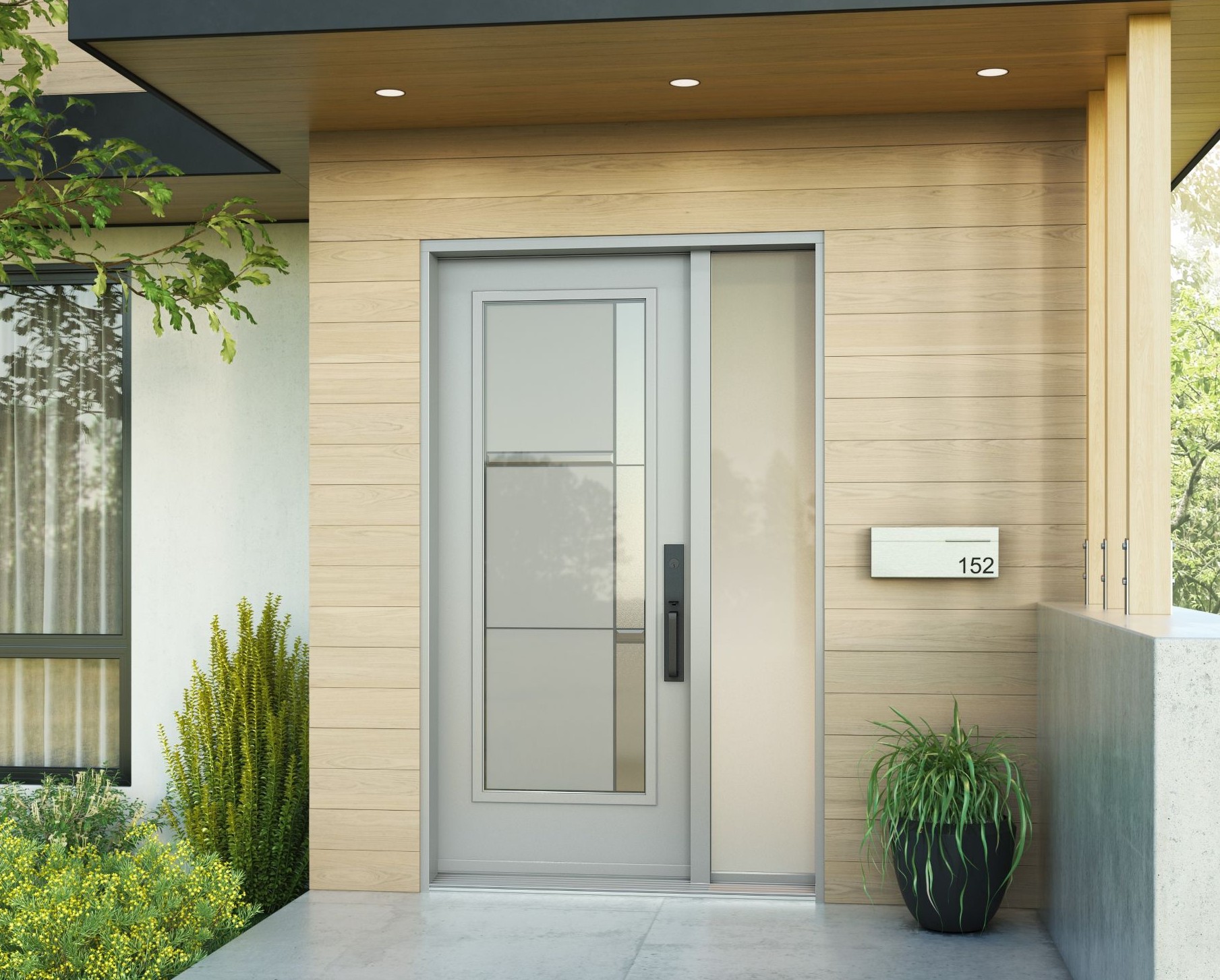
Front Doors
13 Front Door With One Sidelight Ideas You'll Love!
Most front doors with sidelights have two glass panels: one sidelight on each side. This design definitely works better for symmetry. But what if you don't have enough space for two sidelights, but you still want some natural light in your foyer? Would it be a good idea to install a front door with just one sidelight? That's definitely a yes! It's a bit more challenging to achieve that perfect look, but certainly not impossible.
So, if you're looking for some front door with one sidelight ideas, we've got you covered!
13 Best Front Door With One Sidelight Ideas
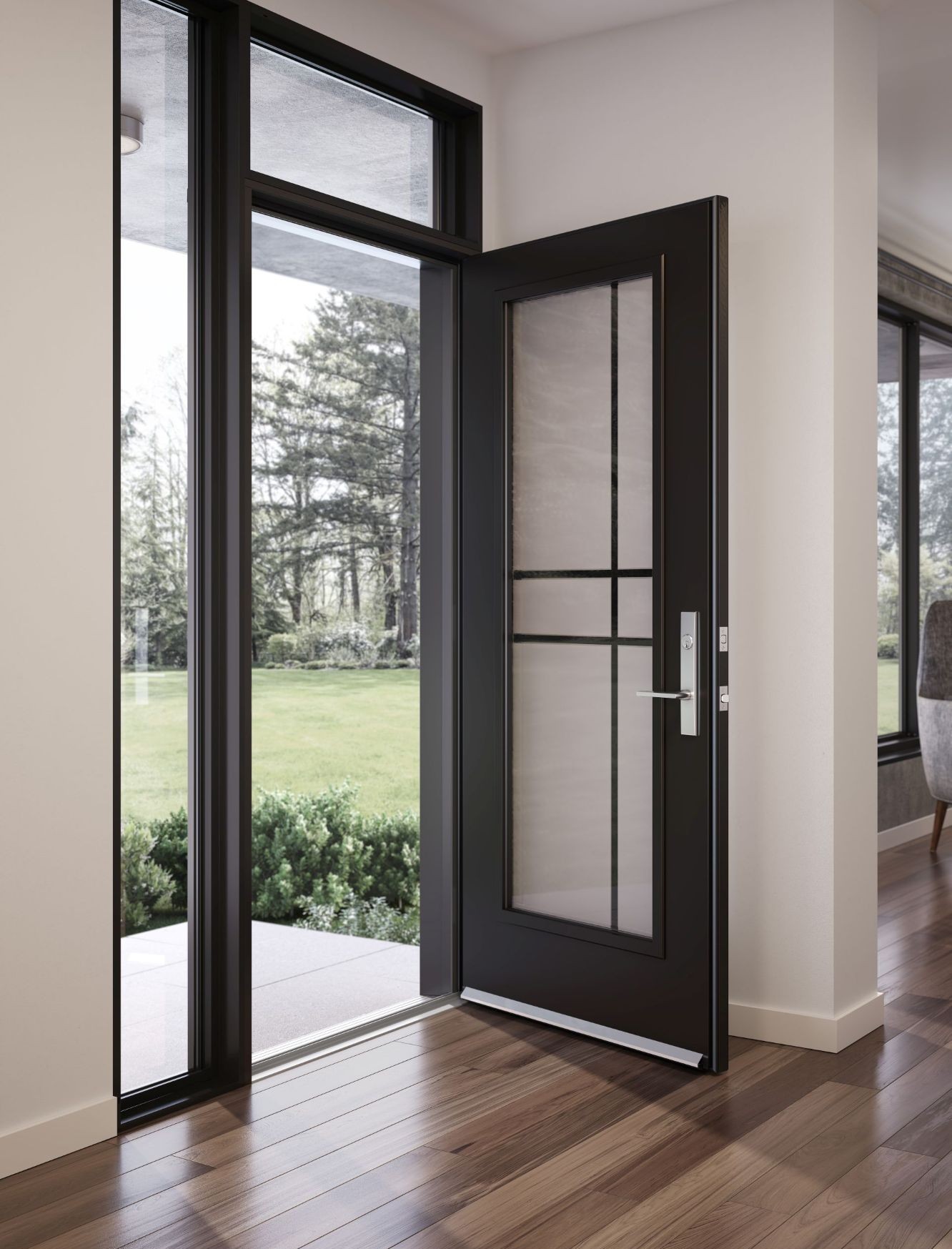
Adding glass to your door panel can truly make your home feel more welcoming. And it will also let natural light in to brighten your space. Plus, a single sidelight will create the illusion of a large double door. But how can you design it so it fits your home facade perfectly?
In the following sections, we'll provide you with some expert tips and tricks for installing a front door with one sidelight! Who knows, you might feel a spark of inspiration that will solve this design dilemma!
1. Treat the Entry Door and Sidelight as One Architectural Element
On an asymmetrical facade, the biggest mistake is diminishing the importance of the sidelight. From a design standpoint, the door and sidelight should be considered a single composition. That means matching heights perfectly and aligning all horizontal details - handle position, panel divisions, grooves, or glazing breaks. This way, the asymmetry will become intentional.
Naturally, the easiest way to achieve this is by installing full-height sidelights. They allow for cleaner framing, fewer transitions, and better structural rigidity.
2. Use Visual Weight to Balance the Facade
If one side of your facade already feels heavier (because of a garage or corner glazing, for example), you can counterbalance it through material and color choices at the entry. Darker door and sidelight frames can visually anchor the opening and prevent the glass from feeling too overwhelming. You can go for matte black, dark bronze, or deep charcoal frames, for instance, as they work especially well on asymmetrical homes because they compress visual noise.
3. Choose Glass that Softens Asymmetry

Clear glass brings in the most light, but it can exaggerate asymmetry by drawing attention to the sidelight's width. This can be particularly noticeable if your front door is in the middle of the facade. In this case, you can install textured glass. It will diffuse light while visually calming the composition. Painted glass could work as well, as long as it doesn't draw too much attention.
And don't forget that the glass type you choose also has a privacy role. For added privacy, you should definitely go for textured or decorative glass, among which these are the most popular:
- Frosted or acid-etched glass for balanced privacy
- Reeded or fluted glass for a subtle modern feel
- Patterned or decorative glass in traditional-style homes
Another option is installing Magic sidelights, which can be equipped with fully retractable blinds that provide 100% privacy.
4. Align the Entry with Surrounding Elements
Design-wise, your door doesn't exist in isolation. If your facade has vertical windows, siding joints, or cladding seams, align the sidelight with those vertical rhythms. Even subtle alignment, such as matching the sidelight width to a nearby window mullion, can truly improve how your entrance looks.
From a fabrication angle, this alignment often dictates custom sizing rather than standard door packages. While this can increase cost slightly, it allows manufacturers to optimize sightlines, glass thickness, and framing so the entry looks purpose-built rather than retrofitted.
5. Use Hardware and Details to Redirect the Eye
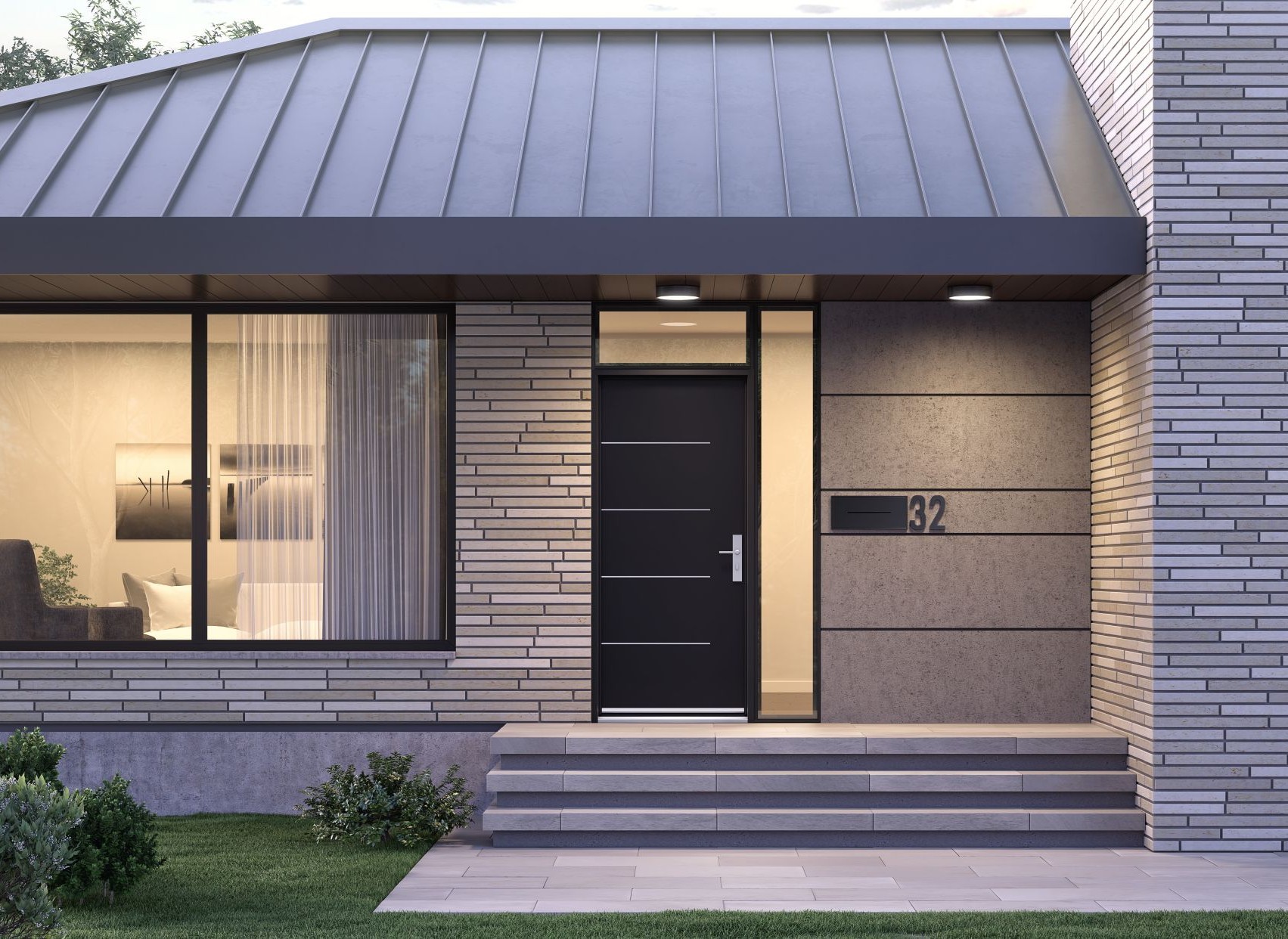
If you're working with an asymmetrical door, it's of the essence to carefully choose hardware placement. For instance, a long vertical pull handle emphasizes height instead of width. Or you can go for minimalist hardware, which prevents visual clutter near the sidelight edge, which is where the imbalance is most noticeable.
6. Let the Sidelight Support the Door, not Compete with It
The sidelight should be a complementary element, not a primary one. Keep the door panel more solid and let the sidelight remain visually quieter. You can, for instance, go for a bold color for your front door, as it can create a more welcoming entryway and make it stand out.
7. Choose the Sidelight Side Carefully
From a manufacturing and usability perspective, the sidelight is best placed on the handle side of the door, not the hinge side. This improves daylight near the lockset, makes the entry feel more welcoming, and avoids interference with hinges.
But keep other factors in mind too. For instance, consider how people approach the house. If the main walk path comes from one side, it might be wise to install the sidelight on that side, as it can make the entrance feel more open and intuitive.
Other factors that can influence the sidelight location include:
- Interior walls, closets, or staircases near the entry
- Electrical switches and structural constraints from construction
- Wind exposure for outswing doors
- Handle-side placement for better usability and visibility
8. Pair the Sidelight with a Transom
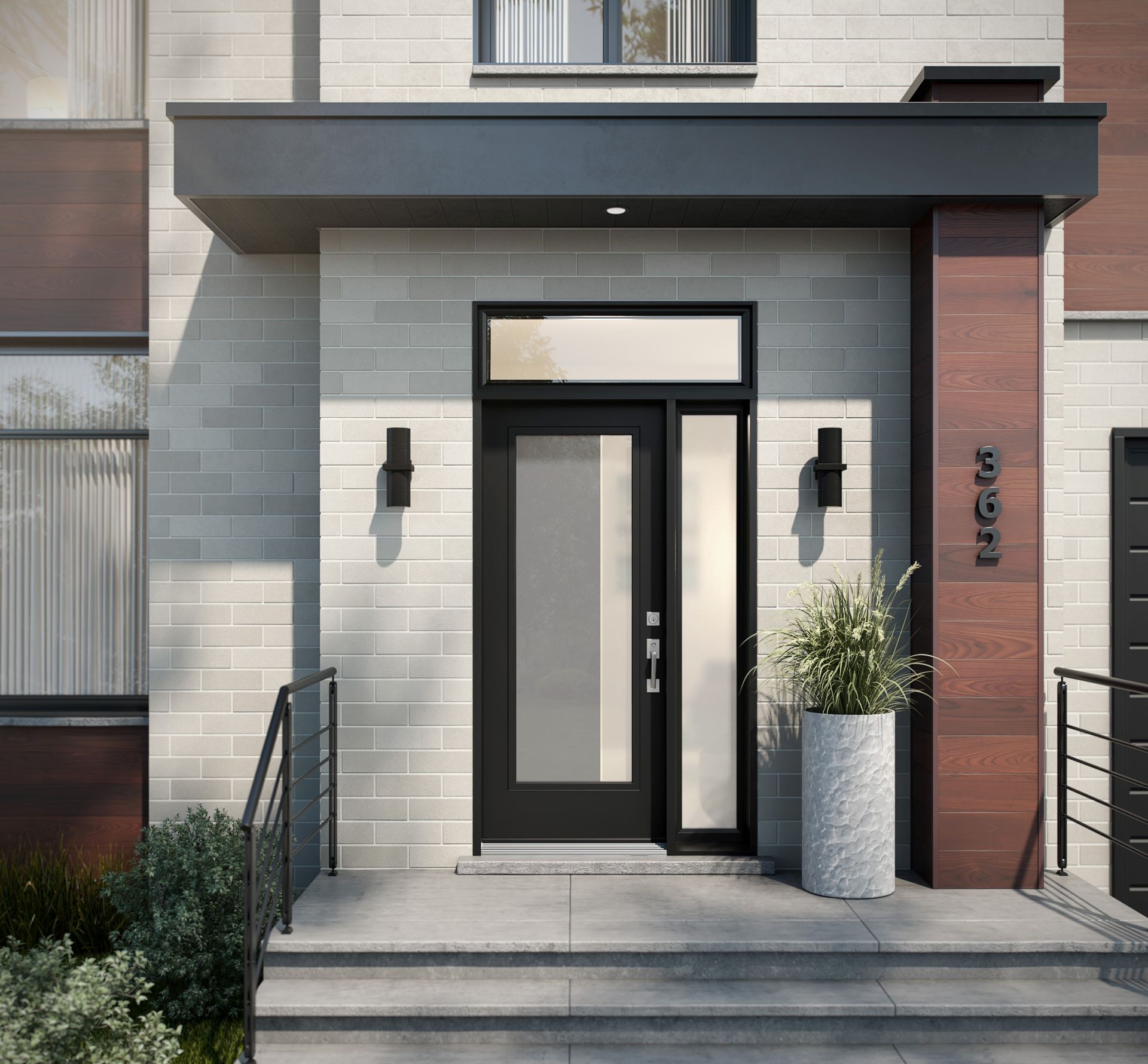
A transom window is installed above the door. Visually, it creates a strong horizontal line above the opening, which balances the asymmetry below. In the case of entry doors designed with one sidelight, the transom is as wide as the entire door system (door + sidelight), which creates continuity between the sidelight and the transom.
Moreover, a transom window can also allow manufacturers to keep sidelight proportions slimmer without sacrificing light. So, instead of installing a wide sidelight, you distribute the width between the sidelight and the transom without sacrificing natural light.
9. Design the Porch Strategically
If the facade itself can't be symmetrical, the porch absolutely can. Columns, ceiling treatments, lighting, and plants can definitely balance things out. For example, you can place two identical sconces equidistant from the center of the door. Even if the sidelight is only on one side, this will trick the eye into reading symmetry. The same goes for porch columns: aligning them symmetrically around the door opening can reframe the entry as a centered composition.
You can also install overhangs and place a chair/bench on the other side of the sidelight. And don't forget about lighting. Symmetrical lighting around the door can visually center the entry regardless of where the sidelight sits.
10. Don't Forget About Door Trim
Wide door trim can visually contain the asymmetry. When the trim is thick enough, the door and sidelight feel like they belong inside a defined frame. This is especially effective on modern homes with flat trim or on traditional homes with layered mouldings.
11. Popular Front Door with One Sidelight Styles (by Home Type)
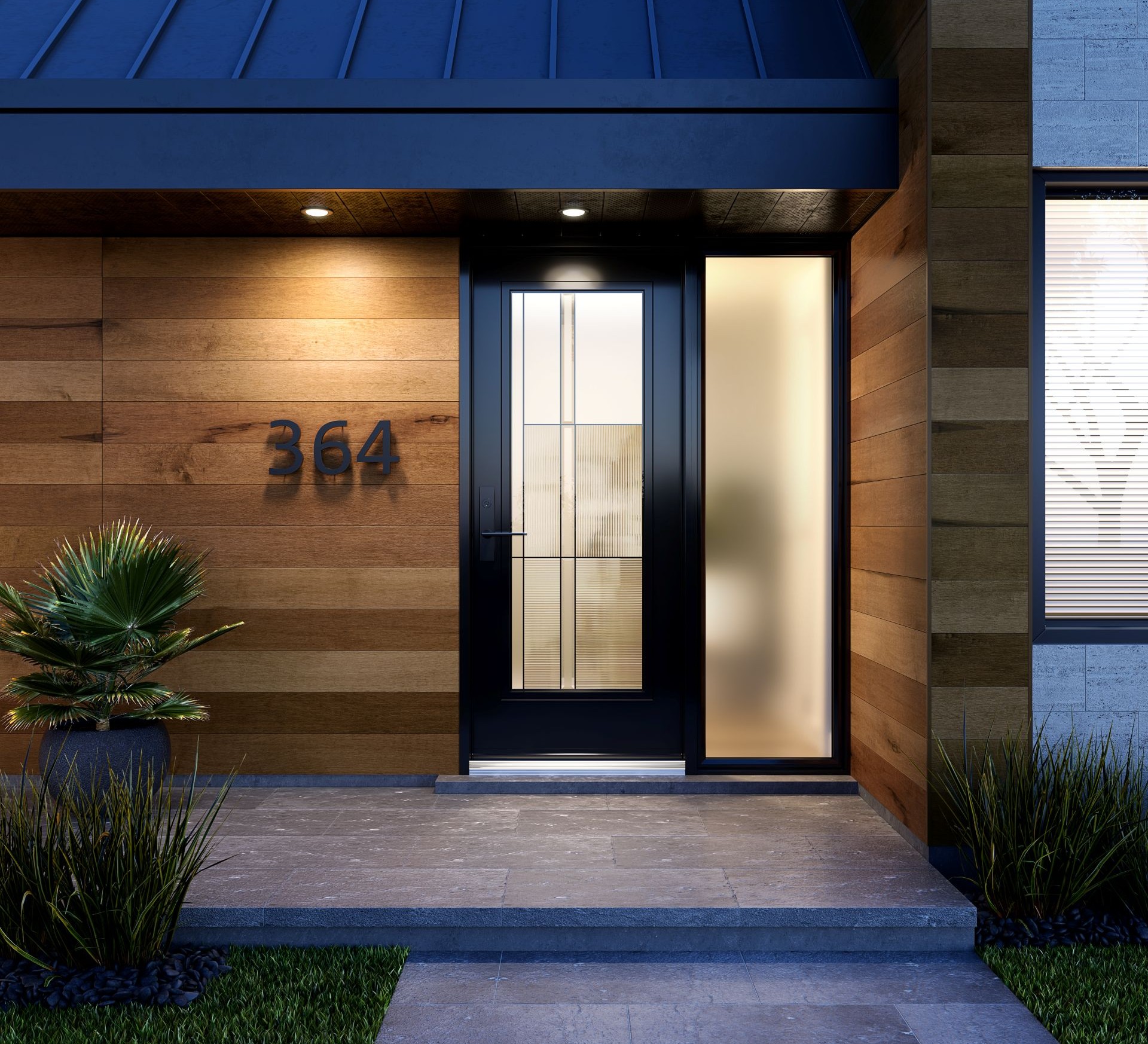
A front door with one sidelight can suit different styles, as long as the proportions and materials complement your home's architecture.
A traditional front door with one sidelight features glass inserts with panel detailing or even wrought iron accents, for example. This design is elegant and classic, especially when paired with decorative trim and muted colors. Traditional or ornate doors may also look good with sidelights that feature matching scrollwork, textured glass, or handcrafted detailing.
In a modern farmhouse setting, a single sidelight can be a great choice when you want natural light but don't want to overwhelm the entry. You can go for fiberglass or wood doors with a simple full-height glass insert.
If your house has a mid-century modern design, you should focus on clean lines, minimal ornamentation, and narrow glass panels. In this case, steel doors or aluminum doors might be your best choice.
12. Keep in Mind Energy Efficiency
An energy-efficient front door can help keep your home's temperature steady. This, in turn, can help you save you money on energy bills. But will the sidelight reduce energy efficiency? It can. But only if:
- You're installing single-pane glazing.
- The glass panels are poorly installed.
- The window unit consists of poor materials.
Well-built sidelights are IGUs, meaning insulated glass units consisting of two or three glass panes separated by inert gas. They also have thermally broken frames, Low-E coatings, and proper seals. Fiberglass, steel, and aluminum systems can all perform well when installed correctly. That's why, most often, poor installation is what causes drafts or heat loss.
So, when designed as a unified system and equipped with necessary energy-efficient elements, a front door with one sidelight can maintain excellent thermal performance.
13. What About Security?
Entry doors with sidelights can indeed be less secure because of the glazing area. But given how advanced window technologies are nowadays, you can install secure doors even if they have glass panels. You can choose laminated glass, tempered glass, or impact resistance glass, for example. You can also install security window film.
But don't forget that you also have to choose the right locking system, which is essential for added security for your front door and sidelights.
Cost Impact: Does One Sidelight Increase the Price?
Adding a sidelight does increase the cost compared to a solid door. The final price is influenced by:
- Material choice (wood, fiberglass, steel, aluminum)
- Glass type and decorative detailing
- Full-height versus partial-height sidelights
- Custom fabrication versus standard packages
- New construction vs replacements
When Is a Single Sidelight Better than Two?

A single sidelight is often the smarter design decision. On narrow facades, asymmetrical layouts, or homes where interior space is limited, one sidelight can actually complement the entry. In these cases, two sidelights can be a bit too much.
Entry doors with one sidelight are also ideal when you want:
- A cleaner, more modern touch
- Better control over privacy
- Flexibility in interior layout
- A subtler, more architectural statement
Pros and Cons of a Front Door with One Sidelight
Pros
- Brings natural light into the entry without requiring a symmetrical facade
- Works well on narrow homes or layouts where two sidelights aren’t possible
- Offers better privacy control compared to double sidelights
- Creates a more architectural, intentional look when designed correctly and enhances your home's curb appeal
- Often costs less than a door with two sidelights or extensive glazing
Cons
- Requires careful proportioning to avoid looking visually unbalanced
- Fewer standard, off-the-shelf configurations may be available
- Poor trim, alignment, or installation is more noticeable in asymmetrical designs
- Can feel underwhelming if the sidelight is too narrow or poorly placed
Sidelight Width and Proportion Guidelines
Proportion is the single most important factor when designing a front door with one sidelight. A sidelight that is too wide can overpower the door, while one that is too narrow can look like an afterthought.
Luckily, the width and height of door sidelights can be customized to meet specific needs, usually built in 2-inch increments.
Here are some general sidelight width guidelines:
- Narrow sidelights (6-10 inches): best for modern door styles and minimalist homes. They provide light without drawing attention to asymmetry.
- Medium sidelights (12-14 inches): ideal for transitional, farmhouse, and traditional homes where some visual presence is needed.
- Wide sidelights (16-18 inches): should be used cautiously and usually paired with a transom or strong trim to maintain balance.
New Construction vs. Replacement Projects
New construction offers the most design flexibility. Door openings, structural headers, and surrounding facade elements can be planned from the start, so it's much easier to optimize sidelight proportions and alignment.
Replacement projects, on the other hand, require more careful planning. In some cases, it's not possible to install a sidelight because existing rough openings, structural supports, and interior layouts can limit sidelight placement and width. Sometimes, though, resizing the opening or reinforcing the structure is possible.
Maintenance and Longevity
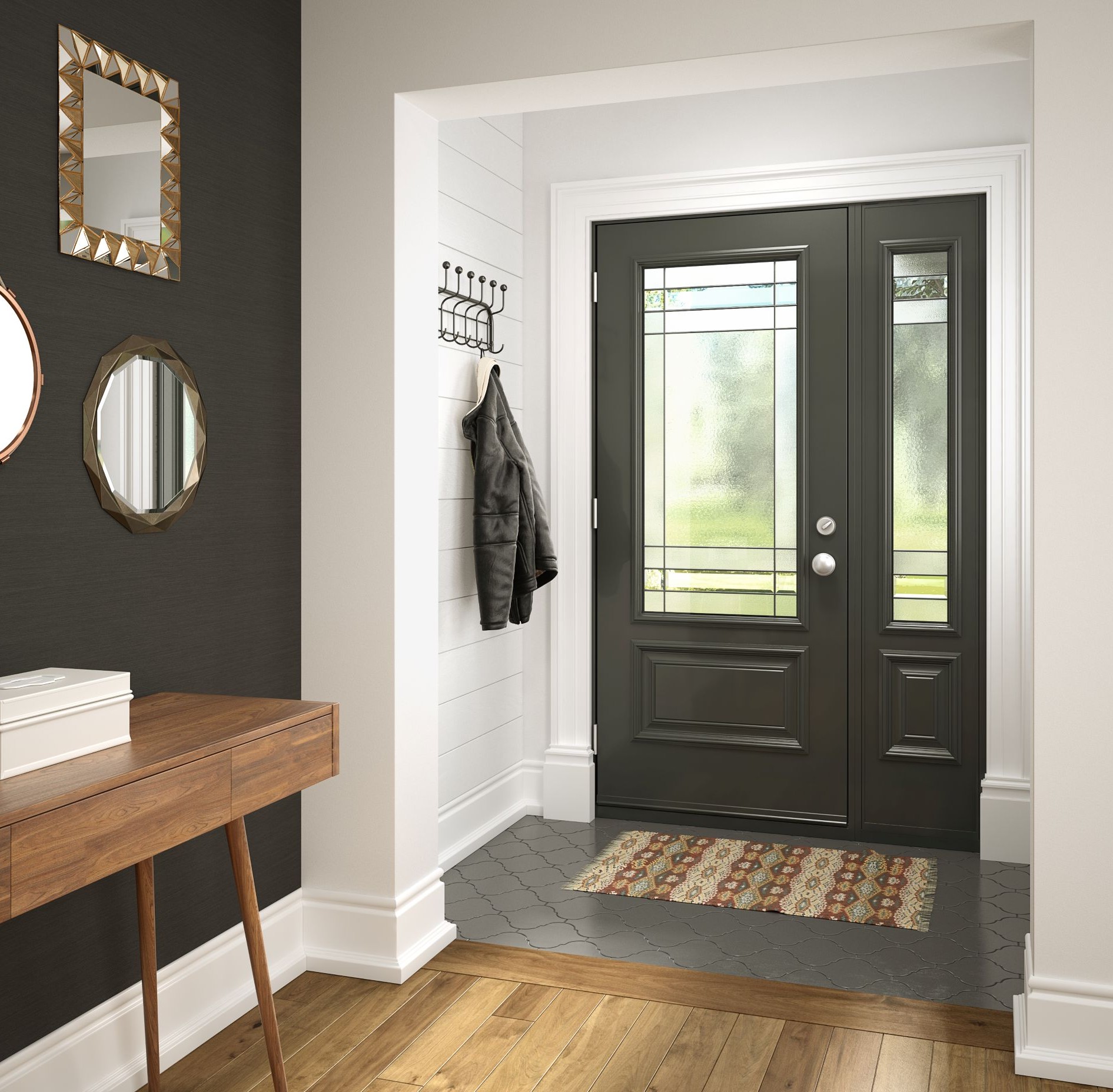
A front door with one sidelight does not require significantly more maintenance than a standard front door, as long as quality materials are used. Ultimately, the material of your front door and sidelights affects how long they last, how much care they need, and how well they keep your home insulated.
Generally, here's what you need to do:
- Insulated glass units are sealed and low-maintenance, so all you have to do is clean them regularly to make sure you are enjoying that natural light. But you do have to inspect them once in a while to check if the seals aren't broken.
- Fiberglass, steel, and aluminum frames resist warping better than vinyl and moisture damage better than wood, so they don't need too much maintenance. Wood needs to be maintained regularly to prevent rot and water damage.
- High-quality seals and weatherstripping typically last around 15 years before seals may need attention, but they need to be inspected regularly.
Looking for a New Front Door with Sidelights? Get the Best One!
If you're in Ontario and want to replace your front door, why not get the best one? Magic has engineered a revolutionary entry door that provides top security and excellent weather protection, designed specifically for the Canadian climate.
Magic entry doors have 30% more steel and 40% more insulation, feature a proprietary J-bend design that makes them incredibly durable (they can withstand up to 1,600 lbs of force), and are equipped with a unique weather protection system at the bottom.
Plus, your door can be designed in countless ways, and the glazing unit for your door's sidelight will be of top quality. Have we mentioned that all Magic glazing units are manufactured right here in Ontario? Curious to learn more? Book a free consultation with us!
FAQs
What color front door means the house is paid off?
A red front door traditionally symbolizes that the home is paid off, a belief rooted in Scottish and early American history. Today, it’s more of a symbolic or stylistic choice than a financial statement.
What are the three colors not to paint your front door?
Pure white, pale yellow, and dusty pink are often discouraged for front doors because they show dirt easily, fade quickly, or clash with many exterior materials. These colors can also make the entrance look flat or less welcoming from the street.
How wide is a door with one sidelight?
A standard 36-inch door with one sidelight is typically 48 to 60 inches wide in total, depending on the sidelight width. Common sidelights range from 10 to 14 inches wide.
What is the trend in front door colors for 2026?
Front door color trends for 2026 lean toward earthy, grounded tones like olive green, clay, warm taupe, and deep charcoal. Rich, muted colors with a natural feel are favored over bright or glossy finishes.