
Window Styles & Comparisons
Double Hung vs Casement Windows: 11 Key Differences Explained
Double-hung windows are typically better for flexibility, tight spaces, and traditional aesthetics. Casement windows are usually better for energy efficiency, ventilation, and unobstructed views. The right choice depends on your climate, budget, cleaning preferences, and where the window will be installed.
In this guide, we compare double hung vs casement windows across cost, energy efficiency, airflow, maintenance, appearance, and ideal use cases.
Double Hung vs Casement Windows: Quick Comparison
Casement vs double-hung windows by category:
- Ventilation → Casement
- Energy efficiency → Casement
- Small spaces → Double-hung
- Cleaning → Double-hung
- Maintenance → Casement
- Modern aesthetics → Casement
- Traditional homes → Double-hung
- Lifespan → Tie (depends on window frame and hardware quality)
- Egress → Tie, depending on size (casement windows are easier to size for egress)
- Security → Casement
What Is a Double-Hung Window?
Double-hung windows slide open and closed vertically along the sides of the frame (the jambs). Both the upper sash and the bottom sash move, giving you flexible control over how much air comes in and from where.
They're one of the most common window styles in North American homes, popular because they're easy to use and work in almost any room. Double-hung windows fit both traditional and contemporary facades and different interior design styles.

Advantages of Double-Hung Windows
- Easy to clean from inside the home (on tilt-in models)
- No exterior clearance required to open
- Good ventilation control (open top, bottom, or both window sashes)
- Works well in windy conditions
- Suits traditional and transitional home styles
- Typically offers slightly more flexibility for tight spaces and walkways
- Available in a wide range of sizes and configurations
- Lower sash can stay closed for safety if you have small children or pets
Disadvantages of Double-Hung Windows
- Slightly less energy-efficient than comparable casement windows
- Centre meeting rail interrupts the outdoor view
- Usually provides less airflow than a fully opened casement
- More moving and sliding components require regular maintenance and cleaning
- May need larger dimensions to meet egress requirements
- Can develop air leaks over time if balances, weatherstripping, or alignment wear
What Is a Casement Window?
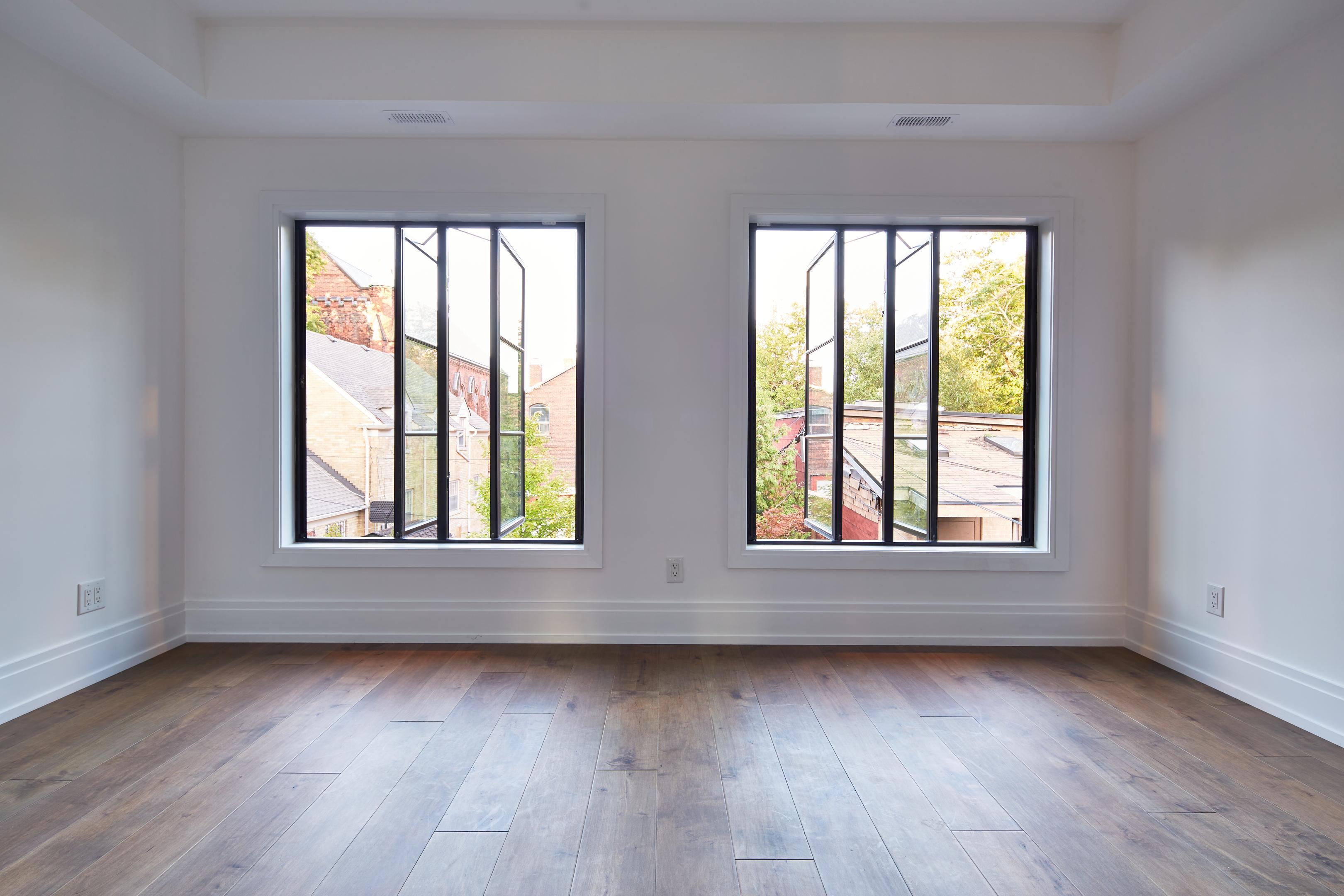
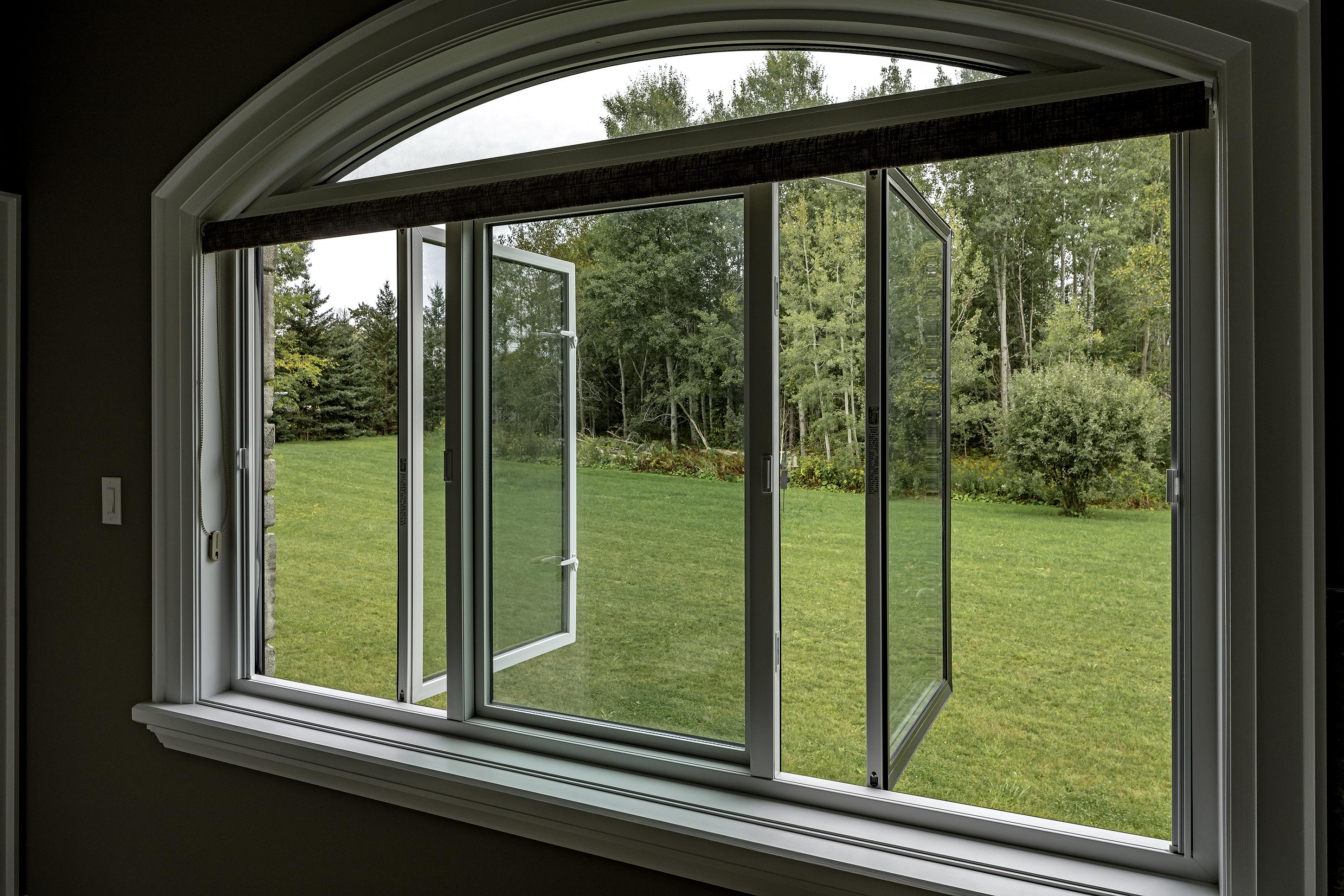
Casement windows swing open outward, like a door. They attach to the frame by one or more hinges on the side. To open casement windows, you have to use a crank at the bottom of the frame. When closed, locking mechanisms pull the sash firmly against the frame, creating a slightly tighter seal compared to double-hung windows.
Casement windows suit modern home styles particularly well, and their unobstructed glass surface makes them a strong choice anywhere views matter.
Find out more about casement window parts in our detailed guide.

Advantages of Casement Windows
- Full ventilation and airflow
- Typically more energy-efficient due to compression sealing, thus better for cold climates
- Large, unobstructed glass area for views and natural light
- Easier to operate in hard-to-reach locations
- Often easier to meet egress requirements
- Multi-point locking systems can provide excellent security
- Strong fit for modern and minimalist home designs
Disadvantages of Casement Windows
- Requires exterior clearance to swing open, so not the best for upper floors on multi-storey homes
- Crank and hinge hardware require periodic maintenance
- Usually slightly more expensive than comparable double-hung models
- More exposed to strong winds when left open
- Exterior glass is harder to clean from indoors
- Large units may put more stress on hinges over time
Double-Hung vs Casement: 11 Key Differences
In the following sections, we'll compare casement and double-hung windows in detail to help you understand which window style is a better choice for your home.
1. Cleaning and Maintenance Access
Double-hung windows are straightforward to operate: slide up, slide down. Many newer windows have tilt-in sashes that tilt inward to 90 degrees so you can clean the outside glass from inside your home without a ladder.
On the other hand, double-hung windows typically involve more components, such as balances, tracks, locks, and sliding hardware. This increases the number of parts that require periodic cleaning, lubrication, and adjustment, and also introduces more potential points of wear over time.
Casement windows use a crank mechanism that pulls the sash tight against the frame, being perfect for hard-to-reach areas such as over the kitchen sink. They are a bit harder to clean compared to double-hung windows with a tilt-in feature because you don't have access to the outdoor surface from the inside.
Casement windows have fewer moving parts overall, but the crank mechanism and hinges require regular lubrication and inspection. If the crank system fails, repairs can be more complex than basic sliding adjustments.
Summary: Double-hung windows are easier to clean but usually require more ongoing maintenance due to their higher number of moving parts. Casement windows are harder to clean from inside but have a simpler overall structure, with maintenance concentrated around the crank system.
2. Ease of Use
Double-hung windows operate using a simple vertical sliding motion, moving up and down along tracks. This makes them intuitive and easy to use in everyday situations, with no additional mechanisms required.
Casement windows operate using a crank handle that opens the sash outward and pulls it tightly against the frame when closed. This design allows for smooth, controlled operation and is especially useful in hard-to-reach locations such as above kitchen sinks or countertops.
Summary: Both window types are easy to operate. Double-hung windows use a straightforward slide system, while casement windows use a crank mechanism that offers controlled opening and strong sealing performance.
3. Appearance and Outdoor View
Double-hung windows have a horizontal bar across the centre where the two sashes meet. Depending on the height of the window and where you're standing, this can partially break up your view.
Casement windows offer better views because they have clean lines and no horizontal rail. The glass runs top to bottom without interruption, which is why they're popular in living rooms and anywhere you want to frame a landscape or garden.
Summary: Casement windows typically provide a wider, uninterrupted glass area. In terms of design, decide based on architectural style.
4. Installation Location
Double-hung windows don't need any clearance outside. They slide within the frame, so you can install them anywhere without worrying about the window swinging into a path, deck, or planter.
Casement windows open outward, which means they need clear space on the exterior. Installing them beside a walkway, patio, or tight garden bed can create an obstruction or a safety hazard.
Summary: If space outside is limited, double-hung windows are the more practical option.
5. Ventilation
Double-hung windows give you good ventilation control. You can open the top sash, the bottom sash, or both at once, which lets warm air escape from the top while cooler air flows in from below.
Casement windows, when fully cranked open, work more like a sail: the sash catches the breeze and directs it into the room. In a hot climate or a room that gets stuffy, that makes a noticeable difference.
Summary: Casement windows generally allow more airflow. If you're in a hot climate or prioritize airflow, casement wins. If you're in a windy location, go for double-hung windows, which can stay open when it's windy.
6. Energy Efficiency
Casement windows are more energy-efficient than double-hung windows. Because the casement sash presses directly against the weatherstripping when locked, there's no space for air infiltration.
Double-hung windows have a good seal, too, particularly modern high-performance models, but they still don’t seal as tightly as casement windows because they have more weak points through which air can pass.
Ultimately, the energy efficiency of a window depends on multiple factors, including frame material, number of panes, gas fills, and low-E glass. A single-pane casement will be less efficient than a double-pane or double-hung window. Conversely, a double-pane double-hung window will be less efficient than a double-pane casement window.
Summary: Casement windows have a slight advantage due to compression sealing. With quality materials, though, and double-pane glass or triple-pane glass, both styles can achieve good energy performance.
7. Weather Resistance and Performance in Wind
Double-hung windows tend to perform well in windy conditions because the sash stays inside the frame when open. They can also be partially opened without catching strong gusts.
Casement windows generally achieve tighter air seals when closed because the sash compresses against weatherstripping. However, when fully open, the wind can place more stress on hinges and hardware.
In areas exposed to frequent strong winds or storms, hardware quality and structural ratings become especially important for casement windows.
When closed, both styles can perform extremely well if properly manufactured and installed.
Summary: Double-hung windows are often more practical in consistently windy locations, while casement windows typically provide tighter sealing when closed.
8. Cost
Casement windows are slightly more expensive than double-hung windows. Here are some average prices for installing double-hung and casement windows in Canada:
The final window replacement price depends on frame material, glass package, custom sizing, and installation complexity. Ultimately, quality matters more than style when it comes to cost. A well-made window at either end of the range will last decades and reduce energy bills. A cheap one, regardless of style, will cost you more in the long run.
9. Lifespan
Both double-hung and casement windows can last 20-40 years when they're well-made, properly installed, and regularly maintained.
Frame material is the bigger lifespan driver than window style. Vinyl frames resist moisture and don't need repainting, but lower-grade vinyl can warp in extreme temperature fluctuations, for example. Fibreglass and reinforced composite frames like Magic's Hybrid Fusion Frame hold their shape and thermal performance significantly longer. Wood frames look beautiful but demand the most maintenance to reach their full lifespan potential.
For casement windows, hinge and crank quality matters a lot. Cheap hardware wears faster, and replacing it mid-life can be fiddly depending on the unit. Double-hung windows also have many hardware pieces that can fail on budget models.
The most reliable indicator of lifespan isn't the style but the manufacturer's warranty. Magic backs our windows with a 40-year warranty on all styles, for instance, which reflects the quality of the frame, hardware, and glazing unit together.
Summary: Both styles last for decades with quality manufacturing. Frame material and hardware grade matter more than whether the window cranks or slides.
10. Suitability for Egress
Casement windows are often considered the best for egress because the entire sash swings open and creates a large, unobstructed opening. Even a relatively compact casement can sometimes achieve the required clear opening dimensions.
Double-hung windows can qualify as egress windows, too, but only half of the total window area opens at once because one sash slides over the other. That means the overall unit often needs to be larger to meet the same minimum opening requirements.
That said, window style alone doesn't determine compliance. Local building codes specify minimum clear opening width, height, opening area, sill height, and accessibility requirements.
Summary: Casement windows often have an advantage for egress because they open fully. Double-hung windows can still meet egress requirements but may require larger dimensions.
11. Security
Casement windows are generally more secure than double-hung windows.
Double-hung windows lock by securing the two sashes together. Because the window opens vertically, there’s no exterior hinge hardware, and the opening size can be controlled more precisely.
Casement windows are considered slightly more secure by design because the sash closes tightly against the frame, and many models use multi-point locking systems that engage at several locations at once. Since the hinges are located on the inside edge of the frame when the window is closed, there are fewer accessible pry points from the exterior.
That said, security depends much more on window quality. Reinforced frames, laminated or tempered glass, quality locks, professional installation, and proper maintenance all have a bigger impact than whether the window slides or swings open.
Summary: Casement windows often have a slight advantage due to compression sealing and multi-point locking, but high-quality double-hung windows can provide good security. Frame strength, glass type, and lock quality matter more than window style.
Which Window Should You Choose?
Choose double-hung windows if:
- You want to clean both panes from inside your house
- Your windows face a walkway, deck, or patio
- You prefer a traditional or classic look
- You want flexible control over ventilation
- You're working with a tight exterior clearance
- You live in a windy area and frequently leave windows open
Choose casement windows if:
- Energy efficiency is a top priority
- You want maximum airflow in a warm climate
- You want a larger, unobstructed view
- You're installing in a hard-to-reach spot (they're easier to operate with just the crank)
- You're going for a modern or minimalist aesthetic
- The window may need to function as an egress opening
- You want the tightest possible air seal
Ready to Find Your Perfect Replacement Windows?
Whether you're leaning toward hung or casement windows, Magic can offer quality windows, built with our Hybrid Fusion Frame technology, Parallex hardware for easy tilt-in cleaning even for casement windows, retractable screens, and industry-leading glazing packages.
Book a free, no-hassle consultation today, and we'll help you figure out exactly which style is right for each room in your home!
FAQs
Are casement windows better than double hung?
Casement windows typically perform better for ventilation and energy efficiency and can lead to more energy savings. Double hung windows are generally easier to clean and better suited to tight spaces or traditional home styles. Neither is objectively "better." It depends on your priorities.
Which lasts longer: double hung or casement windows?
Both double-hung and casement windows can last decades with quality manufacturing, proper installation, and regular maintenance.
Are casement windows more expensive?
Casement windows are often slightly more expensive, primarily because of the hinge and locking hardware. The gap narrows with larger double-hung units that include tilt-in mechanisms.
Do double-hung windows leak more air?
Older or lower-quality models can allow more air intrusion. Modern high-performance double-hung windows seal very well and can match or approach casement performance depending on the glazing package and installation quality.
What's the main downside of casement windows?
They need exterior clearance to open and the crank hardware requires periodic maintenance over time. They can also be more vulnerable to damage in very strong winds.
Do casement windows work with window screens?
Yes, casement windows can have window screens, but the screens must be installed on the interior side.