Front Doors
Fiberglass vs Steel Door: What's the Difference?
Fiberglass or steel doors? That's the question...
If your entry door is too old or damaged to be repaired, you're likely on the lookout for the best doors on the market, right?
And you're also probably looking for a front door with high efficiency ratings (so it can withstand Canada's extreme weather), superior security features, excellent insulation against outside noise, and good potential to increase your home's resale value, correct?
Well, while doing their research, many homeowners end up choosing either fiberglass or steel doors. But which one is, after all, better? What are the main differences between a fiberglass vs steel door? Let's find out!
Key Takeaways
- Fiberglass offers excellent durability, low maintenance, superior insulation, and better resistance against humidity. Steel is a highly durable material that provides superior noise insulation, high security, and a lower upfront cost.
- Fiberglass doors insulate better, don’t conduct heat, and hold up well in extreme temperatures and coastal environments, though they may fade in direct sunlight. Steel doors can be highly energy-efficient when engineered with advanced insulation, but they conduct heat and require protective coatings to prevent rust.
- Steel doors are more affordable and offer higher ROI, while fiberglass doors cost more initially but last longer with minimal maintenance.
Steel vs Fiberglass Doors: Key Differences

Which door is better for security? Which one lasts longer? Which one resists better in direct sunlight? Which one will protect your home better against the elements?
If you're planning to replace your entry door, these questions sound all too familiar, right? No worries, though! We'll discuss everything below, but before that, here's a quick breakdown of the key differences between fiberglass and steel doors:
Material and Construction
Both fiberglass and steel doors consist of multiple layers: the exterior layers (fiberglass/steel) and the core, which is usually filled with polyurethane foam for insulation. Some doors also have a reinforcement layer - internal support "beams" that go around the edges of the door for extra support.
Now, fiberglass is made of very fine glass fibers woven together, which are then reinforced into a thicker material and put into a resin. The outer shell of a steel door consists of heavy-gauge galvanized steel.
Durability
Both fiberglass and steel doors are considered more durable than wood doors. They have a similar lifespan, with different disadvantages when it comes to durability.
For example, fiberglass doors resist dents, scratches, and general wear-and-tear better than steel. They won't rot, rust, or warp (that is, if they have a strong structural internal frame). Fiberglass also resists humidity, salty air, and temperature changes surprisingly well. However, it can fade in sun exposure. Since it's a lightweight material, it can also fracture under extreme force.
Steel doors, on the other hand, resist warping and cracking and are extremely hard to break through. However, steel can dent, but it will rarely break under impact.
Steel is also vulnerable to rust if the protective coating is scratched. Over time, rust affects the door's functionality. With good paint, however, steel doors can perform well and remain in excellent condition for many years.
Maintenance

Maintenance requirements often reach the top of the list of factors to consider when looking for a replacement entry door. That's why many people automatically remove wood doors from the options list - they require a lot of maintenance; otherwise, they don't perform as needed and need to be replaced sooner rather than later.
If we compare steel and fiberglass doors in terms of maintenance, fiberglass usually excels in this regard. Fiberglass requires minimal maintenance. Its finish lasts a very long time. It does not rust or warp. And moisture does not affect it. Basically, all you have to do is clean it occasionally and sometimes repaint it.
Steel, on the other hand, requires a bit more maintenance, primarily to prevent corrosion. Plus, if the door dents, repairs can be challenging. Therefore, a poorly maintained steel door will have a shorter lifespan.
Security
Security is where steel doors excel.
While fiberglass is definitely a tough material, it is undoubtedly not as hard as steel. The security level of a fiberglass door mainly depends on its core and lock reinforcements.
On the other hand, steel doors are considered the most secure option for residential entry doors. Even a thin-gauge steel exterior is very difficult to kick in or break through. Some doors on the market, such as those manufactured by Magic, also feature more steel than standard doors and can resist a force of up to 1,600 lbs, being almost impossible to break.
Energy Efficiency and Weather Resistance
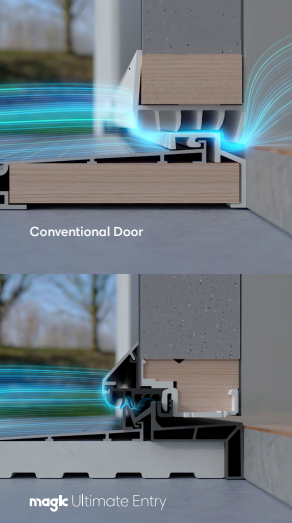
If you want to improve your home's energy efficiency, you should turn your attention to windows and doors, as they account for a lot of heat gain and loss. So, if insulation is a priority, fiberglass is your go-to option, because it's considered an excellent insulator. However, there are technologically advanced steel doors nowadays that offer the same degree of insulation. But let's take things step by step.
Fiberglass does not conduct heat, which is why it's a good insulating material. Plus, fiberglass doors have a polyurethane foam core that traps heat effectively. So, fiberglass performs exceptionally well in both cold and hot climates and can help you reduce energy costs.
Steel, however, conducts heat more readily. Because of this, steel is considered inferior to fiberglass when it comes to energy efficiency, especially in extreme temperatures. For example, if it's extremely hot outside, a steel door will be very hot to the touch.
However, modern steel entry doors also have a polyurethane foam core that makes them highly energy-efficient. Moreover, door units like those manufactured by Magic have more polyurethane foam than many models on the market (40% more in the case of Magic entry doors) and extra insulating technologies (e.g., aluminum rain deflectors and auto-triggers that create an impenetrable seal).
Therefore, even if fiberglass is considered more energy-efficient, modern steel doors can often provide the same degree of insulation.
Fire Resistance
Fiberglass itself is a non-combustible material, but not all fiberglass entry doors are automatically fire-rated. A standard fiberglass door can typically resist fire for a short period, around 20 minutes, before structural integrity begins to degrade. But to achieve a fire rating, a fiberglass door must be specifically manufactured and tested for fire resistance.
Steel doors are naturally more fire-resistant than fiberglass doors. Steel itself won't ignite, melt, or contribute to fire spread.
Frame Material
Don't forget that the door frame is just as important as the door itself, as it keeps the slab and the hardware in place, as well as makes sure that the entire door unit is properly insulated. Steel frames, for example, resist forced entry better, while fiberglass frames (unlike wood door frames) resist rot, insects, and moisture.
Moreover, the frame also matters in terms of fire resistance. A fire-rated door must have a fire-rated frame as well and be equipped with fire-rated hardware.
Cost and ROI
Fiberglass entry doors are usually more expensive than steel entrance doors - one of the most significant cons of fiberglass door units. You can expect to pay up to $2,000 more for a fiberglass door, especially if it's a high-end model.
A steel door, on the other hand, typically costs between $300 and $1,300, depending on quality and customization options.
Fiberglass doors are believed to add up to 75% of ROI value, with an average of 61%, while steel doors can offer an ROI value of roughly 90% or even more.
Aesthetics and Design Options
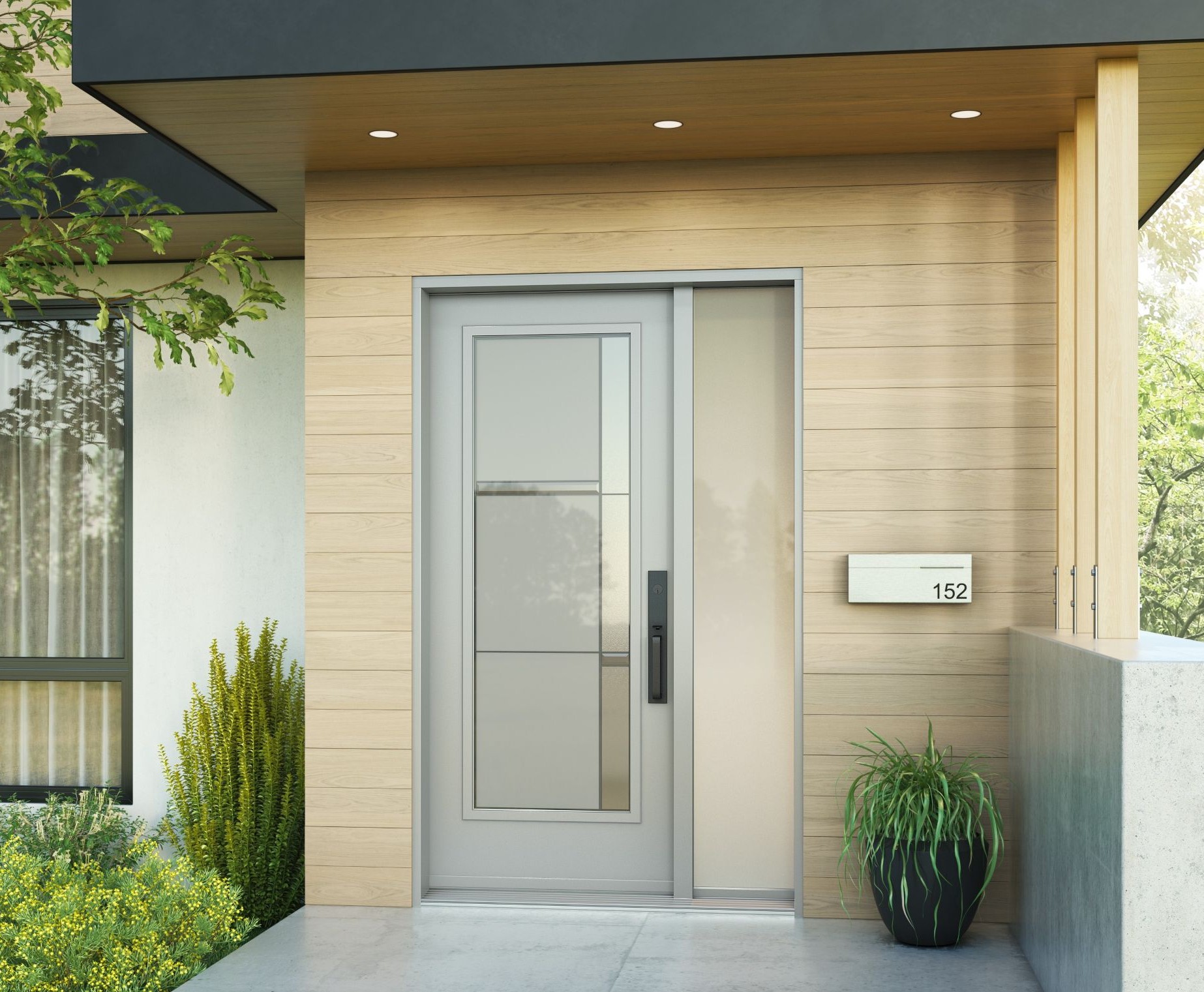
Both fiberglass and steel entry doors are aesthetically pleasing and perfect for enhancing curb appeal, although they tend to fit different architectural styles. Steel doors, for instance, work incredibly well for minimalist home designs, Scandinavian homes, or industrial architecture. They're favored for their clean, modern simplicity.
Fiberglass doors, on the other hand, are favored for their finish that can closely mimic real wood - much better than steel. But it can also be smoothly finished if you want a modern or contemporary look.
Both fiberglass and steel doors can be painted if you want to change their color. You can also incorporate glass inserts into fiberglass and steel doors, but keep in mind that the glazing area will reduce energy efficiency and security.
Installation Considerations
Steel doors are usually more difficult to install than fiberglass front doors because steel is heavier. Because of this, it's recommended to hire a professional team to install steel doors to ensure proper alignment.
That being said, it's always better to hire a professional team for front door installation, even if you're installing a door made of a lightweight material. Even the best door on the market will perform poorly if it's incorrectly installed.
What Should You Choose?
Here's what material you should choose depending on your needs:
- Best for maximum security: Steel
- Best for low maintenance: Fiberglass
- Best for coastal/humid climates: Fiberglass
- Best for a tight budget: Steel
- Best wood-look aesthetic: Fiberglass
- Best for modern/minimalist homes: Steel
Why Should You Choose Magic's Ultimate Entry Door?

Magic's Ultimate Entry Door is engineered in Canada and purpose-built for Ontario's demanding climate. Our door systems are performance-driven and designed to solve problems that traditional products simply can't.
Engineered for Maximum Strength
Magic's steel entry system uses 30% more steel and 40% more insulation than typical doors. This equals exceptional rigidity and superior thermal performance. Its advanced J-bend construction reinforced the entire panel, allowing the door to withstand over 1,600 lbs of force without deforming.
In other words, Magic's reinforced frames and door slabs stay solid, secure, and reliable year after year, no matter how cold, hot, or windy the weather gets!
Enhanced Protection Against the Elements
Every component of the Ultimate Entry Door is designed with weather defense in mind.
A built-in aluminum rain deflector channels water away from your home.
Magic's proprietary sealing system provides double the air and water tightness of a standard entry door.
Plus, there's an automatic trigger mechanism that engages a tight seal as soon as the door closes. This prevents drafts, heat loss, and moisture intrusion.
Tailored Design and Professional Installation
Magic offers a wide range of customization options so you can create an entrance that truly reflects your style. Glass designs, decorative elements, sidelights, transoms, and hundreds of colour choices... Endless possibilities!
And just as important as the door itself is the installation. Magic’s certified installers specialize in full-frame door replacements, ensuring your new door fits perfectly and performs at peak efficiency from the day it’s installed.
Built for Canada’s Climate
Manufactured locally in Ontario, Magic’s doors are designed with firsthand knowledge of Canadian weather conditions. They’re engineered to perform in freezing winter temperatures, summer humidity, and rapid seasonal changes that can cause ordinary doors to shift or deteriorate.
Curious to learn more? Give Magic a call! Our experts will help you make an informed decision for your home improvement project!
Frequently Asked Questions
Is a fiberglass door better than steel?
Fiberglass doors are generally better than steel doors in terms of weather-related wear, as it does not rot or corrode. Steel doors, however, offer superior security and are usually more budget-friendly.
What are the disadvantages of fiberglass doors?w
Some disadvantages of fiberglass doors include higher upfront cost, the risk of fading over time if exposed to strong, direct sunlight without proper UV-resistant finishes, and limited product availability in certain areas.
Are steel or fiberglass doors better for direct sunlight?
Both fiberglass and steel doors perform well in direct sunlight, but each has a disadvantage: fiberglass doors can fade more quickly, while steel doors will get hotter under direct sunlight.
What type of door is best for an exterior door?
For an exterior door, choose a steel door for better security and affordability and a fiberglass door for longevity and weather resistance. You can also choose reinforced steel doors like those from Magic for superior durability and energy efficiency.
Are fiberglass doors more expensive than steel doors?
Fiberglass doors are indeed more expensive than steel doors, with prices typically ranging from $1,000 to $2,000 compared to steel doors, which cost between $300 and $1,300.
Which door type offers better energy efficiency?
Fiberglass doors provide better energy efficiency because of their excellent insulation properties, which can significantly reduce heating and cooling costs. However, reinforced steel doors like those from Magic, which have 40% more insulation, provide superior energy efficiency and a higher insulation value compared to standard steel doors.
Can fiberglass doors be painted or stained?
Yes, fiberglass doors can be painted or stained, providing flexibility to match different design styles and aesthetic preferences.
Will a fiberglass door warp in direct sunlight?
High-quality fiberglass doors are highly resistant to warping, even in direct sunlight.
What are the disadvantages of a steel door?
Steel doors can dent or scratch easily, and once the finish is compromised, they can rust. They also conduct heat, making them hotter to the touch and less energy-efficient in strong sun exposure.