Window Styles & Comparisons
Hopper vs Awning Window: Which One Is Right for Your Home?
If you're replacing windows in your basement, bathroom, or elsewhere in your home, you've probably come across two very similar-looking options: the hopper window and the awning window. They look almost identical when closed, but they work quite differently. Choosing the wrong one for your space can create real problems down the line.
So, what's the difference between a hopper vs awning window? And which one suits your home best? We've broken it all down so you can make the right call.
Key Facts: Hopper vs Awning Window
- Hopper windows are hinged at the bottom and open inward from the top. Awning windows are hinged at the top and open outward from the bottom.
- Awning windows can stay open during rain without letting water in. Hopper windows cannot. They open inward and will collect rain if left open.
- Most awning and hopper windows don’t qualify for egress because they typically don’t meet required opening size or full-clearance criteria.
- Hopper windows are the more common choice for basements. Awning windows work better in bedrooms, kitchens, and living rooms where year-round ventilation matters.
- Both window types create a tight compression seal when closed, making them more energy-efficient than sliding or double-hung windows.
What Is a Hopper Window?
A hopper window is hinged at the bottom of the frame and features an inward-opening mechanism. The top of the sash tilts inward into the room when opened. You operate it with a simple handle: turn it and pull the top of the window toward you.
Hopper windows offer an excellent solution if you want to install windows near the top of a wall, close to the ceiling. You'll find them most often in basements, bathrooms, and laundry rooms, basically in spaces where wall space is limited but ventilation is important.
The name of this window style comes from the shape the open window makes. With the top tilting inward and the bottom remaining fixed, it resembles a hopper or chute.
Hopper Window Pros
- Tight compression seal when closed – more energy-efficient than sliding windows
- Opens fully into the room, making the exterior glass easy to clean from inside
- Works well in small or narrow wall spaces
- Good security – the inward-opening design is hard to force from outside
- Can serve as an egress window when it tilts to a 90-degree angle and meets egress building code requirements
Hopper Window Cons
- Cannot stay open during rain – water will enter the room
- Requires clear interior space for the sash to swing inward, so not the best for small spaces
- Smaller sizes limit natural light
- Can collect debris
- Some use weatherstripping instead of a compression seal, which can lead to air leaks
What Is an Awning Window?
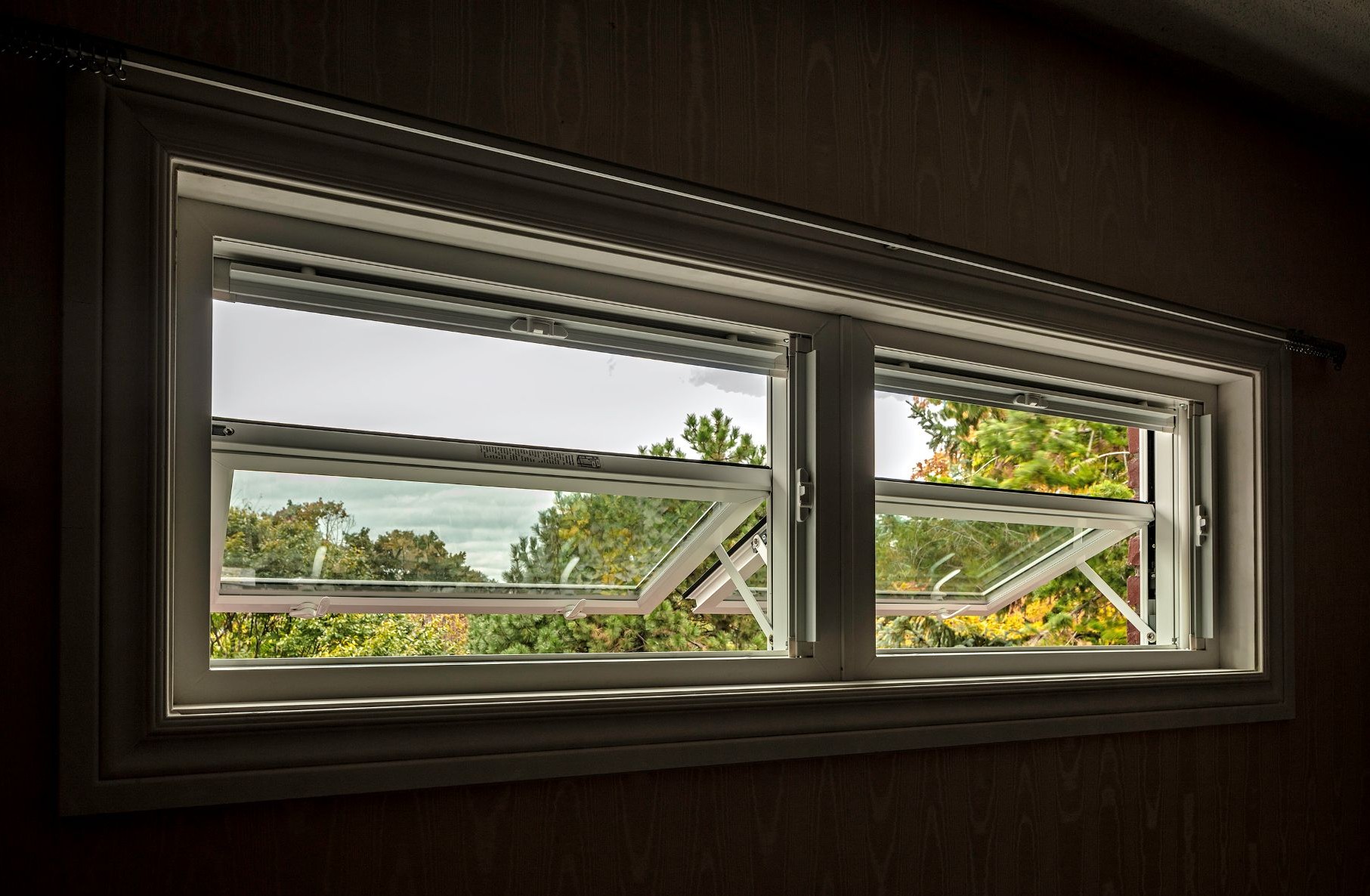
An awning window is hinged at the top of the frame. The bottom of the sash pushes outward when opened, creating an overhang that keeps rain out. Most awning windows are operated with a crank, though Magic's awning windows use our crankless Parallex Hardware instead, which extends their lifetime.
Awning windows are wider than they are tall and can be installed anywhere on a wall: low, mid-height, or high. They're common in bedrooms, kitchens, bathrooms, and living rooms. You'll also find them installed above fixed picture windows or alongside casement windows to add ventilation.
Awning Window Pros
- Can stay open during light rain – the outward-swinging sash acts as a cover
- Works in more locations throughout the home
- Better fresh air control – you can adjust how far it opens
- Can be combined with fixed windows for a custom look
Awning Window Cons
- Standard crank mechanisms can strip, break, and loosen over time (not an issue with Magic's crankless design)
- Exterior glass can be harder to reach for cleaning, especially on upper floors
- Requires clear exterior space for the sash to swing outward – not ideal near walkways
- Generally costs a bit more than hopper windows
- Not suitable for egress requirements unless the sash opens up to a 90-degree angle and the window meets egress building code requirements
Hopper vs Awning Window: Side-by-Side Comparison
Hopper vs Awning Windows: Opening Direction
This is the main difference between hopper and awning windows. And it's an important thing to understand because it affects everything else about how these windows perform in your home.
Hopper windows open inward from the bottom hinge. That means you need clear wall space inside the room directly in front of the window. If there's a shelf, piece of furniture, or a perpendicular wall close by, the sash won't open fully or at all. This is the most common installation mistake with hopper windows. Before you choose one, measure the interior clearance in front of the opening, especially if the sash opens up to a 90-degree angle.
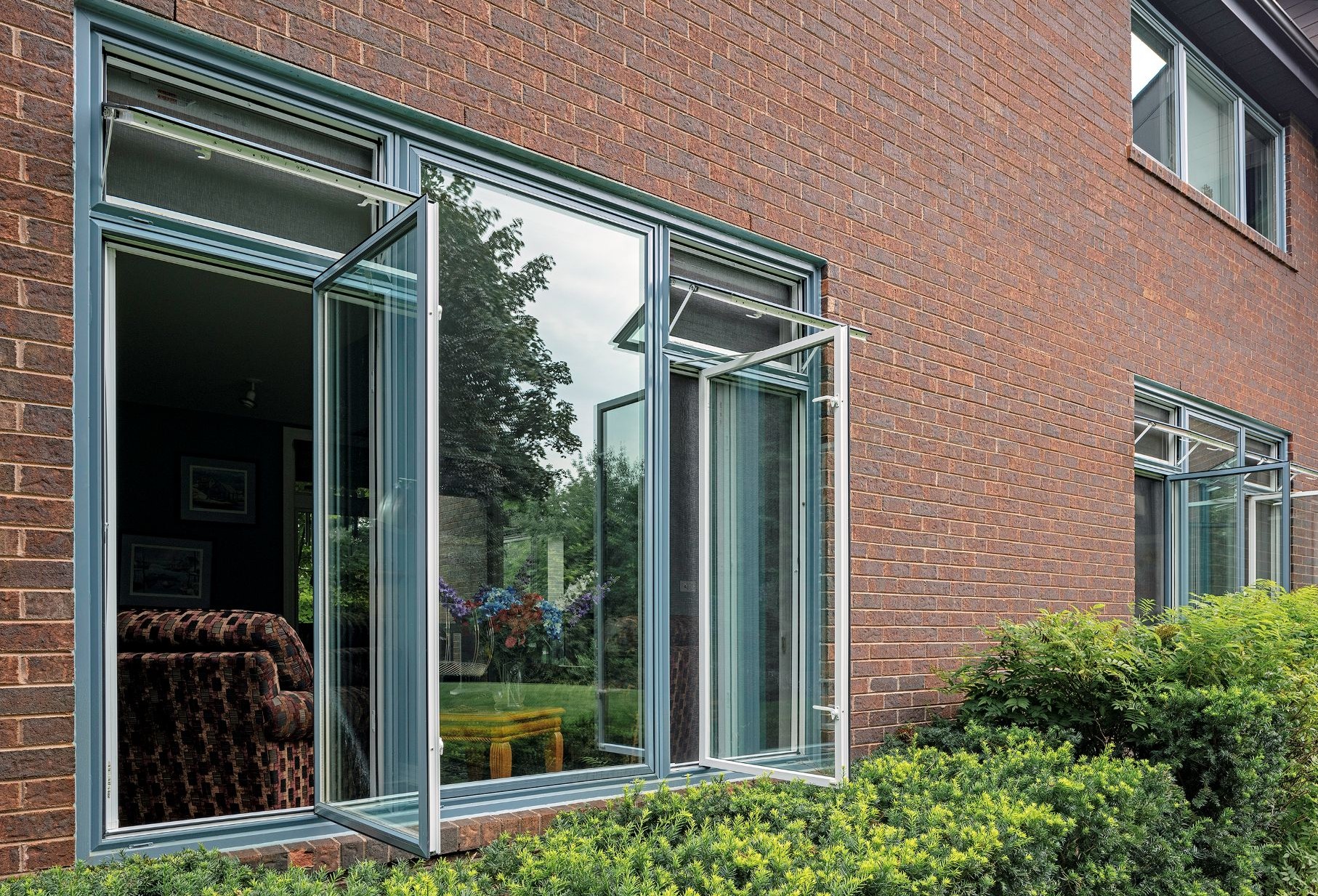
Awning windows open outward. That means you need to think about what's on the outside of the window instead. If the window sits above a walkway, near a patio, or close to outdoor furniture, the sash can obstruct the space or get damaged. For awning windows installed higher on a wall, this usually isn't an issue, but it's worth checking before installation.
Hopper vs Awning Windows: Energy Efficiency
Both window options usually use a compression seal, which is why they outperform sliding and double-hung windows on energy efficiency. When the sash closes, it presses firmly against the frame, creating a tight seal with no gap for air to pass through. Wind pressure actually improves this seal in the case of awning windows. The harder the wind blows against the window, the tighter it closes.
Where the two differ is in the seal hardware. Some hopper windows on the market use weatherstripping instead of a full compression seal. Weatherstripping wears down faster and allows more air leakage over time. Awning windows more consistently use compression seals across manufacturers.
Hopper vs Awning Window: Ventilation
Awning windows have an outward-opening design. The opening faces downward and outward. This directs incoming air upward into the room and keeps rain from entering even when the window is open. You get usable ventilation year-round, including during summer rain and cool fall evenings.
Hopper windows open inward from the top, so the opening faces into the room from above. This works well for releasing stale or warm air that collects near the ceiling, which is why many homeowners choose to install them in the basement, near the ceiling. But you have to close them when it rains, which limits how often you can realistically use them for ventilation. Plus, they can collect lots of debris.
For rooms where you want continuous, weather-independent airflow, like a bedroom, kitchen, or living room, an awning window is usually the better choice. For spaces where you just need occasional air exchange, and rain isn't a concern, a hopper does the job.
Hopper vs Awning Window: Hardware
Hopper windows use a simple handle mechanism. You turn the handle to release the latch, then push or pull the top of the sash inward. There's no crank involved. This is an advantage. The window basically has fewer moving parts that can wear out and fail. Hopper windows are generally the lower-maintenance option of the two from a hardware standpoint.
Most hopper windows don't have a mechanism to hold the sash at a specific angle. You open it, and it rests against a stop. Some models include a stay arm to hold the sash partway, but this isn't standard. Moreover, some hopper windows can't accommodate triple-pane Insulated Glass Units, as they are quite heavy, and the windows require reinforced hardware to be able to support their weight.
Awning windows usually operate with a crank mechanism. You rotate it to push the sash out along an arm, and the arm holds the sash at whatever angle you've cranked it to.
This gives you angle control, which hopper windows don't offer. You can crack an awning window a few centimetres for a light breeze without opening it fully.
The problem is that cranks are mechanically unreliable over time. They strip, loosen, freeze in cold weather conditions, and develop play in the mechanism. Once the crank fails, operating the window becomes difficult. In an egress situation, that's a safety problem.
How Magic's Parallex Hardware Changes This
Magic's awning windows don't use a crank. Our Parallex Hardware replaces the crank entirely with a handle-and-track system.
Because there's no crank gear to strip, the hardware stays reliable across temperature changes and decades of use. It also makes the window faster to operate in an emergency: one turn of the handle and a push, rather than multiple crank rotations.
Hopper vs Awning Windows: Cleaning and Maintenance
Hopper windows are easier to clean. Because the sash opens inward and tilts toward you, you can reach both sides of the glass from inside the room. This matters a lot if the window is installed in a basement or at ceiling height, where going outside to clean isn't practical.
Awning windows are harder to clean on upper floors. The outward-swinging sash means you need exterior access to clean the outside surface of the glass. On ground-floor installations, this is straightforward. On second-floor installations, it's definitely not. You'd need a ladder or an extension tool.
Hopper vs Awning Windows: Cost Comparison
Both hopper and awning windows often cost less than casement or hung windows of comparable size, but awning windows are generally more expensive than hopper windows. A hopper window costs between $700 and $1,200+, while an awning window costs between $800 and $1,500+.
Prices vary based on several factors, including frame material, glass configuration, size, and installation complexity. If your basement requires a concrete cut to enlarge the opening to egress size, for example, that adds to the overall project cost.
Magic includes installation in our pricing, so you won't get any unexpected labor charges after the fact.
Where to Install Hopper and Awning Windows?
Hopper Windows
Hopper windows are the standard choice for basements in Canada, and for good reason. They fit in narrow wall sections near the ceiling, and they're easy to seal tightly. They also work well in:
- Bathrooms and powder rooms where privacy is a concern and wall space is limited
- Laundry rooms and utility spaces
- Above interior doors, where they're sometimes used to allow light between rooms
Awning Windows
Awning windows are more versatile and can be used throughout the home. Common locations include:
- Bedrooms, installed high on a wall to provide ventilation and privacy at the same time
- Kitchens, great above the sink, countertop, or other hard-to-reach areas, where a crank (or crankless handle) makes them easier to reach
- Living rooms, often paired with a large fixed window below for a combined look
- Bathrooms, installed near the ceiling for ventilation without sacrificing privacy
How to Choose Between a Hopper and an Awning Window
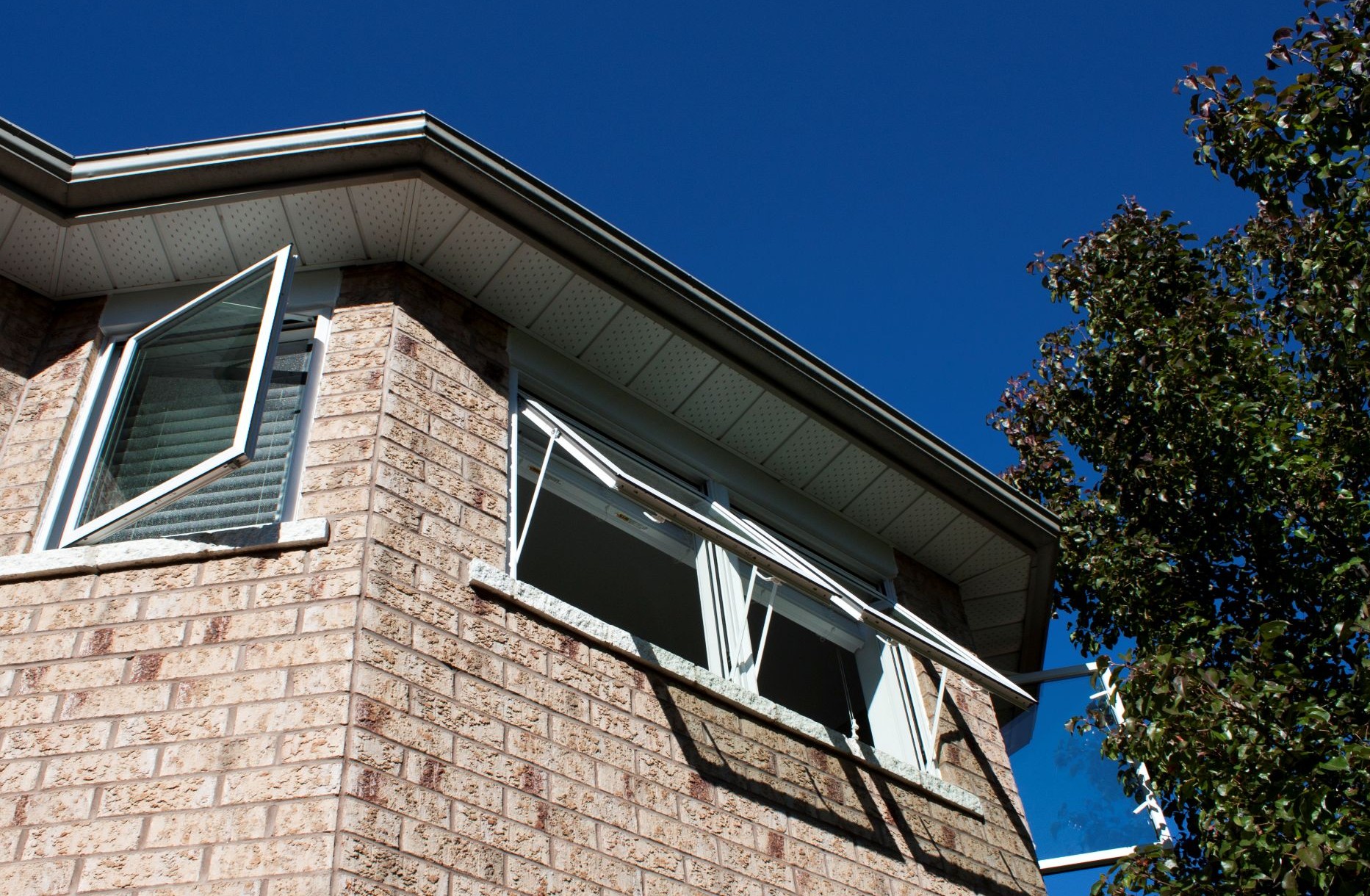
Still not sure how to choose the right style for your living space? These questions will help narrow it down.
Where is the window going? -> If it's a basement or any space near the ceiling with limited wall area, a hopper is the practical choice. If it's a bedroom, kitchen, or living room where you want to maximize ventilation year-round, even when it rains, go with an awning.
Is rain a factor? -> If you want to leave the window open during summer rain or cool weather, you need an awning window. A hopper must be closed anytime it rains. Plus, hopper windows also collect debris.
Do you have interior clearance? -> Measure the space directly inside the wall opening. If furniture, shelving, or a wall is within the swing radius of the sash, a hopper won't work, or it won't open properly in such a compact space. Switch to an awning, which will save space inside the house.
Does it need to meet egress code? -> Hopper and awning windows don’t qualify for egress unless their sash opens up to a 90-degree angle, which is not very common. Plus, they must also meet egress size requirements, and both hopper and awning windows usually are not manufactured in sizes large enough to qualify. But you can confirm directly with the manufacturer if meeting egress requirements is possible.
Is cleaning convenience important? -> If exterior access is difficult, a hopper is a better option than a standard awning window.
What About Combining Both Window Styles?
You don't have to choose just one type for the whole house. Many homeowners install hopper windows in the basement and bathrooms, then awning windows in bedrooms and main living areas. This gets you the right performance in each space without compromise.
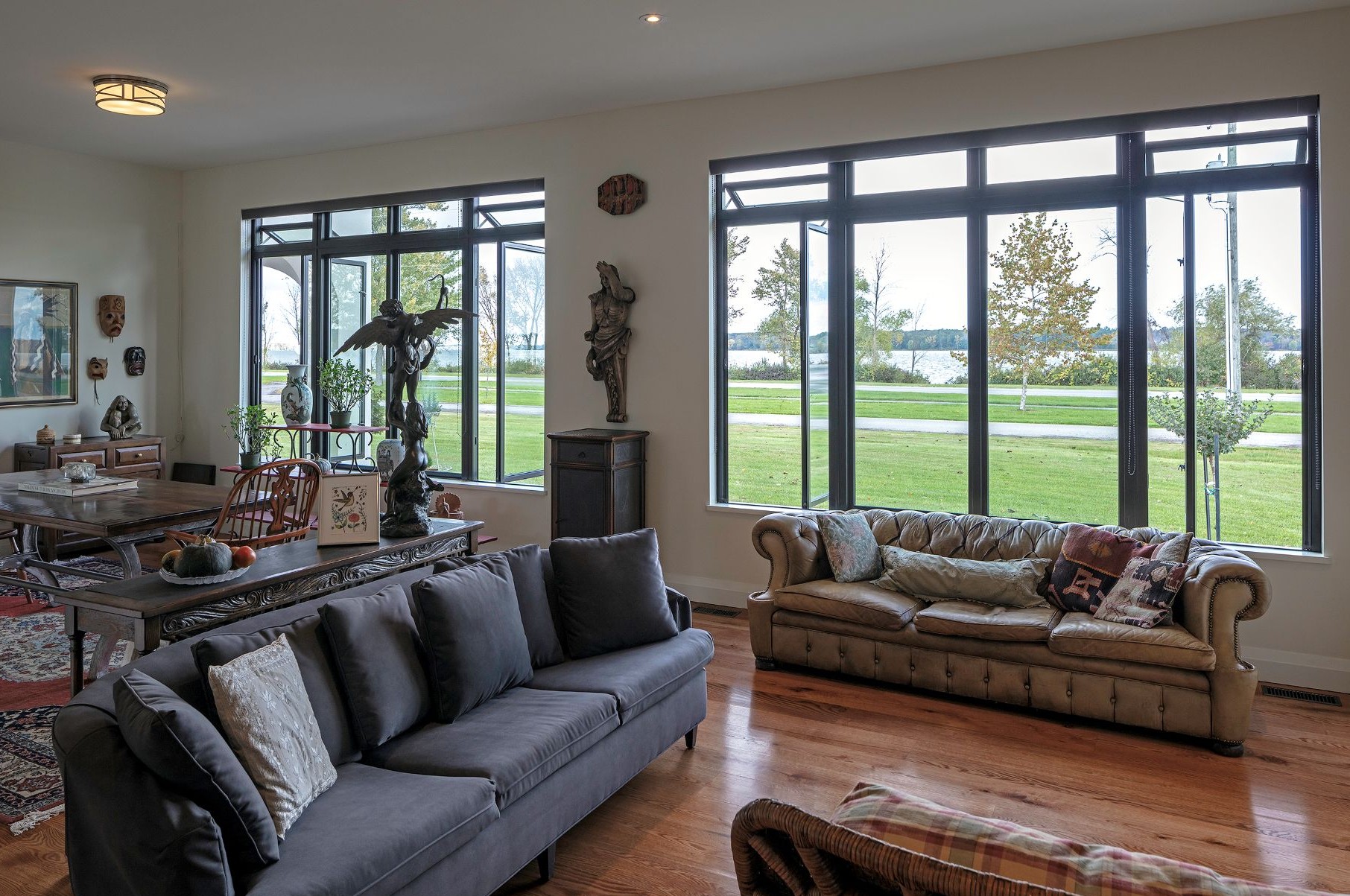
You can also combine awning windows with fixed picture windows and/or casement windows. The large fixed pane provides an unobstructed view, the casement window serves as egress, and the awning window above or beside them handles the ventilation. This pairing is popular in living rooms and dining rooms.
Ready to Choose? Book a Free Consultation with Magic!
At Magic, we manufacture some of the most efficient and durable replacement windows in Canada. Magic systems feature our advanced technologies that significantly improve energy efficiency, durability, and functionality. We’re talking about the Hybrid Fusion Frame, the Parallex Hardware, and the Slide’n’Hide technologies, to name a few. Plus, all our window units come with a 40-year warranty. That’s how much we believe in them!
If you want to learn more about why our awning windows stand out among others on the market, book a free in-home consultation with Magic!
One of our project managers will explain everything you want to know about our windows, assess your space, confirm egress requirements, and recommend the right window for your situation. They'll help you select windows that will suit your home specifically!
FAQs
What are some common problems with hopper windows?
The most common problems with hopper windows are water intrusion if the window is left open during rain, and interior clearance problems when furniture or shelving blocks the inward-swinging sash. The latch and weatherstripping can also wear out faster than on awning windows, allowing drafts over time.
What are the disadvantages of awning windows?
The main disadvantages of awning windows are the crank mechanism, which can strip, loosen, or fail in cold weather, and the fact that the outward-swinging sash needs clear exterior space, making them unsuitable near walkways or tight wall sections. Exterior glass cleaning is also harder on upper floors with a standard awning window.
What is the purpose of a hopper window?
Hopper windows are designed to provide ventilation and natural light in spaces where wall area is limited, particularly basements, bathrooms, and utility rooms. The inward-opening design of hopper windows makes them easy to clean from inside the room.
What is the difference between an awning vs casement window?
Both awning and casement windows are hinged windows that create a tight compression seal when closed, but they open in different directions. A casement window is hinged on the side and swings outward like a door, giving a larger opening and better ventilation. An awning window is hinged at the top and opens outward from the bottom, which is a smaller opening, but is a great choice if you want to leave it open during rain without water getting in.