
Energy Efficient Windows
Insulated Glass Unit: Pros, Cons, Costs & Common Problems (2026 Guide)
If you’re planning a window upgrade, building a new home, or simply trying to understand why your energy bills fluctuate with the seasons, an insulated glass unit should be on your radar.
This guide explains how an insulated glass unit works, the difference between double- and triple-pane glass, and how to choose the right configuration for your climate and budget.
Quick Overview: What Is an Insulated Glass Unit?
An insulated glass unit (IGU) is a factory-assembled, sealed unit made of two or more panes of glass separated by a spacer and a chamber filled with air, argon, or krypton gas. The unit is sealed around the edges to trap that insulating air space or gas layer. The entire unit acts as a single component. It cannot be disassembled without compromising its insulating capabilities.
You'll see IGUs referred to as:
- Insulated glass windows
- Double-pane or triple-pane windows
- Double-glazed or triple-glazed glass
Today, double‑ and triple‑pane IGUs dominate residential windows, patio doors, skylights, curtain walls, and storefronts in North America due to increasingly strict energy codes and market demand for energy efficiency.
Key Benefits of Insulated Glass Units:
- Energy savings of 10-20% on annual heating and cooling bills
- Superior insulation that keeps indoor temperatures stable
- Reduced drafts and cold spots near windows
- Noise reduction compared to single-pane alternatives
- Less condensation on interior glass surfaces
- UV reduction that helps protect floors and furnishings
What Is an Insulated Glass Unit?
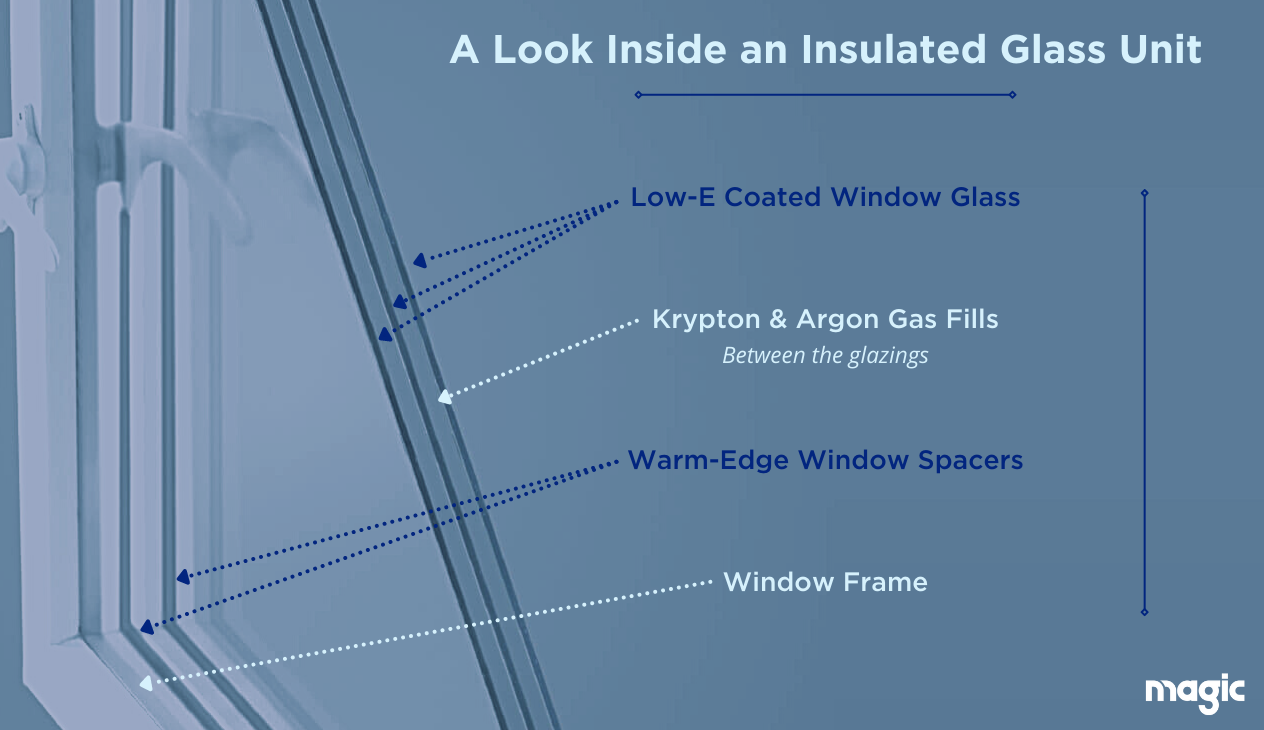
An insulating glass unit (IGU) is a factory-assembled, hermetically sealed glass unit consisting of two or more panes of glass. These glass panes are separated by a spacer bar and are bonded together as a single unit. Here are the main components of an insulated glass unit.
Glass Panes
The glass panes in an insulated glass unit are usually 3-6 mm thick. They can be annealed glass, as well as laminated or tempered glass. Insulated glass units usually have two or three panes. In very cold regions, quadruple glazing exists.
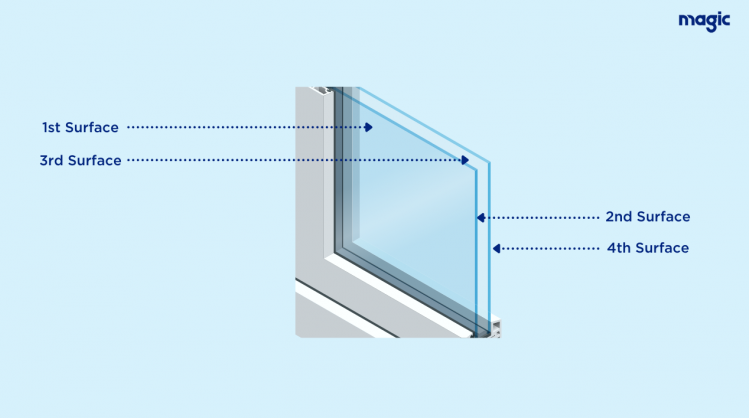
In a standard double‑pane unit, the four surfaces are numbered from outside to inside:
- Surface 1: Exterior face of the exterior pane
- Surface 2: Interior face of the outer pane (facing the cavity)
- Surface 3: Exterior face of the inner pane (facing the cavity)
- Surface 4: Interior face of the inner pane
Spacer Bar
The spacer bar is a continuous or corner-keyed bar that maintains the gap between the pains.
Traditional hollow aluminium spacers are strong but very conductive, creating a “cold edge” around the perimeter of the glass that can drive condensation and slightly raise the whole‑window U‑factor. Contrastingly, warm‑edge spacers made from stainless steel, hybrid polymers, or foam:
- Reduce thermal bridging at the edge, improving overall window U‑factor by up to about 10-15% compared with aluminium spacers.
- Reduce condensation potential and improve comfort.
Desiccant
The desiccant is located inside the spacer and absorbs residual moisture from the air or gas cavity. This prevents fogging until they eventually become saturated.
A window undergoes a thermal exchange process every day. This means that some outside air enters the space between the panes. And if it weren't for the desiccant, that moisture would stay trapped within that space, and gas would leak. So, the desiccant is a super-absorbent material that absorbs the excess moisture and maintains the window's insulation.
Air or Insulating Gas
The chamber between the two panes of glass is filled with either air or an insulating gas, usually argon, or, rarely, krypton. Most modern IGUs use inert gases instead of air to improve insulation. Here's what you need to know about argon and krypton gases:
Industry and inspection guidance notes that even if gas diffuses at roughly 1% per year, a unit filled to about 90% argon would still retain around 70–80% of the gas after 20 years, with acceptable performance.
Primary and Secondary Sealant
The primary sealant is typically polyisobutylene, which creates the gas and moisture barrier. The secondary sealant is usually silicone or polyurethane, which provides structural strength and weather resistance around the perimeter.
Low-E Coatings
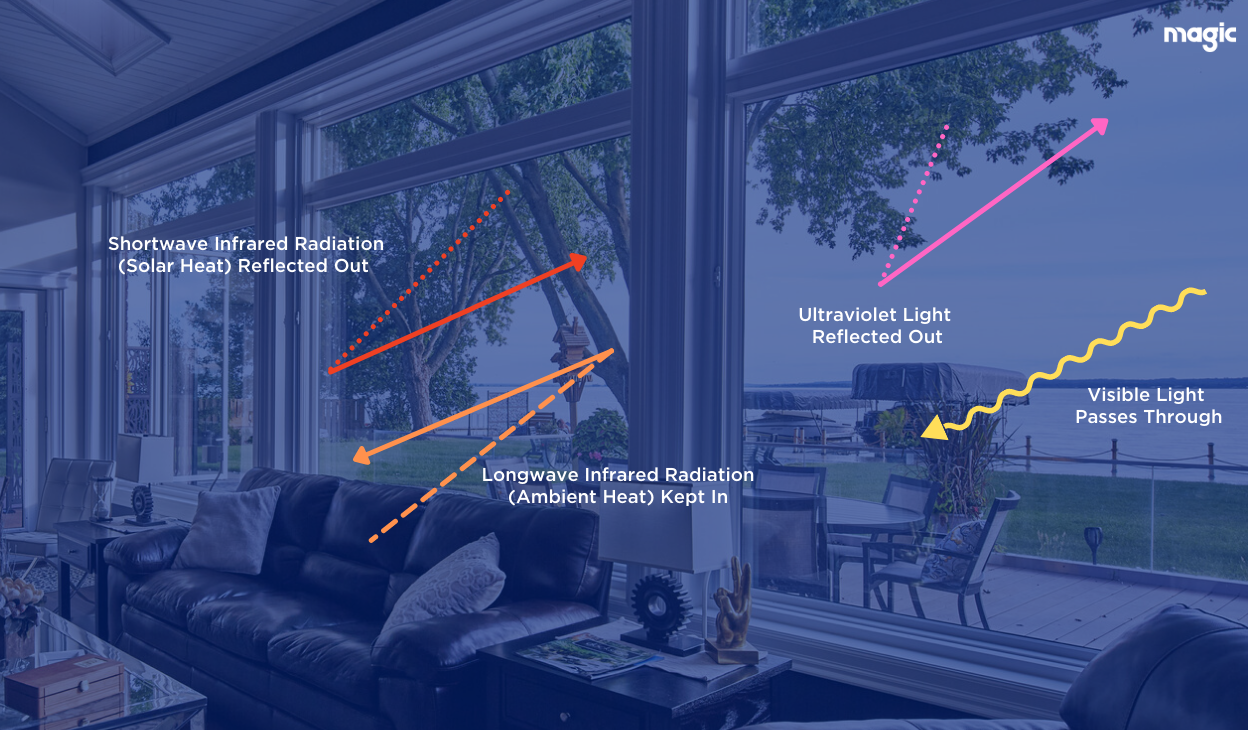
Low-E coatings are thin, almost invisible coatings applied to one or more glass surfaces inside the Insulated Glass Unit. They reflect radiation while allowing visible light to pass, which reduces heat loss in winter, heat gain in summer, and UV damage to furniture.
Common strategies of applying Low-E coatings:
- Low‑E on surface 2: favours blocking solar gain, popular in cooling‑dominated or very sunny climates.
- Low‑E on surface 3 or 4: admits more solar heat while still limiting heat loss, useful in heating‑dominated cold weather.
- Triple‑pane units: may use low‑E on two surfaces (often 2 and 5/6)
How Do Insulated Glass Units Improve Energy Efficiency?
Single‑pane glass loses heat quickly through conduction (heat passing through glass), convection (air movement), and radiation (infrared energy), leading to cold glass in winter and large solar gains in summer. IGUs disrupt all three mechanisms:
- Conduction: replacing air with argon or krypton, which have lower thermal conductivity than air, slows conductive heat transfer through the cavity.
- Convection: energy-efficient windows help maintain more consistent glass temperatures
- Radiation: low‑emissivity (low‑e) coatings reflect long‑wave infrared heat back toward its source while still allowing visible light to pass.
In performance terms:
- A typical older single‑pane window has a U‑factor around 1.0.
- Modern double‑pane low‑e IG units commonly achieve U‑factors around 0.25-0.35, depending on coatings, gas fill, and window frame.
- High-end triple‑pane units can reach 0.17-0.25 with advanced low‑E and gas fills, which is particularly beneficial in cold climates and passive‑house projects.
Types of Insulated Glass Units and Where They Are Used

IGUs are customized for different building types, climates, and code requirements. The main types of insulated glass are double-pane and triple-pane configurations, which provide varying levels of insulation and energy efficiency.
Double-Pane IGUs
- Two glass panes with one sealed air or gas cavity
- Typical U‑factor range: about 0.25–0.35 with low‑E and argon
- Oftentimes, the best value for moderate climates or cost‑conscious retrofits
- Can be more energy-efficient with insulating window coverings
- More budget-friendly and easier to install
Triple-Pane IGUs
- Three panes of glass with two sealed cavities, usually gas‑filled
- Typical U‑factor range: about 0.17-0.25 with advanced low‑E and gas fills
- Provide better thermal performance than comparable double‑pane units
- Cost more and are heavier, thus sometimes not suitable for very large glazing areas
- Usually not worth it in regions like Toronto
Specialty IGUs
Common options include:
- Laminated IGUs for impact resistance, security, and improved acoustic performance (thanks to PVB or EVA interlayers)
- Tempered glass IGUs where safety glazing is required by code (doors, low sills, near floors, and wet areas)
- Tinted or reflective IGUs to manage glare and reduce solar gain in hot or high‑sun exposure facades
- Decorative grids (muntin bars) between the glass for a traditional look without the cleaning and maintenance of exterior bars
Acoustic and Comfort‑Oriented IGUs
Insulated glass units can be tailored to reduce noise and improve perceived comfort beyond basic energy performance. Here's what you need to know about this:
- Asymmetric glass thicknesses: pairing, for example, a 3 mm pane with a thicker glass pane measuring 6 mm instead of two equal 4 mm panes helps improve Sound Transmission Class (STC) ratings
- Laminated glass: one or both lites can be laminated with a PVB or acoustic interlayer to boost STC, significantly muting traffic and urban noise
- Optimized cavity width: larger cavities (within design limits) help with low‑frequency noise, which is common from traffic and trains
Advantages and Disadvantages of Insulated Glass Units
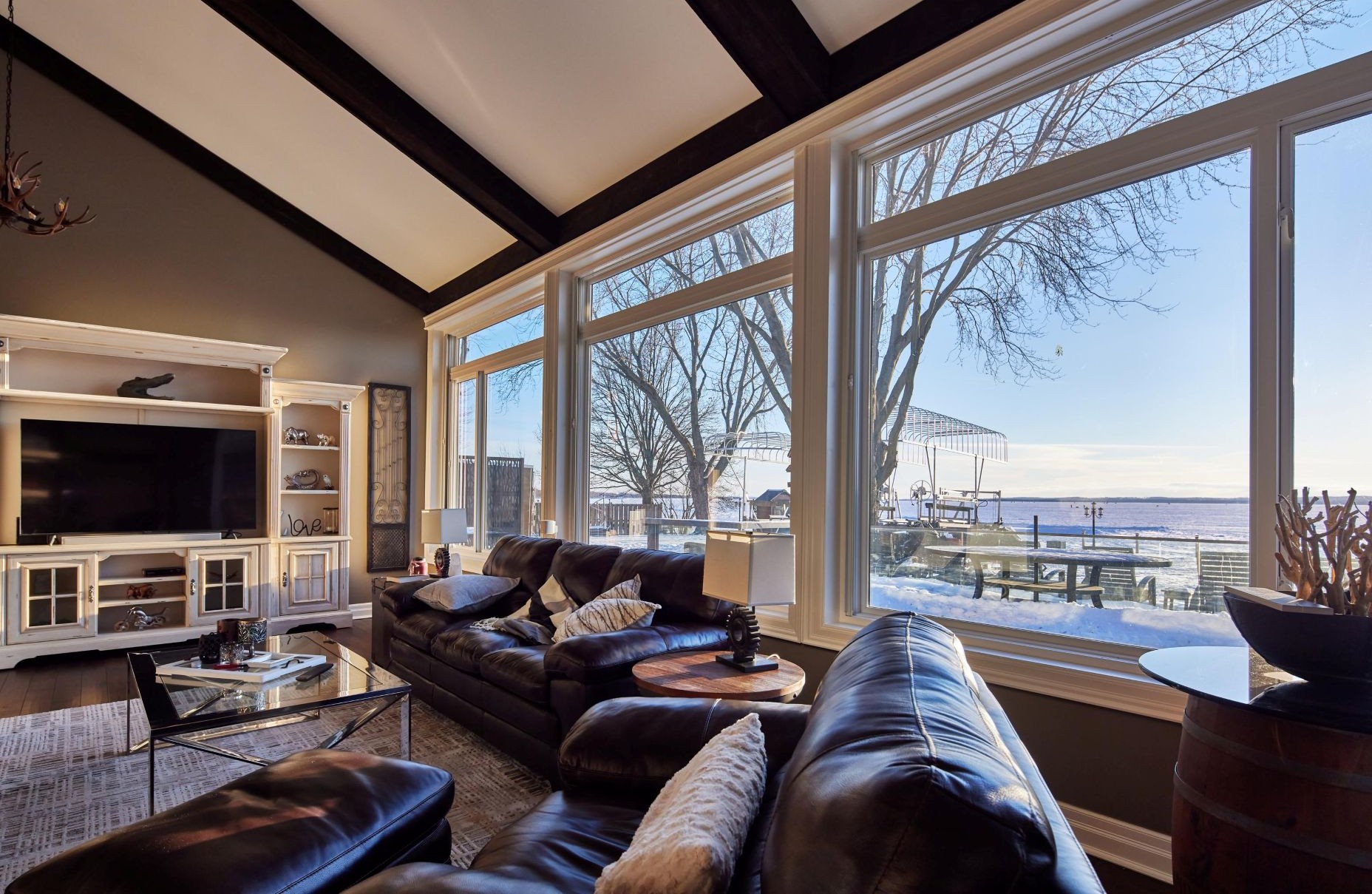
Insulated glass units now represent most of the new window installations in Canada, but they still have some disadvantages that might be worth considering.
Advantages of insulated glass units:
- Improved energy efficiency, reducing heating/cooling costs
- Reduced heat loss in winter and heat gain in summer
- Better comfort with fewer drafts and cold spots
- Better noise reduction compared to single-pane windows
- Less condensation on interior panes
- UV protection preserving furnishings
- Increase in property value
Disadvantages of insulated glass units:
- Higher initial cost
- Heavier units, requiring structural considerations
- No field repairs possible; when the perimeter seal of an IGU fails, condensation can form between the glass layers, which usually necessitates the replacement of the entire unit
Lifespan, Failure Modes, and Maintenance
In general, IGUs last 10-25 years, although premium units can last longer. Units exposed to harsh sun, wind, and moisture may fail sooner.
The most common problem with IGUs is perimeter seal failure. When the seal is compromised, and the desiccant can no longer absorb moisture, water vapor enters the cavity and causes fogging or condensation between the panes that cannot be wiped away. Gas fills also slowly diffuse over time, but performance usually remains acceptable as long as a substantial portion of the original gas is still present.
The main signs of failure are persistent haze or a milky look inside the glass, visible moisture droplets or streaks between panes, and a noticeably colder glass surface compared to similar units nearby. Once the seal fails, the practical fix is usually to replace the entire IGU, or sometimes the whole sash.
Basic care is simple. Clean the glass with soft cloths and non‑abrasive, non‑ammonia cleaners, keep weep holes and drainage paths clear, and inspect the unit occasionally for fogging, cracked seals, or frame movement that could stress the glass.
Size Limits, Weight, and Design Considerations
Manufacturers can produce surprisingly large IGUs. Practical limits depend on glass thickness, wind load, handling requirements, and the strength of the frame. Many residential double‑pane units are available in sizes up to roughly 96 × 60 inches. Commercial systems may allow larger dimensions, so the exact limit should always be confirmed with the manufacturer.
Triple‑pane units are thicker and much heavier than double‑pane units, which means that the frames, hinges, and hardware must be rated for the added load. When ordering a replacement, it is important to measure the visible glass size and overall thickness carefully, verify that the unit meets the required wind and code loads, and confirm compatibility with the existing frame and hardware before fabrication begins.
How to Choose the Right IGU for Your Home
1. Start with Climate and Orientation
- In cold or mixed climates, prioritize low U‑factor and consider higher SHGC on south‑facing windows to capture winter sun.
- In hot, sunny climates, emphasize lower SHGC on east, west, and south exposures to control cooling loads and glare.
2. Decide between Double‑ and Triple‑Pane
- Double‑pane IGUs with low‑E and argon are usually sufficient for moderate climates and budget‑conscious retrofits.
- Triple‑pane IGUs make the most sense in very cold zones, exposed locations, or high‑efficiency builds where comfort near large windows is a priority and payback periods are acceptable.
3. Pick the Right Enhancements
- Low‑e type and surface placement (more solar control vs more winter gain)
- Warm‑edge spacers for improved edge performance and less condensation
- Laminated or acoustic glass if you’re near busy roads, transit lines, or airports
- Safety glazing (tempered or laminated) where required by building codes
4. Check Labels and Certifications
- Look for NFRC labels for verified U‑factor, SHGC, and VT.
- Review the Energy Rating (ER) to compare overall performance and confirm that units meet or exceed Energy Star requirements for your climate zone.
Here are some guidelines in this regard:
What these energy performance ratings mean:
- U-value/U-factor: lower is better. It measures how much heat escapes through the window assembly.
- SHGC: lower is better in hot climates, but a higher value can help in cold climates on sun-facing windows.
- VT: higher means more daylight enters the home.
- ER: this is especially useful in Canada because it combines insulation, solar gain, and air leakage into one score. Higher is better.
5. Take Advantage of Rebates and Incentives
- Many utilities and governments offer rebates for upgrading to ENERGY STAR‑certified windows and doors.
- Always confirm current program names, eligibility requirements, and performance thresholds before purchasing, as details change over time.
Replacement and Installation Basics
When replacing a failed or outdated IGU, start by confirming that the fogging or moisture is actually between the panes and not just on the surface. From there, decide whether you only need the IGU replaced or whether the entire window unit should be changed as well.
Accurate measurement is critical. The replacement unit has to match the visible glass size and overall thickness of the original assembly.
Installation should be handled by a qualified glass or window contractor who can remove the old unit, fit the new IGU or sash correctly, and verify sealing, drainage, and operation afterward. Any certification labels or performance documentation should be preserved for future energy audits, warranty claims, or rebate applications.
Looking for High-Quality IGUs? Contact Magic!
If your windows are fogged, drafty, or no longer performing as they should, Magic can help you find the right replacement solution for your home. Magic IGUs are manufactured right here in Ontario and feature revolutionary window technologies for superior comfort, energy efficiency, and curb appeal. We're talking advanced hardware systems, superior insulating materials, high-performance frames, and more!
Curious to discover why Magic units are among the most praised in Ontario? Contact Magic today to discuss your window replacement project and find the best fit for your home!
FAQs
What is the difference between DGU and IGU?
DGU stands for double-glazed unit, while IGU stands for insulated glass unit. Double-glazed units (DGUs) are a type of insulated glass unit (IGU) that has two panes of glass. Other IGUs include triple-glazed units with three panes of glass.
What are insulated glass units filled with?
Insulated glass units can be filled with air or with insulating gases like argon or krypton. Argon gas windows are the most common nowadays, as they are budget-friendly and offer great insulation for most homes.
Can I fix a fogged double‑pane window without replacing the glass?
Some service companies offer drilling and venting services to fix fogged double-pane windows, but these are not a long-term solution. In most cases, replacing the failed IGU (or sash) is the recommended fix for long‑term performance.
Is argon gas really worth it?
For the relatively small cost increase compared to air-filled windows, argon gas almost always makes sense in double‑ and triple‑pane windows because it measurably improves energy efficiency and comfort. It is safe, clear, and remains effective even as some gas diffuses over time.
Are triple‑pane windows always better?
Triple‑pane IGUs provide lower U‑factors and often improved comfort, but they're not always better. Triple-pane windows are likely not worth it in moderate climates, where high-quality double-pane windows with low-E coatings and argon gas offer the best cost-to-benefit ratio. Plus, triple-pane windows cost more and are heavier, which can impact hardware, installation, and payback.