Front Doors
Exterior Door Threshold Types: Your ULTIMATE Guide!
If you’ve ever noticed drafts sneaking under your front door, puddles forming inside after a heavy rain, or high energy bills that just won’t go down, you might be wondering what’s going on at the bottom of your door...
The problem (and the solution!) is often one small but very important component: the door threshold that seals the exterior opening. Many homeowners overlook it, but thresholds play a surprisingly big role in comfort, energy efficiency, and even the longevity of your doors.
So, if you want to learn more about different exterior door threshold types and make an informed decision for your home improvement project, read on!
Key Takeaways
- Door thresholds prevent air infiltration, water intrusion, dust, insects, and noise, while also protecting the door and flooring from wear and damage.
- Thresholds come in many types: saddle, low-profile, interlocking, thermal break, bumper seal, heavy-duty, panic, ramp, and acoustic designs.
- Choose the right threshold depending on your door type, climate, and foot traffic.
What Is a Door Threshold?
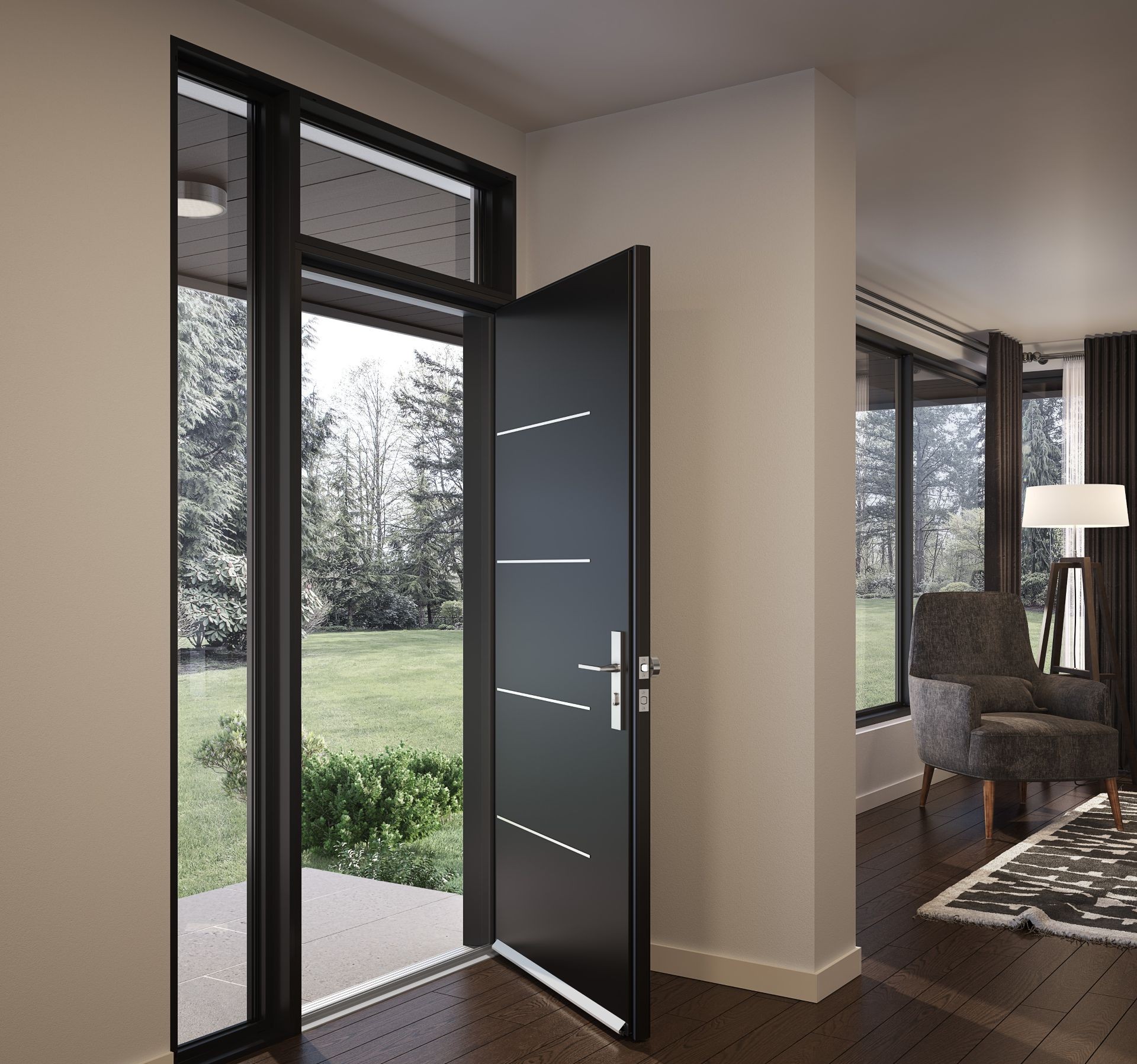
The door threshold is the piece that sits directly under the bottom edge of the door. Its main functions are to:
- Seal the gap between the door and the floor to block drafts, water, dust, and insects.
- Provide a smooth transition between inside and outside surfaces.
- Support specialized features like acoustic sealing, ramp access, or latch tracks.
In short, thresholds represent the primary defense against moisture infiltration and energy loss at the base of an entry system. Their main role is to minimize drafts and air leaks, thus guaranteeing a tight seal at the base of the door and consistent indoor temperatures.
Door Sill vs Door Thresholds
A door sill is a structural component, while a door threshold is a functional component. The door threshold sits above the door sill.
The door sill is the horizontal structural part of the door frame at the bottom. It’s usually made of wood, metal, or concrete and is often part of the building’s construction. Its primary functions are to:
- Support the structural integrity of the door frame and distribute weight.
- Provide a base for the threshold to sit on.
Why Are Exterior Door Thresholds Important?
Exterior door thresholds play a critical role in sealing gaps at the bottom of the door. This enhances energy efficiency by preventing air leaks and water intrusion, thus reducing the workload on heating and cooling systems and lowering your utility bills.
Moreover, thresholds protect the lower edge of your door from damage caused by rain, snow, wind, and debris. They act as a barrier and prevent moisture and dirt from entering your home. Because of this, door thresholds can also help prolong the lifespan of your door. They can even contribute to a serene indoor atmosphere by reducing noise infiltration. Furthermore, doors without thresholds are slipping hazards.
Beyond their functional benefits, exterior door thresholds can also enhance the visual appeal of your property. They're available in a variety of materials and finishes. If chosen wisely, they can complement the existing design of your entrance, adding a touch of elegance and completeness to your home’s curb appeal.
Different Types of Exterior Door Thresholds
In the following sections, we'll discuss various exterior door threshold types based on their construction and functionality to help you find the perfect threshold for your home! Keep in mind that some of them work for both interior and exterior use.
Saddle Thresholds
A saddle threshold is the slightly raised, rounded type you physically step over when walking through a door. These are very common in older homes and commercial buildings.
They are excellent at stopping water because they create a higher barrier at the bottom of the door. You’ll often find them made from aluminum, stainless steel, or brass. They can also feature smooth or grooved surfaces (the latter ensuring better slip resistance), as well as special finishes for extra grip to prevent slipping. Saddle thresholds are also available in multiple widths and thicknesses.
Low-Profile or Flat Thresholds
Low-profile thresholds are designed to sit almost flat with the floor. These are perfect for homes that need to be wheelchair accessible or easy to walk through with strollers or small children.
While they don’t block water as aggressively as taller thresholds, they work very well when paired with a good door sweep (the rubber strip attached to the bottom of the door).
Interlocking Threshold Systems
Interlocking thresholds are more advanced. Instead of just sealing against the door, the threshold and the bottom of the door are designed to fit together when the door closes, like puzzle pieces, thanks to the L- or J-shaped hooks.
This creates a very tight seal against air and water. These systems are common with modern steel and fiberglass doors and are excellent for energy efficiency.
On the other hand, rocks, ice, or mud can get trapped in the hooks, so they need to be regularly cleaned.
Thermal Break Thresholds
Thermal break thresholds are designed to help save energy by minimizing temperature transfer and condensation buildup. Inside the threshold, there’s a vinyl spline that divides the threshold into two sections, thus stopping cold or hot temperatures from entering your home.
These are especially useful in very cold or very hot climates because they help keep indoor temperatures stable and reduce heating and cooling costs.
Bumper Seal Threshold
These thresholds have a flexible vinyl lip (the bumper) that compresses against the bottom of the door face when it closes. This creates a tight, flexible seal.
Bumper seal thresholds are available to block drafts, dust, and minor water seepage. They're often used on residential exterior doors, storm doors, or light commercial doors where a soft seal is preferred over a rigid one.
Panic or Latch Door Thresholds
Panic door thresholds are designed with built-in tracks or channels to accommodate doors equipped with panic hardware. They allow the doors to meet building codes for egress while still providing a clean threshold and maintaining a tight seal.
These thresholds are installed in commercial buildings, schools, hospitals, and other places that need to open quickly in emergencies.
Heavy-Duty Thresholds
Heavy-duty thresholds are thick, rigid, and durable metal thresholds. They can withstand high traffic, frequent door use, and heavy loads without bending or wearing.
These thresholds provide long-lasting protection. They're best for high-traffic commercial entrances, industrial facilities, or exterior doors installed in regions with harsh weather conditions.
Ramp Saddle Door Thresholds
Ramp saddle door thresholds have an angled or curved design and act as a small ramp between two surfaces. The saddle shape helps water drain away while keeping the doorway accessible. They are easy to install with pre-drilled holes.
The main purpose of this threshold is to offer water protection and wheelchair/stroller accessibility. It's often installed on patio doors, garage entries, or homes that should meet ADA requirements.
Acoustic Door Saddle Thresholds
Acoustic door saddle thresholds are specifically designed with gaskets or seals embedded into the saddle shape. They sit under the door and press tightly against it when it's closed. They're specifically engineered to reduce sound transmission through the doorway.
These thresholds are perfect for recording studios, offices, conference rooms, or anywhere soundproofing is important.
Carpet Divider Door Thresholds
Although not exterior door thresholds, carpet divider door thresholds are worth mentioning, just in case you stumble upon them in your research. They feature a thin, slightly raised strip designed to create a seamless transition between two floor surfaces, usually from carpet to tile or hardwood.
They protect the edges of the carpet and prevent you from tripping. While they may provide minor sealing, their main role is floor protection and smooth transition. Carpet dividers are installed in interior doorways, offices, and homes with mixed flooring types.
Exterior Door Threshold Types: Materials
Exterior door thresholds can also be grouped based on the materials they're made of, which play an important role in their efficiency. They are usually made from wood, aluminum, steel, and composite materials. There are also exterior door thresholds made from premium metals like brass, stainless steel, and bronze, often used for heavy-duty applications or luxury residences, given their durability.
Aluminum Thresholds
Aluminum thresholds are the most common type you’ll see in modern homes. These are metal strips that are strong and durable. They also don’t rot like wood. They work especially well in rainy, snowy, or humid weather.
Many aluminum thresholds are adjustable thresholds, which means they have small screws that let you raise or lower the center part. This helps the threshold stay tight against the bottom of the door, keeping out drafts and water as your house settles and shifts over time. Adjustable door thresholds are particularly useful in accommodating uneven door frames.
Wood Thresholds
Wood thresholds are mostly found in older or traditional-style homes. They give a warm, classic look and blend nicely with hardwood flooring.
The downside is that wood doesn’t handle water very well. If rain or snow melts against it over time, it can crack, warp, or rot. That’s why many modern wood thresholds are sealed or topped with a thin metal layer for added protection against moisture.
Composite Thresholds
Composite thresholds are made from a mix of materials, usually plastic and wood fibers. These are designed to look like wood but act more like plastic when it comes to durability.
They don’t rot, they resist warping, and they’re very low maintenance. If you want something that looks nice but doesn’t get damaged by water easily, composite thresholds are a great option.
Rubber and Vinyl Thresholds
Rubber and vinyl thresholds are softer and more flexible than metal or wood ones. These are great if you need an extra-tight seal to keep out water and drafts.
Instead of being screwed in, they are often glued down. You’ll commonly see these used with storm doors, basement doors, or in areas that get strong winds and heavy rainfall.
Bronze Thresholds
Bronze thresholds are typically made from solid or cast bronze, sometimes with an alloy mix for durability. Structurally, they function like standard thresholds: they sit under the bottom of the door and create a seal to block air, water, dust, and pests. But they also add a decorative, high-end finish.
Bronze thresholds are often used in historic homes, high-end residential properties, and commercial applications where aesthetics matter as much as function. They pair well with solid wood, steel, or fiberglass doors.
How to Choose the Right Door Threshold
Can't find the proper threshold for your door? Here are some key factors to consider when determining which threshold is the best:
- Are you mainly trying to block water, reduce drafts, improve accessibility, or reduce noise?
- Exterior doors, sliding doors, and heavy-duty commercial doors require different threshold designs. Make sure the threshold fits your door’s structure and closes tightly without interfering with hardware.
- If wheelchairs, strollers, or small children frequently pass through, a low-profile or ramp saddle threshold may be best for safe and convenient access.
- For high-traffic areas, look for heavy-duty metal or stainless steel thresholds that can withstand constant use without warping or wearing down.
- Climate & environment: wet climates may require raised thresholds to prevent water entry, while extreme temperatures might benefit from thermal break thresholds for energy efficiency.
How to Maintain Door Thresholds
Although it doesn't seem like a threshold would need much maintenance, it is definitely prone to wear and tear. It is, after all, one of the main elements that protects your home against pests, water damage, and dirt.
Therefore, clean your door thresholds regularly. Dirt, leaves, and debris can interfere with the threshold’s seal. Sweep or vacuum around the threshold and wipe it down with a damp cloth.
And while you're cleaning, check for damage as well. Look for cracks, warping, or loose sections. Vinyl and rubber seals can wear down over time and may need replacement.
For wooden thresholds, make sure that the paint, varnish, or sealant is intact to prevent water damage. For metal or composite thresholds, check that the gaskets or door sweeps are functioning properly.
And don't forget that thresholds are not permanent. If water is leaking inside, drafts are noticeable, or the threshold is heavily worn, it’s better to replace it promptly to avoid bigger problems like flooring damage or energy loss.
Need to Replace Your Door? Contact Magic!

If your door is old or poorly insulated, even the best thresholds won't be of too much help, and it might be time to replace the entire unit.
Luckily, the door market has evolved so much in the past few years that you can get incredibly secure and energy-efficient doors equipped with technologically advanced thresholds!
Magic's entry door, for example, features:
- An integrated anodized aluminum rain deflector that actively drives water away from the door
- Multi-point gaskets
- An auto-trigger lock that auto-locks the slab's compression seal directly into the frame, completely eliminating gaps
Plus, our doors feature 30% more steel and 40% more insulation, as well as a unique J-bend design that makes the door incredibly resistant to break-ins (it can resist up to 1,600 lbs of force!).
Curious to learn more? Book your free consultation today!
Frequently Asked Questions
What kind of threshold is best for exterior doors?
The best threshold for an exterior door is one that balances weather sealing, durability, and accessibility. The ideal choice depends on climate, exposure to rain, and whether you need it to be accessibility compliant.
What is the difference between a door sill and a threshold?
The door sill is the structural base at the bottom of the door frame, while the threshold is a separate, often replaceable piece that sits on top of the sill to provide a walking surface and weather seal. In short, the sill supports the frame and the structure, and the threshold protects the sill and interior from water, drafts, and wear.
What is a saddle threshold?
A saddle threshold is a raised, bridge-like profile that runs under the door, with a gently sloped or rounded top. It is typically made from aluminum, bronze, or stainless steel and is used to close the gap at the bottom of the door, improve sealing, and provide a durable step surface, often working with a door sweep for better weather protection. Saddle thresholds are most commonly used in commercial exterior doors.
What is the main purpose of an exterior door threshold?
The main purpose of an exterior door threshold is to seal gaps at the bottom of the door, which enhances energy efficiency, protects against the elements, and reduces noise infiltration.
How do I choose the right material for my door threshold?
To choose the right material for your door threshold, consider climate conditions, aesthetic preferences, and maintenance needs. Aluminum is durable and rust-resistant, wood provides a classic appearance but needs upkeep, while vinyl is versatile and low-maintenance.
How often should I inspect my door thresholds?
You should inspect your door thresholds every few months, specifically during spring and fall, to identify potential issues early and ensure their proper function.
What is the best way to maintain a wooden threshold?
To maintain a wooden threshold effectively, regularly clean it and apply a protective sealant to prevent moisture damage. This practice will help preserve its appearance and functionality over time.
How can I install a door threshold?
To install a door threshold, first determine which type is appropriate by measuring the width of the door opening and by checking the height of the existing threshold. Next, ensure that the subfloor is clean and level. If necessary, cut the threshold to the correct length. Most thresholds come with pre-drilled holes for screws, so their installation is pretty straightforward: position the threshold, secure it with screws, and check that it sits firmly. After installation, you should apply a bead of weatherproof sealant around the edges of the threshold.