Front Doors
Top 14 Door Latch Types and Their Best Uses
You're probably here because something about your door doesn't feel right. Maybe it won't stay shut. Maybe you're upgrading your home's security. Or maybe you're just tired of that cheap latch that sounds like it might give up next time someone closes the door too hard.
Regardless of the reason you're reading this article, it will help you understand the differences between the most common door latch types, as well as find the best one for your door(s)!
Key Takeaways
- Not all door latches offer the same level of security. Some are designed for convenience, while others are made to resist forced entry and heavy use, especially if paired with high security lock types.
- Choosing the right door latch depends on where you plan to install it and how often you will use the door. Interior doors, front doors, commercial exits, garden gates, and other spaces all require different latch mechanisms.
- Durability and installation matter just as much as design. A high-quality latch that is properly installed can dramatically extend the lifespan and performance of your door.
14 Door Latch Types

Before we discuss more about the most common door latch types for internal and external doors, here's a quick comparison of these door hardware pieces:
1. Mortise Latches
Mortise latches have a recessed external casing with a latch mechanism. Unlike tubular latches, mortise latches are installed in a pocket cut within the door's edge. The mechanism includes an integrated lock body housing both the latch bolt and often a deadbolt. When you turn the door handle, the latch retracts.
Pros:
- Superior durability, especially in high-traffic environments
- Elegant, traditional aesthetic suitable for premium applications
- A single mechanism controls multiple functions
Cons:
- Complex installation requiring professional help and door modification
- Higher cost than tubular alternatives
- May lead to lockouts if the passage mode isn't properly set
Best for: commercial properties, high-end residential homes, historic buildings, exterior doors, and heavy-duty applications requiring robust hardware
2. Rim Latches
Rim latches mount on the door's interior surface rather than being mortised into the edge. The latch engages a strike plate on the adjacent frame when the door closes. Rim locks are usually operated by a key from outside and handle from inside.
Pros:
- Simpler installation without door modification
- Visible mechanism for easy maintenance
- Traditional aesthetic for period properties
- Often used with night latch cylinders for added security
Cons:
- Less aesthetically integrated than mortise alternatives
- Surface mounting may not suit modern interiors
- Generally used alongside other security measures
Best for: historical buildings, retrofit installations where door modification isn't desired, and traditional cottage-style homes.
3. Tubular Latches
Tubular latches slide through a cylindrical hole in the door edge, connecting to the doorknob or lever through the door's bore hole. A spring-loaded bolt retracts when the handle is turned and automatically extends to secure into the strike plate.
Pros:
- Most common residential latch type
- Easy installation on pre-drilled doors
- Compatible with various knob and lever styles
- Cost-effective with multiple finish options
Cons:
- Less secure than mortice latches
- Requires separate deadbolt for enhanced security
- Springs may wear over time in high-traffic areas
Best for: interior residential doors, bedroom and bathroom doors
4. Night Latches
Night latches automatically lock the door when it's closed. But they also have a button that, when pressed, disengages the latch or lock to keep the door open if needed. They may feature a dead latch, a dead bolt, or dead lock.
Pros:
- Automatic locking provides convenience and consistent security
- Easy operation from inside during emergencies
- Some models include deadlocking features for enhanced protection
- Anti-lockout mechanisms available on certain models
Cons:
- Not sufficient as sole security for exterior doors
- Prone to forced entry without additional deadbolts
- Requires proper key management to prevent lockouts
Best for: residential front doors (typically paired with deadbolts), apartment buildings, and doors requiring automatic secure closure.
5. Thumblatches
Thumblatches feature an external handle with a thumb-operated lever. Pressing the thumb piece lifts an internal latch bar, releasing it from a catch on the frame. Gravity returns the bar to the closed position when released.
Pros:
- Traditional aesthetic ideal for period properties
- Operable from both sides
- Durable hand-forged options available
- Works with ledge-and-brace style doors
Cons:
- Requires precise installation
- Not weather-sealed without additional protection
- Traditional versions may not suit modern architecture
Best for: garden gate latches, cottage-style doors, rustic interiors, traditional homes, and period property renovations.
6. Panic Latches
Panic latches usually feature a horizontal bar spanning the door width. The handles you see on exit doors in commercial settings are panic latches. When you push a panic latch, the latch retracts, and you can quickly exit the room without having to locate or operate handles.
Pros:
- Life-safety compliance with building codes
- Allows rapid emergency egress
- No special knowledge required to operate
Cons:
- Often required by building codes for doors serving large occupant loads (50+ people)
- Higher cost than standard hardware
- Must be properly maintained for reliable function
Best for: commercial buildings, schools, hospitals, theaters, any space requiring emergency exit capability, and all high-hazard occupancies.
7. Multipoint Latch
Multipoint latches offer higher security compared to standard latches. They are door locking systems that secure a door at multiple points along the frame. They usually consist of a central handle and lock mechanism connected to two or more steel rods or bolts that extend vertically. When you operate the handle or turn the key, all the locking points disengage at once, securing the door firmly along its entire edge.
Pros:
- Increased security
- Improved door stability
- Enhanced weather sealing
- Easy operation
Cons:
- Requires precise door and frame preparation to fit rods and keepers properly.
- Typically more expensive than single-point locks.
- Installation usually requires professional expertise.
Best for: exterior residential doors, commercial entry doors, high-security areas, and locations needing superior sealing and door stability
8. Roller Bolt Latch
Roller bolt latches use a roller mechanism to keep the door closed. They're quite easy to install and operate, but are better suited for internal doors.
Pros:
- Works well for doors with self-closing hinges
- Easy to install and replace
- Simple hardware
Cons:
- Not suitable for heavy-traffic doors
- Not suitable for front doors
Best for: closet doors, interior double doors, cabinet doors, light-duty applications
9. Deadbolt Latches
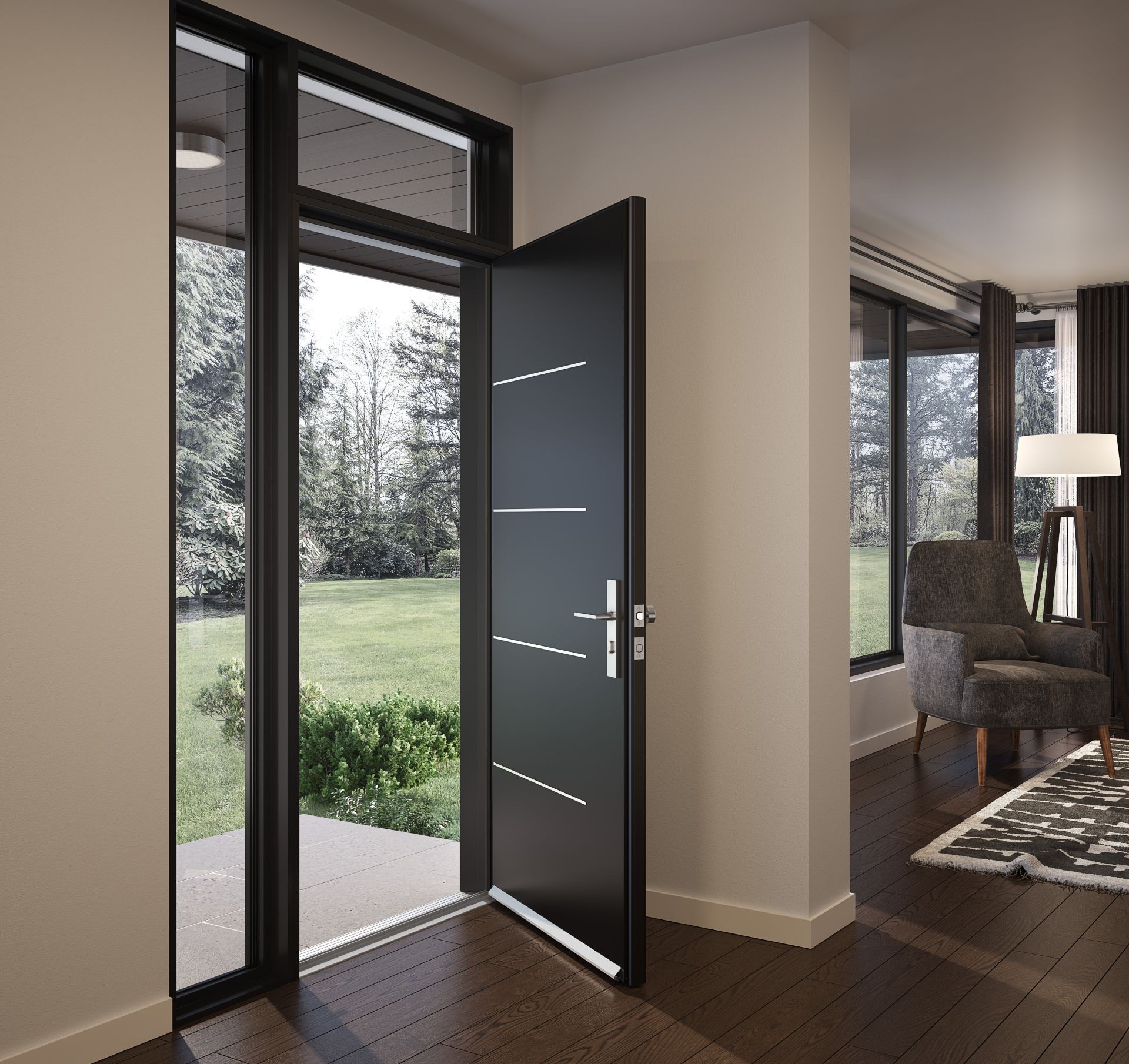
Deadbolt latches feature a bolt that moves horizontally, extending into the strike plate in the door frame. A deadbolt latch is usually operated by a key or thumb turn.
Pros:
- Superior security with excellent resistance to forced entry
- Durable construction from heavy-duty door materials
- Available in single-cylinder (keyed outside, thumb turn inside) and double-cylinder (keyed both sides) variants
Cons:
- Requires manual locking each time
- More expensive than basic spring latches
Best for: exterior entry doors, front and back doors, garage entry doors, and any location requiring enhanced protection against break-ins.
10. Slam Latches
Slam latches feature an enclosed spring mechanism, a sliding pin pushed by the spring, as well as a separate component with a curve or a notch. As the door is pushed, the pin presses against the notch with the curved side, and it glides over. The spring will then push the pin out, its angle preventing the pin from retracting and thus securing the door.
Pros:
- Automatic secure closure without manual latching
- Robust design withstands repeated slamming
- Ideal for high-traffic or industrial environments
- Available with keyed locking options
Cons:
- Spring mechanisms need periodic maintenance
- Not all models offer high security
Best for: access doors requiring hands-free closure
11. Sliding Bolt Latch
Sliding bolts consist of a metal bar that slides into a receiving bracket on the frame. You have to simply push or pull the bolt to engage or disengage.
Pros:
- Extremely simple mechanism
- Can accommodate padlocks for additional security
- Self-adjusting versions available to compensate for door movement
- Durable and weather-resistant in stainless steel versions
Cons:
- Operable only from one side
- Manual operation required
- May misalign due to temperature changes or settling
- Not suitable as primary security
Best for: gates, sheds, bathroom stalls, secondary security on doors, marine applications (transom doors), and areas needing simple, visible closure.
12. Door Chains
Chain latches have two components: a metal chain and a sliding channel installed on two surfaces. They attach one end of a metal chain to the door and the other to the door frame via a sliding channel. When engaged, the chain allows the door to open a few inches while preventing full entry.
Pros:
- Allows visual identification before opening fully
- Adds a secondary security layer
- Simple installation and operation
- Affordable additional protection
Cons:
- Limited resistance to forced entry
- Can be cut or broken with tools
- Should not be the sole security measure
- Some models include keyed locking
Best for: front doors for visual verification, hotel rooms, apartments, and any entry where identifying visitors before full access is desired.
13. Spring Latches
Spring latches feature a spring-loaded bolt with an angled edge. When the door closes, the angled edge contacts the strike plate, causing the bolt to automatically retract. Once the door is fully closed, the spring pushes the bolt back out into the strike plate opening, securing the door in place.
Pros:
- Easy to operate and install
- Cost-effective solution for basic closure needs
- Works well with standard door knobs and lever handles
Cons:
- Door must be fully closed for proper engagement
- Not suitable for high-security applications
Best for: most internal doors, low-security areas, closets, and rooms requiring frequent access without locking needs.
14. Magnetic Latch
Magnetic latches employ magnets that keep the door closed.
Pros:
- Silent operation with no clicking or clanking
- Minimal moving parts mean reduced wear and longer lifespan
- Sleek, modern appearance without protruding hardware
- Excellent for noise-sensitive environments
- Easy installation
Cons:
- Lower holding force than mechanical latches
- Not suitable for security applications
Best for: cabinet doors, cupboard doors, interior doors where quiet closure matters, hospitals, libraries, bedrooms, bathrooms, and furniture applications.
How to Choose the Best Door Latch
First things first: are we talking about an inside door or an outside door? If it's an inside one, you can go for a simple spring latch. If it's an exterior door, you'll need something stronger and more secure, especially if it's a front door. Outdoor latches are usually made of much stronger and more durable materials than interior latches.
Then, think about security. Different latches have different levels of security:
- Basic spring latch → light use, indoor doors
- Dead latch / deadbolt → much stronger, better for outside doors
- Privacy latch → for bathrooms/bedrooms where you want to lock from the inside
Also, check your door type. You need to know:
- Thickness of the door
- Which way it swings open (left or right)
- If it’s a metal door, a timber door, or a glass door
Think about durability as well. If the door is used a lot, choose strong materials and purchase the latch from a brand with good reviews.
Final Thoughts
If your front door is outdated, damaged, or no longer providing the security your home deserves, it may be time for a full replacement, since replacing the latch is just a temporary solution.
Magic has the best solution for homeowners in Ontario looking for maximum protection, as we specialize in installing high-security front doors built to withstand real-world threats (spoiler alert: our front doors can withstand up to 1,600 lbs of force!).
Contact Magic today to explore options for the most secure front door in Ontario and give your home the level of protection it deserves!
Frequently Asked Questions
What are three types of latches?
The most common types of door latches are spring latches, dead latches, and magnetic latches.
What are the 7 types of door locks?
The most common types of door locks include cylinder locks, deadbolt locks, knob locks, lever handle locks, mortise locks, smart locks, and multipoint locks.
What is the most common type of door latch for internal doors?
The most common type of door latch for internal doors is the tubular latch, which provides a simple solution for closing doors without the need for locking mechanisms.
What are the benefits of using magnetic catches?
Magnetic catches provide a sleek, unobtrusive look and are simple to install, making them ideal for various applications like kitchen cabinets and interior doors.
What factors should be considered when choosing a door latch?
When selecting a door latch, it’s crucial to consider the door type, compatibility with handles, security requirements, and environmental durability. These factors ensure that the latch will function effectively and meet your specific needs.