
Front Doors
Types Of Exterior Doors: Your ULTIMATE Guide!
If you're reading this, chances are you're thinking about upgrading your home's exterior. Or perhaps you're looking for the perfect door for your new home.
With so many styles, materials, and designs available, it can be quite difficult to choose. Been there, done that (more times than we can count!).
Therefore, we'll explain everything you need to know about various types of exterior doors, so keep reading!
Key Takeaways
- There are two main types of exterior doors: front doors and patio doors.
- The most common types of front doors include single and double entry doors, pivot doors, Dutch doors, storm doors, security doors, screen doors, glass doors, and arched or custom-shaped doors.
- The most common types of patio exterior doors in 2026 are French, sliding, bi-fold, and multi-slide doors.
- Door materials, such as steel, fiberglass, wood, aluminum, and composite, affect durability, maintenance, energy efficiency, and design options.
Front Doors
The front door is the focal point of your home’s exterior, setting the tone for your entire property. It controls first impressions, weather resistance, security, and the vibe you get from your main entrance.
There are different types of front doors, which we'll discuss in the following sections.
Single Entry Doors
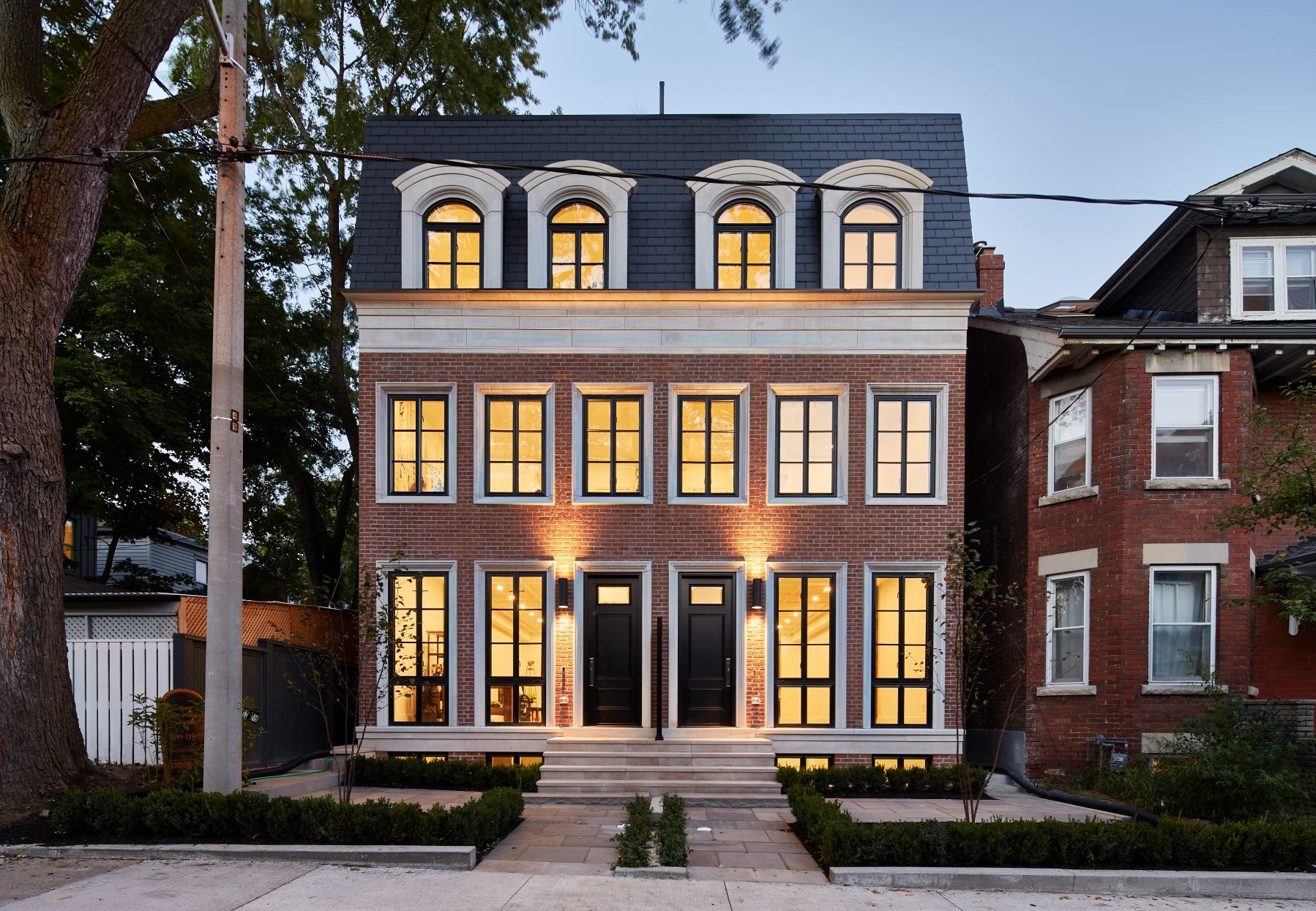
A single entry door is the most common exterior door type. It’s a single slab mounted on hinges attached to a jamb, typically swinging inward, though outward-swinging versions are common in tight interiors.
The door rotates on side-mounted hinges and seals against weatherstripping in the frame. High-quality single doors often feature insulated cores and multi-point locking systems with a deadbolt lock.
Single doors are ideal for front entries (especially for smaller houses), side entrances, porch entries, and garage-to-yard doors. They work especially well in homes where space is limited or where a simple, low-maintenance entry is desired.
Single entry doors are reliable, structurally strong, budget-friendly, and easy to install or replace. However, you’re limited by width: large furniture or appliances can be difficult to move through. The swing direction can also affect furniture layout, hallway circulation, and staircase landings.
Double Entry Doors
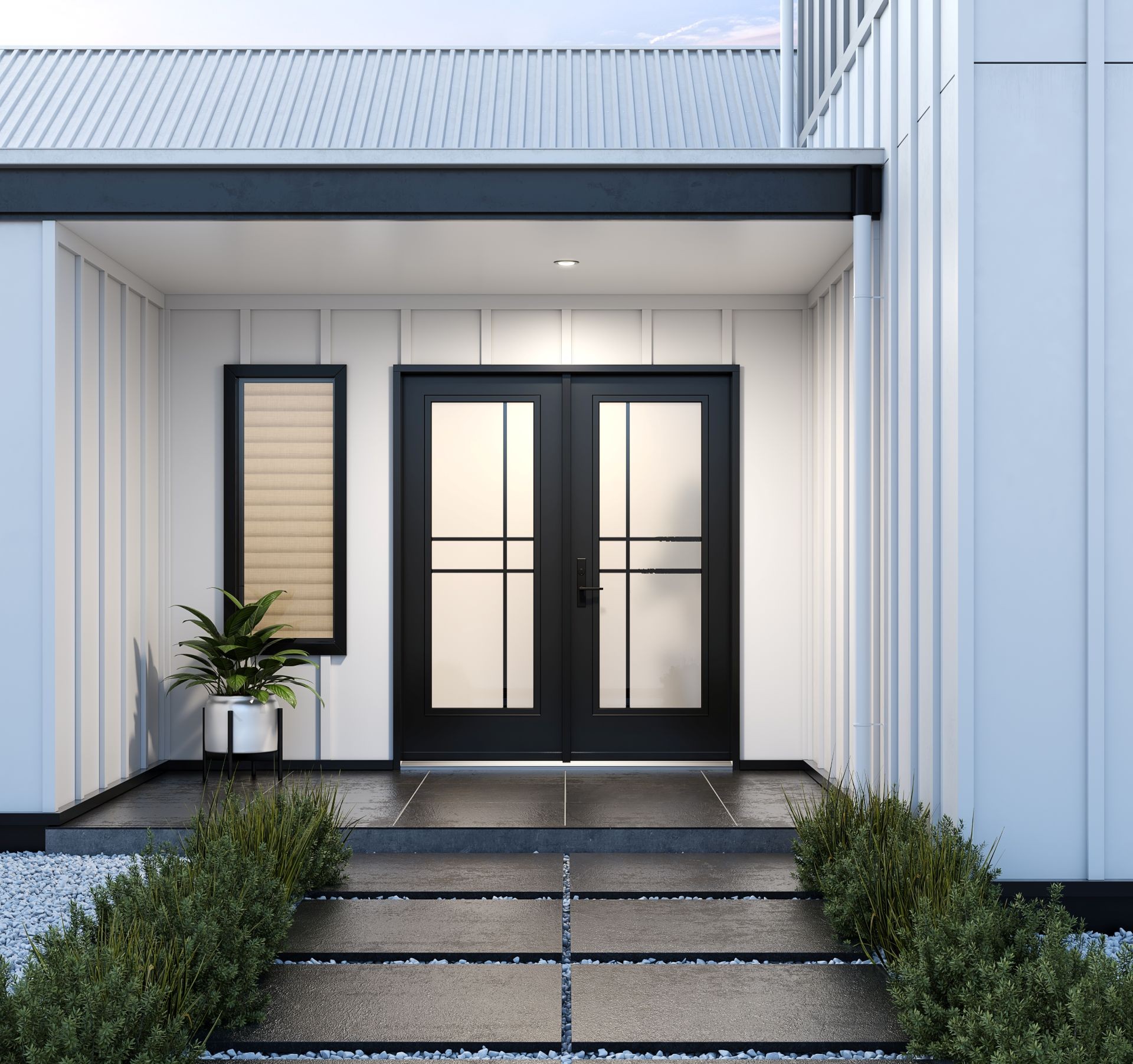
Double entry doors use two hinged panels that meet in the center. One panel is typically fixed with flush bolts, while the other operates as the main door. Some modern versions use astragals or gasketed center seals to improve wind and water resistance.
Double doors work best in wide entryways and homes with large foyers. They’re common in luxury residences, estates, craftsman homes, and any architecture that benefits from symmetry and scale.
They create a grand, formal arrival experience and add curb appeal. Depending on the doors' size, they usually allow very wide openings when both doors are opened.
Keep in mind that double entry doors cost more to purchase and install. Moreover, poor alignment can cause air and water leaks at the center seam, leading to potential heat loss.
Pivot Doors
Pivot doors rotate on a pivot point at the top and bottom of the door instead of along a side hinge. A heavy-duty pivot hinge is mounted into the floor and header. The door rotates around this point, splitting the door’s swing into an inward and outward arc simultaneously. The weight is distributed through the floor and ceiling rather than the door jamb.
These exterior doors are most common in ultra-modern and luxury architecture. You’ll often see them in custom homes, contemporary villas, and architectural showcase builds. They make a powerful design statement and allow for very tall or very wide door panels that standard hinges can’t support.
On the other hand, pivot doors are expensive and technically demanding to install. Weather sealing is also much more complex than in the case of traditional hinged doors. And they require precise structural support in the floor and header.
Dutch Doors
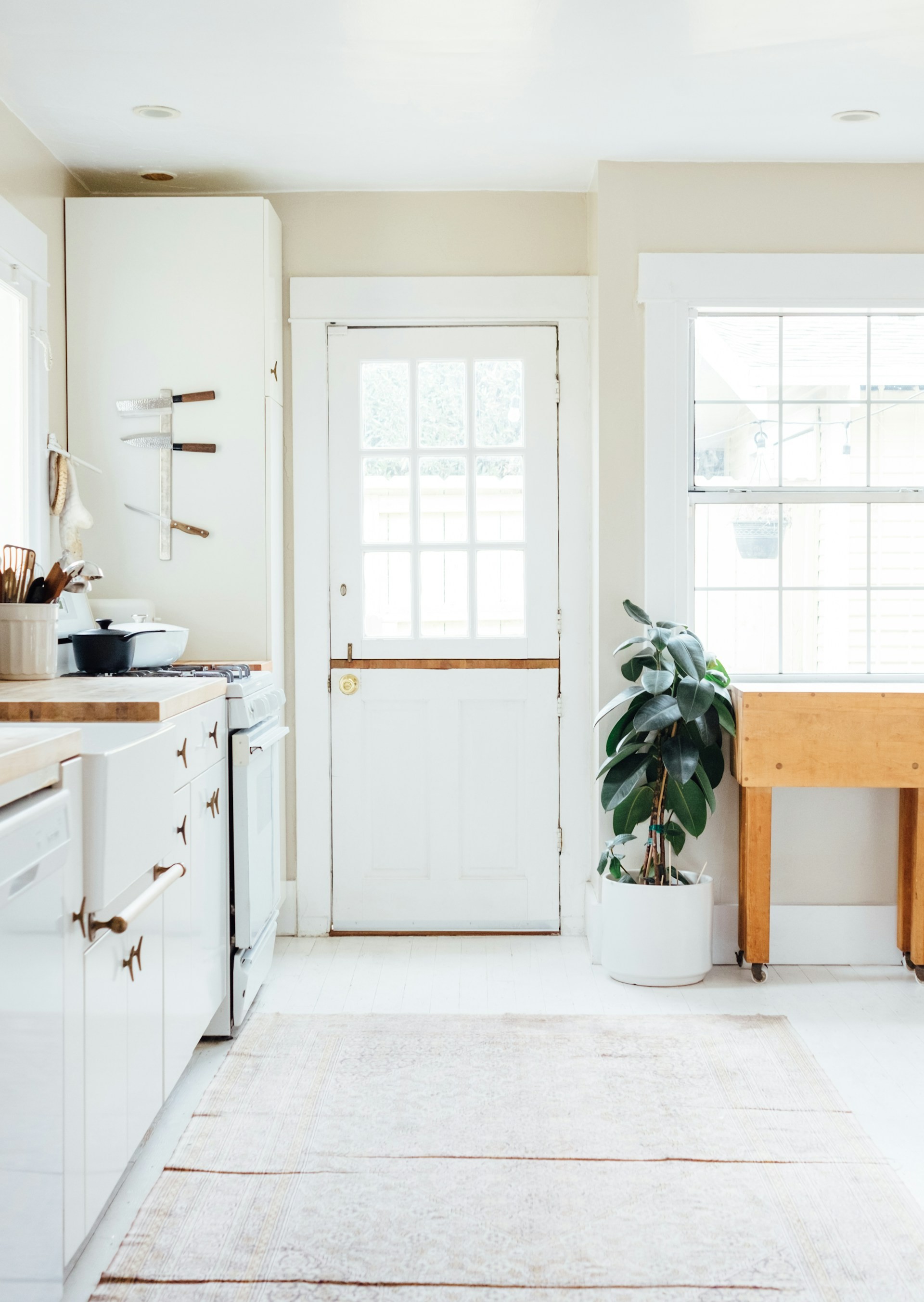
A Dutch door is divided into two operable panels connected by separate hinge sets. A latch mechanism allows the two halves to be secured together so the door behaves like a standard single slab when desired.
These doors are perfect for farmhouse-style homes, cottages, rural properties, pet-friendly homes, and family homes with small children. For example, you can open the top half to allow airflow and light while keeping pets or kids safely inside.
Keep in mind that Dutch doors don’t seal as tightly as a solid slab door and can be less energy efficient.
Storm Doors
Storm doors are secondary exterior doors installed in front of the main entry door to provide extra protection against the elements and improve ventilation.
They mount to the exterior face of the door frame and typically include interchangeable glass and screen panels.
Storm doors perform best in cold, windy, or storm-prone climates, and in homes where seasonal airflow is desired without fully exposing the interior. They protect the primary door from rain, snow, UV rays, and physical wear.
Security Doors
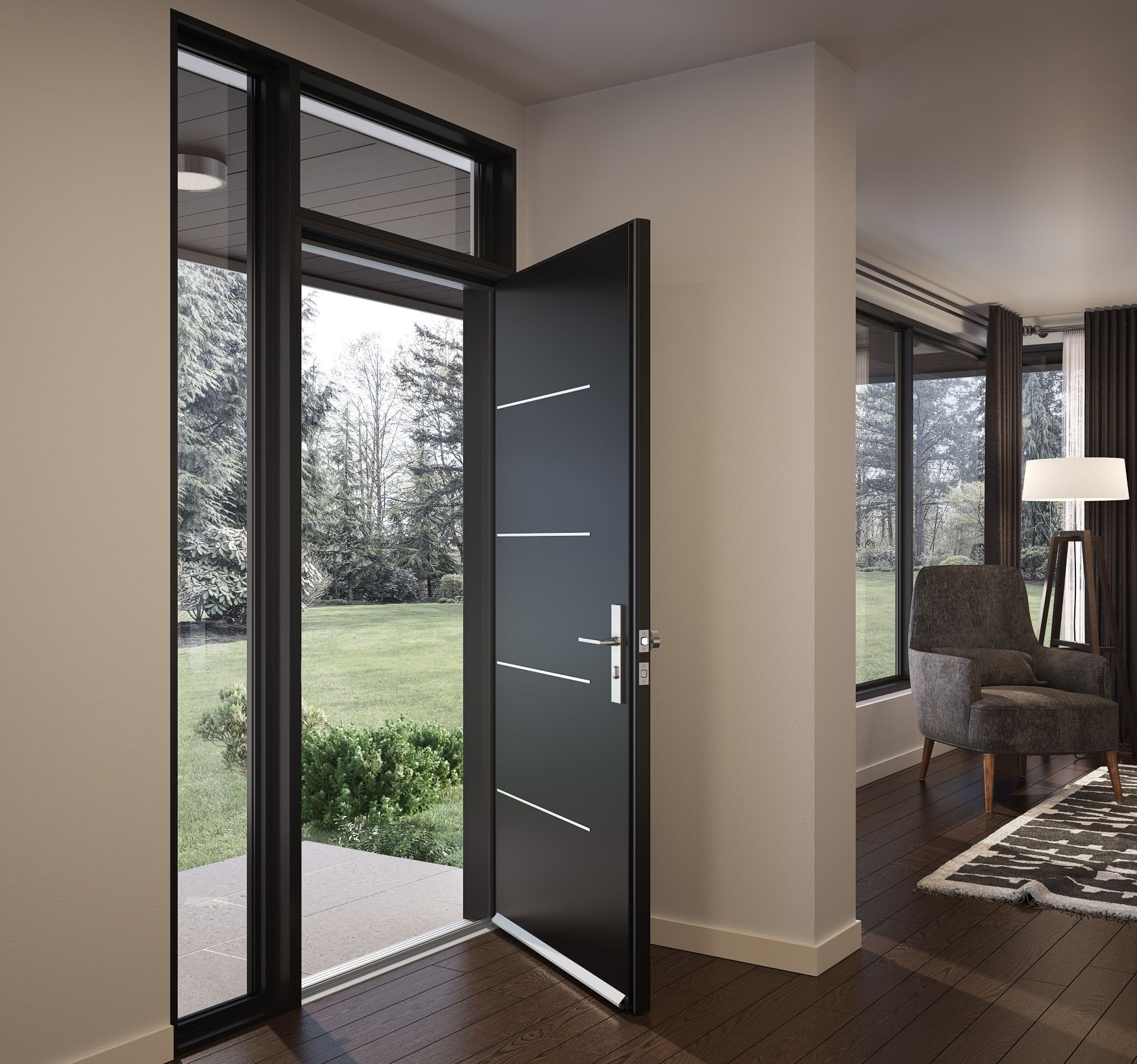
Security doors are reinforced aluminum or steel doors or metal-grill doors designed to prevent forced entry. They are constructed from heavy-gauge steel or aluminum and often feature multi-point locking systems.
Nonetheless, low-quality designs can look institutional or harsh, so it's worth it to pay extra for custom finishes and stylish hardware to make the entry door more attractive.
Magic's entry doors, for example, are security doors. They have 30% more steel and a unique J-bend design that can resist up to 1,600 lbs of force, making our doors among the most secure in Ontario.
Screen Doors
Screen doors are lightweight secondary doors designed primarily to allow airflow while keeping insects and debris out. They’re typically mounted on lightweight hinges or sliding tracks and consist of aluminum, wood, or vinyl frames with mesh screening stretched across.
Screen doors are excellent for porches, back doors, side entries, vacation homes, and coastal properties.
Glass Front Doors
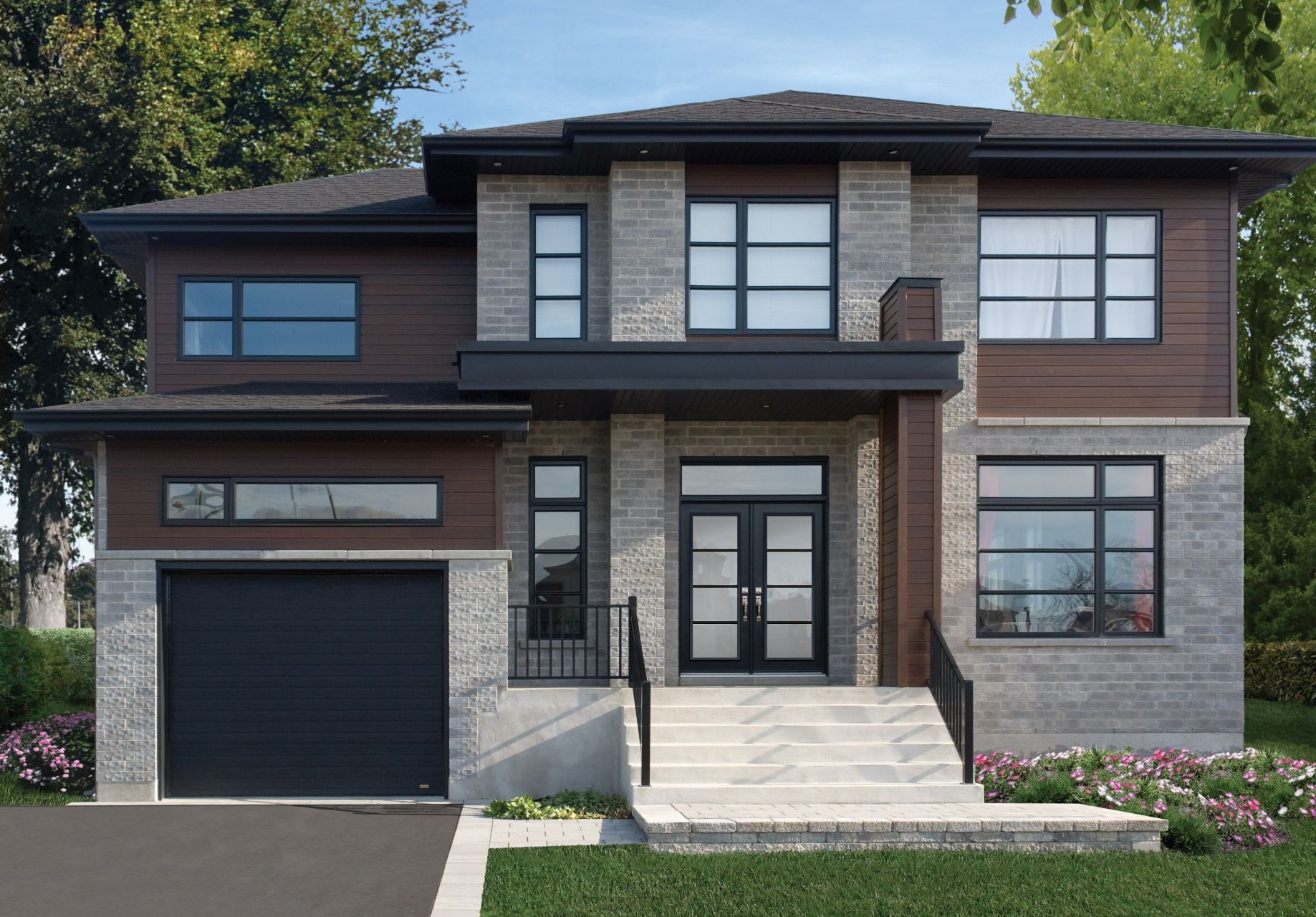
Glass front doors are one of the most popular front door styles for homeowners who want most natural light and a brighter entryway.
These doors use tempered glass or laminated safety glass and come in several styles:
- Full-lite – mostly glass for maximum brightness
- Half-lite – glass on the upper portion only
- Decorative glass – etched or patterned for visual interest
- Frosted or privacy glass – bright light with added privacy
Glass front doors are ideal for modern homes, transitional designs, and entryways that feel dark or enclosed. However, most entry doors with glass panels should feature double or triple-pane glass, insulating gas, and Low-E coatings to reduce heat transfer, especially in extreme climates.
Arched and Custom-Shaped Front Doors
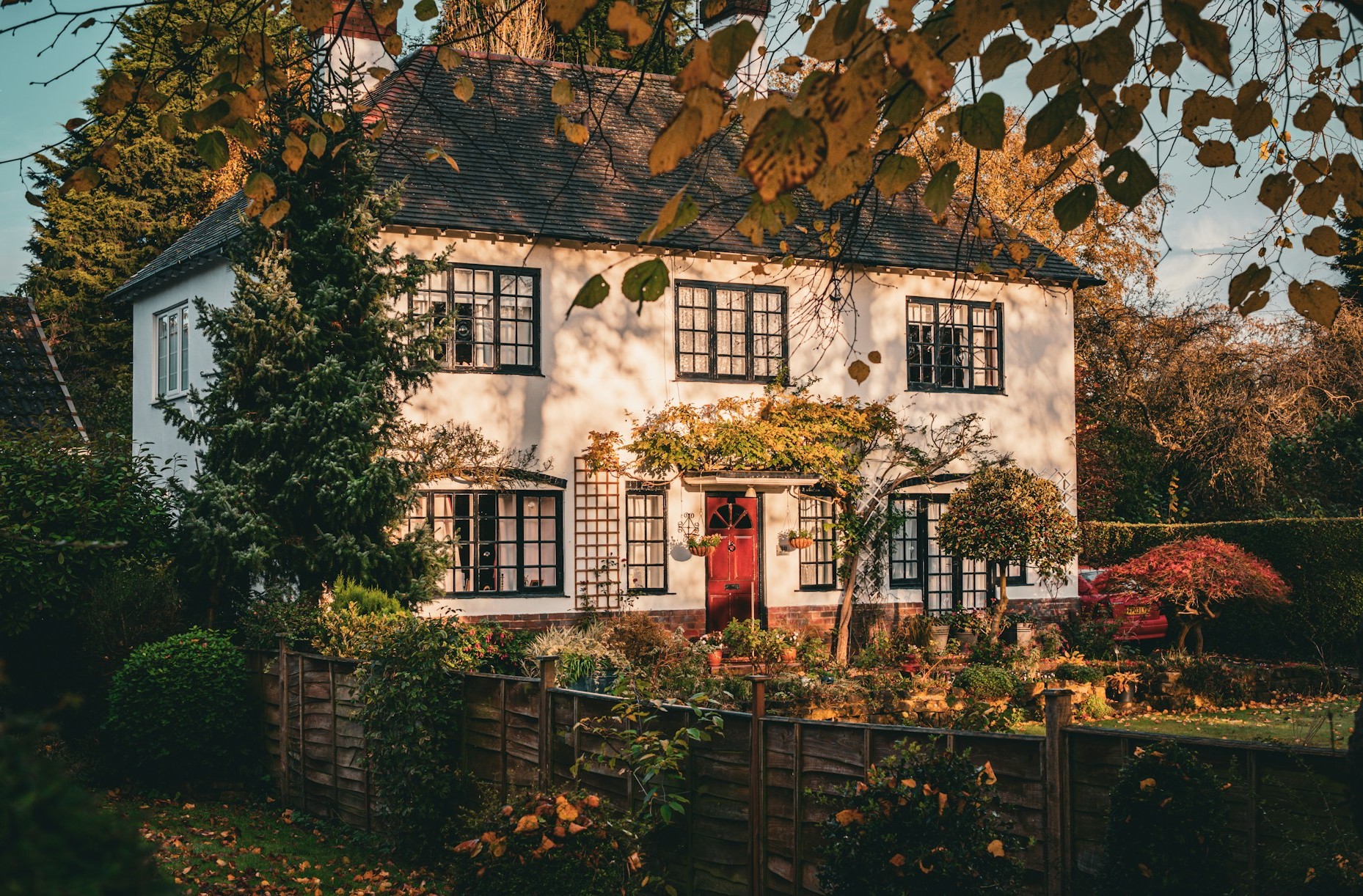
Arched and custom-shaped entrance doors are architectural statement pieces. Instead of the standard rectangle, these doors feature curved or uniquely shaped tops.
Common styles include:
- Arched top doors
- Cathedral or Gothic-style doors
- Round top or elliptical shapes
These doors are often used in luxury homes, Mediterranean, Spanish, and custom-built properties. Because of the unusual shape, they require specialized framing and are usually built to order.
Patio Doors and Large-Opening Exterior Doors
Patio doors are designed to erase the boundary between indoor and outdoor spaces. Unlike standard entry doors or interior doors, their main job is to maximize light, airflow, and views while still protecting the home from weather and intrusion.
The biggest differences between these systems are how much space they require to operate, how airtight they are, and how structurally demanding they are to install.
Sliding Glass Doors
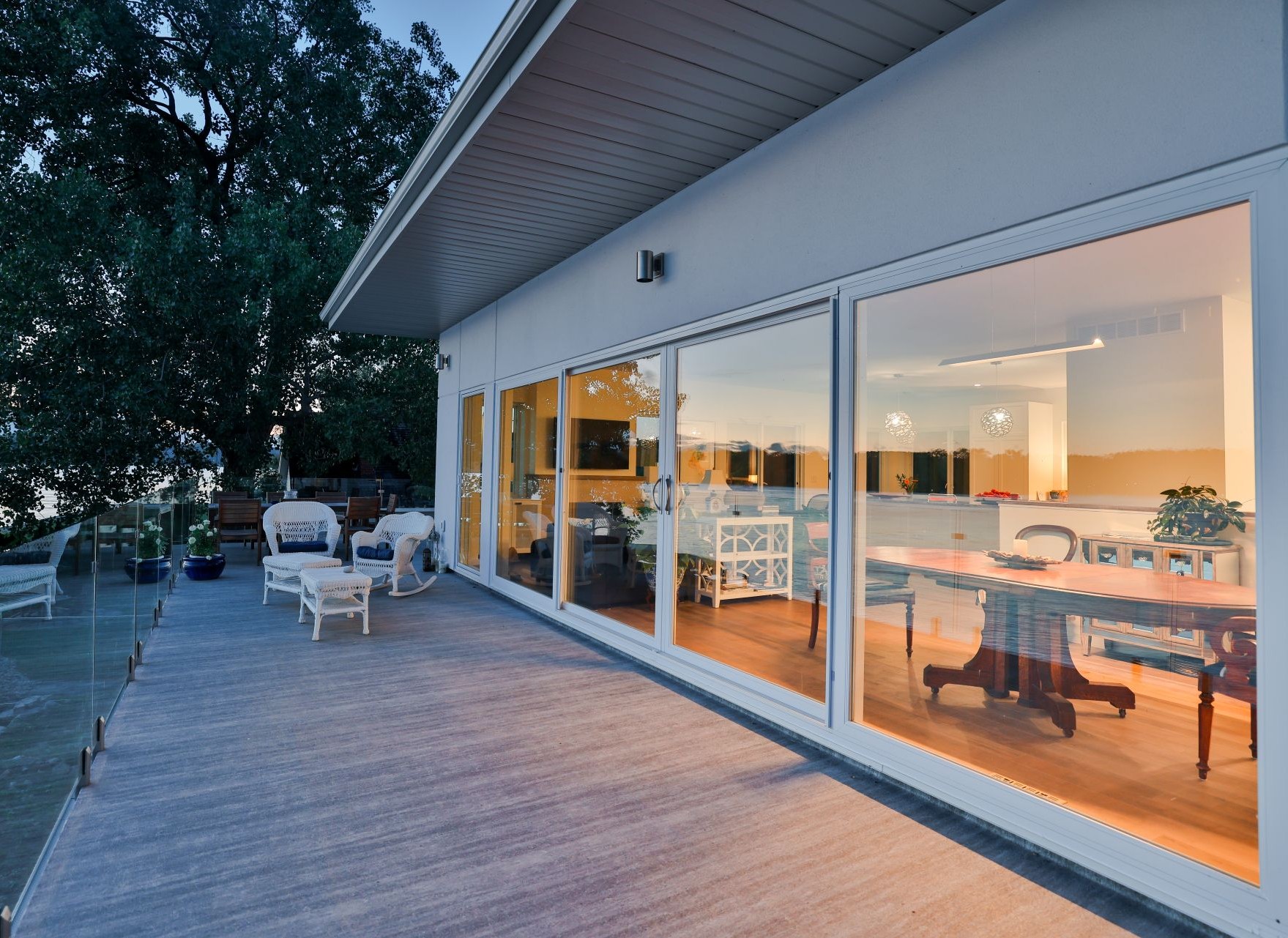
Sliding glass doors use one or more panels that move horizontally along a track, with at least one fixed panel and one operable panel. Each operable panel sits on rollers that glide along an aluminum or stainless steel track.
Weatherstripping and interlocks are used at panel meeting points to reduce air and water intrusion. Modern versions also often include double or triple glazing, Low-E coatings, and insulated frames.
Sliding doors are ideal for patios, decks, balconies, pool enclosures, and backyard access points where interior space is limited. They offer wide, uninterrupted views and let natural light flood the room. Sliding glass doors also tend to be more affordable than complex folding or multi-slide systems.
On the other hand, the tracks collect dirt, sand, pet hair, and debris, and must be cleaned regularly to keep the doors sliding smoothly. Sliding glass doors are also generally less airtight than hinged patio doors, especially in high-wind or storm-prone regions.
French Doors
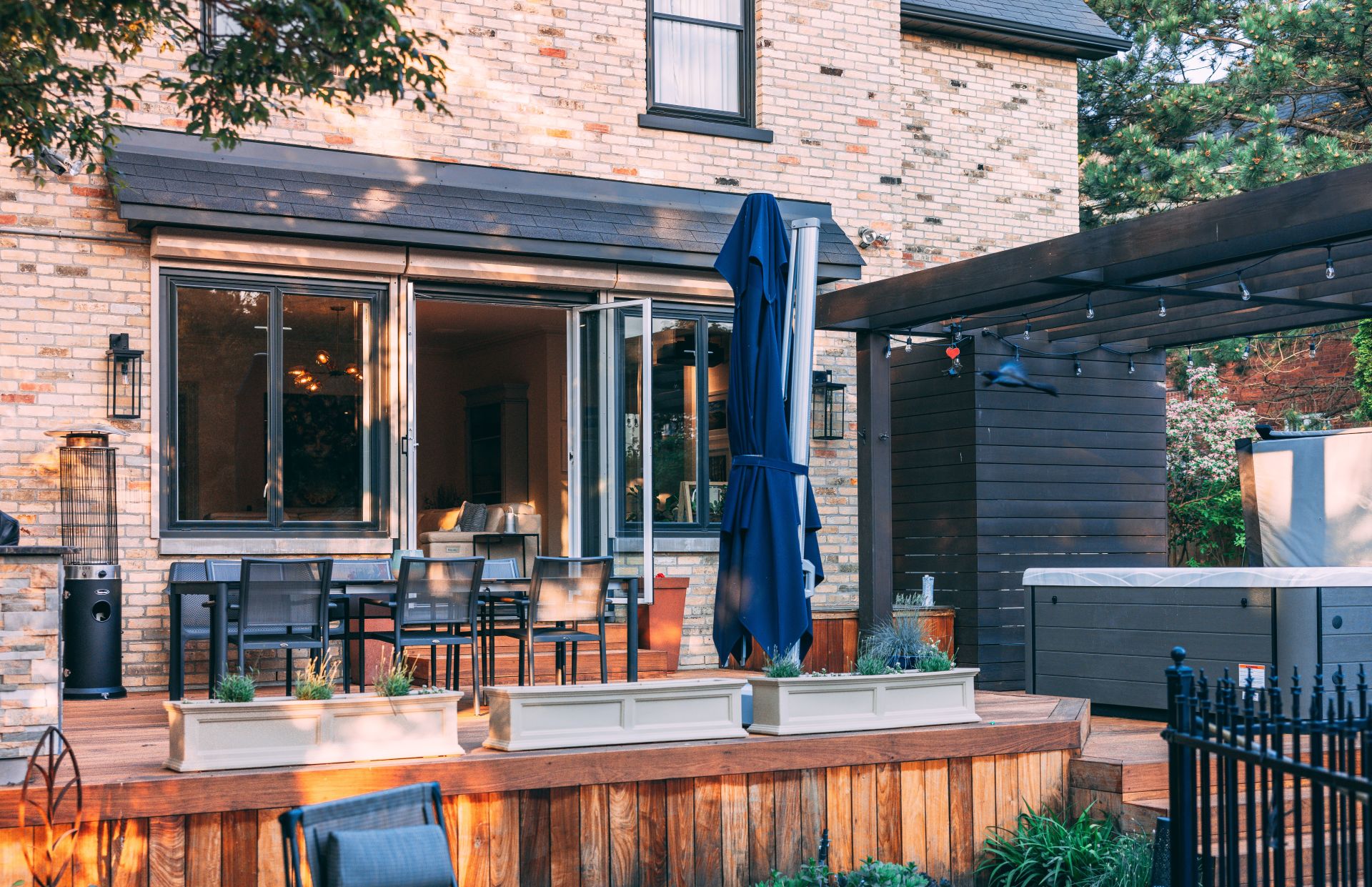
French doors are hinged, glass-heavy door systems designed to maximize light and create a strong visual and physical connection to the outdoors.
They operate on side-mounted hinges. The glass is usually tempered or laminated and often insulated.
The most common French door style is the traditional French door, which has two hinged door panels that meet in the middle and swing either inward or outward. In some designs, one door functions as the main daily-use door, while the other stays secured with flush bolts. However, you can also have just one single door panel in your French door.
Outswing French doors are ideal when interior space is limited or when you want better wind resistance. Outswing doors tend to seal better against wind-driven rain and are harder to kick in. Inswing doors are easier to protect from snow, leaves, and ice buildup.
Bi-Fold Doors (Accordion Doors)
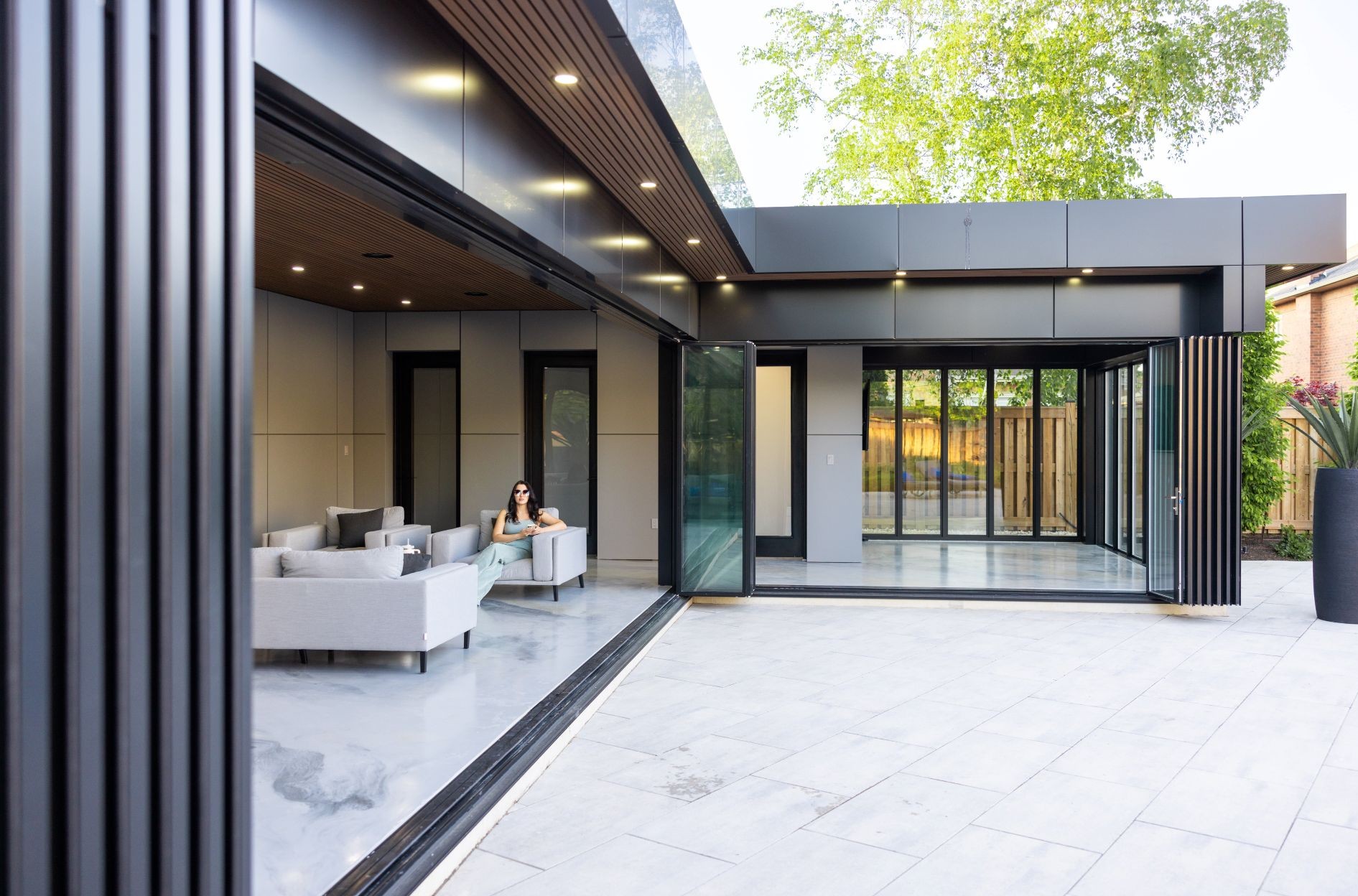
Bi-fold doors are made of multiple hinged panels that fold and stack to one or both sides of an opening. The panels are connected by hinges and roll along a track. When opened, the panels neatly stack together like an accordion, clearing most of the opening.
They’re perfect for luxury patios, poolside openings, outdoor kitchens, and entertainment spaces where a full wall connection is desired.
It's not all roses, though, because bi-fold doors are among the most expensive door styles. Moreover, installation must be extremely precise to keep panels aligned, and they require strong structural headers to support the opening. On account of that, it is recommended to hire a professional for bi-fold door installation for a precise fit and proper sealing, which are key to insulation and security.
If you're looking for a secure, well-insulated, and stylish bi-fold door, you can contact Magic to learn more about our Window Wall systems (which can reach up to 50 feet in length, by the way!).
Multi-Slide Doors
Multi-slide systems use multiple large panels that slide and stack behind one another or disappear into wall pockets. The panels run on heavy-duty tracks and can slide to one or both sides. Some systems allow panels to slide into wall cavities, making them disappear almost completely.
These doors offer panoramic views and very large openings without the visual complexity of multiple folding panels. But as in the case of bi-fold doors, multi-slide doors are expensive and require large openings and strong structural support.
Climate-Specific Door Guidance
Choosing the right types of exterior doors often depends on the environment and weather conditions. Here are some tips that can help you choose among different front door styles:
- Cold climates → Fiberglass or reinforced steel doors with tight weather sealing; wood doors could also work because wood is a good insulator, but they need to be properly maintained.
- Hot and sunny climates → UV-resistant finishes and Low-E glass
- Coastal areas → Fiberglass or stainless steel rust-resistant components
- Storm-prone regions → Impact-rated glass and reinforced frames
Types of Exterior Doors Based on Materials
The material of a front door affects durability, energy efficiency, maintenance, appearance, and security.
Here’s a more detailed look at common materials used in various types of doors.
Steel Doors

Steel doors are probably the most popular exterior door choice in 2026 thanks to their durability and security.
Steel doors are extremely versatile and can work with all architectural styles. Plus, steel is one of the most durable and secure options available. They are usually constructed with a steel skin over a solid foam or composite core, so they offer impressive insulation (and are relatively affordable!). Steel doors are resistant to warping, cracking, and pests, being perfect for extreme weather or high-traffic areas.
- Pros: very strong and secure, tighter-fitting frames, resistant to dents and moisture, affordable for the level of durability.
- Cons: can dent or scratch if impacted, may rust over time if the paint finish is damaged, and limited design options compared to wood.
Fiberglass Doors
Fiberglass doors can mimic the appearance of wood but require far less maintenance. They are highly resistant to weather, moisture, and warping. Many fiberglass doors come prefinished or textured to look like real wood.
- Pros: low maintenance, weather-resistant, energy-efficient with insulated cores, versatile design options.
- Cons: can be more expensive than steel, may look less natural than real wood up close, heavy models require strong framing.
Wood Doors
Wood doors are undoubtedly prized for their traditional, timeless, and high-end look, offering warmth and beauty to any home. They can be fully solid or engineered with veneers, and can be manufactured from different wood species. Wooden doors provide natural insulation and can be custom-carved or paneled to match traditional and luxury home designs. However, wood doors require regular maintenance (paining, varnishing) to protect them against moisture and sun damage.
- Pros: beautiful, highly customizable, excellent insulation properties, suitable for historic or traditional homes.
- Cons: requires regular maintenance (painting, staining, sealing), prone to warping, cracking, or rotting in extreme moisture, more expensive than steel.
Aluminum Doors
Aluminum doors are lightweight, corrosion-resistant, and commonly used in contemporary or commercial-style exterior doors. They often feature large glass panels and slim frames, which maximize natural light and visibility.
- Pros: lightweight, corrosion-resistant, low maintenance, modern appearance.
- Cons: less energy-efficient than fiberglass or steel, dents easily, can feel cold to touch.
Composite/Engineered Doors
These doors are made from a combination of wood fibers, resins, or PVC and are designed to mimic wood while offering superior durability.
- Pros: resistant to warping, moisture, and pests, customizable finishes, often energy-efficient, especially if they are equipped with insulated cores, proper weatherstripping, and ENERGY STAR certification.
- Cons: can be more expensive than standard steel or wood doors, fewer ultra-luxury finish options compared to solid wood.
Looking for New Exterior Doors? Give Magic a Call!
Are you looking for new doors? Do you want to get the very best in Ontario? Book your free consultation with Magic!
Our product offering includes entry doors, sliding glass doors, French doors, Window Walls, and more! Magic units are incredibly secure and highly energy-efficient, and feature proprietary technologies that significantly improve their functionality.
Curious to learn more about our engineering process and revolutionary technologies? Give us a call!
Frequently Asked Questions
What are the different types of exterior doors?
Exterior doors include single and double entry doors, pivot doors, Dutch doors, storm doors, security doors, screen doors, glass front doors, arched or custom-shaped doors, and large-opening patio doors like sliding, French, bi-fold, and multi-slide doors.
What type of door is best for an exterior door?
There is no best exterior door that works well for each house. It depends on your home’s style, entry size, and functional needs. Single entry doors are practical for smaller homes, for example, while double doors work better on larger homes that need a touch of grandeur.
What's the best material for an exterior front door?
Steel, fiberglass, and wood are the most popular materials for exterior doors due to their durability, energy efficiency, and design versatility. The right material depends on climate, maintenance preferences, and the look you want for your home.
What are the disadvantages of composite doors?
Composite doors can be more expensive than standard steel or wooden front doors. They also offer fewer ultra-luxury finishes compared to solid wood and may not achieve the exact natural look of real wood. However, composite doors are also durable and low maintenance, providing excellent thermal efficiency and security.
What are the most secure types of exterior doors?
Steel and fiberglass doors are the most secure exterior options, providing robust construction that effectively resists forced entry. Magic's entry door is even more secure than standard front doors because it has 30% more steel and a unique J-bend design.
What factors should I consider when choosing an exterior door?
When choosing an exterior door, think about the door size, cost, functionality, aesthetics, and security features, as well as climate requirements.
What are the benefits of storm doors?
Storm doors are beneficial as they protect primary doors from weather damage, enhance insulation, and provide ventilation and natural light through adjustable panels.
What is a pre-hung door?
Pre-hung doors are already set within their own frame and can be installed all at once. A slab door, on the other hand, consists only of the door slab itself, with no hinges, knobs, or frame.