Front Doors
What Is a Deadbolt? Types, Uses & How They Improve Home Security
If you're planning to upgrade your home security, you've probably heard that deadbolts are essential for front doors and other exterior doors. But what is a deadbolt, exactly? And why do experts recommend them over regular door locks?
If that’s what you want to find out, you're in the right place! We've laid out everything you need to know about deadbolt locks, from how they work to which type of lock is best for your home.
Quick Facts: What Is a Deadbolt Lock?
- A deadbolt is a locking mechanism that uses a solid metal bolt to secure your door. Unlike regular locks, it has no spring mechanism.
- Deadbolt door locks offer enhanced security against forced entry compared to regular door locks, such as knob locks or lever handle locks.
- There are two main types of deadbolts: single cylinder deadbolts (with a thumb turn inside) and double cylinder deadbolts (requiring a key on both sides).
- Deadbolt grades (1, 2, and 3) indicate durability and strength. Grade 1 provides superior security for entry doors.
- Proper installation with a reinforced strike plate and door frame is critical for maximum protection.
What Is a Deadbolt Lock?
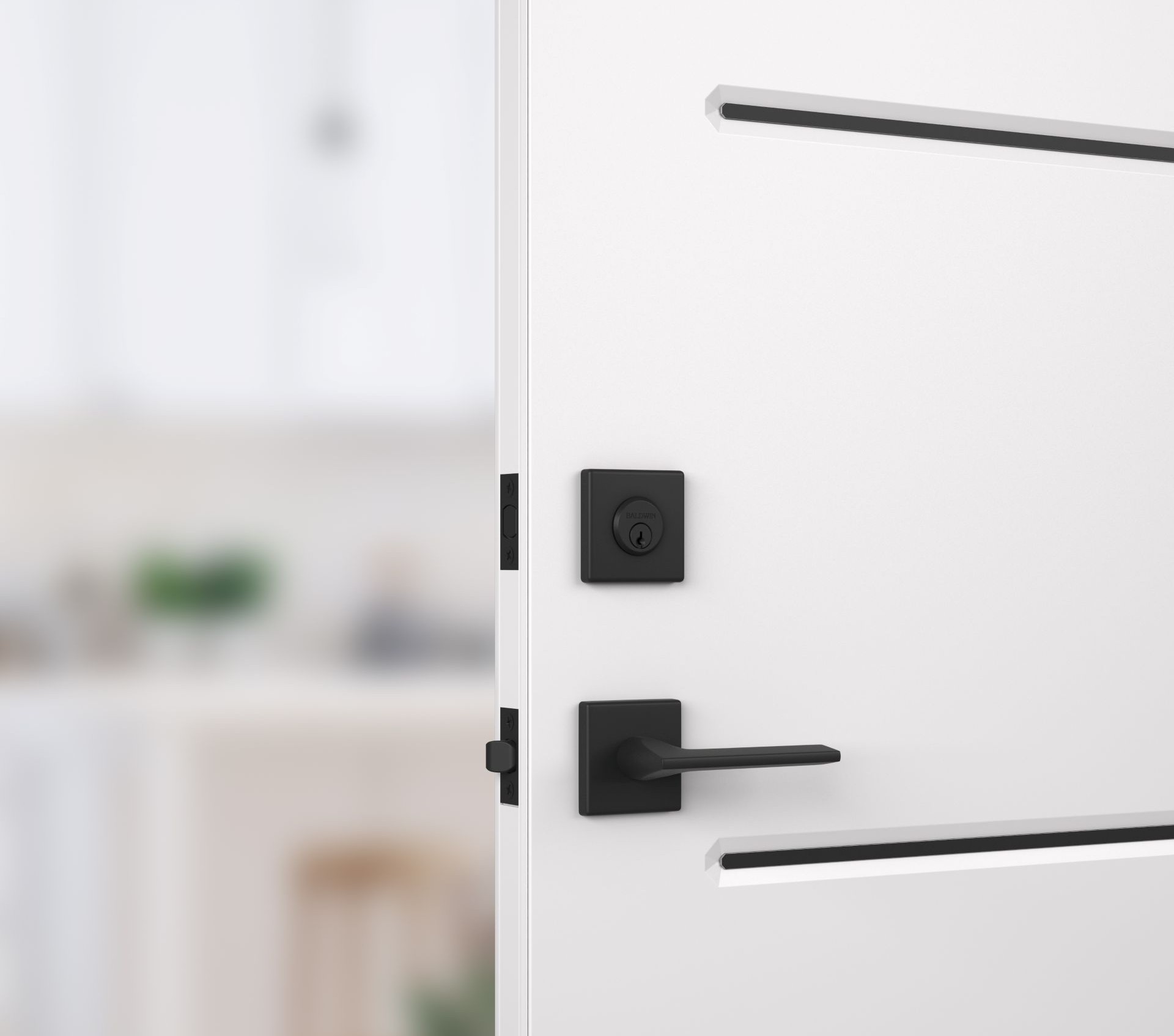
A deadbolt lock is a security device that extends a solid bolt deep into your door jamb when locked. Unlike regular door locks that rely on a spring mechanism, deadbolts can be operated with a key or thumb turn (except for keyless and smart deadbolts). The bolt doesn't retract on its own.
When you turn your key or thumb turn, the key cylinder rotates, and the solid metal bolt slides horizontally into or out of a hole in the door jamb. The bolt slides about an inch into the frame, far deeper than a typical knob lock or spring latch. (Learn more about door lock parts in our comprehensive guide.)
This simple design makes deadbolts significantly more resistant to forced entry. When someone tries to force open a door with a deadbolt, they're fighting against a thick steel bolt that's anchored firmly into the door frame and strike plate. That said, deadbolts are not completely burglar-proof, and their security properties also depend on the door, frame, strike plate, and installation quality.
Many modern deadbolts feature pick-resistant or bump-proof cylinders that resist common bypass techniques used by burglars. Some of them also include hardened steel inserts to resist drilling and other physical attacks.
Deadbolt vs Regular Locks: What's the Difference?
You might be wondering why you need a deadbolt when your door already has a lock in the handle. Here's the key difference: traditional locks like door knobs and lever handle locks use a spring mechanism that allows the latch to retract when pressure is applied. A determined intruder can often bump, pick, or force these locks open in seconds.
Deadbolt door locks, on the other hand, have no spring. The solid bolt is locked in position and won't budge without the correct key or thumb turn. This makes them harder to bypass and gives you more peace of mind about your entry points.
Unlike regular locks, deadbolts also extend much deeper into the door frame, typically one full inch compared to half an inch or less for standard locks. This deeper engagement means the door is anchored more securely and can better withstand force.
Types of Deadbolts: Which One Is Right for You?
There are several types of deadbolts available, and choosing the right one depends on your security needs, door configuration, and local fire safety codes. Let's walk through the main options!
Single Cylinder Deadbolt
The single cylinder deadbolt is the most common type of lock for residential doors. It features a key slot on the outside and a thumb turn mechanism on the inside.
Advantages:
- Quick access from inside, no need to fumble for keys during emergency situations
- More affordable than double cylinder options
- Easy to use for all family members
- Ideal for solid front doors without glass panels
Considerations:
- If there's a nearby window or glass panels next to the door, an intruder could break the glass and reach the thumb turn to unlock from inside.
- Children can easily unlock and exit, which may be a safety concern for some families.
- Provides less security than double cylinder deadbolts in specific situations
Double Cylinder Deadbolt
A double cylinder deadbolt requires a key to operate from both sides of the door, inside and out. There's no thumb turn. While this does provide extra security, double cylinder deadbolts are generally not allowed on exit doors in Ontario homes. According to the Ontario Fire Code, egress doors must be easily openable from the inside without keys, tools, or special knowledge.
Advantages:
- Extra security for doors with glass panels or nearby window access
- Prevents children or pets from unlocking the door unsupervised
- Offers maximum protection against someone breaking glass to reach the lock
- Often used in commercial buildings and high-risk areas
Important safety considerations:
- Can be a hazard in emergency situations like fires – you need a key to exit
- Some areas restrict or prohibit double cylinder locks due to fire safety codes
- Keys should be kept accessible but not inside the lock itself
- May violate local building codes for residential doors used as emergency exits
Smart Deadbolts
Modern smart deadbolts or keyless deadbolts combine the security of traditional locks with digital convenience. These locks typically feature:
- Keypad or touchscreen access codes instead of traditional keys
- Smartphone connectivity for remote locking and status checks
- Fingerprint recognition on some models
- Integration with smart home systems
Smart deadbolts offer the same mechanical security as standard single cylinder deadbolt locks while adding quick access features and eliminating the need for physical keys. They're an excellent choice if you want both convenience and home security.
Vertical Deadbolt
A vertical deadbolt is a specialized lock designed for maximum protection against jimmying and prying attacks. Instead of a horizontal bolt, it uses a vertical mechanism that's extremely difficult to force open with a crowbar.
These are most commonly used in commercial buildings, vault doors, and other high-security applications where standard horizontal deadbolts might be vulnerable.
Deadbolt Grades: What Do They Mean?
Deadbolts have three grades that indicate durability, strength, and resistance to forced entry:
Which Grade Should You Choose?
For front doors and primary entry points, we strongly recommend Grade 1 or Grade 2 deadbolts. Grade 3 locks provide only basic security and are easier to bypass than Grade 1 and 2 locks.
High-quality deadbolts with Grade 1 ratings cost more upfront but can provide decades of reliable front door security.
Proper Installation: The Foundation of Deadbolt Security

Even the best deadbolt lock won't protect you if it's poorly installed. Proper installation is absolutely critical for security.
Strike Plate Reinforcement
The strike plate is the metal piece attached to your door jamb where the bolt enters. Standard strike plates are often held by short screws that can be kicked out during a forced entry attempt.
For maximum protection, use:
- A heavy-duty strike plate made of solid steel
- Screws that penetrate deep into the wall framing
- A strike plate with a reinforced box that fully encases the bolt
Door Frame and Door Considerations
Your deadbolt is only as strong as the door and door frame it's installed in. A solid core or steel door paired with a reinforced door frame provides the best foundation for deadbolt performance. Hollow-core doors and weak frames can be kicked in regardless of your lock quality.
So, if you're serious about security, consider upgrading to:
- Solid wood or steel exterior doors
- Reinforced door jamb with metal plates
- Proper alignment so the bolt fully extends into the frame
Professional Installation vs DIY
While many homeowners successfully install deadbolts themselves, professional installation ensures:
- Correct alignment
- Proper installation of the strike plate and reinforcements
- Compliance with local building codes
- Proper function of the locking mechanism
Upgrade Your Home Security with Magic Front Doors
Your home's security starts at the door, literally! While high-quality deadbolts are essential, they work best when paired with properly designed and installed doors that can handle the forces involved in a break-in attempt.
Magic specializes in entry doors engineered for both beauty and security. Our front doors feature:
- Reinforced steel doors tested to withstand over 1,600 lbs of force
- 30% more steel and 40% more insulation - 2 times stronger than other doors on the market
- Unique J-bend design that resists folding or buckling under pressure
- Superior weatherproofing technology
- High-quality locks and professional installation
We don't just sell doors; we create complete security systems where every component works together to protect your family!
Ready to upgrade your home's first line of defense? Book your free consultation with Magic today and let our experts show you how the right door and deadbolt combination can give you true peace of mind!
FAQs
Can I install a deadbolt on any door?
Most doors can accommodate deadbolts, but you'll need sufficient thickness and proper clearance between the door knobs or handle and the deadbolt location.
Do I need both a deadbolt and a doorknob lock?
You don't always need both a deadbolt and a doorknob lock. That said, most doors do have both a deadbolt and a door knob lock. This provides added security and convenience. Local code and the door's design determine the exact hardware needed.
Are smart deadbolts as secure as traditional deadbolts?
Quality smart deadbolts from reputable manufacturers offer the same mechanical security as traditional locks. The solid bolt and strike plate function identically. The only difference is in the access method.
What is a double cylinder deadbolt?
A double cylinder deadbolt is a door lock that requires a key to be locked and unlocked from both sides of the door. Unlike a single cylinder model, there's no thumb turn on the interior side. This provides extra security for doors with sidelights or nearby glass, since an intruder won’t be able to unlock the door from the inside if they break the glass. However, in Ontario, double cylinder deadbolts cannot be installed on egress doors as per the Ontario Fire Code, because occupants must be able to exit without a key.
What is a single cylinder deadbolt?
A single cylinder deadbolt is a lock that has a key slot on the outside and a thumb turn on the inside for easy locking and unlocking. This is the most common type of deadbolt for residential doors because it offers quick access from the inside without fumbling for keys. It's ideal for solid front doors without glass panels, providing excellent security while maintaining convenience for your family.
How do I know if I have a deadbolt?
To check if your door has a deadbolt, look for a separate lock above or below your doorknob or handle. Deadbolts are typically installed independently of the main handle lock. When locked, you'll see a solid metal bolt extended from the door edge into the door frame. If you only have a handle or knob lock with no separate lock mechanism above or below it, you don't have a deadbolt.
Can burglars pick a deadbolt?
While skilled burglars can pick some deadbolts, quality deadbolt locks with pick-resistant cylinders are significantly harder to bypass than regular locks. Most burglars prefer easier targets that don’t require the use of advanced tools. High-quality deadbolts with Grade 1 ratings, hardened steel inserts, and proper installation with reinforced strike plates make your home a much less appealing target!
What is the purpose of a deadbolt?
The purpose of a deadbolt is to provide superior security against forced entry by extending a solid metal bolt deep into your door frame. Unlike regular door locks that use a spring mechanism, deadbolts can only be retracted with a key or thumb turn, making them much more resistant to bumping, picking, and kick-in attacks.