
Front Doors
21+ Types of Doors Explained for Modern Homes
Can't find the perfect door for your home? Look no further! This article lists all types of doors, both interior and exterior ones! We'll explain how they work, their benefits, plus disadvantages, so read on! We've also included some sections with types of closet doors, cabinet doors, and garage doors!
21 Types of Doors: Interior Doors and Exterior Doors
In this section, we'll discuss 21 types of exterior doors and interior door styles, describing the door construction and how the doors operate, as well as listing their benefits and drawbacks!
As such, these are the 21 most common types of doors!
1. Hinged Entry Doors
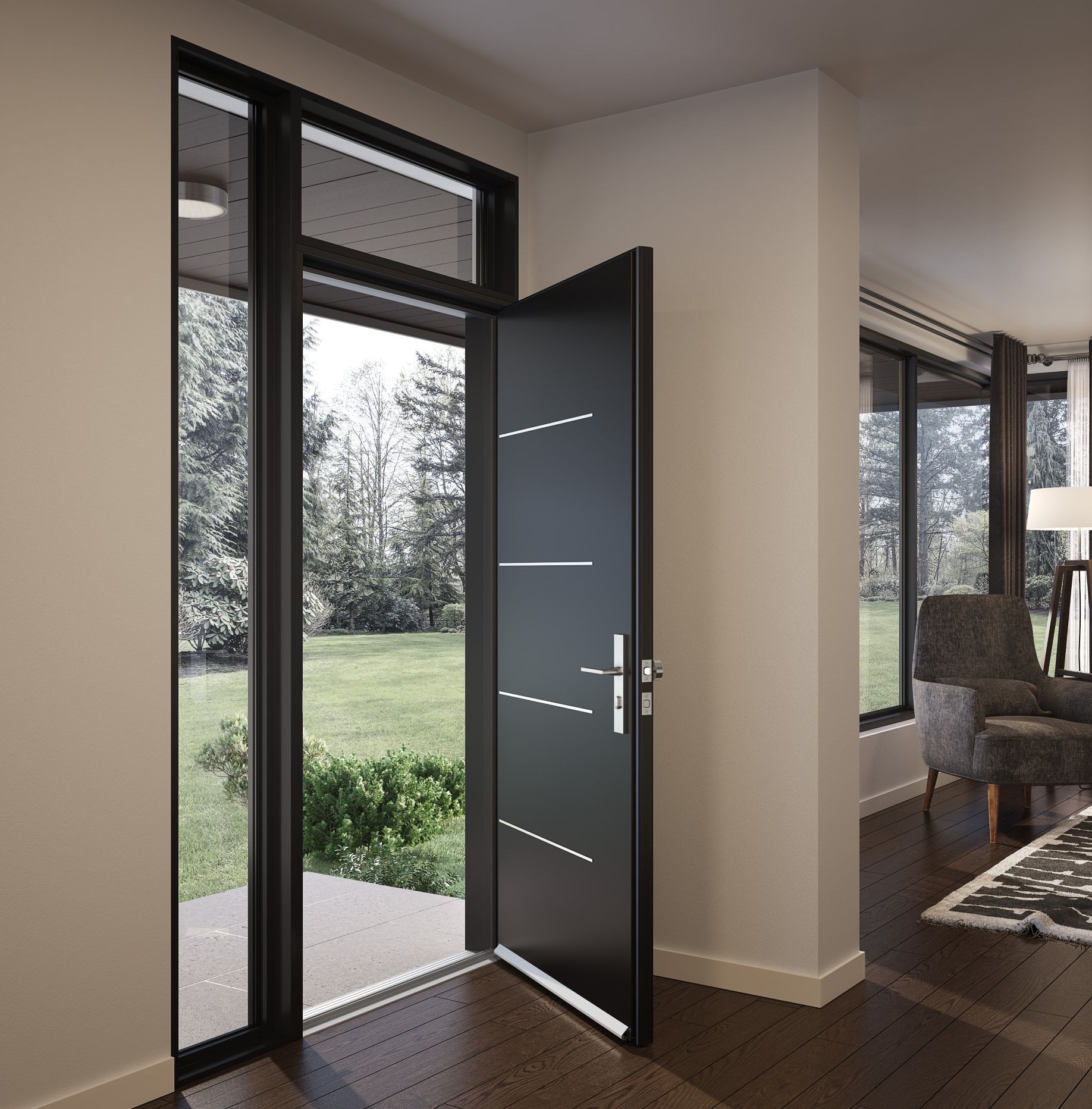
Hinged doors are hinged on one side and open inward or outward. These systems come in endless configurations: solid-panel doors, half-glass or full-glass designs, decorative elements (e.g., grille patterns), and modern flush slabs. You can choose to install single or double doors for your entryway.
Single and double hinged doors can work for almost any exterior door opening:
- Primary front entryways where the door is a visual focal point (especially if you install two doors)
- Side-yard access points
- Mudroom and utility entrances
- Porch or patio transitions
- Secondary or service entrances
Moreover, they are quite low maintenance compared to other door styles, although it depends on what materials they're made of.
2. Pivot Entry Doors
Instead of hanging on traditional hinges, a pivot entryway door rotates on a pivot point set into the floor and overhead frame, creating a grand, modern entrance. This pivot may be centered, but more commonly it’s placed a few inches from the edge, which reduces the operating weight and creates a stunning “floating” motion.
Because the pivot hardware supports the mass of the door vertically, these systems allow for oversized slabs that are simply too heavy for standard hinges.
Pivot doors are excellent for modern or contemporary homes, significantly enhancing their curb appeal:
- Homes with impressive, wide, or tall entryways
- Minimalist architecture with flush exterior walls
- Luxury homes where the entry is meant to feel sculptural
- Foyers with high ceilings or open-concept layouts
However, because of their offset swing and large size, weather sealing is more complex. These doors often require specialized gaskets and thresholds to maintain insulation. Plus, they cost more to purchase, fabricate, and install. Therefore, if you do want to install pivot doors, go for professional installation services, given that it's a complex installation. A precise fit and proper weather-sealing are absolutely necessary for preventing air leaks around these doors.
3. Dutch Exterior Doors

A Dutch door is divided horizontally into two sections, each with its own hinge set. The top and bottom operate independently. A latch or internal connector allows them to be joined when you want the door to behave as a single slab. With the top open and bottom closed, you get airflow, sunlight, and visibility while keeping children or pets safely inside.
These doors are perfect for:
- Back or side entries
- Cottage, coastal, and farmhouse-style homes
- Mudrooms and kitchens leading to outdoor play areas
- Homes that benefit from natural ventilation
Keep in mind that because Dutch doors have more joints and moving parts, they can be less airtight than solid-core doors. In cold climates or high-wind regions, additional weatherstripping may be necessary.
4. Standard Sliding Glass Doors
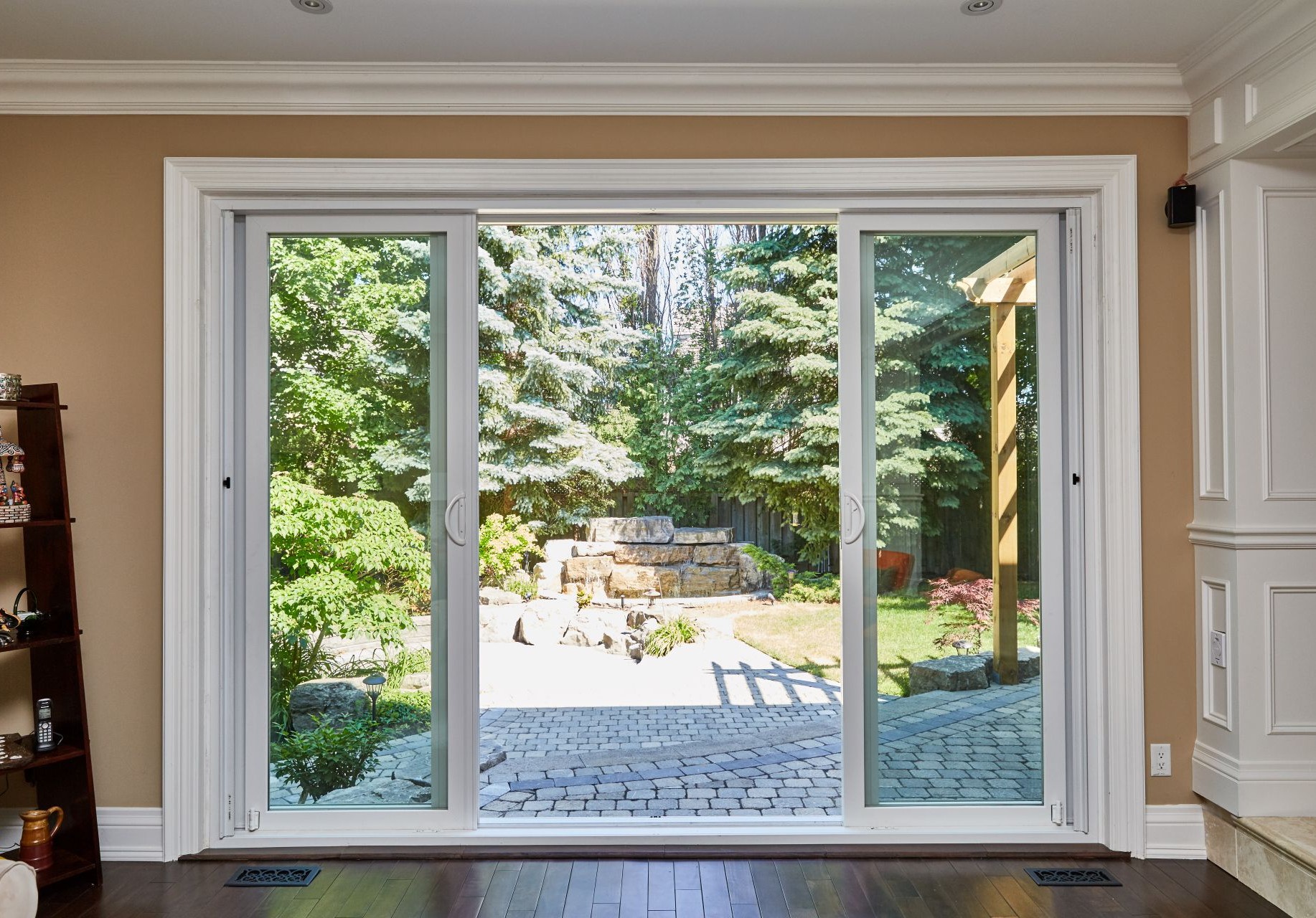
Sliding glass doors are probably the most popular among different door styles: simple, space-efficient, and designed to frame outdoor views. They maximize light and aesthetics and are often double or triple-paned for superior insulation.
They have at least two panels. An operable panel slides horizontally on rollers inside a track system. A fixed glass panel sits adjacent to it. Modern versions often include double-pane or triple-pane insulated glass, low-E coatings, and durable vinyl, fiberglass, or aluminum door frames.
Sliding glass doors save interior space since they don’t require a swing arc. They also let in huge amounts of daylight and keep views unobstructed.
On the other hand, the track system is the weak point: dirt, pet hair, sand, and debris can affect performance and must be cleaned periodically. Moreover, sliding doors don’t seal quite as tightly as hinged or French doors, especially in regions with heavy wind or sideways rain.
5. Multi-Slide Patio Doors
Rather than having one operable panel, a multi-slide system uses several large glass panels, each moving along its own track. Depending on the configuration, the panels may:
- Stack neatly on one side
- Split and stack to both sides
- Slide into wall pockets and disappear entirely
When open, they create an extremely wide, unobstructed connection between indoor and outdoor spaces. But they're also significantly more expensive than standard patio doors, not just in door materials but also in installation and framing.
6. Bi-Fold Patio Doors (Accordion Doors)
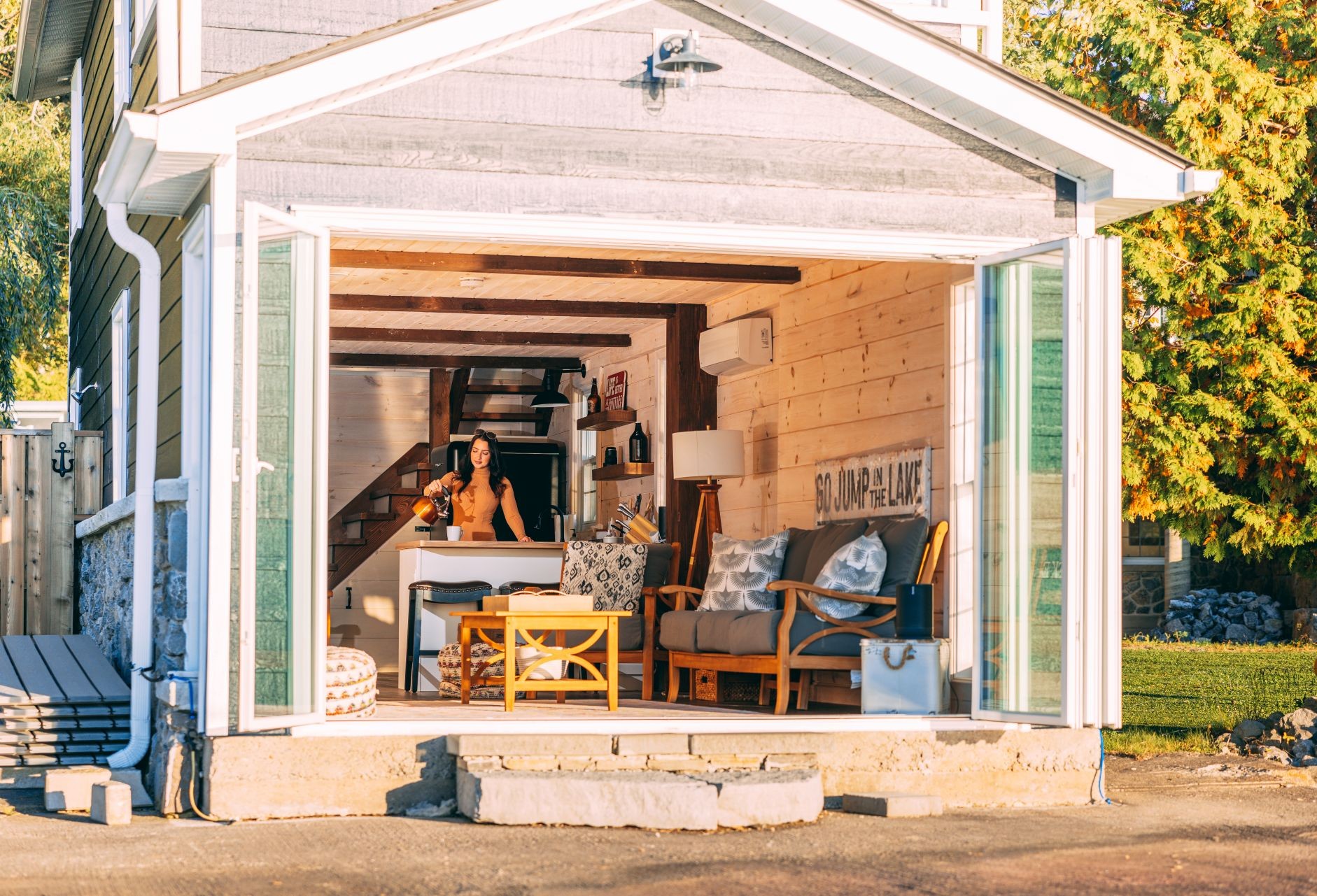
Bi-fold doors provide panoramic views and can fold neatly to one or both sides. They can open almost the entire width of a doorway to enhance indoor-outdoor connectivity. The panels are connected with hinges and glide along top and bottom tracks. As they move, the panels fold against each other like an accordion. When fully open, they clear nearly the entire rough opening, leaving only a slim stack of folded panels.
These doors are ideal for high-end patios, pool lounges, modern outdoor living rooms, and any space designed for gatherings where you want rooms to flow into each other.
Bifold doors involve many moving parts, so proper door installation and regular maintenance are extremely important to ensure that they function correctly and last for decades. They also tend to cost more than standard sliding doors, and their energy efficiency depends heavily on quality hardware and seals.
7. French Patio Doors

French patio doors remain one of the most iconic exterior door options. They consist of two glass-filled hinged panels that swing inward or outward.
Some designs feature a primary active door paired with a secondary door that stays fixed until manually released. Others are double-active, allowing both doors to open freely.
French patio doors work beautifully in living rooms, dining rooms, sunrooms, garden-facing entrances, and areas with traditional or formal aesthetics.
Keep in mind that these doors require ample swing clearance, both indoors and outdoors.
8. Louvered Exterior Doors
Louvered exterior doors aren’t commonly used for main entries, but when airflow is critical, nothing performs quite like them.
These doors use angled horizontal slats (louvers) arranged in a consistent pattern. The slats allow air to pass through while blocking direct views and shedding moderate rain. Some models use fixed louvers, while others include adjustable ones that tilt open or closed for more control. The door frame itself is usually built from durable wood, composite, or metal to withstand outdoor exposure.
Louvered doors excel in locations where equipment generates heat or moisture: HVAC closets, outdoor water heater enclosures, pool pump rooms, and laundry cabinets on covered porches.
Because of the open slat structure, louvered doors are not secure enough for primary entry points and cannot be fully weatherproofed.
9. Storm Doors
Storm doors act as a protective outer layer for the main doors. The lightweight frame typically includes interchangeable or retractable glass inserts, mesh screens, or combination panels that slide into place depending on the season.
Cold climates benefit most from storm doors, especially in areas with snow, strong winds, or temperature extremes.
On the other hand, the extra layer can hide a beautifully designed front door, while poor-quality models may rattle in high winds.
10. Security Doors
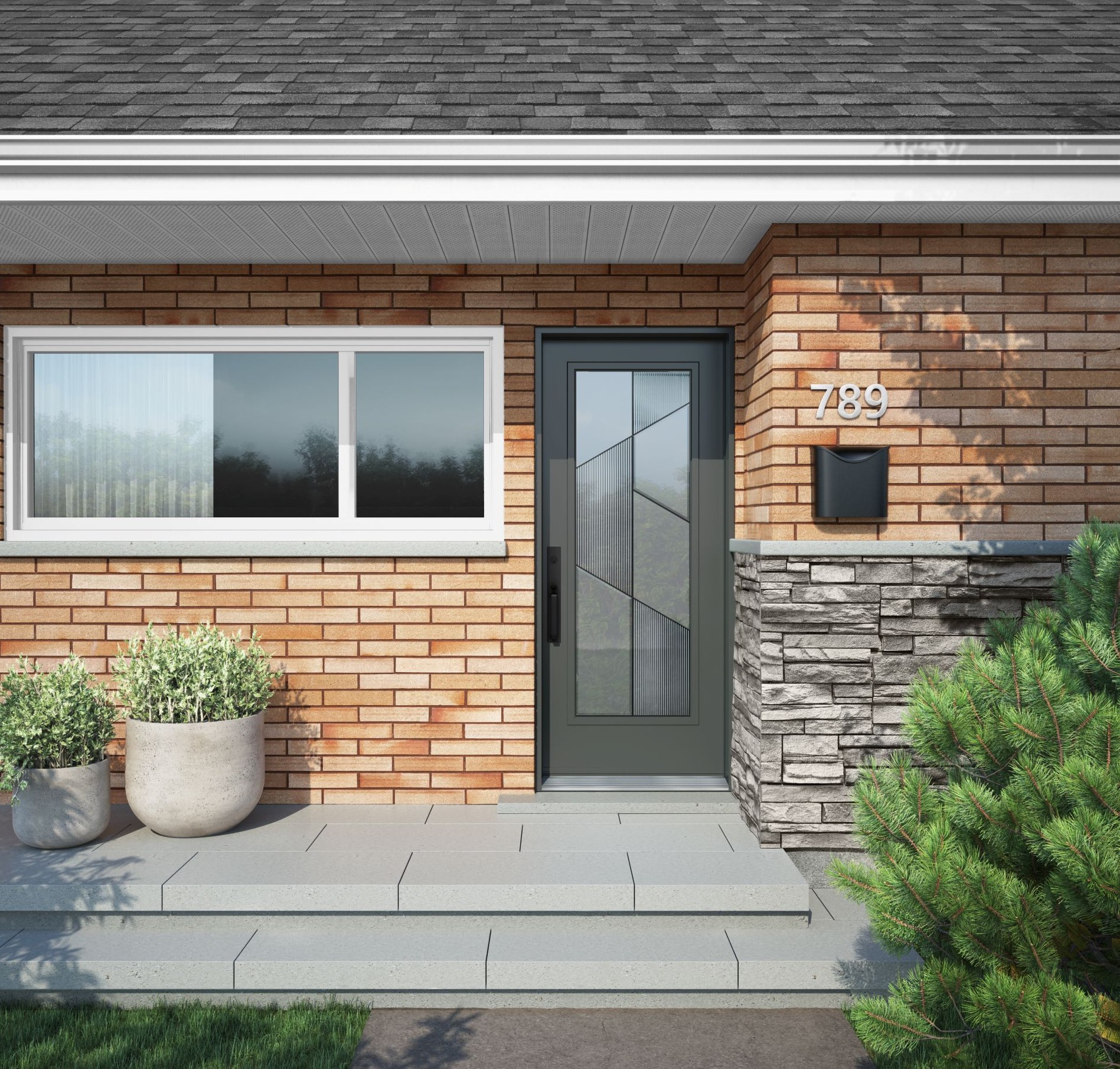
Security doors prioritize protection first and aesthetics second, though modern designs like those from Magic are far more attractive than older, industrial-looking versions. For certain homes and regions, they provide peace of mind that regular doors simply can’t match.
These doors are usually made from reinforced steel, wrought iron, or heavy-duty aluminum. Steel doors are definitely the most popular for exterior units due to their strength, low-maintenance requirements, and security. High-end versions use impact-rated glass or perforated stainless steel mesh, allowing airflow and visibility without the vulnerabilities of typical screens.
11. Screen Doors
Screen doors feature a mesh panel, usually fiberglass, aluminum, or stainless steel, which is stretched across a wooden, aluminum, or composite frame. The door can swing on side hinges like a traditional door or slide on a track like a patio screen. Some modern versions retract into a side cassette when not in use.
However, they provide minimal security and little weather insulation. Plus, pets or children may damage the mesh unless reinforced.
12. Interior Hinged Doors
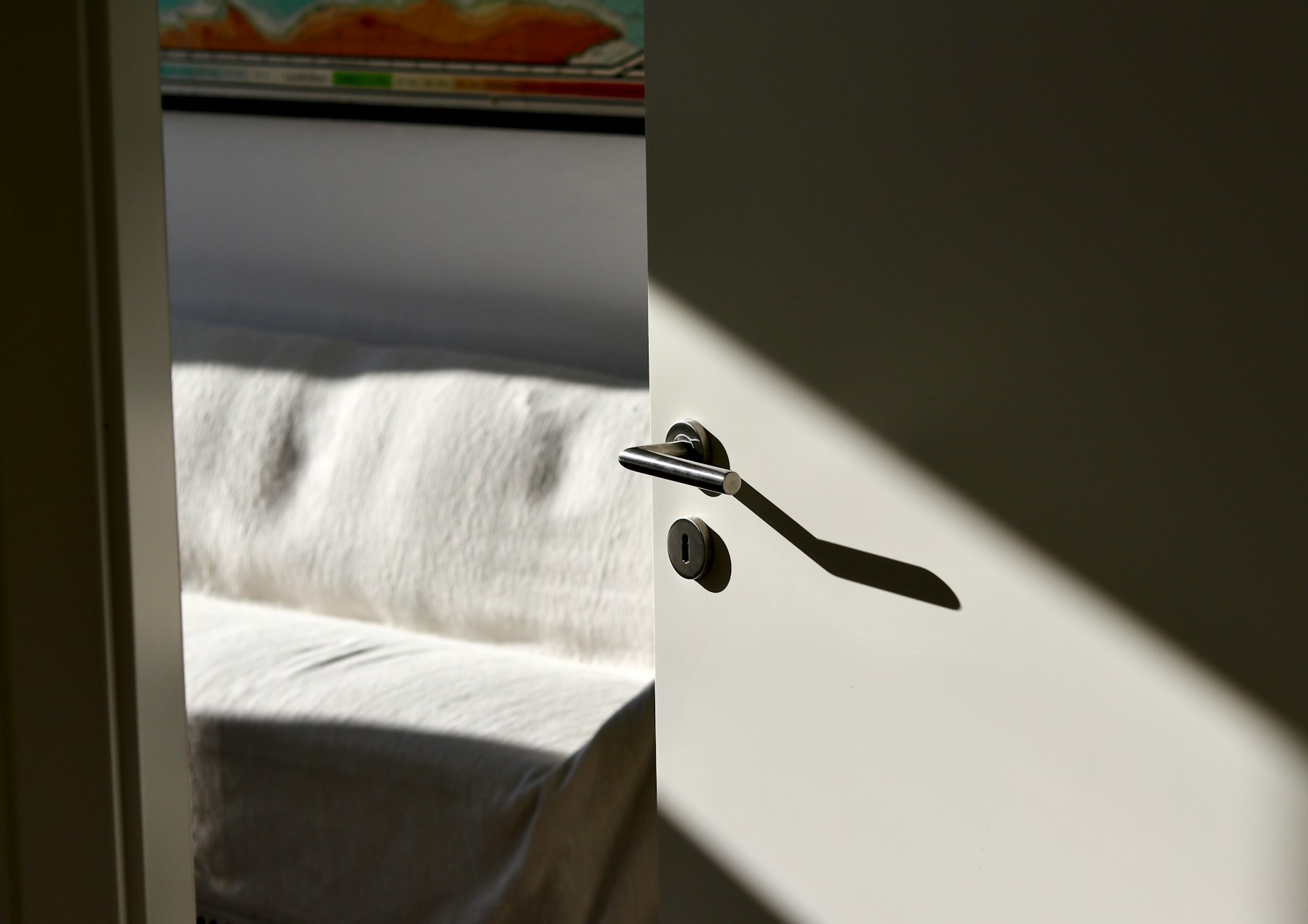
Hinged doors are the classic, go-to solution for interior applications, as they are affordable and perfect at separating rooms and managing privacy. They are among the first types of doors ever made and are still the most common doors on the market. Hinged doors work so well (and have for centuries!) because they’re intuitive, versatile, and architecturally compatible with almost any design. They come in different styles and can be made of various materials.
The slab mounts on side hinges and swings open into one of the adjoining spaces. Depending on the door’s purpose, it can swing inward or outward.
Solid-core versions, made with dense interior material, offer significantly better sound control and a quality heft. Hollow-core doors are lightweight and the most affordable but their have poor soundproofing properties. Their cores usually have a honeycomb structure made of lightweight plastic tubing.
But because they require swing clearance, they’re not ideal in tight spots or small rooms with inflexible furniture layouts.
13. Barn Doors
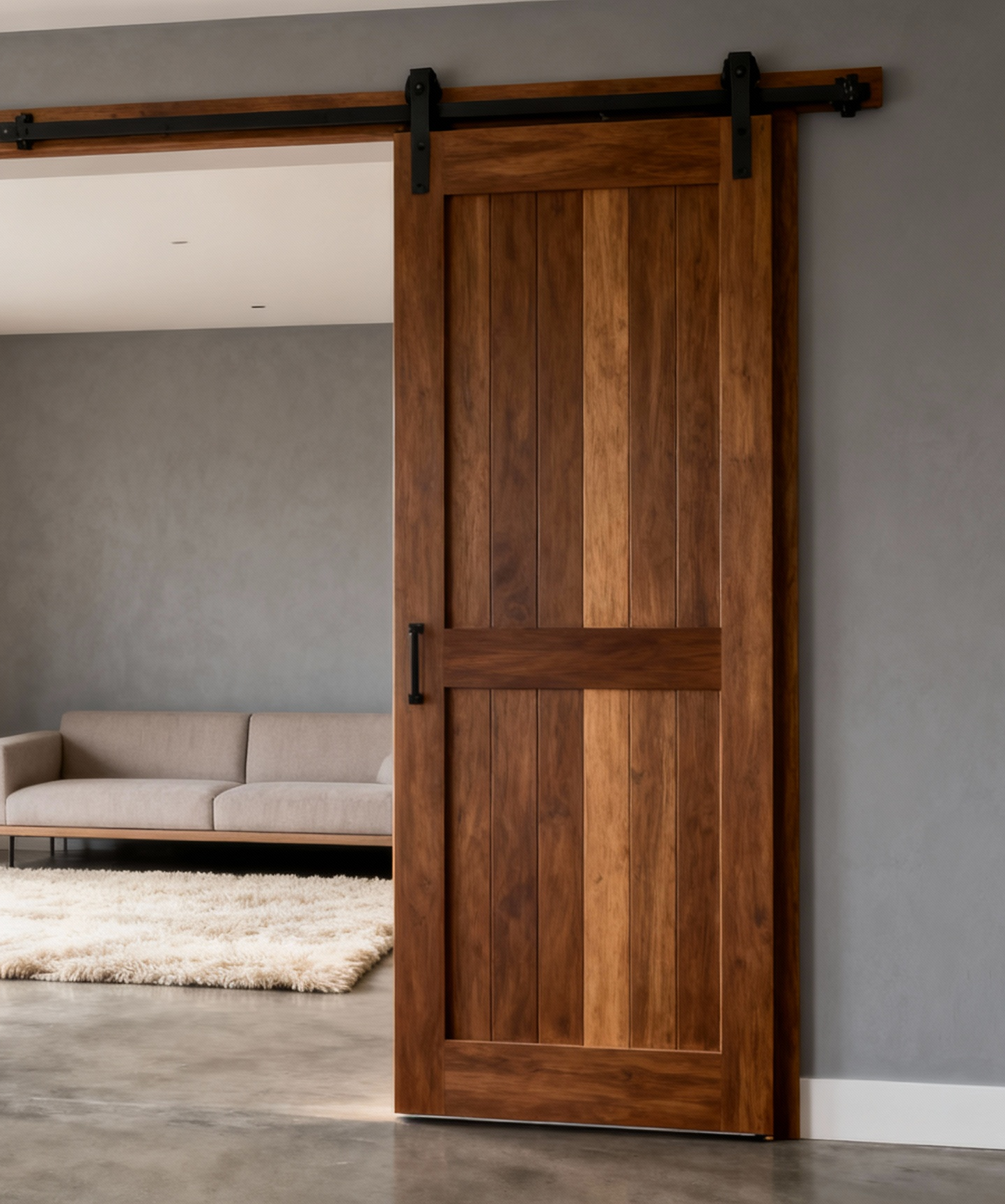
Barn doors have become popular in modern, rustic, farmhouse, and eclectic interior designs. They are as much a decorative statement as they are a functional barrier.
A barn door features a door slab that hangs from a track mounted above the opening, sliding horizontally across the wall surface. It also has visible rollers and hardware.
These doors are perfect for bedrooms, laundry rooms, offices, and pantry entrances, particularly where there isn’t enough clearance for a full-swing hinged door.
Keep in mind that barn doors don’t seal well acoustically, they require uninterrupted wall space for the slide, and there might be privacy concerns because of the gaps on the sides.
Barn doors are often made of wood, because it offers a classic, warm appearance and can be customized with different styles and finishes.
14. Bypass Sliding Doors
Bypass doors are practical, low-profile solutions commonly used for closets, pantries, and storage alcoves. They have two or more door panels that are mounted on parallel tracks, allowing them to glide past one another. Only part of the opening can be accessed at a time, but the design is extremely space-efficient.
15. Pocket Doors
Pocket doors are ideal for tight or awkward spaces where swinging doors would interfere with furniture or traffic flow. The door basically slides into a hollow cavity built inside the wall. It disappears completely when open and pulls out along a track when closed.
Many homeowners install pocket doors in powder rooms, closets, laundry rooms, small bedrooms, en-suites, and any area where saving floor space is critical.
On the other hand, installation requires modifying the wall, so it’s best planned during construction or renovation.
16. Bi-Fold Closet Doors
Bi-folds are a go-to for closets and storage. Each door is split into two narrow panels joined by hinges. The panels fold together and slide to one side on a top pivot and track.
17. Glass Interior Doors
Glass interior doors are excellent for bringing natural light deep into a floor plan. They can incorporate clear, frosted, textured, or decorative glass panels within a wood, metal, or composite frame. Some doors are fully glazed; others use partial lites.
18. Flush (Flat) Doors
Flush doors feature a smooth, flat slab with no panels or detailing. They may be hollow-core or solid-core. These doors are perfect for modern homes, mid-century designs, rentals, and minimalist interiors.
They're affordable, easy to paint, and visually unobtrusive. Plus, solid-core versions offer good sound control.
Nonetheless, their simplicity can look plain unless balanced by other design elements.
19. Accordion Doors
Accordion doors consist of pleated vinyl, fabric, or plastic panels on a spring-loaded track, collapsing fully for maximum closet or divider access in tiny spaces.
They prioritize utility over privacy or sound control, ideal for pantries or laundry nooks in apartments.
20. Saloon Doors
Saloon doors, or cafe doors, swing freely in both directions on double-action hinges, facilitating traffic in kitchens, bars, or playrooms without full clearance needs.
Typically half-height with glass uppers, they add playful Western or vintage charm while containing pets or toddlers.
21. Room Dividers
Room dividers function as flexible barriers that define spaces without requiring permanent walls. They range from full-height operable door systems to lightweight decorative screens. Unlike standard interior doors, the primary purpose of room dividers is zoning, privacy, and adaptable layouts rather than security or noise reduction.
Types of Cabinet Doors

Here are the common types of cabinet doors:
- Shaker cabinet doors: a simple five-piece design with a recessed center panel.
- Slab (flat-panel) cabinet doors: a completely flat, unembellished panel.
- Raised-panel cabinet doors: a center panel raised above the surrounding frame.
- Glass-front cabinet doors: clear, frosted, seeded, or reeded glass set into a frame.
- Louvered cabinet doors: horizontal slats similar to shutter designs.
- Mullion cabinet doors: divided glass panes resembling windows.
Types of Closet Doors

Here are the most common types of closet doors:
- Sliding bypass closet doors: two or more panels sliding past one another on parallel tracks.
- Bi-fold closet doors: panels fold in the middle and slide to the side.
- Swinging hinged closet doors: standard hinged doors that open outward.
- Pocket closet doors: doors slide into the wall cavity.
- Barn-style closet doors: door slab slides across the wall on exposed hardware.
- Louvered closet doors: horizontal slats that allow airflow.
Types of Garage Doors

Here are the most common types of garage doors:
- Sectional garage doors: made of horizontal panels that roll upward on tracks and rest near the ceiling.
- Roll-up garage doors: narrow metal slats coil into a cylinder above the opening.
- Side-hinged (carriage house) garage doors: doors swing outward like oversized French doors.
- Slide-to-side garage doors: the door slides horizontally along the interior wall.
- Tilt-up (one-piece) garage doors: the entire door lifts as a single solid panel, tilting up and over.
- Full-view glass garage doors: aluminum or steel frames hold glass panes, functioning like sectional doors.
Can't Find the Door of Your Dreams? Contact Magic!
If you're looking for new residential doors, whether patio doors or front doors, book your free consultation with Magic to learn more about our revolutionary products!
We offer:
- French doors
- Sliding glass doors
- Window walls (up to 50 ft in length!)
- Entry doors
All our products feature energy-efficient frames and glazing options, technologically advanced hardware, highly secure locks, and countless customization options!
Curious to discover what exactly makes Magic doors some of the best in the GTA? Contact us today and find the right door for your house!
Frequently Asked Questions
What are the main types of doors?
The main types of doors include hinged doors, sliding doors, folding doors, pivot doors, French doors, pocket doors, and specialty doors like louvered, glass, storm, and security styles. These categories cover both interior and exterior applications, each suited to different functional and aesthetic needs.
How many door types are there?
There are approximately 20-30 distinct door types when you include all major configurations, materials, and specialty variations. Broadly, they fall into a few core families: hinged, sliding, folding, pivot, and specialty doors.
What is the best type of exterior door?
For most homes, insulated steel doors or fiberglass doors with a foam core, usually hinged doors, are the best exterior doors overall because they offer the strongest thermal performance, durability, and security. In high-end or view-oriented homes, large multi-slide or bifold patio doors are best for indoor–outdoor living.
What is the cheapest type of interior door?
Hollow-core hinged interior doors are typically the cheapest types of interior doors, costing significantly less than solid-core doors or specialty designs. They’re lightweight and easy to install, making them common in budget builds and basic renovations.
What are the benefits of solid wood doors over hollow core doors?
Solid wood doors are a smart choice because they provide better durability, insulation, and soundproofing than hollow core doors. If you want something that stands the test of time and quiets your space, solid wood is the way to go.
How to choose the right door for your home?
To find the right door for your home in 2026, focus on durability, security, affordability, indoor-outdoor connectivity, energy efficiency, space optimization, curb appeal, and privacy. Choosing a right door can significantly increase your property's appeal and value.