Front Doors
What Is a Storm Door? Definition, Benefits, and How to Choose One
Have you ever wondered why some homes have two doors at the front entrance? Or maybe you're reading this for a whole different reason: you've felt a cold draft seeping through your entry door this winter, and you've heard that storm doors might be of help.
So, what is a storm door? Let's find out!
What Is a Storm Door?
A storm door is a secondary exterior door installed directly in front of your main entry door. It is designed to provide weather protection and improve insulation while still allowing natural light and ventilation when you want it. Storm doors are typically constructed with an aluminum or vinyl frame. They also feature interchangeable glass panels and screens and act as a buffer between your primary door and the elements.
Here are the main benefits of a storm door:
- It protects your primary door from rain, snow, wind, UV damage, and temperature extremes.
- It improves your home’s energy efficiency by reducing drafts and heat transfer.
- It allows fresh air flow and natural light without opening the main door.
- It enhances curb appeal and can add an extra layer of security with deadbolt locks.
- It can serve as an additional barrier against intruders.
Storm Doors: The Basics
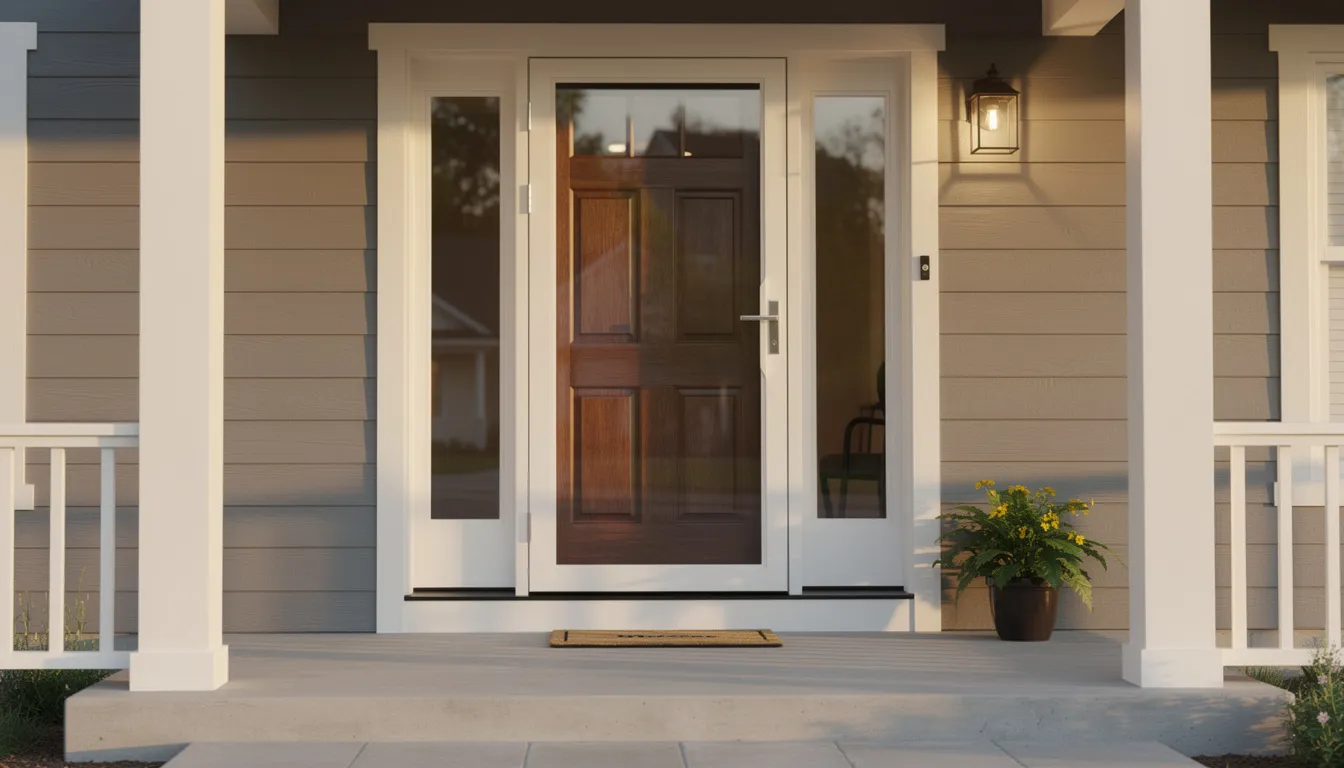
A storm door mounts on the exterior side of your door frame. It is positioned between your main door and the outside world.
Most storm doors feature a lightweight but rigid frame (usually aluminum) that holds large glass panels. Many models include integrated or interchangeable screens, allowing you to swap between full glass and mesh depending on the season.
The air space created between the storm door and your primary door acts as an insulating buffer. In winter, this pocket of trapped air slows heat loss. In summer, it can help reduce heat gain, especially when using a storm door with Low-E glass or double-glazed panels.
Storm doors are often installed on the exterior of:
- Exterior doors exposed to street-facing weather
- Back doors leading to patios or yards
- Side entrances that catch wind tunnels or receive heavy rain
Common Types and Styles of Storm Doors
When shopping for storm doors, “type” usually refers to how much glass versus solid panel the door includes, plus how the screen configuration works.
Here are the main storm door styles:
- Full-view – maximum glass, maximum light, showcases the main door
- Mid-view – glass only covers the upper two-thirds; there's a solid panel at bottom
- High-view – glass covers the upper half only; there's a more substantial lower panel
- Specialty options – storm doors with pet openings, built-in blinds, decorative glass

Full-View Storm Doors
Full-view storm doors feature a single large sheet of glass running nearly the full height and width of the door, often with just a horizontal rail separating upper and lower sections.
Key characteristics of full-view models:
- Ideal for showcasing decorative wood or fiberglass main doors
- Often use interchangeable full-screen and glass inserts
- Many include retractable screen systems hidden in the frame
- Popular for front entries where curb appeal is a priority
Mid-View and High-View Storm Doors
Mid-view doors feature glass over the upper two-thirds or three-quarters of the door, with a solid panel (often metal) at the bottom. High-view doors have glass panels only in the upper half and a more substantial lower section.
Mid-view and high-view storm doors are suitable for:
- High-traffic back doors that see heavy use
- Mudroom or garage entries where durability matters
- Homes with large dogs that scratch at the bottom of the door
- Entrances where you want some privacy at lower eye levels
Special Features: Pet Doors, Blinds, and Retractable Screens
Many types of storm doors include specialty features, mostly for convenience:
- Pet doors – built-in pet door flaps at the bottom; it allows dogs or cats to access fenced yards; pet-view models position glass above the flap so you can still see outside.
- Blinds between glass – two glass panels with integrated blinds sandwiched between them. The blinds stay protected from dust and damage.
- Retractable screen systems – screens roll into a cassette at the top or side of the frame when not in use. This keeps screens cleaner, more protected, and out of sight when you want a full-glass appearance.
What's the Difference between a Storm Door and a Screen Door?
The main difference between storm doors and screen doors is that storm doors are used for weather protection and durability, while screen doors are used for airflow and convenience.
A storm door is designed to protect the main door from weather exposure, improve insulation, and add a modest layer of security. It typically includes interchangeable glass and screen panels or a combination design.
A screen door, by contrast, is installed almost entirely for ventilation. It allows fresh air into the home while keeping insects out, but it provides little to no insulation or security. Screen doors are generally seasonal and are not intended to withstand harsh weather conditions.
What Are the Advantages of Storm Doors?
Storm doors have lots of benefits - no wonder they're so popular among homeowners! As such, let's discuss each storm door benefit in detail.
Better Sight Lines and Everyday Visibility
A glass storm door lets you see outside clearly while your main door stays closed and locked. This is more practical than it sounds. Why? Because full-view glass panels make it easy to monitor:
- Your kids playing in the front yard after school
- Package deliveries arriving at your doorstep
- Any visitors approaching before they knock
- Your pets sitting on the porch or in the driveway
Many storm doors also feature built-in deadbolt locks, so you can leave the main door open for visibility. You get more light and a clear view. And you can also feel safe in your home.
Fresh Air and Ventilation Without Bugs
Storm doors with retractable screen or interchangeable screen panels let you enjoy cross-breezes without the risk of letting all kinds of bugs inside. This is a huge advantage during late spring and early autumn when you’d rather not run the AC. And when there are lots of insects trying to get inside (boxelder bugs, for example).
Moreover, modern retractable screen systems roll up into a cassette hidden in the door frame when not in use. This keeps the screen protected from damage and gives you a clean, full-glass look.
More Natural Light and a Brighter Entryway
If your front hallway feels dark and cramped, a full glass panel storm door can totally change the way it looks! When the main door stays open behind the storm door, sunlight floods in, even when the storm door remains closed and locked!
This is especially helpful in homes where:
- The front entry has no sidelights or transom windows
- The foyer faces north and gets limited direct sunlight
- Winter days feel particularly dim from November through February
- Small entryways need visual expansion
And don't forget that having plenty of natural light inside your house doesn't just make your home feel cozier. It's actually beneficial for your physical and mental health, so don't underestimate the power of sunlight! And you can also place some indoor plants in the entryway!
Weather and Door Protection
A high-quality storm door serves as the first barrier against rain, hail, drifting snow, and wind-driven debris. Your main entry door, whether painted wood, stained fiberglass, or steel, stays protected behind this outer layer.
This weather protection is necessary for:
- Ice storms – a storm door prevents ice from building up directly on your primary door’s surface and hardware
- Driving rain – the storm door takes the brunt of water exposure, reducing moisture damage to your main door’s finish
- UV exposure – a west-facing door that bakes in the afternoon sun will fade and crack faster without protection
- Coastal locations – vinyl or aluminum storm doors resist salt spray that would corrode an unprotected steel door
In other words, a quality storm door can delay the need for full door replacement by many years. This can potentially help you save hundreds of dollars in early repairs or refinishing.
Extra Security
When properly constructed and installed (e.g., with laminated or tempered glass), a storm door acts as a secondary barrier between the exterior and the primary entry door. For example, models made from steel or reinforced aluminum can deter opportunistic break-ins by increasing the time, effort, and noise required to gain entry.
Plus, many modern storm doors include security-focused elements like multi-point locking systems, heavy-duty frames, tamper-resistant hinges, and impact-resistant glass.
That said, the security benefit of a storm door is only as strong as its materials and installation quality. Lightweight or decorative storm doors offer limited protection and should not be considered a substitute for a high-quality front door.
What Are the Disadvantages of Storm Doors?
It's not all roses, though. A new storm door might not be a good option for your home. This is what you should consider before installing one.
Visual and Curb Appeal Limitations
Storm doors can detract from the appearance of a home’s entryway, particularly when installed over a high-end or architecturally distinctive front door. The additional frame, visible hardware, and reflections from glass panels can obscure the design of the primary door rather than enhance it. So, if you've invested in a beautiful entry door, it would be a pity to cover it with a storm door. But, on the other hand, if weather conditions are extreme in your region, storm doors may be a necessity to protect that beautifully-constructed exterior door.
More Maintenance Requirements
Storm doors must be cleaned, adjusted, and maintained. Its tracks can collect dirt and debris, closers may require periodic adjustment, and glass or screen panels can crack or warp over time, especially in climates with significant temperature fluctuations.
Heat Buildup and Door Damage
In direct sunlight, a poorly insulated storm door can trap heat between itself and the main door. This “greenhouse effect” may cause paint blistering, warping, or premature aging of the primary door, particularly if it is made from wood or dark-colored materials.
But you can prevent this by selecting energy-efficient storm doors.
Limited Value with Modern Doors
With today’s advancements in insulated entry doors, heavy-duty weatherstripping, and multi-pane glass, the original storm door purpose, which was weather protection and energy efficiency, is often redundant. In many cases, upgrading the front door itself yields better long-term performance and aesthetics than adding a storm door.
Storm Doors: Energy Efficiency and Insulation

One of the main reasons homeowners add storm doors is to improve insulation and reduce energy loss. Your entry door is one of the least insulated points in your home’s exterior, so a storm door helps address that weakness.
As mentioned earlier, the sealed air space between the storm door and primary door acts like an extra insulating layer. During cold snaps, this buffer slows heat escaping from inside. During summer heat waves, it reduces warm air infiltration, particularly on sun-exposed entrances.
However, the amount of energy you'll actually be saving depends on the type of storm door you'll install.
Multi-Pane Glass Options
For a storm door with glazing area to be energy-efficient, it must have double-glazed or triple-glazed panels. For even better energy efficiency, those glass panels should be separated by inert gas.
Double-glazed panels also help limit condensation on interior glass surfaces during extreme temperatures. This is very important because the space between the storm door and the main door can quickly become flooded with mold growth if there's always condensation on the glass pane. In short, while multi-pane options typically cost more upfront, they are necessary in climates with frequent sub-zero temperatures or intense summer heat.
Low-E (Low Emissivity) Glass Coatings
Low-E glass features a nearly invisible metallic coating that reflects heat while allowing visible light to pass through. This technology is common in windows and increasingly available in storm door glass.
Here's how Low-E glass can help save energy and keep your home more comfortable:
- Winter – the coating reflects heat back into your home, helping keep warm air inside when temperatures drop
- Summer – it blocks a portion of infrared energy from the sun, reducing heat gain and keeping your entry cooler
Low-E coatings also filter UV rays that fade flooring, rugs, and furniture near the entryway.
Weatherstripping and Insulated Frames
Tight seals around the door perimeter are crucial to stop drafts and minimize air leakage. Without proper weatherstripping, even the best glass won’t prevent hot air or cold air from slipping through gaps.
These materials compress when the door closes, forming a seal that blocks drafts.
How to Choose the Right Storm Door for Your Home
There's no best storm door that works for every home. You should choose a storm door assembly based on your climate, door exposure, home style, and how your household uses the entrance daily.
Decide on Design, Glass Area, and Functional Features
Start by determining how much of your main door you want visible from the street. If you have a decorative wood or fiberglass exterior door, a full-view door might be the best option, as it won't cover it. For high-traffic areas or homes with pets who like to go outside, go for a mid-view or a high-view storm door.
And don't forget to:
- Pair the frame colors with the existing trim, siding, and window frames
- Choose handle finishes that complement your main door hardware
- Select Low-E glass if energy efficiency is a priority
- Consider a retractable screen if you want seasonal ventilation without panel swapping
Take Accurate Measurements
Most storm doors typically require measurements at multiple points to account for any irregularities in your opening.
Here's how to measure for a storm door:
- Measure the width at the top, middle, and bottom of the opening. Use the narrowest width measurement.
- Measure height from the threshold to the top of the opening at three points. Use the shortest height measurement.
Double-check your measurements before ordering. A door that’s even slightly too large won’t fit, while one that’s too small won’t seal properly.
Select Quality Materials and Hardware
Frame material directly impacts durability, maintenance needs, and long-term performance. Most storm doors feature aluminum frames, which offer an excellent strength-to-weight ratio and resist rust and corrosion. But there are other materials available as well, and here's a quick overview of the main differences between them:
Furthermore, look for:
- Corrosion-resistant hinges rated for your door’s weight
- Pneumatic or hydraulic closers for smooth operation (not slamming)
- Keyed locks or deadbolt locks for added security
- Quality powder-coat finishes that resist peeling and fading
- UV-resistant hardware for doors that face south or west
Magic's Front Doors Need No Storm Doors!
For homeowners considering a premium front door upgrade, a storm door may be entirely unnecessary. If your front door is old or damaged beyond repair or if you are planning for a home upgrade to improve its energy efficiency, replacing the exterior door might be better than installing a storm door. It's a more significant investment indeed, but it will pay for itself over time.
Magic's Ultimate Entry Door, for example, is engineered with advanced insulation, airtight sealing, reinforced frames, and high-performance glass options. They feature:
- 30% more steel and 40% more insulation
- A unique J-bend design that significantly improves security and durability
- A unique weatherproofing system that eliminates the risk of water or air infiltration at the bottom of the door
When Replacing the Front Door Makes More Sense
Replacing an older or underperforming outer door with Magic’s Ultimate Entry Door system may be the better option when:
- The existing door is drafty, warped, or poorly insulated
- You want improved energy efficiency without visual compromise
- Security is a priority, but you prefer a single, integrated solution
- You want to modernize curb appeal rather than conceal the door behind a storm door
In some cases, however, like if you want to preserve a historic wood door or add seasonal ventilation to an otherwise sound entry, you can definitely go for a storm door.
Nonetheless, for homeowners seeking long-term performance, aesthetics, and value, upgrading to a high-quality entry door system often eliminates the need for a storm door altogether. If you think your house might benefit from a well-insulated, highly durable front door, book a free consultation with Magic!
FAQs
Do storm doors add home value?
Storm doors can improve perceived value by enhancing comfort, home’s curb appeal, and protection, but they add less resale value than replacing the primary door or upgrading windows. The greatest “value” usually comes from energy savings through reduced energy costs over time, extended lifespan of your main entry door, improved daily usability and comfort.
How hard is it to install a storm door?
Installing a storm door is a moderate-complexity DIY project for handy homeowners comfortable with measuring, drilling, and basic carpentry. Most modern storm doors come with pre-cut frames, hinges, closers, and detailed instructions tailored to standard openings. The most important factor is to make sure that your opening is square and the frame is solid.
What is a self-storing storm door?
A self-storing storm door is a type of storm door designed with integrated glass and screen panels that can be switched without removing or storing separate inserts. Instead of having to physically take out a glass panel and store it elsewhere when warmer weather arrives, a self-storing storm door allows the glass to slide, retract, or flip within the door frame to expose a screen panel underneath.