Front Doors
Best Front Doors for Cold Climates in Canada: What to Choose and Why
The best front doors for cold climates in Canada are typically insulated fiberglass, steel, or composite doors with strong thermal performance, low air leakage, and properly sealed frames. Homeowners should choose depending on their region's climate, their budget, maintenance preferences, and whether they want maximum insulation, durability, or a particular style.
If you've ever stood next to your front door on a January evening in Canada and felt a wall of cold air, you already know the problem. Your exterior door isn't doing its job, and it's costing you on your energy bills every single month. It might be time to find that best front door that can withstand the weather conditions in your region, whether you're in Edmonton, Ottawa, or Charlottetown.
So, what do you look for? We've broken it all down below.
Key Takeaways: Best Front Doors for Cold Climates
- Fiberglass and insulated steel are among the most common choices for cold Canadian climates because they can provide strong insulation and weather resistance.
- Wood doors look beautiful but need more maintenance and score lower on insulation (R-1 to R-2).
- A high R-value and low U-factor are the two numbers that matter most for energy performance.
- Proper sealing, including advanced weather stripping, an insulated door frame, and a thermal break, is just as important as the door material itself.
- Proper installation is essential. Even the best door underperforms if it's not installed correctly.
Why Does Your Front Door Matter for Energy Efficiency?
Your exterior door is one of the most exposed parts of your home's building envelope. In cold weather, it faces three main threats: heat transfer through the door slab, air leaks around the frame and weatherstripping, particularly at the bottom, and moisture infiltration from snow and ice.
An older or poorly chosen door can account for a significant portion of your home's total heat loss. And in a country where the heating season runs five to eight months a year in most regions, that’s not good news. So, if you choose your front door wisely and hire professionals to install it, it will keep the warm air inside, exactly where it belongs. And you’ll be able to save money on heating costs.
What to Look for When Buying a Front Door for a Cold Climate
When buying a front door for a cold climate, look for:
- Insulated door core
- Low U-factor for doors with glazing area
- High R-value
- Low air leakage rating
- Quality weatherstripping
- Insulated threshold
- ENERGY STAR certification where applicable
- Double- or triple-pane glazing if choosing a glazed door
- Proper installation and air sealing
- Materials appropriate for your local moisture and temperature conditions
Best Front Doors for Cold Weather: Performance Ratings
Before you look at door styles or finishes, check these two values: R-Value/U-factor and Air Leakage.
R-Value/U-Factor
The R-value measures how well a material resists heat flow. The higher the number, the better the insulation. For cold climate performance, aim for R-5 or higher on your door slab, without glass panels.
The U-factor measures how quickly heat passes through the door, and it’s usually used for both windows and doors with a glazing area. Lower U-factor values are better.
Hollow-core doors have almost no insulating value. If your current door is hollow-core, replacing it should be a priority, especially if your region has freezing winters. Hollow-core doors are usually recommended only for interior use in Canada.
Air Leakage
Air leakage metrics measure the volume of air flowing per unit time per unit area through a system. It is measured in cfm/ft². To qualify for ENERGY STAR certification, swinging front doors must have an air leakage rating of no more than 0.5 cfm/ft². Lower air leakage indicates a tighter door system.
Best Door Materials for Cold Weather in Canada
Choosing the right door material is the most important decision you'll make, as it will greatly influence your door’s performance during those freezing Canadian nights. Here's how the main options compare.
Fiberglass Doors
A fiberglass door is among the best all-around choice for cold climates in Canada. These doors combine excellent insulation with low maintenance, and they hold up where other materials struggle.
Here's why they work so well in cold weather:
- High-density polyurethane foam cores deliver superior insulation, up to R-5 to R-6.
- They don't expand or contract significantly with temperature swings, so weatherstripping stays tight.
- No rust, no rot, no warping, even after years of exposure to ice and moisture.
- Many styles mimic the look of wooden doors without any of the maintenance.
- Low maintenance; periodic cleaning is typically all they need
However, fiberglass doors cost more upfront than steel doors. If budget is a concern, look at insulated steel as an alternative - some of them, such as those from Magic, match the benefits of fiberglass doors.
Steel Doors

Steel doors are another great option for cold-weather doors in Canada, and they're the most popular choice for homeowners watching their budget.
What makes them a solid choice:
- Foam-filled insulated core (usually polyurethane) gives R-4 to R-6 performance
- Extremely durable; resistant to denting and impact
- Inherently secure
- Low maintenance
The one thing to keep in mind is that steel conducts cold. Without a proper thermal break, meaning without a layer of low-conductivity material between the inner and outer steel panels, your door can act as a bridge for cold air. Always confirm that the door includes a thermal break before buying.
If you want to install a steel front door, you can explore Magic options. Our front doors have 30% more steel and 40% more insulation.
Also, don’t forget that if you live in a coastal or wet climate, your steel door will need periodic maintenance.
For a more comprehensive comparison between fiberglass vs steel doors, read our article on this topic.
Wood Doors
Wood doors have natural warmth and character that no other material quite matches. But from a cold-weather performance standpoint, they do have some important limitations.
Solid wood doors, particularly hardwoods like mahogany, white oak, and red oak, perform better than engineered or softwood options. They're dense, heavy, and provide some natural insulation. Still, even the best solid wood door tops out around R-2 or R-3, which is well below what fiberglass doors or steel doors with foam cores can deliver.
The maintenance factor is extremely important too:
- Wooden doors need regular repainting or varnishing to stay protected.
- In harsh winters, temperature swings cause wood to expand and contract, which can warp the frame over time and compromise your weatherstripping seal.
If you love the look of wood, consider a composite door or a fiberglass door with a wood-grain finish. You’ll get the necessary aesthetic without sacrificing performance in cold weather.
Composite Doors
Composite doors combine multiple materials, typically a solid timber core, fiberglass skins, and foam insulation, to give you strength, insulation, and weather resistance in one package. They're a strong option for cold climates and require far less maintenance than traditional wooden doors. Naturally, they do cost more than either steel or standard fiberglass, but they hold their shape well even through Canada's freeze-thaw cycles.
The Features That Make or Break Performance in Cold Weather
The door material is only the first decision you’ll have to make while shopping for a front door. The features we’ll discuss below determine how well your entry door actually performs once it's installed, regardless of the material it’s made of.
Weatherstripping and Proper Sealing
Proper sealing is where most doors fail in cold weather. Poor seals around the frame and threshold let cold air in and let warm air escape, even through an otherwise well-insulated door. And the most vulnerable location for a front door in this regard is at the threshold.
High-quality weatherstripping comes in a few main types:
- Compression seals – rubber or vinyl tubes that compress when the door closes. They hold up well in cold temperatures and maintain a consistent seal.
- Magnetic weatherstripping – similar to a refrigerator seal. Creates an extremely tight contact between the door and the frame.
- Tension or V-strip seals – folded vinyl or metal pressed against the door edge. Durable and nearly invisible when closed.
For cold climates, magnetic compression seals are the most reliable. They stay flexible in sub-zero temperatures, where foam tape and felt options tend to harden and lose their seal.
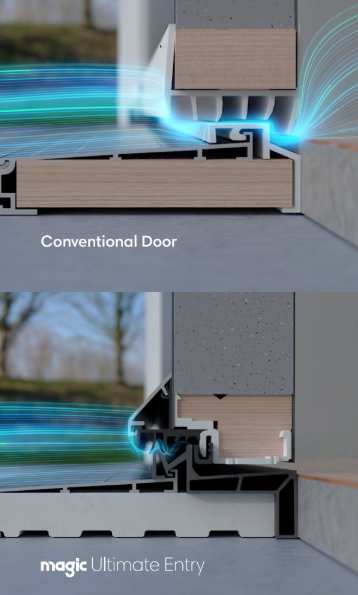
However, if you want ultimate weather protection that prioritizes the weakest spot in a front door system, you can get Magic’s front door, which features a unique weatherproofing system in Canada. Give us a call to discover how exactly it stands out!
Thermal Break in the Door Frame
A thermal break is a barrier made from low-conductivity material placed between the inner and outer sections of your door frame. Without one, the frame itself becomes a path for cold to travel into your home, even if the slab is well-insulated.
This is especially important for steel and aluminum frames, which conduct heat easily. When comparing doors, always ask whether the frame includes a thermal break.
Glass Panels and Glass Inserts
Adding glass panels or sidelights to your entry door makes a big difference in terms of natural light, but it also affects the entire system’s thermal performance. Single-pane glass, for example, is a no-no for Canadian winters.
For cold-weather doors with glass, look for:
- Triple pane glass, the best option for cold climate performance, with the highest resistance to heat transfer
- Double pane with Low-E coating and argon gas fill, a strong second option, widely available, and still excellent for most Canadian climates
Glass inserts reduce the overall R-value of your door, so the more glass, the more important it is to choose high-performance glazing.
Moreover, pay attention to these details:
- Spacer type: look for warm-edge spacers instead of aluminum ones, as they reduce heat transfer
- Amount of glass: the more glass your door has, the lower the overall insulation
- Solar Heat Gain Coefficient (SHGC): an energy rating that measures how much solar heat passes through a glazing area; in Toronto, lower SHGC ratings are better; in colder climates, higher SHGC ratings are recommended.
Storm Doors
A storm door is an additional door installed in front of your main exterior door. It creates a buffer of air between the two doors, which offers better insulation and protects your main door from direct exposure to snow and ice.
Storm doors are worth considering if:
- Your existing door is older but still structurally sound.
- You live in a region with extreme wind and blowing snow.
- You want added protection for a wood door.
If your main door is already a modern, insulated fiberglass or steel unit with solid weatherstripping, a storm door may not add meaningful energy savings. It does, however, add a layer of protection against physical wear.
Adjustable Threshold and Door Frame
The gap between the bottom of your door and the floor is one of the most common spots for cold air infiltration. An adjustable threshold covers this gap even as the door and floor shift slightly with temperature changes over time. Combined with a good door sweep, it contributes to a tight seal all the way around the door.
Your door frame matters just as much as the door itself. A frame with a thermal break, properly shimmed and insulated during installation, eliminates the thermal bridging that undermines even the best door.
Security Considerations
Did you know that your front door’s security features can also influence its energy performance?
Multi-point locking systems, for example, secure the door at multiple points along the frame. This means that the door is pressed tightly against the frame, which also enhances energy efficiency.
The material’s strength matters as much, since it can also influence how your door performs in extreme weather conditions. Steel doors, for example, offer the highest level of impact resistance.
And let’s not forget about hinges and hardware. Heavy-duty hinges and secure strike plates prevent the door from being forced open at weak points.
All in all, in many cases, better security also improves energy performance. A tightly sealed, well-locked door reduces air leaks and drafts, making your home both safer and more comfortable.
Professional Installation: Why It's Non-Negotiable
You can spend top dollar on the most energy-efficient door available and still end up with cold drafts, moisture problems, and air leaks if it's not installed correctly.
Professional installers will ensure that:
- The frame is plumb and square, since even minor misalignment prevents the door from sealing fully.
- The rough opening is properly shimmed and insulated.
- The weatherstripping compresses evenly on all sides.
- The flashing and sill pans are installed to manage water and ice at the threshold.
- The door warranty stays valid, and the system meets local building code requirements.
When getting quotes, ask your installer to explain how they'll handle shimming, gap insulation, and flashing. If they can't answer clearly, get another quote.
Proper Maintenance Keeps Your Door Performing
Even the best cold-weather doors need regular maintenance to stay at peak performance. Before each winter, run through this basic checklist:
- Inspect weatherstripping for cracks, compression loss, or visible gaps.
- Check the threshold seal for wear and adjust if needed.
- Look for drafts by running your hand slowly around the closed door frame on a cold day.
- Lubricate hinges and locks with a cold-weather lubricant, as components stiffen in extreme temperatures.
- Inspect glass seals on any glass inserts for fogging or condensation between panes (a sign the seal has failed).
- Clean and reseal or repaint steel or wood door surfaces as needed
Proper maintenance extends the life of your door and preserves the tight seal that keeps your home warm. A door that performed well in year one should still perform well in year ten. That is, if it's maintained.
How to Choose the Right Front Door for Your Region
Canada's climate varies significantly from one province to the next. The door that works for Vancouver is not the same one that's optimal for Winnipeg. Here are some things to consider when choosing the right front door for your region’s climate:
Ultimately, the right exterior door for your home depends on your specific climate zone, your priorities (insulation vs. aesthetics vs. budget), and how much maintenance you're willing to take on.
Quick Comparison: Door Materials
How Much Do Front Doors Cost in Canada?
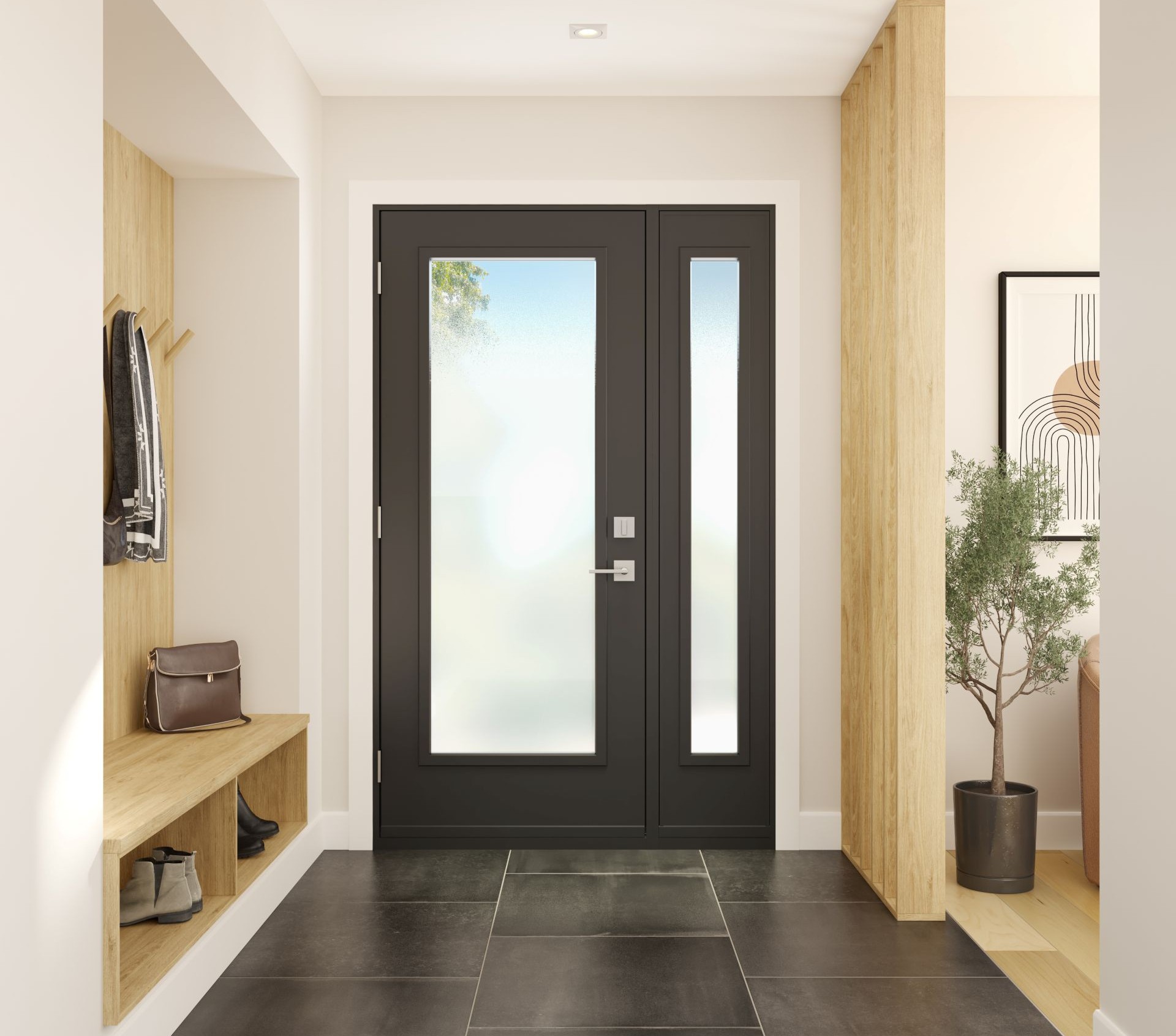
In Canada, front doors cost between $700 and $5,500 or more. The price of a front door varies significantly depending on the material, insulation level, and whether you're replacing an existing unit or installing a completely new system. For most homeowners, installation costs matter just as much as the door itself.
Here’s a realistic breakdown of what front door prices you can expect in Canada:
What About Energy Rebates in Canada?
ENERGY STAR-certified exterior doors qualify for federal and provincial rebate programs in many parts of Canada. These programs typically require a pre- and post-home energy assessment and a product from the approved list.
If you're replacing a new entry door as part of a broader home improvement project, it's worth checking Natural Resources Canada's current ENERGY STAR program requirements. A qualifying door can meaningfully offset the upfront cost, particularly for higher-end fiberglass or composite units.
Ready to Replace Your Front Door? Here's What Magic Offers
Magic builds entry doors specifically for Canada's climate. Here are some of Magic's Ultimate Entry Door features:
- 40% more insulation than standard doors (foam core with enhanced density)
- 30% more steel in the slab and a J-bend design that resists bending and buckling under pressure
- A multi-point gasket system and rain deflector for high industry ratings for air and water performance
- An integrated door sweep with a U-channel design that auto-locks the slab's compression seal directly into the frame, eliminating gaps completely
- An integrated anodized aluminum rain deflector that drives water away from the door
- Magic doors are tested to withstand over 1,600 lbs of force.
If you're looking for the best exterior doors for cold weather in Canada, book a free consultation with Magic. We'll help you find the right entry door for your home, your region, and your budget!
FAQs
What is the most thermally efficient front door?
Fiberglass and steel front doors with insulated cores are the most thermally efficient front doors for Canadian climates. They offer high R-values, resist temperature fluctuations, and minimize heat loss better than wood or standard steel doors.
How to stop cold air from coming through the front door?
To stop cold air from coming through the front door, make sure to cover any gaps around the door. Replace worn weatherstripping, seal the bottom with a door sweep, and check if the door is properly aligned and tightly sealed.
Which is better, composite or uPVC front door?
Composite doors are generally better for Canadian climates than uPVC front doors because they provide superior insulation, durability, and airtightness. uPVC doors are more budget-friendly but generally less robust and efficient in extreme cold.
What makes a front door good for Canadian winters?
A front door designed for Canadian winters should have strong thermal performance, low air leakage, durable weatherstripping, an appropriately insulated frame and threshold, and glazing suited to the climate if it includes glass. Proper installation is also essential to prevent drafts and moisture infiltration.