
Front Doors
Parts of a Door Knob: Complete Component Guide
Are you planning to install a new door or a new door knob? Or is it that your door does not operate properly and you can't understand why?
Either way, we're here to help by explaining all the parts of a door knob, related door hardware terms, and how they work together, so read on!
Door Knob Parts

The door knob components fall into two main categories:
- external parts that you can see and touch (like the knob itself, circular plate, and keyhole)
- internal components hidden within the door (including the spindle, latch mechanism, and internal mechanism).
These parts vary slightly between passage knobs (no locking mechanism), privacy knobs (interior lock button or thumb turn), and keyed lock systems for exterior doors.
All the components of a door knob play a vital role in how a door operates. If one component fails, the door knob and the lock mechanism will not function properly anymore. Because of this, it's extremely important to understand what's what and how all the components work together. This can help you identify the issue in case your door doesn't operate properly and find a solution.
Door Knob
Modern door knobs come in various materials that affect both durability and aesthetics:
- Brass knobs offer a classic appearance and corrosion resistance.
- Stainless steel provides contemporary styling and maximum durability.
- Crystal or glass knobs add decorative appeal for interior applications.
- Wood knobs complement traditional door styles but require more maintenance.
The choice between a traditional round knob and a lever handle often depends on accessibility needs. Lever door handles require less grip strength and can be operated with an elbow when hands are full, making them ideal for households with elderly residents or those with mobility challenges.
The knob or lever is secured to the shank or spindle with set screws.
Rosette or Backplate
Rosettes (sometimes known as escutcheons) and backplates are decorative outer covers surrounding the lever, handle, or knob on each side of the door.
The backplate is rectangular. It covers the bore hole drilled through the door and conceals the mounting screws that hold the entire system together. Backplates can be larger and more ornate for decorative purposes.
Rosettes have a round shape that provides a flush, clean appearance. They typically measure 2.5 to 3 inches in diameter for standard residential applications.
The trim or rosette of a doorknob can enhance the overall look and style of your home, with various styles and finishes available.
Beyond protection, these plates provide the finished appearance that makes door hardware look professional. Moreover, quality backplates include gaskets or seals that prevent air infiltration around the door hardware. This is particularly important for exterior doors where weather sealing affects energy efficiency.
Keyhole and Lock Cylinder
The lock cylinder is a precision-engineered component that houses a pin tumbler mechanism with 5-6 pins that must align perfectly for the lock to operate. The keyhole itself is the external opening that provides access to this internal mechanism - in simple terms, it's the hole you insert the key into.
When you insert the correct key, it pushes the pins to their proper positions. This allows the cylinder to rotate freely and lock the door.
Mounting Plate
The mounting plate sits beneath the rosette or backplate and holds the two halves of the knob assembly together. It anchors the lockset to the door using through-bolts or screws and distributes mechanical load across the door surface.
Spindle
The spindle is a metal rod that runs through the center of the latch assembly. The spindle connects both sides of the door hardware. It actually drives the latch.
When you turn either knob or lever, the spindle rotates as a single unit. This rotation gets translated into linear motion by internal mechanisms, causing the latch bolt to retract and allow the door to open.
Quality spindles are made from hardened steel to resist wear and prevent the stripped connections that cause loose or non-functional door knobs.
Shank
The shank is a solid or hollow metal shaft that connects the exterior knob to the interior knob or latch mechanism. It has a hole for the spindle that connects the knobs and the latch. It basically transfers the knob's rotation to the spindle and latching mechanism.
Keep in mind that in many modern cylindrical locksets, the shank and spindle are integrated.
Spring Mechanism
Springs are small components located inside the knob assembly and latch mechanism. They bring the knob back to its neutral position after it is turned and provide the constant pressure needed to keep the latch properly engaged.
Latch Assembly
The latch assembly houses the spring-loaded bolt mechanism that actually keeps your door securely closed. It is installed in a cross bore drilled from the edge of the door and has a latch faceplate installed on the door edge.
The latch bolt itself features a beveled edge that allows the door to close smoothly. As you push the door shut, this beveled surface rides over the strike plate and compresses internal springs until the bolt snaps into position in the door jamb.
Some modern latch assemblies include a deadlatch plunger, a small secondary pin next to the main bolt. Its role is to prevent the door from opening using a credit card or another thin object, which is important for security.
Chassis or Lock Body
The chassis, a door lock part, is the internal housing that contains the lock mechanism and determines whether your door hardware functions as passage, privacy, or keyed entry door hardware.
The internal mechanism within the chassis determines how the door hardware responds to user inputs.
Strike Plate
The strike plate is the metal plate installed on the door jamb. It mounts flush with the door jamb surface and includes a curved lip that guides the latch bolt into the proper position.
The strike plate protects the wooden door frame from repeated impact. It also plays a crucial role in door security. The quality of the strike plate and how it’s mounted often determines whether a door can resist forced entry attempts.
Thumb Turn
Privacy door locks include a thumb turn on the interior side that allows locking and unlocking without keys. The thumb turn is a small component typically mounted on the interior rosette or backplate. It connects directly to the locking mechanism.
When you operate the thumb turn, it engages or disengages an internal blocking mechanism that prevents the exterior knob from operating the latch. This provides privacy for bedrooms and bathrooms while ensuring that you can always exit quickly in emergencies.
Most privacy locks include an emergency release feature accessible from the exterior side.
Deadbolt
Many exterior doors combine standard door knobs with separate deadbolts for enhanced security. These additional security bolts extend approximately 1 inch into the door frame, providing resistance to forced entry that spring latches cannot match.
Deadbolts operate independently from the main latch mechanism. They require either key cylinders or thumb turns for activation.
Set Screws
Set screws are small components found on the interior side of the door knob or lever. These screws are responsible for securing the knob or lever to the spindle, which is the metal rod that connects both sides of the door hardware.
By tightening the set screws once in a while, you ensure that the knob or lever remains firmly attached and does not wobble or come loose over time. This maintains the smooth operation of the door knob and helps preserve the security of the door, as a loose knob can compromise the locking mechanism.
Door Frame and Jamb
The door frame and door jamb are the foundational structures that support your door and all its hardware. The door frame consists of the vertical jambs on each side, along with the horizontal head at the top and the sill at the bottom.
The door jamb, specifically, is the vertical section where the hinges and strike plate are mounted. It provides a secure anchor for the door to swing open and close.
Without a sturdy frame and jamb, even the best door hardware cannot perform its job effectively, making these structural parts critical for both security and smooth operation.
Bore Hole
A bore hole is the drilled opening in the door that allows for the installation of the lock cylinder or latch mechanism. Typically, the bore hole is created on the face of the door, with an additional hole drilled into the edge of the door to accommodate the latch.
The size and placement of the bore hole are determined by the type of door lock or latch being installed. It must be accurately measured for a proper fit and to avoid damaging the door.
How Door Knob Parts Work Together
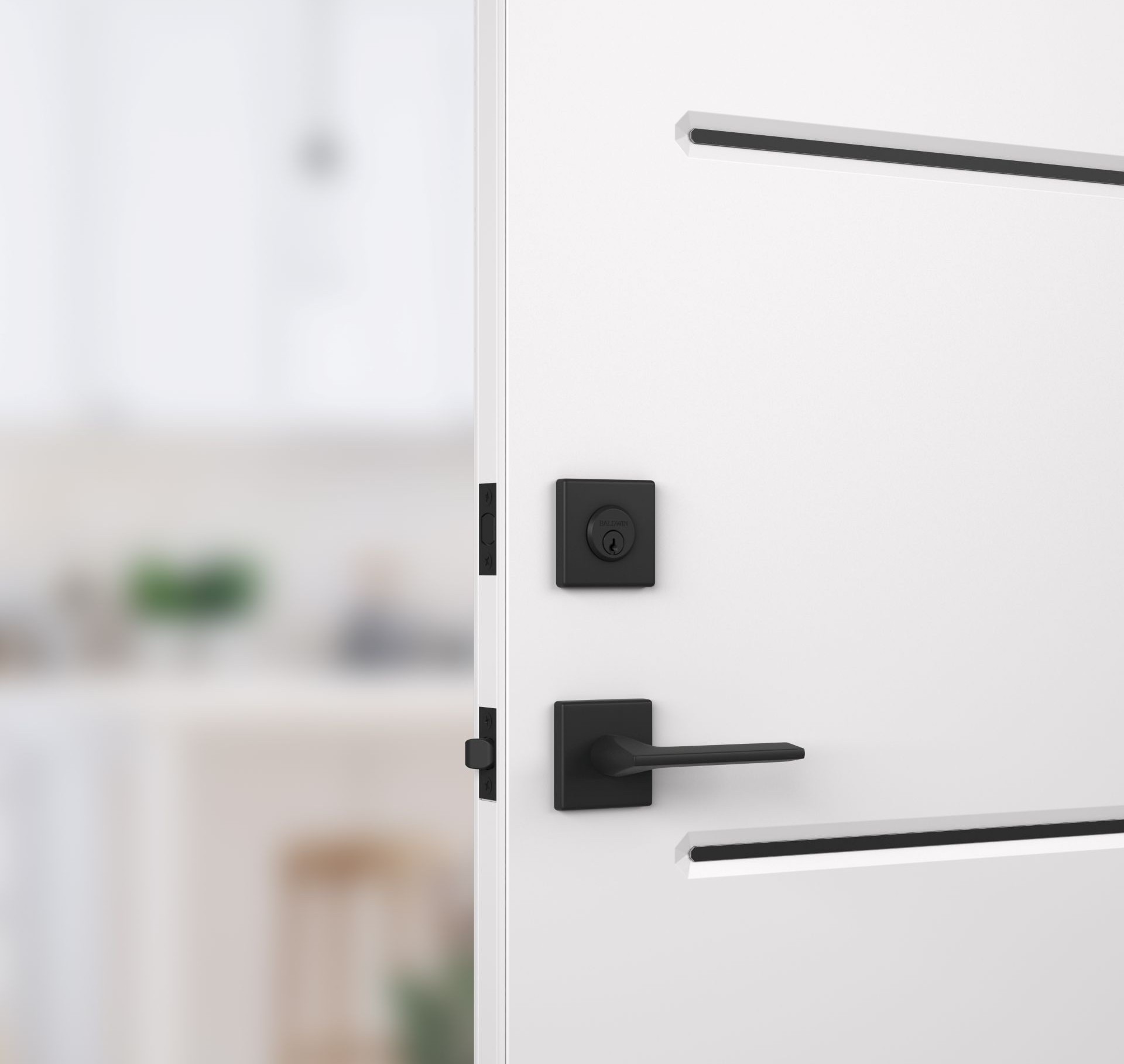
Here's how all the door knob parts work together:
- Turning the knob. When you grab and turn the knob or lever, you apply force with your hand.
- Transferring the movement. The knob is attached to a metal piece (the shank). The shank turns the spindle, a metal rod that runs through the door.
- Pulling back the latch. As the spindle turns, it moves the parts inside the chassis and latch assembly. This action pulls the latch bolt back into the door so the door can open.
- Spring action. The springs inside the knob and latch push everything back into place when you let go. This is why the knob returns to its normal position and the latch sticks back out.
- Holding the door closed. When the door closes, the angled edge of the latch bolt slides against the strike plate on the door frame. The latch is pushed in briefly, then springs back out into the strike plate hole to keep the door closed.
- Locking the door. In privacy locks, turning the thumb turn blocks the knob from opening the latch. In keyed locks, the key turns the lock cylinder to allow or stop the spindle from moving.
- Keeping everything in place. The mounting plate and screws hold the entire assembly tightly to the door. The rosette or backplate covers these parts and gives the door a finished look.
Common Door Knob Part Problems
Like all hardware parts, door knobs don't perform perfectly forever. Luckily, you can easily solve whatever is wrong with them most of the time. Here are some of the most common door knob issues and how to solve them:
- Loose knobs are usually caused by loosened set screws that connect the knob to the spindle. Just tighten or replace the screws that are loose.
- Knobs that don’t spring back - this is usually caused by worn or broken internal springs. Replace the knob or latch assembly.
- Doors that won’t latch properly - this is usually caused by a worn latch bolt or misaligned strike plate. Adjust the strike plate or replace the latch.
- Keys that won’t turn or get stuck - this is usually caused by dirt, wear in the lock cylinder, or a worn key. It is recommended to lubricate the door knob and handle components every six months, so if you haven't done that, clean, lubricate, or replace the key or lock. It's also recommended to lubricate exterior knobs just before winter starts and freezing temperatures set in.
- Knobs that turn but don’t open the door - this is usually caused by a stripped spindle or damaged internal parts. Replace the lockset.
- Privacy locks that won’t unlock - this is usually caused by a failed thumb turn or internal blocking mechanism. Use the emergency release or replace the lock. Most homeowners can fit a door knob themselves by following the manufacturer's manual.
- Doors that feel hard to open or close - this is usually caused by worn parts, lack of lubrication, or misalignment. Lubricate or realign the components.
Types of Door Knobs
Here are the most common types of door knobs.
Dummy Knobs
Dummy door knobs are simply handles that do not turn or operate a latch. They are often used on closet doors, pantry doors, or bi-fold doors where a pull handle is all that is needed.
Because they do not lock, their purpose is purely functional or decorative.
Passage Door Knobs
Passage door knobs are functional knobs that turn to retract the latch but do not lock. They are commonly installed on interior doors, such as hallways or bedrooms, where locking is not required. These knobs allow the door to open freely from either side at all times.
Privacy Door Knobs
Privacy door knobs include a simple locking feature, usually operated by a thumb turn on the inside. They are used for bedrooms, bathrooms, and other areas where temporary privacy is needed.
Most privacy knobs include an emergency release on the outside to ensure the door can be opened in case of an emergency.
Keyed Entry Door Knobs
Keyed entry door knobs provide controlled access, typically using a key on the outside and a thumb turn on the inside. They are used on exterior doors or doors that require security. The latch can only be retracted with the correct key or by turning the interior thumb turn.
Double Cylinder Door Knobs
Double cylinder door knobs are similar to keyed entry knobs but require a key on both sides of the door. They are often used on exterior doors with glass panels to prevent someone from unlocking the door from the inside through the glass.
While offering higher security, they can pose a safety risk in emergencies if a key is not readily available.
Entrance and Security Door Knobs
Entrance or security door knobs are heavy-duty, keyed knobs often paired with deadbolts for maximum protection. Deadbolts are one of the strongest methods of securing a door and are used on exterior doors where forced-entry resistance is important. These knobs are reinforced and designed to withstand frequent use and higher stress.
Specialty Door Knobs
Specialty door knobs include decorative, child-safe, or push-button privacy designs. Decorative knobs focus on aesthetics and style, while child-safe knobs or push-to-lock models are designed for safety or special functional requirements. They may operate like standard knobs but include additional features for specific applications.
Planning to Replace Your Front Door? Get the Best One!

If you're planning to install a new front door, hurry up and book your free consultation with Magic! We offer a unique solution in Ontario that goes far beyond standard residential doors. Here's why:
- Superior engineering and construction: Magic doors feature a heavy-duty slab construction with 40% more insulation, 30% more steel, and a unique "J-bend" design that resists folding or buckling under extreme pressure (up to 1,600 lbs for force, to be precise).
- Advanced weather protection system: Magic's Ultimate Entry Door features an integrated anodized aluminum rain deflector, a proprietary multi-pocket compression seal that delivers twice the air and water tightness of a standard door, and an auto-trigger locking mechanism.
- Complete design customization: all our doors are manufactured right here in Ontario, so you can customize them in countless ways!
If you want to learn more about Magic's revolutionary technologies and what makes Magic units superior on the Ontario market, book a free consultation today!
FAQs
What are the parts called on a door knob?
The main external parts are the knob (or lever handle), the rosette or backplate, the keyhole, and the set screws (which secure the knob to the spindle). Internal components include the spindle, the shank, the latch assembly, the chassis or lock body, and the mounting plate.
What is the thing called that the door latch goes into?
The door latch goes into the strike plate. It's a metal plate installed on the door jamb (the vertical part of the door frame) with a curved lip that guides and receives the latch bolt when the door closes.
What is the metal bar in a door handle called?
The metal bar in a door handle is called a spindle. It's a metal rod that runs horizontally through the center of the latch assembly and connects both sides of the door hardware. When you turn the knob or lever, the spindle rotates and drives the latch mechanism.
What is the part of the door handle that latches?
The part of the door handle that latches is the latch bolt. It's the spring-loaded bolt housed within the latch assembly that extends out from the edge of the door. The beveled edge of the latch bolt slides against the strike plate when you close the door. Then, it springs back into the strike plate's opening to hold the door securely closed.